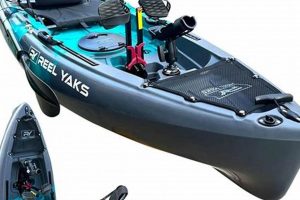
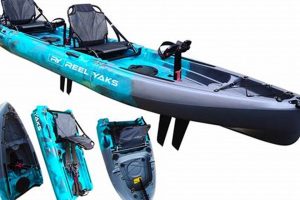
Illumination systems designed specifically for kayaks used in angling activities typically consist of navigational lights for safety and visibility, as well as specialized lights for attracting fish or illuminating the water around the vessel. These can range from small, battery-powered LED lights to more powerful systems with integrated wiring and multiple lighting modes. An example would be a green light mounted on the starboard side and a red light on the port side for nighttime navigation, coupled with underwater or surface-mounted lights to attract baitfish.
Enhanced visibility and safety are primary advantages of these systems. Navigational lights allow other boaters to see the kayak, especially in low-light conditions, reducing the risk of collisions. Specialized lighting can also improve the angler’s ability to see their fishing line, tackle, and the surrounding environment. Historically, anglers relied on less sophisticated methods like lanterns or headlamps, which offered limited illumination and functionality. Modern lighting systems provide significantly improved performance, durability, and safety, enabling anglers to fish effectively and safely in a wider range of conditions, including nighttime and early morning hours.
This article will further explore the various types of illumination available, factors to consider when choosing a system, proper installation techniques, and relevant regulations governing their use.
Tips for Kayak Fishing Illumination
Proper illumination is crucial for safe and successful kayak fishing excursions, especially during low-light conditions. These tips offer guidance on maximizing effectiveness and ensuring safety.
Tip 1: Prioritize Navigation Light Compliance: Ensure all lights meet coast guard regulations for visibility and placement. This typically includes a white stern light visible from 360 degrees and red/green sidelights. Non-compliance can result in fines and jeopardizes safety.
Tip 2: Consider the Fishing Environment: Different lighting colors and intensities are suitable for various fishing scenarios. Blue lights are often effective for attracting baitfish in open water, while green lights can be beneficial in shallower, vegetated areas.
Tip 3: Select Durable and Waterproof Lights: Kayak fishing exposes equipment to harsh conditions, including water spray and potential impacts. Opt for lights constructed from robust, waterproof materials to ensure longevity and reliable performance.
Tip 4: Optimize Battery Life: Carry spare batteries or utilize rechargeable systems, especially for longer trips. Consider light intensity and duration of use to maximize battery life. Switching to lower power modes or turning off lights when not needed can significantly extend operating time.
Tip 5: Minimize Light Pollution: Excessive or improperly directed light can hinder visibility and disturb wildlife. Focus light downwards and avoid excessively bright lights when not necessary.
Tip 6: Regularly Inspect and Maintain Equipment: Check lights for damage or corrosion before each trip. Ensure connections are secure and batteries are fully charged. Routine maintenance can prevent unexpected failures on the water.
Tip 7: Test Lights Before Departure: Verify proper operation of all lights, including color accuracy and intensity, before embarking on a fishing trip. This simple check can prevent issues and ensure safety on the water.
By adhering to these guidelines, anglers can enhance their safety and fishing success while minimizing environmental impact. Effective illumination contributes significantly to an enjoyable and productive kayak fishing experience.
This concludes the discussion on practical tips for utilizing illumination effectively in kayak fishing. The following section will offer concluding remarks.
Safe navigation is paramount in kayak fishing, particularly in low-light conditions or congested waterways. Dedicated illumination systems play a crucial role in ensuring visibility and preventing collisions. Understanding the various facets of navigation as they relate to these specialized lighting systems is essential for safe and responsible angling.
- Legal Requirements
Adhering to navigation light regulations is legally mandated and fundamental for safety. These regulations dictate specific light colors, placements, and visibility arcs required for different vessel types and sizes. Kayaks typically require a white stern light visible from 360 degrees and red/green sidelights. Failure to comply can lead to fines and significantly increases the risk of collisions, especially at night.
- Enhanced Visibility
Appropriate lighting significantly enhances visibility in low-light scenarios, such as dawn, dusk, or nighttime fishing. This improved visibility allows anglers to navigate safely around obstacles, other vessels, and shoreline features. For example, a brightly lit kayak is more easily discernible by larger motorboats, reducing the likelihood of a collision in dark conditions.
- Situational Awareness
Illumination contributes to improved situational awareness on the water. By illuminating the surrounding environment, lights allow anglers to better perceive changing water conditions, identify potential hazards, and navigate more effectively. An example would be using a spotlight to identify navigation markers or submerged objects in shallow water.
- Emergency Signaling
In emergency situations, lights can serve as crucial signaling devices. A flashing white light can attract attention and signal distress, while a directional spotlight can be used to guide rescuers. Having readily accessible and functioning lights can be life-saving in a nighttime emergency situation.
The integration of effective illumination is inextricably linked to safe and responsible kayak fishing. By understanding and implementing proper lighting strategies, anglers enhance their safety, improve navigational capabilities, and contribute to a safer boating environment for all. A well-lit kayak is not merely an accessory; it’s a critical safety feature that enables informed navigation and responsible angling practices.
2. Visibility
Visibility plays a critical role in kayak fishing safety and effectiveness, significantly influenced by appropriate illumination. Adequate lighting enhances the angler’s ability to perceive the surrounding environment, navigate safely, and perform essential fishing tasks. This connection between visibility and specialized kayak lighting systems is multifaceted, affecting both the angler’s ability to be seen and their capacity to see.
Enhanced visibility for the angler improves navigational safety, especially in low-light conditions. Illuminating potential hazards like rocks, logs, or shallow areas allows for safer maneuvering. Furthermore, adequate lighting facilitates crucial tasks such as tying knots, changing lures, and handling fish. For example, a well-lit cockpit area allows for efficient tackle management, even at night. Conversely, poor visibility due to insufficient or improperly directed lighting increases the risk of accidents, equipment loss, and a diminished fishing experience. Navigating through unfamiliar waters at night without sufficient lighting can lead to disorientation and potential collisions.
Ensuring the kayak’s visibility to other vessels is paramount for preventing collisions. Proper navigation lights, conforming to regulatory standards for color, placement, and intensity, are crucial for making the kayak visible to larger boats. This is particularly important in areas with heavy boat traffic or during periods of restricted visibility. For instance, a kayak without proper stern and sidelights is difficult to see at night, creating a significant collision risk. The interaction between visibility and kayak lighting is a fundamental consideration for safe and effective angling. Appropriate lighting solutions directly contribute to a safer and more productive fishing experience, allowing anglers to navigate confidently and perform essential tasks effectively while minimizing risks associated with poor visibility.
3. Fish Attraction

The strategic use of illumination plays a significant role in fish attraction, a key aspect of successful kayak fishing. Specific light wavelengths and intensities can attract baitfish and subsequently larger predatory fish, enhancing angling opportunities. This connection between fish attraction and specialized kayak lighting revolves around understanding fish behavior and how light influences their movement and feeding patterns. The primary mechanism involves phototaxis, the movement of organisms toward or away from light. Many aquatic species, including baitfish, exhibit positive phototaxis, being drawn to light sources. This concentrated prey then attracts larger predatory fish, creating a localized feeding opportunity for anglers. For example, submersible green lights can attract baitfish and squid, which in turn draw in larger species like snapper or grouper. Similarly, blue lights are often effective for attracting pelagic fish in open water scenarios.
The effectiveness of light-based fish attraction depends on several factors, including water clarity, ambient light levels, the target species, and the specific light characteristics. In clear water, light penetrates further, attracting fish from a greater distance. Conversely, murky water limits light penetration, requiring closer placement of the lights to be effective. Ambient light levels also influence the efficacy of fish-attracting lights. Bright moonlight or artificial light pollution can reduce the attractiveness of fishing lights. Choosing the correct light color is crucial. Different species respond to different wavelengths, requiring anglers to select appropriate colors based on their target species and the fishing environment. Furthermore, the light’s intensity and flashing pattern can influence its effectiveness. Some species are attracted to steady lights, while others respond better to pulsating or flashing patterns.
Understanding the principles of fish attraction through illumination enables anglers to utilize specialized kayak lighting systems strategically. By considering factors like water clarity, ambient light, target species, and light characteristics, anglers can significantly enhance their fishing success. However, responsible use of fish-attracting lights is essential to minimize environmental impact and avoid disrupting natural ecosystems. Excessive or improperly used lighting can negatively affect aquatic life and should be avoided. Selecting appropriate lighting solutions and employing them judiciously contributes to a more ethical and sustainable fishing practice while enhancing the angler’s catch potential. Balancing effective fish attraction with responsible environmental stewardship is a critical consideration for any angler utilizing light-based techniques.
4. Safety
Safety is paramount in kayak fishing, and appropriate illumination plays a crucial role in mitigating risks and ensuring a secure experience on the water. The relationship between fishing kayak lights and safety is multifaceted, encompassing collision avoidance, navigation in low-light conditions, personal visibility, and emergency signaling.
- Collision Avoidance
Proper navigation lights significantly reduce the risk of collisions with other vessels. Red and green sidelights, combined with a white stern light, clearly communicate a kayak’s position and direction of travel, particularly in low-light conditions or periods of restricted visibility. For example, a powerboat approaching a kayak at night can easily discern the kayak’s orientation and avoid a collision due to these lights. Without proper lighting, kayaks are virtually invisible to other boaters, drastically increasing the risk of accidents.
- Navigation in Low-Light Conditions
Kayak fishing often occurs during dawn, dusk, or nighttime hours when visibility is reduced. Illumination systems enhance navigational safety by allowing anglers to see and avoid obstacles such as rocks, logs, or shallow areas. A kayak angler navigating a narrow channel at dusk can rely on a forward-facing light to identify potential hazards and navigate safely. This proactive approach minimizes grounding or capsizing risks.
- Personal Visibility
Beyond navigation, lighting enhances the angler’s overall visibility. Wearing a headlamp or utilizing a kayak-mounted spotlight increases the angler’s ability to see their surroundings, perform essential tasks like tying knots or changing lures, and locate dropped items. In an emergency, a bright light can signal the angler’s location to rescuers. A headlamp also increases visibility to other anglers or boaters in the immediate vicinity, further reducing collision risks.
- Emergency Signaling
In emergency situations, such as capsizing or requiring assistance, lights can be life-saving tools. A waterproof flashlight or a strobe light can signal distress and attract attention. A kayak angler who capsizes at night can use a waterproof strobe light to signal their location to nearby boaters or rescue personnel, significantly increasing their chances of a swift rescue.
These facets underscore the vital role illumination plays in kayak fishing safety. Properly chosen and utilized lighting systems are essential for mitigating risks, enhancing visibility, and enabling anglers to enjoy their time on the water with greater peace of mind. Investing in high-quality lighting equipment and adhering to safe boating practices contributes significantly to a secure and enjoyable kayak fishing experience. By prioritizing illumination, anglers prioritize their safety and the safety of others sharing the waterways.
5. Regulations

Regulations governing fishing kayak lights are essential for ensuring boater safety and preventing accidents, particularly during periods of low visibility. These regulations, often established by maritime authorities or coast guards, dictate specific requirements for light types, colors, placement, and visibility to standardize illumination practices and minimize collision risks. Understanding and adhering to these regulations is crucial for all kayak anglers.
- Navigation Light Requirements
Regulations typically mandate specific navigation lights for kayaks operating between sunset and sunrise or during periods of restricted visibility. These typically include a white stern light visible from 360 degrees and red and green sidelights. The stern light indicates the vessel’s direction of travel, while the sidelights distinguish the port (left) and starboard (right) sides. For example, a kayak navigating at night must display these lights to ensure visibility to other vessels. Non-compliance can result in penalties and significantly increases the risk of collisions.
- Light Color and Intensity Standards
Regulations often specify precise color and intensity requirements for navigation lights. The white stern light must be of sufficient intensity to be visible at a specified distance, while the red and green sidelights must adhere to specific color standards to avoid confusion. Using lights that do not meet these standards can impair visibility and increase collision risks. For example, using a dim or incorrectly colored stern light can make the kayak difficult to see in low-light conditions.
- Placement and Visibility Arcs
Regulations dictate specific placement and visibility arc requirements for navigation lights. The stern light must be positioned to provide all-around visibility, while sidelights must be visible from specific angles relative to the kayak’s bow. Incorrect placement can compromise visibility and mislead other boaters. For example, improperly positioned sidelights might not be visible from the required angles, increasing the risk of a side-on collision.
- Exemptions and Special Considerations
While regulations generally apply to all vessels, some exemptions or special considerations may exist for kayaks. These might include exemptions for kayaks operating solely in daylight hours or within designated areas. However, even with exemptions, carrying and utilizing proper lighting during low-light conditions is strongly recommended for safety. Understanding local regulations and any applicable exemptions is crucial for legal compliance and safe boating practices. For example, some jurisdictions might have specific regulations for kayaks fishing in designated areas, requiring additional lighting or signaling devices.
Adherence to lighting regulations is fundamental for safe and responsible kayak fishing. These regulations are designed to enhance visibility, prevent collisions, and promote a secure boating environment. Familiarizing oneself with and adhering to these regulations is not just a legal requirement; it is a crucial safety practice that contributes to the well-being of all waterway users. By complying with lighting regulations, kayak anglers contribute to a safer and more responsible boating environment, reducing the risk of accidents and ensuring a more enjoyable experience on the water.
6. Power Source

The efficacy and reliability of fishing kayak lights are inextricably linked to their power source. Selection of an appropriate power source is a critical consideration, impacting factors such as light duration, intensity, and overall system reliability. Several power source options exist, each with inherent advantages and disadvantages, influencing the suitability for specific kayak fishing applications.
Battery-powered systems are prevalent, offering portability and ease of installation. These systems typically utilize disposable or rechargeable batteries. Disposable batteries offer convenience but contribute to environmental waste and necessitate frequent replacement, particularly with high-intensity lights. Rechargeable batteries, while environmentally preferable, require access to charging facilities and may have limited operational duration depending on battery capacity and light usage. Lithium-ion batteries are increasingly popular due to their high energy density and relatively long lifespan. For example, a kayak angler on a multi-day trip might opt for rechargeable lithium-ion batteries to power navigation and fishing lights, minimizing the need for battery replacements. Another option involves wiring the lights directly to a kayak’s onboard power system, if available. This provides a consistent power supply but requires professional installation and can be more complex to implement. For instance, a kayak equipped with a fish finder and other electronics might benefit from a wired lighting system integrated into the main power supply. Solar-powered lights offer a sustainable alternative, particularly for daytime running lights or charging onboard batteries. However, their effectiveness is dependent on sufficient sunlight exposure and may not be suitable for nighttime use or extended periods of overcast conditions.
Choosing the right power source depends on individual needs and fishing style. Factors to consider include trip duration, lighting requirements, budget, and environmental concerns. Understanding the characteristics of each power source enables informed decisions, ensuring reliable illumination and a safe and productive fishing experience. Failure to select an appropriate power source can lead to premature battery depletion, diminished light output, and potential safety hazards, particularly during nighttime fishing. Therefore, careful consideration of power source options is a fundamental aspect of equipping a fishing kayak with effective and reliable illumination.
Frequently Asked Questions
This section addresses common inquiries regarding illumination systems designed for kayaks used in angling activities, providing concise and informative responses to facilitate informed decision-making.
Question 1: What are the legal requirements for kayak lights?
Regulations vary by jurisdiction, but typically mandate a 360-degree white stern light and red/green sidelights for nighttime operation. Consulting local maritime authorities confirms specific requirements.
Question 2: How long do kayak light batteries typically last?
Battery life depends on factors like battery type, light intensity, and usage patterns. Rechargeable lithium-ion batteries generally offer the longest lifespan, while disposable batteries require frequent replacement. Manufacturers typically provide estimated runtimes.
Question 3: What are the best lights for attracting fish?
Effective fish-attracting lights vary based on target species and water conditions. Green lights are often effective in shallower environments, while blue lights attract pelagic fish in open water. Submersible lights can be particularly effective for attracting baitfish.
Question 4: Are waterproof lights necessary for kayak fishing?
Waterproof lights are highly recommended due to the potential for water exposure. A waterproof rating ensures reliable operation in wet conditions and prevents damage from splashes, rain, or submersion.
Question 5: Can kayak lights be mounted on any part of the vessel?
Light placement should adhere to navigation regulations and visibility requirements. Stern lights must offer all-around visibility, while sidelights should be positioned to clearly indicate the kayak’s sides. Manufacturer instructions provide guidance on appropriate mounting locations.
Question 6: How do I maintain kayak lights?
Regular inspection and cleaning are essential. Check for damage, corrosion, and secure connections. For battery-powered systems, ensure batteries are fully charged and stored properly when not in use. Consult manufacturer guidelines for specific maintenance recommendations.
Understanding these frequently asked questions provides a foundational knowledge base for selecting and utilizing appropriate illumination systems for kayak fishing. Consulting local regulations and manufacturer guidelines ensures safe and compliant operation, enhancing both safety and fishing success.
The subsequent section will delve into specific product recommendations based on various fishing styles and needs.
Fishing Kayak Lights
Effective illumination systems are integral to safe and successful kayak angling. This exploration has highlighted the multifaceted nature of these systems, encompassing navigation, visibility enhancement, fish attraction, safety considerations, relevant regulations, and power source options. Understanding these interconnected aspects empowers informed decision-making regarding appropriate lighting solutions tailored to specific fishing environments and angler requirements. From ensuring regulatory compliance to maximizing fishing efficacy, the correct illumination strategy significantly enhances the overall kayak fishing experience.
The evolution of kayak fishing lighting technology continues to offer increasingly sophisticated and specialized solutions. Anglers are encouraged to prioritize safety and responsible use while exploring these advancements. Careful consideration of individual needs, environmental impact, and regulatory compliance ensures sustainable and productive kayak fishing practices, illuminated by informed choices and responsible implementation.