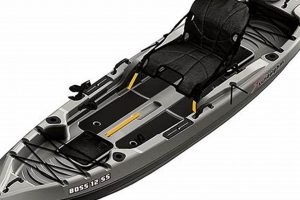
A collection of specialized equipment designed to enhance angler experiences in a kayak typically includes essential items like rod holders, paddle leashes, and storage solutions for tackle and gear. Such collections may also encompass advanced features such as fish finders, anchor trolleys, and even specialized seating systems. These curated sets of accessories aim to optimize the kayak for angling, transforming it into a dedicated fishing platform.
Optimizing a kayak for fishing offers significant advantages. It streamlines the angling process, allowing for greater efficiency and enjoyment on the water. By keeping essential gear organized and readily accessible, these purpose-built setups improve safety and reduce the risk of losing valuable equipment. The historical development of such specialized equipment parallels the growing popularity of kayak fishing, reflecting a demand for more effective and enjoyable experiences in this sport.
This discussion will further explore the various components commonly found in these specialized packages, examining their individual functions and benefits, as well as providing guidance on selecting the right combination of equipment for specific fishing styles and environments.
Essential Considerations for Kayak Fishing Equipment
Careful selection of specialized kayak fishing equipment significantly enhances safety and fishing success. The following tips offer guidance for optimizing gear choices.
Tip 1: Prioritize Stability. Kayak stability is paramount, especially when fishing. Wider kayaks and those with outriggers offer increased stability, reducing the risk of capsizing, especially important when handling fish or navigating challenging waters.
Tip 2: Choose Appropriate Rod Holders. Rod holders should securely hold rods while allowing for quick and easy access. Adjustable rod holders accommodate various fishing techniques and rod lengths.
Tip 3: Secure Essential Gear. Paddle leashes and anchor trolleys prevent equipment loss and ensure essential items remain within reach. Dry bags and waterproof containers protect valuable electronics and personal items.
Tip 4: Consider Comfort and Ergonomics. A comfortable seat and adjustable footrests promote prolonged fishing sessions without discomfort. Proper ergonomics reduce fatigue and allow for better focus on fishing.
Tip 5: Integrate a Fish Finder. A fish finder provides crucial information about water depth, bottom structure, and fish location, significantly increasing the chances of a successful catch.
Tip 6: Organize Tackle Efficiently. Tackle boxes and storage systems designed specifically for kayaks keep lures and other essential gear organized and accessible, maximizing fishing efficiency.
Tip 7: Plan for Safety. Always wear a personal flotation device (PFD) and carry a whistle and signaling devices for emergencies. Inform someone of your fishing plans, including location and expected return time.
Strategic equipment choices contribute significantly to a safer and more productive kayak fishing experience. By considering these recommendations, anglers can enhance their time on the water and improve their chances of success.
These tips offer a starting point for outfitting a kayak for fishing. Further research and consultation with experienced anglers can provide additional insights for optimizing gear selections based on individual needs and fishing styles.
1. Rod Holders

Rod holders are an integral component of a fishing kayak kit, playing a crucial role in enhancing angling efficiency and safety. Their primary function is to secure fishing rods, freeing the angler’s hands for other tasks such as paddling, landing fish, or adjusting tackle. The strategic placement and type of rod holders significantly impact the overall fishing experience.
- Types of Rod Holders
Various rod holder designs cater to different fishing styles and kayak setups. Flush-mount rod holders offer a streamlined profile but may limit rod angle adjustments. Adjustable rod holders provide greater flexibility in positioning rods, while track-mounted systems allow for customized placement along the kayak’s gunwales. Selecting the appropriate type depends on the angler’s specific needs and preferences.
- Placement and Configuration
Strategic rod holder placement optimizes fishing efficiency. Positioning rod holders near the angler’s reach allows for quick access and retrieval. Anglers targeting multiple species might configure rod holders to accommodate different rod lengths and actions. Careful consideration of placement minimizes line tangling and interference with paddling.
- Materials and Construction
Rod holders are typically constructed from durable, corrosion-resistant materials such as plastic, aluminum, or stainless steel. High-quality materials ensure longevity and withstand the harsh marine environment. Reinforced mounting hardware provides a secure and stable platform for rods, even in rough conditions.
- Integration with Other Accessories
Rod holders can be integrated with other fishing kayak accessories, such as fish finders and tackle storage systems, to create a cohesive and efficient fishing platform. This integration streamlines the angling process and enhances the overall experience.
The careful selection and placement of rod holders significantly contribute to a successful kayak fishing experience. By considering factors such as fishing style, kayak type, and desired level of customization, anglers can optimize their setup for maximum efficiency and enjoyment on the water. Effective rod holder integration enhances the functionality of the entire fishing kayak kit.
2. Paddle Leash

Within the context of a fishing kayak kit, the paddle leash serves as a critical safety and convenience feature, preventing accidental paddle loss and ensuring accessibility. Loss of a paddle can create a hazardous situation, especially in challenging conditions. A paddle leash mitigates this risk, allowing anglers to focus on fishing without the constant concern of losing their primary means of propulsion.
- Prevention of Paddle Loss
The primary function of a paddle leash is to secure the paddle to the kayak, preventing its loss due to accidental dropping or unexpected events such as strong currents or sudden waves. A simple scenario illustrates its importance: an angler hooked on a large fish might momentarily lose grip of the paddle during the fight. Without a leash, the paddle could drift away, leaving the angler stranded. The leash ensures the paddle remains within reach, even in demanding situations.
- Enhanced Safety
A paddle leash contributes significantly to angler safety. In the event of a capsize, a secured paddle provides a vital flotation aid and assists in righting the kayak. Furthermore, it allows the angler to maintain control and maneuverability in challenging conditions, reducing the risk of further complications.
- Convenience and Accessibility
Beyond safety, a paddle leash enhances convenience by keeping the paddle readily accessible. When fishing, anglers frequently need to free their hands to handle rods, tackle, or landing nets. A leash ensures the paddle remains within easy reach, eliminating the need to search for it or secure it precariously within the kayak.
- Types and Selection
Paddle leashes vary in design and materials. Coiled leashes offer flexibility and retract neatly when not in use. Straight leashes provide a more direct connection. Selecting an appropriate leash involves considering factors such as kayak type, paddling style, and personal preference. Durable materials and secure attachment points are essential for reliable performance.
Integrating a paddle leash into a fishing kayak kit significantly enhances both safety and convenience on the water. This seemingly simple accessory provides a crucial safeguard against paddle loss, contributing to a more enjoyable and secure fishing experience. Its inclusion reflects a proactive approach to risk management, ensuring anglers can focus on their passion with peace of mind.
3. Anchor Trolley

An anchor trolley system is a crucial component of a comprehensive fishing kayak kit, providing enhanced boat control and positioning capabilities essential for successful angling. This system allows for precise anchor placement and adjustment, maximizing fishing effectiveness in various conditions. Its integration within a fishing kayak kit significantly contributes to strategic angling techniques and overall on-the-water experience.
- Controlled Drift Fishing
An anchor trolley facilitates controlled drift fishing by allowing anglers to position the kayak at a desired angle relative to the current or wind. This technique is particularly effective in rivers, streams, or along shorelines where maintaining a specific position and presentation is crucial for targeting specific fish species. By adjusting the anchor line along the trolley, anglers can fine-tune their drift speed and angle, optimizing lure presentation and coverage.
- Maintaining Position in Current
In moving water, an anchor trolley allows anglers to maintain a stationary position, preventing excessive drift and keeping the kayak within a desired fishing zone. This is especially beneficial in areas with strong currents or tidal flows, where maintaining a fixed location is essential for effective fishing. Without an anchor trolley, the kayak would be constantly swept downstream, requiring continuous paddling adjustments. The trolley system conserves angler effort and maximizes time spent fishing.
- Adjusting to Changing Conditions
Weather and water conditions can change rapidly. An anchor trolley provides the flexibility to quickly adjust anchor positioning to accommodate these changes. Shifting winds or changing currents can alter the ideal fishing location, requiring adjustments to the anchor position. The trolley system allows for rapid and efficient adjustments, maintaining optimal fishing position without the need to re-deploy the anchor.
- Minimizing Anchor Interference
By running the anchor line along the side of the kayak, the trolley system minimizes interference with fishing activities. Traditional anchor setups can obstruct casting and retrieving lines. The trolley system keeps the anchor line out of the way, allowing for unimpeded casting and reducing the risk of line tangling.
The anchor trolley system integrates seamlessly within a fishing kayak kit, enhancing angler control and adaptability. Its inclusion elevates the fishing experience from simply drifting to strategically positioning the kayak for optimal results. By facilitating controlled drifts, maintaining position in current, adapting to changing conditions, and minimizing anchor interference, this system significantly improves fishing effectiveness and overall enjoyment on the water. Its contribution to a well-equipped fishing kayak underscores its importance for serious anglers.
4. Tackle Storage

Effective tackle storage is an integral component of a well-organized fishing kayak kit. The limited space inherent in kayaks necessitates efficient organization to maximize fishing efficiency and safety. Inadequate tackle storage can lead to tangled lines, lost lures, and wasted time searching for equipment, ultimately detracting from the overall fishing experience. Conversely, a well-designed tackle storage system contributes significantly to a streamlined and productive outing. Consider a scenario where an angler hooks a fish but struggles to locate the appropriate landing net amidst a disorganized pile of gear. Such disarray can result in a lost fish and a frustrating experience. Efficient tackle storage mitigates such issues, ensuring essential tools are readily accessible when needed.
Several factors influence the selection and implementation of a kayak fishing tackle storage system. Kayak size and layout dictate available storage options. Fishing style influences the type and quantity of tackle required. Dedicated tackle boxes designed for kayaks offer compact and waterproof solutions, while some anglers prefer modular systems that allow for customization. Integrating tackle storage within the kayak’s design, such as recessed compartments or strategically placed storage bags, maximizes space utilization. Accessibility remains paramount, ensuring frequently used items are within easy reach. Understanding these considerations enables anglers to tailor their tackle storage solutions to specific needs and optimize their fishing experience.
Optimal tackle storage within a fishing kayak kit translates directly to enhanced fishing efficiency and enjoyment. Organized tackle reduces time spent searching for equipment, allowing more time for actual fishing. It minimizes distractions and frustrations, promoting a more focused and enjoyable experience on the water. Moreover, proper storage safeguards tackle investments, protecting lures and other gear from damage or loss. The connection between efficient tackle storage and a successful kayak fishing trip is undeniable. Prioritizing this aspect of kit organization contributes significantly to a positive and productive outing.
5. Fish Finder

A fish finder represents a significant technological advancement within the fishing kayak kit, transforming the way anglers locate and target fish. Its integration elevates the kayak fishing experience from passive searching to informed pursuit, significantly increasing the likelihood of a successful catch. Understanding the capabilities and strategic application of a fish finder is crucial for maximizing its potential within the broader context of the fishing kayak setup.
- Locating Fish and Structure
Fish finders utilize sonar technology to generate detailed underwater maps, revealing fish locations, bottom contours, vegetation, and other submerged structures. This information empowers anglers to identify promising fishing spots, understand fish behavior, and tailor their approach accordingly. For instance, identifying a thermocline, a layer of water with a rapid temperature change, can pinpoint areas where fish congregate. This targeted approach minimizes wasted time searching unproductive areas and maximizes fishing efficiency.
- Determining Depth and Water Conditions
Accurate depth readings are essential for selecting appropriate lures and fishing techniques. Fish finders provide real-time depth information, enabling anglers to adjust their approach based on water column conditions. In shallow waters, topwater lures might be effective, while deeper areas necessitate jigs or weighted baits. Understanding the water column profile enhances lure presentation and increases the chances of attracting fish. Moreover, fish finders can detect water temperature variations, currents, and other environmental factors influencing fish behavior.
- Enhancing Navigation and Safety
Beyond fish location, fish finders contribute to navigation and safety by providing detailed underwater terrain information. Identifying submerged obstacles, such as rocks or logs, prevents potential collisions and protects the kayak from damage. In unfamiliar waters, this information aids navigation and allows anglers to explore new areas with confidence. Furthermore, some fish finders integrate GPS functionality, enabling waypoint marking and navigation back to productive fishing spots or safe harbors.
- Integration with Kayak Setup
Integrating a fish finder into a fishing kayak kit requires careful consideration of power supply, transducer placement, and display mounting. Portable fish finders offer flexibility, while permanently mounted units provide a more integrated solution. Transducer placement is crucial for accurate sonar readings, ensuring optimal contact with the water. Display mounting should prioritize visibility and accessibility without interfering with paddling or other fishing activities. Effective integration maximizes the fish finder’s utility and enhances the overall kayak fishing setup.
The fish finder has become an indispensable tool for the modern kayak angler. Its ability to locate fish, analyze underwater terrain, and enhance navigation transforms the fishing experience. By understanding its capabilities and integrating it seamlessly within the fishing kayak kit, anglers gain a significant advantage in their pursuit of success on the water. Its contribution to efficient fishing, informed decision-making, and enhanced safety solidifies its place as a cornerstone of the modern fishing kayak kit.
6. Safety Equipment
Safety equipment forms an indispensable part of any fishing kayak kit. The inherent risks associated with on-water activities, amplified by the often-remote nature of kayak fishing, necessitate a comprehensive approach to safety. A lack of appropriate safety measures can transform a recreational outing into a life-threatening situation. Consider a scenario where an angler capsizes in cold water without a personal flotation device (PFD). Hypothermia can set in rapidly, incapacitating the individual and potentially leading to drowning. This underscores the critical role of safety equipment in mitigating such risks.
Several key pieces of safety equipment are essential components of a responsible fishing kayak kit. A PFD, designed to keep the wearer afloat in the event of a capsize, is paramount. A whistle, used to signal for help in an emergency, is another critical item. Visual distress signals, such as flares or a signal mirror, can attract attention over long distances. A first-aid kit, equipped to handle minor injuries and stabilize more serious conditions until professional help arrives, is also essential. Furthermore, communication devices, such as a waterproof VHF radio or a charged mobile phone in a waterproof case, allow for contacting emergency services or informing others of one’s location. Carrying these items demonstrates a proactive approach to safety and preparedness.
Integrating safety equipment seamlessly within the fishing kayak kit requires thoughtful planning and organization. The PFD should be readily accessible and worn consistently while on the water. Other safety items should be stored in waterproof containers and secured within the kayak to prevent loss in the event of a capsize. Regular inspection and maintenance of safety equipment, including checking PFD condition and battery life of communication devices, ensure their effectiveness when needed. Understanding the function and application of each safety item empowers anglers to respond effectively in emergencies. Ultimately, prioritizing safety through appropriate equipment selection, organization, and preparedness contributes significantly to a responsible and enjoyable kayak fishing experience. Neglecting these precautions jeopardizes not only the angler’s well-being but also the safety of potential rescuers. A comprehensive approach to safety, reflected in the fishing kayak kit, demonstrates a commitment to responsible angling practices and a respect for the inherent challenges of the aquatic environment.
7. Kayak Stability

Kayak stability forms a cornerstone of a successful and safe fishing experience, directly influencing the efficacy of a fishing kayak kit. A stable platform is essential for various fishing activities, from casting and retrieving to landing fish and navigating varied water conditions. Compromised stability not only diminishes fishing effectiveness but also poses significant safety risks, particularly when handling equipment or encountering unexpected movements. Understanding the factors influencing kayak stability and their implications within the context of a fishing kayak kit is crucial for informed decision-making and enhanced on-water performance.
- Hull Design and Stability
Kayak hull design directly impacts stability. Wider, flatter hulls generally offer greater primary stability, resisting initial tipping. However, they may compromise maneuverability. Longer, narrower hulls provide better tracking and speed but are less stable initially. Specialized hull designs, such as pontoon hulls or those incorporating outriggers, maximize stability, particularly beneficial for fishing platforms. Selecting a hull design that balances stability and maneuverability, aligned with the intended fishing style and water conditions, is paramount.
- Center of Gravity and Weight Distribution
The center of gravity significantly influences kayak stability. A lower center of gravity enhances stability, while a higher center of gravity increases the risk of capsizing. Careful weight distribution within the kayak is crucial, particularly when incorporating a fishing kayak kit. Distributing weight evenly and keeping heavier items lower in the kayak enhances overall stability. Anglers must consider the combined weight of themselves, the kayak, and the fishing kit when assessing stability considerations. Adding accessories, such as rod holders and tackle boxes, further influences weight distribution and requires careful consideration.
- Impact of Water Conditions
Water conditions directly impact kayak stability. Calm, flat water presents fewer challenges, while rough water, currents, and wind introduce destabilizing forces. Kayak stability in varying conditions must be assessed when selecting a fishing platform. Wider, more stable kayaks are better suited for challenging conditions, while narrower kayaks excel in calm waters. Understanding the anticipated water conditions during fishing trips and selecting a kayak with appropriate stability characteristics is essential for safety and performance.
- Stability Considerations for Fishing Activities
Specific fishing activities further influence stability requirements. Casting, retrieving, and fighting fish introduce dynamic movements that can challenge kayak stability. Standing to cast or land a fish requires exceptional stability, especially in a kayak. Selecting a kayak and configuring the fishing kit to accommodate these activities is paramount. Features like outriggers, wider hulls, and stable seating positions enhance safety and performance during these dynamic fishing maneuvers. Furthermore, understanding the limitations of the kayak’s stability in relation to specific fishing techniques contributes to a safer and more successful angling experience.
Kayak stability is intrinsically linked to the effectiveness and safety of a fishing kayak kit. Selecting a kayak with appropriate stability characteristics, considering hull design, weight distribution, water conditions, and anticipated fishing activities, forms the foundation of a successful fishing platform. Understanding the interplay between these factors empowers anglers to make informed decisions regarding kayak selection and kit configuration, ultimately optimizing their fishing experience and ensuring safety on the water.
Frequently Asked Questions about Fishing Kayak Kits
This section addresses common inquiries regarding fishing kayak kits, providing concise and informative responses to facilitate informed decision-making and enhance understanding of essential equipment considerations.
Question 1: What are the essential components of a fishing kayak kit?
Essential components typically include rod holders, a paddle leash, an anchor trolley, tackle storage solutions, a fish finder, and safety equipment such as a personal flotation device (PFD), whistle, and signaling devices. Kayak stability is a crucial factor influencing kit selection and configuration.
Question 2: How does kayak stability influence fishing kit choices?
Kayak stability dictates the practicality and safety of using various fishing accessories. A stable platform is crucial for casting, retrieving, fighting fish, and navigating varied water conditions. Hull design, weight distribution, and anticipated water conditions influence stability considerations.
Question 3: What type of rod holders are most suitable for kayak fishing?
Suitable rod holder types depend on individual fishing styles and kayak setups. Flush-mount, adjustable, and track-mounted rod holders offer varying degrees of flexibility and customization. Placement should prioritize accessibility and minimize interference with paddling.
Question 4: Why is an anchor trolley system beneficial for kayak fishing?
An anchor trolley allows for controlled drift fishing and maintaining position in current. It enables adjustments to changing conditions and minimizes anchor line interference with fishing activities, enhancing angling precision and effectiveness.
Question 5: How does a fish finder enhance kayak fishing?
Fish finders employ sonar technology to locate fish, reveal underwater structures, and determine depth and water conditions. This information informs strategic fishing decisions, improves lure presentation, and enhances navigation and safety.
Question 6: What safety precautions should be taken when kayak fishing?
Always wear a PFD, carry a whistle and signaling devices, inform someone of fishing plans, and check weather conditions before embarking. Regularly inspect and maintain safety equipment. Prioritizing safety is paramount for a responsible and enjoyable fishing experience.
Careful consideration of these frequently asked questions enhances understanding of the critical aspects of fishing kayak kits. A comprehensive approach to equipment selection, stability considerations, and safety precautions contributes significantly to a more productive and secure fishing experience.
The subsequent section will delve into specific product recommendations and reviews, building upon the foundational knowledge established here.
Fishing Kayak Kit
Effective deployment of a specialized fishing kayak kit significantly enhances angling opportunities and overall safety on the water. Careful consideration of individual components, from rod holders and paddle leashes to fish finders and safety equipment, contributes to a cohesive and efficient fishing platform. Kayak stability, influenced by hull design and weight distribution, remains a paramount concern. Appropriate tackle storage solutions maximize fishing time and minimize on-water distractions. Adherence to safety protocols, including consistent PFD usage and communication preparedness, underscores responsible angling practices. A well-equipped fishing kayak reflects a commitment to both successful angling and personal well-being.
Strategic equipment choices, combined with an understanding of kayak dynamics and environmental factors, empower anglers to maximize their time on the water. Continuous refinement of techniques and equipment selection, informed by experience and ongoing advancements in kayak fishing technology, promises further enhancement of this dynamic and rewarding pursuit.