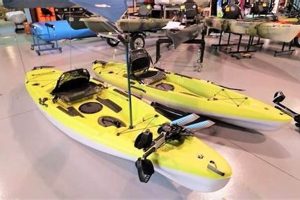
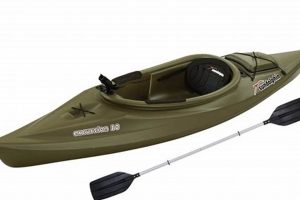
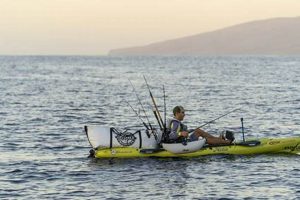
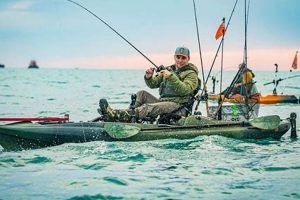
A kayak designed for angling, built to accommodate individuals of higher weight and stature, offers enhanced stability and load capacity. These specialized vessels often feature wider beams, reinforced hulls, and higher weight limits compared to standard recreational kayaks. They may also include features like rod holders, tackle storage, and adjustable seating systems specifically tailored for anglers.
Anglers of larger builds benefit significantly from these purpose-built watercraft. Increased stability and carrying capacity enable safe and comfortable fishing expeditions, accommodating heavier anglers and their gear. This specialized design allows for longer trips with essential equipment, including tackle boxes, fish finders, and coolers. Historically, larger individuals faced limitations in kayak selection, often compromising stability and comfort. The development of these specific kayak designs addresses these challenges, opening up the sport of kayak fishing to a broader audience.
Key aspects to consider when selecting such a watercraft include weight capacity, hull design, seating comfort, and integrated features. Understanding these elements is crucial for selecting the optimal vessel for individual needs and preferences. This article will delve deeper into each of these aspects, providing comprehensive guidance for informed decision-making.
Tips for Selecting a Fishing Kayak for Larger Individuals
Choosing the right kayak is crucial for a safe and enjoyable fishing experience. Careful consideration of several key factors ensures optimal performance and comfort on the water.
Tip 1: Prioritize Weight Capacity: Never exceed the manufacturer’s stated weight limit. Include the angler’s weight, all fishing gear, and any additional equipment to determine the total load. Opting for a kayak with a higher weight capacity than the calculated load provides an added safety margin.
Tip 2: Consider Hull Design: Wider, flatter hulls generally offer greater stability, while longer, narrower hulls tend to track better in open water. A sit-on-top design is often preferred for its stability and ease of entry and exit.
Tip 3: Evaluate Seat Comfort and Adjustability: A comfortable and supportive seat is essential for longer fishing trips. Look for adjustable features that allow for customized back support and legroom.
Tip 4: Assess Storage Options: Ample storage space is crucial for carrying tackle boxes, rods, and other fishing essentials. Consider dedicated compartments and integrated features like rod holders and gear tracks.
Tip 5: Test Before Purchasing: Whenever possible, try out different kayak models before making a purchase. This allows individuals to assess stability, comfort, and maneuverability firsthand.
Tip 6: Research and Compare: Thorough research and comparison shopping are vital for finding the best value. Compare features, prices, and user reviews from reputable sources.
Tip 7: Factor in Transportation: Consider how the kayak will be transported. Roof racks, trailers, and even inflatable options may be necessary depending on vehicle type and storage capacity.
By carefully considering these factors, anglers can select a kayak that provides stability, comfort, and functionality, enhancing their overall fishing experience.
Ultimately, the right kayak selection allows for a safe, comfortable, and successful fishing adventure.
1. Stability

Stability is a paramount concern in kayak fishing, particularly for larger individuals. A stable platform is essential for casting, reeling, and landing fish, as well as for general safety and comfort on the water. Compromised stability can lead to capsizing, especially when combined with the added weight and movement inherent in angling activities. For larger individuals, the center of gravity is often higher, increasing the risk of instability. A wider kayak hull, combined with a lower center of gravity, enhances stability and reduces the likelihood of tipping. For example, a kayak designed specifically for fishing often features a broader beam and a flatter bottom for increased stability compared to a recreational kayak intended for calmer waters.
The impact of stability extends beyond mere safety. A stable kayak allows for more confident and efficient fishing. Anglers can focus on their technique and the pursuit of fish without constantly worrying about balance. This increased confidence translates to improved casting accuracy and quicker reaction times when a fish strikes. Moreover, enhanced stability allows for greater freedom of movement within the kayak, facilitating activities such as reaching for gear, changing lures, and fighting fish. This is especially important for larger individuals who may require more space and stability to maneuver comfortably.
Selecting a kayak with adequate stability is therefore a crucial consideration. Factors influencing stability include hull design, kayak width, and the angler’s weight distribution. Understanding these factors and their interplay is crucial for choosing a kayak that provides a safe and effective fishing platform. Failing to prioritize stability can severely limit fishing effectiveness and compromise personal safety. Ultimately, a stable kayak contributes significantly to a positive and successful fishing experience, particularly for individuals of larger stature.
2. Weight Capacity

Weight capacity stands as a critical factor when selecting a fishing kayak, especially for larger individuals. This specification, determined by the manufacturer, represents the maximum combined weight the kayak can safely support. This encompasses the weight of the angler, all fishing gear, and any additional equipment brought onboard. Exceeding this limit compromises stability, potentially leading to capsizing and creating a hazardous situation. For larger individuals, the weight capacity must accommodate their higher body weight in addition to standard fishing gear. A kayak with insufficient weight capacity will sit lower in the water, reducing freeboard and increasing the risk of water ingress. This lower profile also negatively impacts stability, making the kayak more susceptible to tipping, particularly in challenging conditions.
Consider a scenario where an angler weighing 250 pounds intends to carry 50 pounds of fishing gear. A kayak with a 300-pound weight capacity sits at its limit, offering no margin for error. Unexpected weight shifts, such as leaning to one side or encountering a wave, could easily lead to capsizing. A kayak with a 350-pound capacity or higher provides a crucial safety buffer in such situations. Real-world examples abound where anglers have underestimated the importance of weight capacity, resulting in dangerous situations or compromised fishing experiences. A kayak sitting too low in the water significantly impacts maneuverability and performance. It can also make entry and exit more difficult, especially in deeper water.
Understanding the practical significance of weight capacity is paramount. It directly impacts safety, comfort, and the overall fishing experience. Selecting a kayak with ample weight capacity ensures not only a safe and stable platform but also optimal performance on the water. This allows anglers to focus on fishing rather than constantly managing balance and stability. This is particularly important for larger individuals who require a kayak capable of supporting their weight and gear without compromising performance or safety. Therefore, careful consideration of weight capacity is a non-negotiable element in the kayak selection process.
3. Comfort
Comfort plays a pivotal role in the overall fishing kayak experience, particularly for larger individuals. Extended periods on the water necessitate a comfortable and supportive environment to minimize fatigue and maximize enjoyment. A lack of comfort can detract from the fishing experience, leading to discomfort, distraction, and a potentially shortened trip. For larger individuals, comfort considerations are amplified due to the need for increased support and stability.
- Seat Design and Adjustability
Seat design is paramount for comfort. Features like adjustable backrests, lumbar support, and ample cushioning contribute significantly to overall comfort. A well-designed seat accommodates individual body shapes and sizes, providing crucial support during long hours on the water. High-backed seats with adjustable straps offer personalized support, while breathable fabrics enhance comfort in warm weather. Examples include adjustable foot braces and thigh supports that further enhance stability and control, reducing strain and fatigue. The lack of proper seat adjustability can lead to back pain, leg cramps, and overall discomfort, significantly impacting the fishing experience.
- Legroom and Cockpit Space
Adequate legroom and cockpit space are essential for larger individuals. A cramped cockpit restricts movement and can lead to discomfort and stiffness. Sufficient space allows for comfortable leg extension and facilitates easy entry and exit from the kayak. Kayaks designed with larger cockpits and adjustable footrests provide a more comfortable and ergonomic experience. Consider, for instance, the difference between a compact recreational kayak and a fishing kayak designed with a larger, more open cockpit. The added space in the fishing kayak allows for greater freedom of movement and reduces the feeling of confinement, particularly beneficial for larger individuals.
- Stability and Balance
Stability directly influences comfort, especially for larger individuals. A stable kayak platform minimizes the need for constant adjustments and corrections, reducing fatigue and enhancing relaxation. Features like a wider hull and a lower center of gravity contribute to enhanced stability. A kayak that feels unsteady can create anxiety and detract from the fishing experience. Compare, for example, the stability of a wide, flat-bottomed kayak to a narrow, V-hulled kayak. The wider kayak provides a more stable platform, particularly beneficial for larger individuals who may feel more susceptible to tipping or instability.
- Accessibility and Ease of Entry/Exit
Ease of entry and exit is crucial for comfort and safety. Kayaks with wider cockpits and sit-on-top designs generally offer easier access. Features like grab handles and strategically placed footrests further aid entry and exit. For larger individuals, the physical act of getting in and out of a kayak can be challenging. A kayak with a well-designed cockpit and supportive features simplifies this process, reducing strain and minimizing the risk of injury.
These interconnected comfort factors significantly influence the overall fishing experience for larger individuals. Selecting a kayak that prioritizes these elements contributes to a more enjoyable, productive, and safe time on the water. A comfortable angler is a more focused and effective angler, capable of enjoying longer trips and maximizing their time on the water. Ultimately, comfort should be a primary consideration in the kayak selection process, ensuring a positive and rewarding fishing experience.
4. Storage
Ample and well-designed storage is integral to a positive fishing kayak experience, particularly for larger individuals. Kayak fishing necessitates carrying a variety of gear, including rods, reels, tackle boxes, safety equipment, and potentially food and beverages. Larger individuals may also require additional gear, further emphasizing the need for sufficient storage capacity. Inadequate storage can lead to a cluttered cockpit, hindering movement and fishing effectiveness. It can also compromise safety by creating an unstable environment or obstructing access to essential equipment.
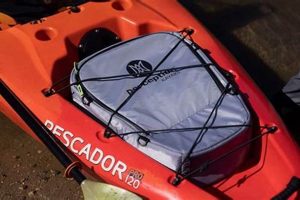
Consider the following scenario: a larger angler embarks on a multi-day fishing trip. This individual requires space for multiple rods and reels, several tackle boxes containing a variety of lures and bait, safety gear including a first-aid kit and signaling devices, food, water, and potentially camping equipment. Without sufficient storage, this gear would clutter the cockpit, hindering casting, reeling, and other essential fishing activities. Moreover, improperly secured gear could shift during movement, further compromising stability. A well-designed fishing kayak addresses these needs by offering a variety of storage solutions, such as dedicated rod holders, sealed hatches for dry storage, and bungee cords for securing larger items. Some kayaks even feature specialized compartments for tackle boxes and other essential gear. For larger individuals, the strategic placement and accessibility of these storage options are crucial. Easy access to frequently used items, like pliers or a knife, can significantly enhance efficiency and enjoyment on the water.
The practical implications of adequate storage extend beyond mere convenience. Proper storage contributes to safety by ensuring that all gear is secured and readily accessible. It also enhances fishing effectiveness by allowing anglers to organize their equipment and focus on the task at hand. For larger individuals, the added demands on storage capacity underscore the importance of careful consideration during kayak selection. Investing in a kayak with ample and well-designed storage contributes significantly to a more organized, efficient, and ultimately, successful fishing experience. Failure to adequately address storage needs can lead to frustration, compromised safety, and a diminished enjoyment of the sport.
5. Hull Design

Hull design significantly impacts the performance and suitability of a fishing kayak, particularly for larger individuals. Several hull types exist, each with distinct characteristics influencing stability, speed, maneuverability, and tracking. Understanding these characteristics is crucial for selecting a kayak that meets the specific needs and preferences of a larger angler. Key hull design considerations include width, length, and profile (shape of the bottom).
Wider hulls generally offer greater stability, a critical factor for larger individuals. Increased width creates a larger surface area in contact with the water, providing enhanced resistance to tipping. This stability is particularly important for activities like casting, reeling, and landing fish, where balance can be easily compromised. However, wider hulls tend to be slower and less maneuverable than narrower designs. A wider, flatter hull, such as a pontoon hull, maximizes stability but sacrifices speed and maneuverability, making it suitable for calm waters and stationary fishing. Conversely, a narrower hull, like a V-hull, prioritizes speed and tracking but offers less inherent stability, making it more appropriate for open water and covering longer distances. For larger individuals, a wider, more stable hull often outweighs the benefits of speed and maneuverability, especially in situations where stability is paramount, like fishing in rougher waters or standing to cast.
Length also influences hull performance. Longer kayaks generally track straighter and glide more efficiently, making them suitable for covering longer distances. Shorter kayaks, while less efficient for long-distance paddling, offer enhanced maneuverability, allowing for quicker turns and adjustments in tight spaces. The hull profile, whether flat, rounded, or V-shaped, also affects performance. Flat hulls offer maximum stability, rounded hulls provide a balance of stability and maneuverability, and V-hulls prioritize speed and tracking. Selecting the appropriate hull design requires careful consideration of the intended use, water conditions, and individual preferences. For larger individuals, the priority often lies in stability and load capacity, making wider, flatter hulls a preferred choice. However, factors like fishing style and intended fishing location should also inform the decision-making process. Ultimately, understanding the relationship between hull design and performance empowers larger individuals to select a kayak that optimizes stability, comfort, and fishing effectiveness.
6. Specialized Features

Specialized features distinguish fishing kayaks from recreational models, enhancing angler performance and comfort. These features are particularly relevant for larger individuals, addressing specific needs and challenges related to stability, weight capacity, and overall fishing experience. Careful consideration of these specialized features ensures optimal functionality and enjoyment on the water.
- Rod Holders
Rod holders secure fishing rods, freeing hands for other tasks like paddling, baiting hooks, or landing fish. Multiple rod holders allow anglers to switch between different setups quickly. Flush-mounted rod holders minimize interference with paddling, while adjustable rod holders offer flexibility in positioning. For larger individuals, strategically placed rod holders within easy reach are essential, reducing the need for excessive stretching or movement that could compromise stability. For example, a larger angler might prefer angled rod holders positioned closer to the seat for easier access.
- Tackle Storage
Dedicated tackle storage compartments keep essential gear organized and readily accessible. Waterproof compartments protect sensitive electronics and tackle from water damage. Removable tackle boxes allow for pre-rigging and efficient organization. Larger individuals often carry more gear, necessitating larger storage compartments and efficient organization systems. Consider a kayak with a large, central storage well and smaller, specialized compartments for specific items. This allows larger anglers to maintain a clutter-free cockpit and quickly locate necessary gear without compromising stability.
- Adjustable Seating Systems
Adjustable seating systems provide crucial comfort and support, particularly for longer fishing trips. Features like adjustable backrests, lumbar support, and elevated seating positions improve posture and reduce fatigue. Larger individuals benefit significantly from robust and adjustable seating systems that accommodate their weight and body shape. For example, a high-backed seat with adjustable lumbar support provides essential back support for a larger angler, enhancing comfort and reducing fatigue during extended fishing sessions. The ability to adjust the seat height and angle further customizes the fit and improves overall comfort.
- Anchor Trolleys or Systems
Anchor trolleys or systems allow for precise anchor positioning and controlled drift fishing. This is particularly important in areas with current or wind, allowing anglers to maintain their desired position without constant paddling adjustments. For larger individuals, the stability offered by a well-positioned anchor is crucial, allowing them to focus on fishing without constantly managing the kayak’s position. An anchor trolley system simplifies anchor deployment and retrieval, further enhancing convenience and safety on the water. For instance, a larger angler fishing in a river can use an anchor trolley to maintain a stable position in the current, maximizing fishing effectiveness.
These specialized features, when considered in conjunction with the needs of larger individuals, contribute significantly to a comfortable, efficient, and successful fishing experience. Features like strategically placed rod holders, ample tackle storage, adjustable seating, and anchor trolleys enhance both comfort and functionality on the water. For larger individuals, these features are not merely conveniences but essential components that directly impact stability, accessibility, and overall enjoyment. Selecting a kayak with these specialized features empowers larger anglers to focus on the sport of fishing rather than the challenges of managing their equipment and maintaining a comfortable and stable platform.
Frequently Asked Questions
This section addresses common inquiries regarding fishing kayaks designed for larger individuals. Clear and concise answers provide essential information for informed decision-making.
Question 1: What constitutes a “large person” in the context of kayak fishing?
While individual manufacturers may vary, “large person” generally refers to individuals exceeding 250 pounds, or those requiring a higher weight capacity than offered by standard recreational kayaks. Consideration should also be given to overall body size and proportions.
Question 2: How is weight capacity determined for these specialized kayaks?
Manufacturers determine weight capacity through rigorous testing and engineering analysis. This capacity represents the maximum combined weight of the angler, gear, and any additional equipment the kayak can safely support without compromising stability or performance.
Question 3: Are these kayaks significantly more expensive than standard models?
While specialized fishing kayaks designed for larger individuals may have a slightly higher price point, the difference is often attributed to enhanced construction, materials, and features that contribute to increased stability and weight capacity.
Question 4: Do these kayaks sacrifice performance for stability?
Not necessarily. While prioritizing stability, manufacturers also consider performance factors such as maneuverability and tracking. Modern designs often incorporate features that optimize both stability and performance, though some trade-offs may exist depending on specific hull designs.
Question 5: What key features should one look for when selecting such a kayak?
Essential features include a high weight capacity, a wide and stable hull, a comfortable and adjustable seat, ample storage space for gear, and specialized features like rod holders and anchor trolleys.
Question 6: Where can reliable information and reviews be found for these kayaks?
Reputable sources include specialized kayak retailers, online forums dedicated to kayak fishing, and independent review websites. Consulting multiple sources provides a comprehensive understanding of available options and their respective strengths and weaknesses.
Careful consideration of these frequently asked questions allows for a more informed and effective selection process, ultimately leading to a safer and more enjoyable fishing kayak experience.
For further guidance and specific recommendations, consult resources listed within this article or contact specialized kayak retailers.
Fishing Kayak for Large Person
Selecting a fishing kayak tailored for larger individuals necessitates careful consideration of several key factors. Weight capacity, hull design, comfort, storage, and specialized features all contribute significantly to a safe, comfortable, and productive fishing experience. Prioritizing stability and load capacity ensures angler safety, while features like adjustable seating and ample storage enhance comfort and functionality. Understanding the interplay of these elements empowers informed decision-making, leading to the selection of the optimal vessel.
The evolution of kayak design has significantly expanded access to the sport of kayak fishing for individuals of all sizes. Continued innovation promises further advancements in comfort, stability, and specialized features. A well-chosen fishing kayak becomes an extension of the angler, facilitating a deeper connection with the water and enhancing the pursuit of angling success. Diligent research and careful consideration of individual needs and preferences are essential investments in a rewarding and fulfilling kayak fishing experience.