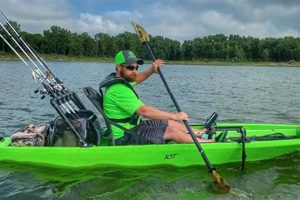
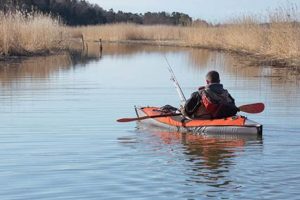
A kayak designed for angling with a weight limit of 500 pounds offers increased stability and space for gear and larger individuals. This higher capacity accommodates the combined weight of the angler, equipment, and potential catch. For example, a two-person fishing expedition with substantial tackle and coolers requires a vessel capable of safely supporting the total load.
The ability to carry heavier loads opens up opportunities for longer excursions, larger catches, and enhanced comfort. Historically, fishing kayaks were limited in their capacity, restricting their use to calmer waters and lighter loads. Advancements in design and materials have led to the development of robust kayaks capable of handling substantial weight, expanding the possibilities for anglers in diverse environments. This higher weight capacity translates to increased stability, a critical factor for anglers casting lines, reeling in fish, and maneuvering in various water conditions.
The following sections will delve into specific features to consider when selecting a high-capacity fishing kayak, including hull design, materials, storage options, and specialized fishing features. Understanding these aspects will empower informed decisions aligned with individual angler needs and preferences.
Tips for Selecting a High-Capacity Fishing Kayak
Choosing a suitable kayak involves careful consideration of several factors beyond weight capacity to ensure optimal performance and safety on the water.
Tip 1: Consider Hull Design: Hull design impacts stability and maneuverability. A wider, flatter hull provides greater stability, beneficial for activities like stand-up fishing. A longer, narrower hull offers better tracking and speed, ideal for covering greater distances.
Tip 2: Evaluate Material Construction: Polyethylene kayaks are durable and affordable, while composite materials offer lighter weight and increased performance. Consider the trade-offs between cost, weight, and durability.
Tip 3: Assess Storage Capacity: Ample storage space is crucial for gear, tackle, and potential catches. Evaluate available compartments, hatches, and bungee systems to ensure adequate storage solutions.
Tip 4: Examine Seating Comfort: Extended fishing trips require a comfortable and supportive seat. Look for adjustable seating positions and breathable materials for enhanced comfort.
Tip 5: Prioritize Safety Features: Essential safety features include multiple grab handles, paddle holders, and self-bailing scupper holes. Consider adding features like a bilge pump and floatation devices for added safety.
Tip 6: Factor in Weight and Portability: Consider the overall weight of the kayak and its portability for transport and storage. Roof racks, carts, and lighter-weight materials can aid in transport.
Tip 7: Research Specific Fishing Features: Specialized features such as rod holders, fish finders, and anchor trolleys enhance the fishing experience. Consider which features align with individual fishing styles and preferences.
By considering these tips, individuals can choose a high-capacity fishing kayak that meets their specific needs and enhances their on-the-water experience. Appropriate selection ensures safety, comfort, and optimized performance for various fishing styles and environments.
The concluding section will offer a final overview of the key considerations and reinforce the importance of informed decision-making in selecting a high-capacity fishing kayak.
1. Stability

Stability is a critical factor in fishing kayaks, particularly those designed for higher weight capacities. A 500 lb capacity kayak suggests the vessel is intended for larger individuals, heavier gear loads, or potentially multiple passengers. This increased load inherently affects stability, demanding a hull design that mitigates the risk of capsizing. A wider beam and flatter hull contribute to primary stabilityresistance to initial tippingwhile a well-designed hull with features like chines or a defined keel enhances secondary stabilitythe ability to recover from a tilted position. Consider a scenario where an angler stands to cast in a fully loaded kayak. A stable platform is essential to maintain balance and prevent an accidental fall overboard.
The relationship between stability and weight capacity is not solely determined by the hull design. Proper weight distribution plays a crucial role. Evenly distributing gear and passengers within the kayak’s designated weight limit optimizes stability. Loading heavier items lower in the hull and closer to the center improves the center of gravity, reducing the likelihood of tipping. For example, placing tackle boxes and coolers near the kayak’s center enhances stability compared to storing them at the bow or stern. Furthermore, angler movements, such as casting or reeling, shift weight distribution and can impact stability. A stable kayak minimizes the impact of these movements, allowing for a secure and comfortable fishing experience.
Understanding the interplay of weight capacity, hull design, and weight distribution is essential for safe and effective kayak fishing. A 500 lb capacity kayak provides the potential for carrying larger loads, but realizing the full benefit requires a design that prioritizes stability. Informed selection based on individual needs, intended usage, and an understanding of stability principles ensures a positive and safe on-water experience. Failure to consider these factors can lead to instability, potentially resulting in capsizing and compromising angler safety. Prioritizing stability contributes significantly to a secure and productive fishing experience.
2. Storage Space

Storage space is a crucial element in fishing kayaks, particularly those with a 500 lb capacity. The increased weight allowance suggests the potential for longer expeditions, larger catches, and additional gear, necessitating ample and well-designed storage solutions. Understanding the various storage options and their implications for different fishing styles and environments is essential for informed kayak selection.
- Dedicated Tackle Storage:
Purpose-built compartments designed for tackle boxes, trays, and smaller fishing accessories keep gear organized and readily accessible. Examples include recessed compartments within the hull, waterproof hatches, and removable tackle boxes. Integrated tackle storage simplifies gear management, reducing clutter and improving efficiency on the water. This is especially valuable in a high-capacity kayak where more gear is likely to be carried.
- Rod Holders and Management Systems:
Securely storing fishing rods while paddling or when not in use is essential. Flush-mounted rod holders, adjustable rod holders, and specialized rod management systems offer various options. A high-capacity kayak benefits from multiple rod holders, accommodating diverse fishing techniques and multiple rods for different target species. Examples include vertical rod holders for trolling and angled rod holders for casting.
- Dry Storage Compartments:
Protecting sensitive items like electronics, phones, and wallets from water damage is crucial. Waterproof hatches and compartments provide secure storage for these essentials. In a high-capacity kayak, dry storage compartments are even more critical, given the potential for longer trips and increased exposure to varying water conditions. Consider scenarios where unexpected splashes or even capsizing could occur; waterproof storage safeguards valuable equipment.
- Large Open Storage Areas:
Larger items such as coolers, dry bags, and even camping gear often accompany longer fishing expeditions. Open storage areas with bungee cords or tie-down points offer flexible storage solutions. High-capacity kayaks, by nature of their increased weight allowance, often accommodate larger items. This necessitates ample open storage space secured with robust systems to prevent gear loss in rough conditions.
The storage capacity and configuration directly impact a fishing kayak’s practicality and functionality. A 500 lb capacity kayak, with its potential for increased loads, requires careful consideration of storage solutions to ensure efficient organization, accessibility, and protection of essential gear. Balancing dedicated compartments with flexible open storage caters to diverse fishing styles and expedition requirements. The selection process should align storage options with individual needs and the anticipated use of the kayak. An organized and well-equipped vessel contributes to a more focused and productive fishing experience.
3. Durable Construction
Durable construction is paramount for fishing kayaks, especially those designed for a 500 lb capacity. This higher weight limit often signifies use in more demanding conditions, carrying heavier loads, and potentially encountering harsher environments. The kayak’s construction must withstand these increased stresses without compromising structural integrity or longevity. A robust build ensures safe and reliable performance, even with substantial weight and gear onboard. For instance, navigating rocky shorelines or shallow rivers requires a kayak capable of withstanding impacts and abrasions without sustaining significant damage. Similarly, a robust hull can better handle the forces exerted by larger fish during a fight. The connection between durable construction and 500 lb capacity lies in the need to support the increased loads and withstand the potential stresses associated with this higher weight allowance. Cause and effect are directly linked: a heavier load necessitates stronger construction to maintain performance and prevent failure.
Material selection significantly influences durability. Polyethylene kayaks offer excellent impact resistance and affordability, making them suitable for recreational use. However, composite materials, such as fiberglass or Kevlar, provide enhanced strength and stiffness, although at a higher cost. Consider a scenario where a kayak is dragged across rocks during launching or landing. A robust polyethylene hull may withstand such treatment with minor scratches, while a less durable material could sustain significant damage. The practical significance of understanding material properties and construction techniques lies in selecting a kayak appropriate for the intended use. A 500 lb capacity kayak designed for offshore fishing in challenging conditions necessitates higher durability than one intended for calm lakes or rivers. The choice of materials and construction methods directly impacts the kayak’s ability to withstand the rigors of its intended environment.
Ultimately, the durability of a 500 lb capacity fishing kayak is directly linked to its long-term performance and safety. Investing in a robustly constructed kayak ensures reliable service and minimizes the risk of structural failure in demanding situations. A well-built kayak withstands the stresses imposed by heavier loads, impacts, and environmental factors, contributing to a safer and more enjoyable fishing experience. Failure to prioritize durability can lead to premature wear, damage, and potentially compromise safety, especially when operating near the kayak’s maximum weight capacity. Therefore, prioritizing durable construction is essential for maximizing the lifespan and performance of a 500 lb capacity fishing kayak.
4. Weight Capacity Distribution

Weight capacity distribution is paramount for stability and performance in a 500 lb capacity fishing kayak. Understanding how weight distribution influences the kayak’s behavior on the water is crucial for safe and efficient operation. Effective weight distribution maximizes stability, improves tracking, and enhances maneuverability. Conversely, improper weight distribution can lead to instability, difficulty paddling, and an increased risk of capsizing. This section explores the key facets of weight capacity distribution in a high-capacity fishing kayak.
- Center of Gravity
The center of gravity (CG) is the point where the kayak’s weight is balanced. Keeping the CG low and centered enhances stability. Loading heavier items closer to the center of the kayak and lower in the hull optimizes the CG. For example, placing a cooler and tackle box near the seat, rather than at the bow or stern, improves stability. An elevated or off-center CG increases the risk of tipping. Imagine standing to cast in a kayak with a high CG; the instability becomes readily apparent.
- Even Distribution
Distributing weight evenly throughout the kayak minimizes stress on the hull and improves tracking. Avoid concentrating weight in one area. For example, if two anglers are on board, they should sit towards opposite ends of the kayak, balancing the weight. Uneven weight distribution can cause the kayak to list to one side, making paddling less efficient and potentially leading to instability. Think of a canoe with one person sitting far to one side; the canoe will tilt and become difficult to paddle straight.
- Impact of Gear Placement
The placement of gear significantly influences weight distribution. Heavier items should be placed lower and closer to the center. Lighter items can be stored higher and towards the ends. For example, storing a heavy anchor near the bow will negatively impact tracking and maneuverability. Conversely, placing lighter items like PFDs or dry bags in the bow or stern has minimal impact. Consider how shifting gear within a kayak changes its handling characteristics; strategic placement optimizes performance.
- Dynamic Weight Shifts
Weight distribution is not static; it changes with angler movements. Standing up, casting, or reeling in a fish shifts the CG, potentially impacting stability. Anticipating these shifts and maintaining a balanced posture is essential for preventing capsizing. A stable kayak design helps mitigate the effects of dynamic weight shifts. Envision an angler leaning over the side of the kayak to retrieve a fish; a stable hull design and proper weight distribution minimize the risk of tipping.
Understanding and managing weight capacity distribution is essential for maximizing the performance and safety of a 500 lb capacity fishing kayak. Proper distribution ensures stability, improves tracking, and enhances maneuverability. Conversely, neglecting weight distribution can compromise performance and create safety hazards, particularly in challenging conditions or when operating near the kayak’s maximum weight capacity. Applying these principles contributes significantly to a safe, efficient, and enjoyable fishing experience.
5. Targeted fishing applications
Targeted fishing applications significantly influence the design and features of a 500 lb capacity fishing kayak. The intended use dictates specific requirements, impacting hull design, storage options, and specialized features. A kayak designed for offshore trolling differs substantially from one intended for freshwater bass fishing. The increased weight capacity of a 500 lb kayak opens possibilities for diverse fishing applications, from inland lakes and rivers to coastal waters and open oceans. Cause and effect are directly linked: the target application determines the necessary features and design elements of the kayak. For instance, offshore fishing necessitates a stable hull design capable of handling rougher water conditions, while freshwater fishing might prioritize maneuverability and shallower draft. The practical implication of this understanding is that selecting a kayak suited to the targeted application significantly enhances fishing success and safety.
Consider specific examples. A kayak intended for deep-sea fishing often benefits from features like rod holders for trolling, a fish finder mount, and ample storage for larger tackle and potential catches. Conversely, a kayak designed for river fishing might prioritize maneuverability in shallow water, necessitating a shorter, more agile hull and specialized storage for river-specific gear. A 500 lb capacity kayak designed for multi-day expeditions requires substantial storage for camping gear, food, and water, impacting hull design and weight distribution considerations. The choice between a sit-on-top or sit-inside kayak also aligns with the targeted application. Sit-on-tops offer greater stability and ease of re-entry after a capsize, advantageous in challenging conditions. Sit-inside kayaks provide greater protection from the elements and enhanced paddling efficiency, often preferred for calmer waters or longer distances.
Matching a 500 lb capacity fishing kayak to the specific fishing application optimizes performance, enhances safety, and improves the overall fishing experience. Understanding the nuanced requirements of different fishing environments and styles allows for informed decisions regarding hull design, features, and storage options. Ignoring the targeted application can lead to a mismatch, compromising both safety and fishing success. Selecting a kayak that aligns with specific fishing goals ensures a properly equipped and appropriately designed vessel for a safe and productive experience on the water.
6. User Comfort and Ergonomics

User comfort and ergonomics are critical factors influencing the overall fishing experience, particularly in a 500 lb capacity kayak. Extended fishing trips, often associated with higher weight capacity kayaks designed for larger individuals, gear, and potentially multiple passengers, necessitate careful consideration of comfort and ergonomic design. Discomfort can detract from the enjoyment and productivity of a fishing trip, while proper ergonomic design enhances performance and minimizes fatigue. This connection between comfort, ergonomics, and higher weight capacity is crucial for informed kayak selection and ensuring a positive on-the-water experience. A comfortable and ergonomically sound kayak allows anglers to focus on fishing, rather than physical discomfort, maximizing enjoyment and success on the water.
- Seating System
The seating system plays a pivotal role in angler comfort, especially during long hours on the water. A well-designed seat provides adequate support, cushioning, and adjustability. Features like adjustable backrests, lumbar support, and breathable fabrics contribute to long-term comfort. An uncomfortable seat can lead to back pain, fatigue, and a diminished fishing experience. Consider a scenario where an angler spends hours battling a large fish; a supportive and comfortable seat is essential for maintaining proper posture and minimizing strain. In a 500 lb capacity kayak, the seating system must accommodate larger individuals and provide ample support for the increased potential duration of fishing trips.
- Footrest System
Proper foot placement and support are crucial for paddling efficiency and overall comfort. Adjustable footrests accommodate varying leg lengths and paddling styles. Secure and comfortable foot bracing enhances stability and power transfer during paddling, reducing fatigue and improving performance. Imagine paddling a kayak without proper foot support; the lack of leverage reduces paddling efficiency and can lead to discomfort and instability. In a 500 lb capacity kayak, the footrest system must accommodate larger individuals and provide secure footing, even with increased weight and potential movement within the kayak.
- Deck Layout and Accessibility
The layout of the deck and the accessibility of essential gear impact both comfort and efficiency. A well-designed deck provides easy access to rods, tackle, and other equipment, minimizing awkward reaching and bending. Strategically placed hatches, compartments, and storage areas contribute to a streamlined and comfortable fishing experience. Consider a scenario where an angler needs to quickly access a lure or adjust a fishing rod; a well-organized and accessible deck layout facilitates efficient operation and enhances comfort. In a 500 lb capacity kayak, the deck layout must accommodate the increased potential for gear and equipment, maintaining accessibility and minimizing clutter.
- Paddle Ergonomics
The paddle itself plays a significant role in user comfort. A paddle with an appropriate length and blade shape for the individual’s size and paddling style minimizes strain and maximizes efficiency. Features like adjustable feathering angles and ergonomic grips enhance comfort and reduce fatigue during long paddling sessions. Imagine paddling with a paddle that is too short or too long; the inefficient stroke mechanics lead to fatigue and discomfort. While not directly related to the kayak’s capacity, paddle ergonomics are crucial for comfortable and efficient operation, especially in a larger kayak where longer distances may be covered.
These facets of comfort and ergonomics contribute significantly to the overall enjoyment and effectiveness of fishing from a 500 lb capacity kayak. A comfortable and ergonomically designed kayak reduces fatigue, enhances performance, and allows anglers to focus on the fishing experience rather than physical discomfort. Prioritizing these elements in the kayak selection process ensures a positive and productive time on the water, maximizing the benefits of the increased capacity and facilitating longer, more comfortable fishing trips. Discomfort, conversely, can detract significantly from the fishing experience, impacting both enjoyment and success. Therefore, careful consideration of user comfort and ergonomics is essential for maximizing the potential of a 500 lb capacity fishing kayak.
7. Safety Considerations

Safety considerations are paramount when operating a fishing kayak, especially one with a 500 lb capacity. This increased capacity suggests the potential for heavier loads, larger individuals, and possibly multiple passengers, amplifying the consequences of safety lapses. Understanding and addressing potential safety risks is crucial for preventing accidents and ensuring a secure fishing experience. The higher weight capacity necessitates heightened awareness of stability limitations, proper loading procedures, and appropriate safety equipment. Neglecting these considerations can jeopardize angler safety and lead to serious incidents. A proactive approach to safety ensures a secure and enjoyable fishing experience, maximizing the benefits of the increased capacity without compromising personal well-being.
- Stability and Load Management
Stability is directly influenced by weight distribution and load management. Exceeding the 500 lb weight limit compromises stability and increases the risk of capsizing. Properly distributing weight within the kayak, securing gear to prevent shifting, and avoiding sudden movements are crucial for maintaining balance. For example, overloading the stern can cause the bow to rise, increasing susceptibility to waves or wind. Similarly, uneven weight distribution can lead to instability, particularly when standing or casting. Effective load management is essential for maintaining a safe and stable platform, especially in a high-capacity kayak.
- Personal Flotation Devices (PFDs)
Wearing a properly fitted PFD is a fundamental safety precaution, regardless of swimming ability or water conditions. PFDs provide buoyancy and increase the chances of survival in the event of a capsize. For example, in cold water, a PFD can delay the onset of hypothermia, providing crucial time for rescue. In rough conditions or when fishing alone, a PFD becomes even more critical. A 500 lb capacity kayak often implies longer trips and potentially more challenging conditions, making PFDs an indispensable safety measure.
- Navigation and Communication
Carrying essential navigation and communication equipment enhances safety, especially in remote locations or open water. A compass, GPS device, and waterproof VHF radio enable effective communication and navigation in emergencies. For example, in foggy conditions or when encountering unexpected currents, a GPS can provide crucial positional information. A VHF radio allows communication with other boaters or the Coast Guard in case of distress. In a 500 lb capacity kayak, often used for longer excursions, reliable navigation and communication equipment becomes essential for safety preparedness.
- Environmental Awareness
Maintaining awareness of weather conditions, water currents, and potential hazards is crucial for safe kayak operation. Checking weather forecasts before embarking, avoiding strong winds or currents, and being aware of potential obstacles like rocks or debris contribute to a safe fishing experience. For example, paddling against strong currents can lead to fatigue and increase the risk of capsizing. Similarly, venturing out in stormy weather puts anglers at significant risk. A 500 lb capacity kayak, potentially used in more exposed waters, necessitates heightened environmental awareness to avoid hazardous situations.
These safety considerations are fundamental for responsible operation of a 500 lb capacity fishing kayak. The increased capacity amplifies the potential consequences of safety lapses, necessitating heightened awareness and proactive measures. Prioritizing stability through proper load management, wearing a PFD, carrying appropriate navigation and communication equipment, and maintaining environmental awareness contribute significantly to a safe and enjoyable fishing experience. Ignoring these safety considerations can jeopardize angler safety and transform a recreational activity into a hazardous undertaking. By adhering to these safety principles, anglers can maximize the benefits of a high-capacity fishing kayak while minimizing the risks inherent in on-the-water activities.
Frequently Asked Questions
This section addresses common inquiries regarding 500 lb capacity fishing kayaks, providing concise and informative responses to facilitate informed decision-making.
Question 1: What are the key advantages of a 500 lb capacity fishing kayak?
Increased stability, the ability to carry heavier loads (gear and larger individuals), and suitability for longer expeditions or multiple passengers are primary advantages.
Question 2: Is a 500 lb capacity kayak suitable for solo anglers?
While designed for heavier loads, a 500 lb capacity remains suitable for solo anglers, especially those carrying substantial gear or anticipating larger catches. The added stability can benefit solo anglers in challenging conditions.
Question 3: How does weight distribution affect performance in a high-capacity kayak?
Proper weight distribution is crucial for stability and performance. Evenly distributing weight and placing heavier items lower in the hull and closer to the center optimizes the center of gravity, enhancing stability and tracking.
Question 4: What materials are typically used in 500 lb capacity fishing kayaks?
High-density polyethylene and composite materials like fiberglass or Kevlar are common choices. Polyethylene offers durability and affordability, while composites provide enhanced strength and stiffness, albeit at a higher cost.
Question 5: Are there specific safety considerations for high-capacity kayaks?
Adhering to the specified weight limit, wearing a PFD, understanding proper weight distribution, and carrying appropriate safety equipment (e.g., VHF radio, signaling devices) are crucial safety considerations.
Question 6: How does one choose between a sit-on-top and sit-inside kayak at this capacity?
Sit-on-tops offer enhanced stability and ease of re-entry after a capsize, advantageous in rough conditions or for anglers less confident in their swimming abilities. Sit-inside kayaks provide greater protection from the elements and enhanced paddling efficiency, often preferred for calmer waters or longer distances.
Careful consideration of individual needs, intended usage, and environmental conditions is essential for selecting the appropriate kayak and maximizing both safety and enjoyment on the water.
The subsequent section will offer a concluding overview and summarize key takeaways regarding 500 lb capacity fishing kayaks.
Fishing Kayak 500 lb Capacity
Exploration of the 500 lb capacity fishing kayak reveals key considerations for informed selection. Weight capacity dictates potential use cases, encompassing heavier individuals, increased gear, and extended trips. Hull design, material construction, and storage solutions directly impact performance and angler experience. Stability considerations are paramount, especially at higher capacities, necessitating proper weight distribution and adherence to manufacturer specifications. Specialized features, tailored to targeted fishing applications, enhance functionality and on-water effectiveness. Comfort and ergonomic design contribute to prolonged fishing sessions without physical strain. Safety remains paramount, demanding proper safety equipment, adherence to best practices, and continuous environmental awareness.
Informed selection of a 500 lb capacity fishing kayak empowers anglers to explore diverse environments, pursue larger catches, and embark on extended expeditions with confidence and safety. Careful evaluation of these factors ensures a well-equipped and appropriately designed vessel, maximizing both performance and enjoyment on the water. The emphasis on thoughtful selection underscores the importance of aligning kayak capabilities with individual needs and targeted fishing applications for a safe and productive experience.