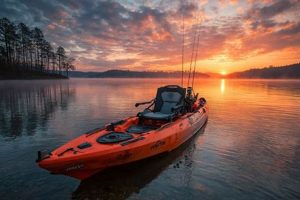
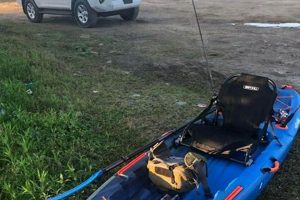
Angling from a kayak using artificial bait offers a unique blend of mobility and stealth. This approach allows anglers to access shallow waters, navigate tight spaces, and approach fish discreetly, often resulting in more successful catches. For instance, a lightweight, maneuverable vessel paired with well-chosen lures can be highly effective in targeting species like bass in heavily vegetated areas or trout in secluded streams.
The advantages of this fishing style are numerous. Kayaks provide a stable platform for casting and retrieving lures, while their quiet operation minimizes disturbance to fish. This method also offers a closer connection to nature and a more active angling experience compared to shore fishing or larger boats. Historically, smaller watercraft have played a role in fishing traditions worldwide, but the modern combination of specialized kayaks and advanced lure technology has elevated this pursuit to a new level of sophistication and effectiveness.
This article will delve deeper into various aspects of this exciting fishing method. Topics covered will include selecting the right kayak and gear, choosing effective lures for different species and conditions, mastering essential casting techniques from a kayak, and identifying prime fishing locations. Additional considerations such as safety precautions and responsible angling practices will also be addressed.
Tips for Effective Kayak Angling with Lures
Optimizing the experience of fishing from a kayak with artificial lures requires careful consideration of several key factors. The following tips provide valuable insights for anglers seeking to enhance their skills and success in this specialized pursuit.
Tip 1: Kayak Selection: Choose a kayak designed for stability and maneuverability in the intended fishing environment. Shorter kayaks are ideal for navigating tight spaces, while longer models offer increased speed and tracking in open water. Sit-on-top kayaks provide easier access to gear and re-entry after accidental submersion.
Tip 2: Essential Gear: Equip the kayak with essential safety gear, including a personal flotation device, a whistle, and a paddle leash. Rod holders, tackle storage, and an anchor system are also highly recommended for efficient angling.
Tip 3: Lure Selection: Select lures appropriate for the target species and prevailing conditions. Consider factors such as water depth, clarity, and current when choosing lure types, sizes, and colors. A diverse tackle box allows for adaptation to changing circumstances.
Tip 4: Casting Techniques: Practice casting techniques suited to the confines of a kayak. Sidearm and underhand casts are often more effective than overhead casts in tight spaces. Maintaining a low center of gravity enhances stability during casting and retrieval.
Tip 5: Location Scouting: Research and identify promising fishing locations. Look for areas with structure, such as submerged vegetation, rocks, or fallen trees, which attract fish and provide ambush points.
Tip 6: Stealth and Observation: Approach fishing spots quietly and avoid sudden movements that might spook fish. Observe the water for signs of activity, such as baitfish or rising fish, to pinpoint productive areas.
Tip 7: Responsible Angling: Adhere to ethical fishing practices, including catch-and-release principles when appropriate. Respect wildlife and minimize environmental impact by properly disposing of fishing line and other debris.
By incorporating these tips, anglers can significantly enhance their kayak fishing experience. Careful planning, proper equipment, and a thoughtful approach contribute to both success on the water and the preservation of aquatic ecosystems.
This foundational knowledge prepares anglers for the more advanced techniques and strategies discussed in the following sections.
1. Kayak Stability

Kayak stability is paramount for a positive and productive lure fishing experience. A stable platform allows anglers to focus on fishing techniques and fish behavior rather than constantly correcting balance. This is particularly critical when casting, retrieving, and landing fish, especially in challenging conditions such as wind or current.
- Primary Stability:
Primary stability refers to a kayak’s initial resistance to tipping. A wider, flatter hull offers higher primary stability, making it ideal for calmer waters and stationary fishing. This stability provides a confident platform for casting and retrieving lures, even for less experienced anglers. For example, a wider kayak allows an angler to comfortably stand while sight-fishing, increasing visibility and casting range.
- Secondary Stability:
Secondary stability describes a kayak’s resistance to tipping at greater angles. Kayaks with rounded or flared hulls typically have higher secondary stability. This is advantageous in rougher water or when making dynamic movements, such as leaning into a turn or reaching for a landed fish. A kayak with strong secondary stability allows an angler to confidently fight a strong fish without fear of capsizing. Consider a kayak angler battling a large fish in choppy water; secondary stability becomes crucial in maintaining balance and control.
- Impact of Kayak Design:
Hull design, including width, shape, and length, significantly impacts stability. Shorter, wider kayaks tend to be more stable, while longer, narrower kayaks prioritize speed and tracking. The choice depends on the intended fishing environment and the angler’s experience level. For instance, a shorter, wider kayak is ideal for navigating tight creeks and mangrove tunnels, whereas a longer, narrower kayak is better suited for covering larger distances on open lakes.
- Influence of Weight Distribution:
Proper weight distribution enhances stability. Keeping the center of gravity low and balanced is crucial, particularly when adding gear like tackle boxes, rods, and fish finders. Evenly distributing weight within the kayak ensures predictable handling and reduces the risk of tipping. Consider an angler with a heavy tackle box placed at the stern; this could cause the bow to rise, making the kayak more susceptible to tipping, especially in windy conditions.
Understanding the interplay between these factors allows anglers to choose a kayak and configure its setup for optimal stability. This contributes significantly to a “feel free” experience, fostering confidence and enhancing the overall enjoyment and success of lure fishing from a kayak.
2. Lure Selection

Lure selection is integral to the “feel free” experience of kayak fishing. The right lure, matched to the target species, water conditions, and fishing environment, significantly impacts angling success and enjoyment. Choosing effective lures contributes to a more engaging and rewarding experience on the water, fostering a sense of freedom and connection with the environment.
- Target Species Considerations:
Different fish species exhibit varying feeding preferences and behaviors. Understanding the target species’ diet, habitat, and activity patterns informs lure choices. For example, bass often respond well to crankbaits and spinnerbaits that mimic the movement of baitfish, while trout might be enticed by smaller, more subtly presented lures like jigs or dry flies. Matching the lure to the target species increases the likelihood of strikes and enhances the overall fishing experience.
- Water Conditions and Clarity:
Water clarity and conditions influence lure visibility and effectiveness. In clear water, natural or translucent lures can be highly effective, while brightly colored or chartreuse lures are often preferred in murky or stained water. Similarly, lure action and retrieval speed should be adjusted based on current and water temperature. For instance, a slow-rolling spinnerbait might be effective in cooler water, whereas a faster retrieve might be necessary to trigger strikes in warmer water.
- Fishing Environment and Structure:
The fishing environment, including vegetation, depth, and structure, dictates lure choices. Weedless lures, such as frogs or Texas-rigged worms, are essential for fishing in heavy vegetation, while deep-diving crankbaits or jigs are effective for targeting fish in deeper water or around submerged structures. Adapting lure selection to the specific environment maximizes efficiency and reduces snags or lost lures.
- Kayak Fishing Specifics:
Kayak fishing presents unique lure selection considerations. Topwater lures, easily manipulated from a kayak’s lower vantage point, can be highly effective. Compact tackle storage necessitates a streamlined and versatile lure selection. For example, a selection of topwater poppers, soft plastic jerkbaits, and a few jigs in various weights can cover a wide range of fishing scenarios without overwhelming limited storage space.
The interplay of these factors emphasizes the importance of informed lure selection in kayak fishing. By aligning lure choices with the target species, environmental conditions, and the unique aspects of kayak angling, anglers can optimize their chances of success and fully embrace the “feel free” experience of fishing from a kayak. This careful consideration transforms lure selection from a simple task to a strategic element that enhances both the effectiveness and enjoyment of kayak fishing.
3. Casting Techniques

Casting techniques are fundamental to the “feel free” experience of lure fishing from a kayak. Effective casting enables precise lure placement, maximizes fishing coverage, and enhances angling success. The limited space and unique vantage point of a kayak necessitate adapting casting techniques for optimal performance and enjoyment. Mastering these adapted techniques contributes significantly to the sense of freedom and control that defines kayak fishing.
- Overhead Cast Adaptation:
The traditional overhead cast requires modification in a kayak’s confined space. Lowering the casting arc and utilizing a more compact backswing prevents interference with the kayak or surrounding obstacles. This adaptation maintains casting distance and accuracy while minimizing the risk of tangling lines or striking the kayak. For example, an angler targeting submerged structure near a riverbank can effectively employ a modified overhead cast to place the lure precisely without snagging on overhanging branches.
- Sidearm and Underhand Casting:
Sidearm and underhand casts become invaluable tools in kayak fishing. These techniques allow for accurate casts in tight spaces, under low-hanging branches, or around other obstacles that might obstruct an overhead cast. These methods are particularly effective when fishing close to the water’s surface or targeting fish in shallow water. An angler navigating a narrow creek lined with overhanging trees can utilize a sidearm cast to present a lure beneath the branches and reach otherwise inaccessible pockets where fish might be hiding.
- Pitching and Flipping Techniques:
Pitching and flipping techniques offer further advantages in kayak fishing. These short-range, accurate casting methods are ideal for targeting specific structure or cover, such as fallen logs, weed beds, or dock pilings. These techniques allow for precise lure placement with minimal disturbance, increasing the likelihood of enticing strikes from wary fish. An angler targeting bass hiding amongst lily pads can utilize a flipping technique to gently drop a lure into openings in the vegetation, minimizing splash and maximizing the chances of a successful hookup.
- Kayak Positioning and Stability:
Effective casting from a kayak requires consideration of kayak positioning and stability. Maintaining a balanced and stable platform is crucial for accurate casts and efficient lure retrieval. Positioning the kayak upstream or upwind allows for a natural drift and better lure control. Understanding how weight distribution and body position affect stability enhances casting performance and contributes to a more comfortable and controlled fishing experience. For instance, an angler fishing in a flowing river can position the kayak upstream of a target area and use the current to drift the lure naturally through the desired zone, maximizing presentation and minimizing effort.
By adapting casting techniques to the unique environment of a kayak, anglers enhance lure presentation, expand fishing reach, and improve overall effectiveness. Mastering these specialized casting methods contributes directly to the “feel free” experience of kayak fishing, enabling anglers to confidently explore diverse waters and pursue their target species with precision and control. The integration of these techniques elevates kayak fishing from a simple activity to a skilled pursuit that fosters a deeper connection with the aquatic environment.
4. Location Knowledge
Location knowledge is intrinsically linked to the “feel free” experience of lure fishing from a kayak. Understanding the nuances of a fishing location significantly enhances angling success and contributes to the sense of freedom and exploration that defines kayak fishing. Informed location choices empower anglers to confidently navigate their environment, target specific areas, and maximize their fishing opportunities. This knowledge transforms a simple fishing trip into a strategic pursuit, fostering a deeper connection with the aquatic environment.
- Species-Specific Habitats:
Different fish species inhabit specific areas within a body of water. Bass, for example, often congregate around submerged structures like fallen logs or weed beds, while trout prefer cooler, oxygenated water near inlets or springs. Knowing the preferred habitats of target species allows kayak anglers to focus their efforts on productive areas, increasing the likelihood of encounters. This targeted approach optimizes fishing time and enhances the sense of purpose and efficiency that contributes to the “feel free” experience.
- Water Depth and Structure:
Water depth and underwater structure play crucial roles in fish behavior. Drop-offs, ledges, and submerged vegetation create ambush points and feeding zones for predatory fish. Utilizing bathymetric maps and sonar technology helps kayak anglers identify these key areas and strategically position themselves for optimal casting angles. This understanding of underwater topography transforms a seemingly featureless body of water into a dynamic landscape of opportunity, empowering anglers to make informed decisions and maximize their fishing potential.
- Current and Water Flow:
Current and water flow significantly influence fish positioning and feeding patterns. In rivers and streams, fish often face upstream, holding in calmer water behind rocks or other obstructions. Understanding current patterns allows kayak anglers to present lures naturally and effectively, drifting them into prime feeding zones. This knowledge of water dynamics transforms the current from a challenge to an advantage, enabling anglers to work with the natural flow and enhance their fishing strategy.
- Seasonal and Temporal Influences:
Fish behavior changes with seasons and time of day. During warmer months, fish might seek refuge in deeper, cooler water, while in cooler months, they may concentrate in shallower areas where the sun warms the water. Understanding these seasonal and temporal patterns allows kayak anglers to adjust their location choices and fishing strategies accordingly. This awareness of natural rhythms connects the angler to the cyclical nature of the aquatic environment, enhancing the sense of place and purpose that underlies the “feel free” experience.
By integrating these facets of location knowledge, kayak anglers gain a significant advantage in their pursuit of fish. This understanding empowers them to make informed decisions, explore new areas with confidence, and maximize their chances of success. Ultimately, location knowledge contributes significantly to the “feel free” experience of lure fishing from a kayak, fostering a sense of exploration, connection with nature, and mastery of the angling craft. It transforms a simple fishing trip into a strategic and rewarding adventure, enriching the overall experience and fostering a deeper appreciation for the aquatic world.
5. Safety Precautions
Safety precautions are inextricably linked to the “feel free” experience of lure fishing from a kayak. While the concept of “feel free” evokes a sense of liberation and uninhibited exploration, true freedom on the water hinges on responsible preparation and a proactive approach to safety. Paradoxically, adhering to safety precautions is what ultimately allows anglers to experience the uninhibited joy of kayak fishing. Neglecting these precautions can transform a liberating experience into a hazardous one, undermining the very essence of “feel free.”
Consider the scenario of an angler venturing out without a personal flotation device (PFD). A sudden capsize, caused by an unexpected wave or an overly aggressive fish, could lead to a life-threatening situation. Conversely, an angler wearing a PFD can confidently navigate challenging conditions, knowing they have a critical safety net. This preparedness fosters a sense of security, allowing the angler to focus on the fishing experience rather than worrying about potential hazards. Similarly, carrying a signaling device, such as a whistle or a flare, can be crucial in the event of an emergency. Being able to signal for help provides peace of mind and empowers anglers to explore more remote areas, secure in the knowledge that assistance is within reach if needed.
Checking weather forecasts before embarking on a kayak fishing trip is another essential safety precaution. Unexpected changes in weather, such as strong winds or thunderstorms, can create dangerous conditions on the water. An angler caught unprepared in a sudden squall faces significant risks, while one who has monitored the forecast and made informed decisions about when and where to fish can avoid these hazards. This proactive approach to safety enhances the “feel free” experience by minimizing anxiety and allowing anglers to fully enjoy their time on the water. Furthermore, informing someone of the intended fishing location and estimated return time provides an additional layer of security. Should an unforeseen event occur, having someone aware of the angler’s plans can facilitate a timely response and potentially avert a serious incident. In conclusion, prioritizing safety precautions is not a limitation on freedom but rather a fundamental enabler of the “feel free” experience of lure fishing from a kayak. It allows anglers to confidently explore the water, focus on the thrill of the catch, and connect with nature without the burden of unnecessary risk. By embracing safety, anglers unlock true freedom on the water.
6. Environmental Awareness
Environmental awareness forms an integral component of the “feel free lure fishing kayak” experience. Respect for the natural environment directly influences the long-term sustainability of this activity. Anglers who prioritize conservation contribute to the preservation of the very ecosystems that support the sport they enjoy. This awareness fosters a deeper appreciation for the interconnectedness of the angler, the kayak, and the aquatic environment. Cause and effect relationships are readily apparent: discarded fishing line entangles wildlife, impacting their ability to thrive; improper disposal of chemical attractants contaminates water bodies, affecting fish populations; and careless kayak operation disturbs breeding grounds, hindering species reproduction. These actions diminish the quality of the fishing experience and jeopardize its future. Conversely, responsible practices, such as catch-and-release fishing, proper waste disposal, and respect for wildlife habitats, contribute to a healthy and vibrant ecosystem, ensuring future generations can also experience the “feel free” aspect of kayak fishing.
Real-life examples illustrate this connection. Consider a kayak angler encountering a nesting area marked with signage. Choosing to fish elsewhere demonstrates respect for the delicate balance of nature and safeguards the future of the species. Similarly, retrieving a snagged lure entangled in submerged vegetation, rather than simply breaking the line, prevents harm to aquatic life and maintains the integrity of the underwater environment. These seemingly small actions collectively contribute to a larger conservation effort, ensuring the long-term health and viability of kayak fishing locations. Practical significance manifests in numerous ways. Participating in local cleanup initiatives, advocating for responsible fishing regulations, and educating fellow anglers about best practices all contribute to a more sustainable future for the sport. By actively engaging in environmental stewardship, kayak anglers become protectors of the ecosystems they cherish, ensuring that the “feel free” experience remains accessible for generations to come. This understanding transforms kayak fishing from a recreational pursuit into a form of environmental activism, where every outing becomes an opportunity to make a positive impact.
In essence, environmental awareness elevates the “feel free lure fishing kayak” experience from one of simple enjoyment to one of deep respect and responsibility. Recognizing the interconnectedness between angling practices and ecosystem health fosters a more meaningful and sustainable approach to the sport. Challenges remain, such as balancing access with preservation and addressing the cumulative impact of increasing numbers of kayak anglers. However, by prioritizing environmental awareness and actively engaging in conservation efforts, kayak anglers can ensure that the “feel free” experience continues to be defined by both the thrill of the catch and the preservation of the natural world.
Frequently Asked Questions
This section addresses common inquiries regarding kayak fishing with lures, providing concise and informative responses to clarify potential uncertainties and enhance understanding of this specialized angling method.
Question 1: What type of kayak is best suited for lure fishing?
Sit-on-top kayaks are generally preferred for their stability, ease of entry and exit, and self-bailing capabilities. Consideration should be given to kayak length and width based on the intended fishing environment. Shorter kayaks offer superior maneuverability in tight spaces, while longer kayaks provide better tracking in open water.
Question 2: What essential safety equipment is recommended for kayak fishing?
A personal flotation device (PFD) is paramount. A whistle, paddle leash, and bilge pump are also highly recommended. Additional safety measures include carrying a communication device, checking weather forecasts, and informing someone of the planned fishing location and return time.
Question 3: How does lure selection differ for kayak fishing compared to other fishing methods?
Kayak anglers often favor lures that can be effectively cast and retrieved from a seated position. Topwater lures, weedless options, and compact, versatile selections are popular choices. Lure selection should always be tailored to the target species and prevailing water conditions.
Question 4: What casting techniques are most effective from a kayak?
Sidearm and underhand casts are often preferred due to limited overhead space. Modified overhead casts with a compact backswing are also effective. Pitching and flipping techniques can be advantageous for precise lure placement around structure.
Question 5: How does one locate productive fishing spots from a kayak?
Understanding fish behavior and habitat preferences is key. Utilizing bathymetric maps, fish finders, and observing natural signs such as baitfish activity or bird behavior can help identify promising fishing areas. Local knowledge and online resources can also provide valuable insights.
Question 6: What are the key principles of environmentally responsible kayak fishing?
Practicing catch and release, properly disposing of fishing line and other waste, respecting designated no-fishing zones, and minimizing disturbance to wildlife habitats are crucial elements of responsible kayak angling. Adhering to these principles contributes to the long-term health and sustainability of aquatic ecosystems.
Addressing these frequently asked questions provides a solid foundation for embarking on safe and successful kayak fishing excursions. A comprehensive understanding of these aspects enhances enjoyment and fosters responsible angling practices.
The next section will provide detailed information on specific lure types and their application in various kayak fishing scenarios.
Conclusion
This exploration of kayak-based angling with artificial lures has highlighted the multifaceted nature of this pursuit. From kayak selection and stability considerations to the nuances of lure choice and casting techniques, each element contributes to the overall experience. Understanding fish behavior, habitat preferences, and the dynamics of aquatic environments empowers anglers to make informed decisions, maximizing their chances of success while minimizing environmental impact. Prioritizing safety precautions ensures a secure and enjoyable experience, allowing for uninhibited exploration and a deeper connection with nature. The confluence of these factors defines the essence of angling from a kayak with lures a pursuit that blends skill, strategy, and a profound respect for the natural world.
The future of this specialized fishing method hinges on continued education and the adoption of responsible angling practices. As the popularity of kayak fishing grows, so too does the responsibility of its practitioners to minimize their impact on aquatic ecosystems. Embracing sustainable fishing methods, advocating for conservation efforts, and fostering a culture of environmental stewardship will ensure that future generations can continue to experience the unique freedom and fulfillment offered by this dynamic and rewarding pursuit. The challenge and the reward lie not merely in catching fish, but in preserving the delicate balance of nature that sustains this exhilarating sport. The ultimate goal is to ensure that the freedom experienced on the water today translates into a legacy of conservation for tomorrow.