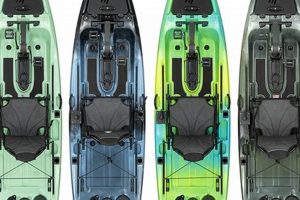
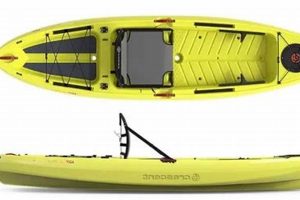
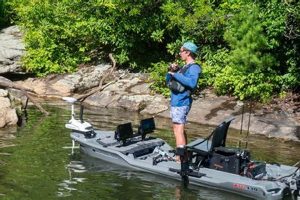
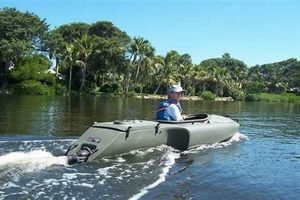
High-speed, human-powered watercraft designed for angling represent a specialized niche within the broader kayaking market. These vessels prioritize swift movement across water bodies, enabling anglers to cover more ground efficiently and reach fishing spots quickly. This type of kayak often features a longer, narrower hull design optimized for glide and speed, while maintaining stability necessary for casting and reeling in fish. They typically incorporate features like rod holders, tackle storage, and comfortable seating designed for extended fishing trips.
The ability to rapidly traverse distances offers significant advantages to anglers. Reaching distant fishing grounds or exploring multiple locations within a limited timeframe becomes achievable. This efficiency can be particularly crucial in tournaments or when targeting specific species known to inhabit particular areas. Historically, fishing kayaks prioritized stability and load capacity, often sacrificing speed. However, advancements in hull design and materials now allow for vessels that excel in both speed and stability, enhancing the fishing experience considerably.
Further exploration will delve into specific design features that contribute to hydrodynamic efficiency, materials commonly used in construction, prominent manufacturers in the market, and factors to consider when selecting a watercraft optimized for both speed and angling effectiveness. Additional topics may include paddling techniques for maximizing speed and accessories designed to enhance performance and fishing success.
Tips for Optimizing Speed and Efficiency in Fishing Kayaks
Maximizing performance in a fishing kayak designed for speed requires attention to several key factors. These considerations range from hull characteristics and paddling techniques to gear selection and weight distribution.
Tip 1: Prioritize a streamlined hull. Longer, narrower hulls with a pointed bow and stern generally offer reduced drag and increased glide, contributing significantly to higher speeds.
Tip 2: Employ efficient paddling techniques. A high-angle paddle stroke with minimal splashing maximizes power transfer and reduces wasted energy. Consistent, rhythmic paddling maintains momentum.
Tip 3: Minimize onboard weight. Carrying only essential gear and distributing it evenly within the kayak improves speed and maneuverability. Unnecessary weight reduces efficiency.
Tip 4: Choose a lightweight paddle. Lighter paddles reduce fatigue and allow for a quicker cadence, contributing to higher speeds over longer distances. Consider carbon fiber or fiberglass options.
Tip 5: Maintain proper posture and body mechanics. A comfortable and efficient posture minimizes strain and maximizes power output, allowing for more effective paddling.
Tip 6: Consider a rudder or skeg. These control surfaces enhance tracking and reduce the need for corrective strokes, particularly in windy conditions, ultimately increasing speed and efficiency.
Tip 7: Regularly clean the hull. Even a thin layer of algae or debris can significantly increase drag and reduce speed. Routine cleaning maximizes hydrodynamic efficiency.
By addressing these factors, anglers can optimize their kayak’s speed potential and cover greater distances with less effort, allowing for a more productive and enjoyable fishing experience.
These considerations, coupled with an understanding of the specific characteristics of one’s chosen vessel, will lead to significant performance gains on the water. Ultimately, the goal is to achieve seamless integration between the angler, the kayak, and the environment for maximum efficiency and fishing success.
1. Hull Design

Hull design is paramount in achieving optimal speed in a fishing kayak. The hull’s shape, length, and width directly influence water resistance, stability, and maneuverability, ultimately dictating how efficiently the vessel converts paddling effort into forward momentum.
- Length and Width
Longer kayaks generally exhibit less drag and track straighter, contributing to higher speeds. Narrower hulls further reduce water resistance. However, excessive narrowness can compromise stability, essential for fishing activities. A balance must be struck between speed and stability, often favoring slightly longer, moderately narrow designs for optimal performance. Fishing kayaks designed for speed prioritize length, often exceeding 12 feet, while maintaining sufficient width for stability.
- Displacement vs. Planing Hulls
Displacement hulls, with their pointed bows and rounded bottoms, are designed to move efficiently through the water by displacing it. Planing hulls, on the other hand, are designed to rise up and skim across the surface at higher speeds. While planing hulls can achieve greater velocities, they often require more energy to get on plane and may be less stable at lower speeds. For fishing kayaks emphasizing speed, modified displacement hulls or hybrid designs often provide the best balance between efficiency and stability.
- Rocker Profile
Rocker refers to the curvature of the hull from bow to stern. A higher rocker (more curve) provides better maneuverability and performs well in rougher water, but sacrifices some speed. A lower rocker (less curve) tracks better and is more efficient for higher speeds in calmer conditions. Fishing kayaks designed for speed often employ a moderate rocker profile, balancing straight-line tracking with sufficient maneuverability for navigating various water conditions.
- Chine Design
Chines are the angled edges where the hull sides meet the bottom. Hard chines create sharper edges, improving secondary stability at speed and facilitating efficient turning. Soft chines create a more rounded transition, promoting smoother tracking and better performance in rough water. The choice between hard and soft chines depends on the intended use and the desired balance between speed, stability, and maneuverability in a fishing kayak. High-performance fishing kayaks often incorporate a combination of hard and soft chines to optimize performance across various conditions.
These facets of hull design work in concert to determine a fishing kayak’s speed potential. By carefully considering these elements, manufacturers strive to create vessels that efficiently convert human power into forward motion, allowing anglers to reach desired fishing locations quickly while maintaining the stability necessary for a successful fishing experience. Understanding these principles empowers informed choices for optimal on-the-water performance.
2. Paddle Efficiency
Paddle efficiency is a critical determinant of speed in a fishing kayak. Efficient paddling maximizes the conversion of human energy into forward momentum, directly influencing how quickly the kayak travels across the water. This connection is paramount in achieving high speeds, especially over longer distances.
Several factors contribute to paddle efficiency. Blade size and shape influence water displacement and propulsion. A larger blade surface area generates more power per stroke, but can be less efficient at higher cadence. Blade shape, whether symmetrical or asymmetrical, affects the catch and release of water, impacting stroke smoothness and power transfer. Paddle length, tailored to the paddler’s height and kayak width, ensures proper body mechanics and leverage. Material selection, such as lightweight carbon fiber or fiberglass, minimizes swing weight and reduces fatigue, allowing for sustained high-cadence paddling.
Proper paddling technique further amplifies efficiency. A high-angle paddle stroke, with the blade entering the water close to the kayak and exiting near the hip, maximizes power transfer and minimizes wasted energy. Smooth, controlled strokes, combined with a consistent cadence, maintain momentum and reduce fatigue. Correct body posture and core engagement contribute to efficient power delivery and minimize strain on the paddler. Consider a paddler using a lightweight, high-angle paddle with a smooth stroke and a consistent cadence versus a paddler using a heavier, low-angle paddle with a choppy, inconsistent stroke. The former will achieve significantly higher speeds with less effort due to improved paddle efficiency. This translates directly to faster travel times and the ability to cover more water, crucial for effective fishing.
Optimizing paddle efficiency is essential for anyone seeking to maximize speed in a fishing kayak. Careful consideration of blade design, paddle length, material selection, and technique contributes significantly to overall performance. Understanding and applying these principles translates to a more efficient, faster, and ultimately, more successful fishing experience.
3. Lightweight Construction
Lightweight construction is integral to achieving high speeds in paddle fishing kayaks. Reduced mass directly translates to increased acceleration and higher top speeds for a given paddling effort. The relationship between mass and acceleration is fundamental in physics: a lighter object requires less force to achieve the same acceleration as a heavier object. This principle applies directly to kayaks; reducing weight allows for faster acceleration and easier maintenance of higher speeds, crucial for covering water efficiently. Consider two kayaks of identical design, one constructed from heavier polyethylene and the other from lighter carbon fiber. The carbon fiber kayak will accelerate more quickly and achieve a higher top speed with the same paddling input, demonstrating the direct impact of lightweight construction on performance.
The practical significance of this understanding is substantial. A lighter kayak requires less exertion to paddle, reducing fatigue and allowing anglers to cover greater distances. This efficiency is particularly beneficial in tournament fishing, where speed is often critical for reaching prime fishing spots quickly. Furthermore, lightweight kayaks are easier to transport and maneuver, both on and off the water, enhancing overall usability. Material selection plays a central role in achieving lightweight construction. Advanced materials like carbon fiber and Kevlar offer exceptional strength-to-weight ratios, enabling manufacturers to create robust yet incredibly light kayaks. Thermoformed ABS and advanced composites also contribute to weight reduction while maintaining durability. However, the trade-off between weight, durability, and cost is a crucial consideration. While lighter materials often come at a premium, the performance benefits they offer can be substantial for serious anglers.
In summary, lightweight construction is a fundamental aspect of designing fast paddle fishing kayaks. Reducing weight translates directly to improved speed, reduced fatigue, and enhanced maneuverability. While material selection significantly influences weight, balancing performance benefits with cost and durability remains a key consideration for both manufacturers and anglers. Choosing a lightweight kayak empowers anglers to reach fishing grounds more quickly and efficiently, maximizing their time on the water and increasing their chances of success.
4. Reduced Drag

Minimizing drag is paramount in the pursuit of a fastest paddle fishing kayak. Drag, the force resisting movement through water, directly opposes forward momentum generated by paddling. Reduced drag translates to higher speeds achievable with the same energy expenditure, a crucial factor for efficient and rapid movement across the water. This principle becomes particularly significant over longer distances or when competing against currents or wind, where the cumulative effect of reduced drag can dramatically impact overall speed. For instance, a kayak with a smoother hull finish will experience less friction drag compared to one with a rough or textured surface, allowing it to glide through the water more efficiently. Similarly, minimizing protrusions and ensuring a streamlined profile above the waterline reduces air resistance, particularly at higher speeds. The impact of reduced drag on a fishing kayak’s speed can be likened to the aerodynamic efficiency of a race car; minimizing air resistance contributes significantly to higher achievable speeds.
Several factors influence drag on a kayak. Hull shape, surface smoothness, and the presence of protrusions like rudder systems or mounting hardware all contribute to overall resistance. A longer, narrower hull design inherently reduces drag compared to a shorter, wider one, allowing for more efficient movement through the water. Minimizing surface irregularities, such as seams or imperfections in the hull material, reduces frictional drag. Recessed deck fittings and internally routed lines further minimize drag by presenting a smoother profile to the water. Furthermore, the choice and positioning of fishing accessories, like rod holders and tackle boxes, can influence drag. Carefully considering these elements during design and outfitting is crucial for maximizing speed potential. For example, comparing two otherwise identical kayaks, one with exposed hardware and the other with recessed fittings, reveals the significant impact even small protrusions can have on drag and, consequently, speed.
Understanding the impact of drag is essential for achieving maximum speed in a paddle fishing kayak. Minimizing drag through careful hull design, surface optimization, and strategic accessory placement directly translates into higher speeds and increased efficiency. This principle is fundamental to performance optimization and separates high-speed fishing kayaks from their slower counterparts. The pursuit of minimizing drag represents a continuous challenge in kayak design, driving innovation in materials, construction techniques, and hydrodynamic optimization. Addressing this challenge is crucial for creating the fastest paddle fishing kayaks capable of meeting the demands of competitive anglers and those seeking to maximize their on-the-water efficiency.
5. Angler Technique
Angler technique plays a pivotal role in realizing the speed potential of a fishing kayak designed for swift movement. While hull design and lightweight construction contribute significantly to inherent speed capabilities, effective paddling technique unlocks maximum performance. This connection hinges on maximizing the conversion of human power into forward momentum, a direct link between angler input and kayak velocity. An efficient paddling stroke, characterized by a high angle of entry and exit, minimizes wasted energy and propels the kayak forward with greater force. Conversely, a poorly executed stroke, often featuring excessive splashing and a low angle of attack, dissipates energy and limits speed. This distinction becomes particularly apparent over extended distances, where consistent and efficient paddling technique translates to significantly higher average speeds. Consider two anglers in identical high-speed kayaks: one employing a precise, high-angle stroke and the other using a less efficient, low-angle technique. The former will consistently outpace the latter, demonstrating the direct impact of technique on speed.
Beyond the basic paddling stroke, several other aspects of angler technique contribute to maximizing speed. Maintaining a proper posture and utilizing core muscles for power generation enhances efficiency and reduces fatigue. Smooth, controlled strokes, executed with a consistent cadence, maintain momentum and minimize energy loss. Furthermore, adapting technique to prevailing conditions, such as wind and current, is crucial for maintaining optimal speed. For example, adjusting paddle angle and stroke rate to compensate for crosswinds or headcurrents allows the angler to maintain course and speed effectively. Similarly, efficient turning techniques minimize speed loss when changing direction. These nuanced adjustments, informed by experience and an understanding of hydrodynamic principles, distinguish skilled kayakers who consistently achieve higher speeds. Imagine an angler navigating a winding river with varying currents; mastering efficient turning and stroke adjustment techniques becomes crucial for maintaining momentum and minimizing time spent on the water.
In summary, angler technique is inextricably linked to maximizing speed in a fishing kayak. While inherent design features contribute significantly to speed potential, proficient paddling technique unlocks peak performance. A high-angle stroke, coupled with proper posture, core engagement, and adaptive adjustments to prevailing conditions, translates directly to higher speeds and increased efficiency on the water. This understanding underscores the importance of developing and refining paddling technique as a critical component of achieving maximum speed in a fishing kayak designed for rapid movement. Ultimately, mastery of technique empowers anglers to exploit the full potential of their equipment, enhancing not only speed but also overall fishing success.
Frequently Asked Questions
This section addresses common inquiries regarding kayaks designed for speed and fishing, offering concise and informative responses to clarify potential misconceptions and guide informed purchasing decisions.
Question 1: How is speed measured in fishing kayaks?
Speed is typically measured in knots (nautical miles per hour) or kilometers per hour. Manufacturers may provide estimated top speeds, but actual speed varies based on factors like paddling technique, water conditions, and kayak load.
Question 2: Does a faster kayak compromise stability?
While longer, narrower hulls optimized for speed can be less stable than wider, shorter designs, manufacturers incorporate features like multi-chine hulls and strategically placed seating to enhance stability without significantly sacrificing speed. Stability considerations are paramount in fishing kayak design, ensuring anglers can confidently cast, reel, and land fish.
Question 3: What materials contribute to a faster fishing kayak?
Lightweight materials like carbon fiber, Kevlar, and thermoformed ABS contribute significantly to speed by reducing overall mass. These materials offer high strength-to-weight ratios, enabling faster acceleration and higher top speeds. Material selection often influences cost, balancing performance with budget considerations.
Question 4: How does hull design affect speed?
Longer, narrower hulls with a streamlined profile minimize water resistance (drag), contributing significantly to higher speeds. Features like a pointed bow, tapered stern, and a moderate rocker profile further enhance hydrodynamic efficiency, allowing for faster movement through the water.
Question 5: Do rudders or skegs improve speed?
Rudders and skegs improve tracking and directional stability, particularly in windy conditions or strong currents. By minimizing the need for corrective strokes, these features indirectly contribute to higher speeds and increased efficiency by allowing the paddler to focus on forward momentum.
Question 6: How does weight capacity influence speed?
Higher weight capacities can sometimes come at the expense of speed. Kayaks designed to carry heavier loads may have wider, more stable hulls, which can increase drag. Finding a balance between sufficient weight capacity for gear and angler and a design optimized for speed is crucial.
Selecting a fast fishing kayak requires careful consideration of individual needs and priorities. Balancing speed with stability, weight capacity, and budget is key to finding the optimal vessel. Understanding the interplay between design, materials, and angler technique is essential for informed decision-making.
Further sections will delve into specific models, manufacturer comparisons, and advanced paddling techniques to enhance speed and efficiency on the water.
Fastest Paddle Fishing Kayaks
Achieving superior speed in a paddle-powered fishing kayak necessitates a multifaceted approach encompassing design, materials, and technique. Hull design, prioritizing a streamlined profile and minimizing drag, forms the foundation for efficient water displacement. Lightweight construction, employing advanced materials like carbon fiber and Kevlar, reduces inertia and enhances responsiveness to paddling input. Furthermore, optimized paddle selection and proficient angler technique maximize power transfer and maintain efficient momentum. These elements, working in concert, determine a fishing kayak’s ultimate speed potential, enabling anglers to cover greater distances with reduced effort and reach desired fishing locations more rapidly. No single factor dictates ultimate velocity; rather, a synergistic combination of optimized design, construction, and technique defines performance.
The pursuit of speed in fishing kayaks reflects a broader trend towards maximizing efficiency on the water. As anglers seek to explore further reaches and access prime fishing grounds quickly, the demand for high-performance vessels continues to drive innovation in design and materials. This ongoing evolution promises even faster, more efficient, and specialized kayaks, empowering anglers to pursue their passion with enhanced speed and precision. Ultimately, the quest for the fastest paddle fishing kayak embodies the relentless pursuit of enhanced performance and the unwavering dedication to maximizing time spent pursuing the thrill of the catch.