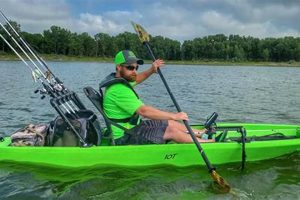
Maintaining the freshness of caught fish and providing chilled refreshments on the water necessitates a dedicated portable refrigeration unit designed for kayak fishing. These specialized containers are typically compact and robust, built to withstand the rigors of the marine environment while maximizing storage within limited kayak space. They often feature secure closures, tie-down points, and specialized insulation to ensure contents remain cool and protected from the elements.
Preserving the quality of a catch directly impacts food safety and enjoyment. Historically, anglers relied on basic ice chests, but the evolution of kayak-specific designs offers enhanced portability, durability, and integration with the vessel’s layout. A properly chilled environment prevents spoilage, maintains the flavor profile of the fish, and prolongs its usability. Furthermore, access to cold beverages enhances the overall fishing experience, especially during long outings in warm weather.
This discussion will delve into various aspects of insulated storage solutions for kayak anglers, including key features, selection criteria, popular models, and recommended usage practices.
Tips for Selecting and Using Kayak Fishing Coolers
Choosing and utilizing appropriate on-board refrigeration is crucial for successful kayak angling excursions. These tips offer guidance for maximizing both practicality and enjoyment on the water.
Tip 1: Prioritize Size and Capacity: Cooler dimensions should complement kayak space without hindering paddling or stability. Capacity requirements depend on anticipated catch size and the duration of trips.
Tip 2: Consider Insulation Quality: Superior insulation prolongs ice retention, minimizing spoilage and extending the viability of stored items. Look for coolers with thick walls and robust seals.
Tip 3: Evaluate Mounting and Securing Options: Securely fastening the cooler prevents shifting and potential capsizing. Integrated tie-down points and compatible mounting systems are advantageous.
Tip 4: Opt for Durable Construction: Marine environments demand robust materials resistant to impacts, UV exposure, and saltwater corrosion. Rotational molding and high-density polyethylene offer superior durability.
Tip 5: Pre-Chill the Cooler: Adding ice to an already cold cooler enhances ice retention. Pre-chilling for several hours before use significantly reduces initial ice melt.
Tip 6: Use Block Ice and Layer Effectively: Block ice melts slower than cubed ice. Layering food and beverages between layers of ice optimizes cooling efficiency.
Tip 7: Minimize Opening Frequency: Every time the cooler lid is opened, cold air escapes and warm air enters, accelerating ice melt. Open the cooler only when necessary.
Following these guidelines ensures optimal cooler performance, preserves catch quality, and enhances the overall kayak fishing experience.
These practical considerations contribute significantly to a successful and enjoyable outing on the water. The next section will explore specific cooler models and their features.
1. Size and Capacity

Cooler size and capacity are critical factors for kayak anglers, directly impacting both storage practicality and vessel stability. Careful consideration of these aspects ensures efficient use of limited kayak space while maintaining a safe and balanced platform for fishing.
- Storage Volume and Catch Size:
Cooler capacity must align with anticipated catch size and the duration of fishing trips. Insufficient volume may necessitate early returns or discarding fish, while excessive capacity occupies valuable space and adds unnecessary weight. Typical catch sizes and trip lengths should inform volume selection.
- Footprint and Kayak Stability:
The cooler’s footprint, particularly its length and width, influences kayak stability. Oversized coolers can restrict movement, impede paddling, and increase the risk of capsizing. Cooler dimensions must complement the kayak’s design and available deck space.
- Weight Distribution and Balance:
Proper weight distribution is crucial for kayak performance and stability. Cooler placement and weight influence the vessel’s center of gravity. Evenly distributing weight, including the loaded cooler, is essential for maintaining balance and efficient paddling.
- Accessibility and Organization:
Cooler accessibility impacts efficient retrieval of items without compromising stability. Consider cooler placement and opening mechanisms to ensure easy access to contents while minimizing disruption during fishing activities. Internal organization features, such as dividers or trays, can further enhance practicality.
Optimal cooler selection requires a balanced approach, considering both storage needs and the practical limitations imposed by the kayak’s size and design. A well-chosen cooler maximizes storage capacity without compromising stability, maneuverability, or overall fishing experience. Careful evaluation of these factors ensures a successful and enjoyable outing on the water.
2. Insulation Performance

Insulation performance is paramount in fishing kayak coolers, directly influencing ice retention and the preservation of stored items. Effective insulation minimizes heat transfer, slowing ice melt and maintaining lower internal temperatures for extended periods. This capability is crucial for preserving catch quality, ensuring food safety, and extending the viability of beverages and other perishables during fishing trips. Subpar insulation results in rapid ice depletion, potentially leading to spoilage, compromised food safety, and a less enjoyable experience on the water. The effectiveness of insulation depends on material type, thickness, and overall cooler construction.
Several insulation methods exist, each offering varying performance levels. High-end coolers often employ closed-cell foam insulation, such as polyurethane or rotomolded construction, providing superior heat resistance. Less expensive coolers may utilize less effective insulation materials, compromising ice retention capabilities. Cooler design also plays a role; tight seals and well-fitted lids minimize air exchange, further enhancing insulation effectiveness. For instance, a cooler with thicker insulation and a robust sealing mechanism will maintain lower internal temperatures for a longer duration compared to a thinner-walled cooler with a less effective seal, especially under identical external temperature conditions.
Understanding the impact of insulation performance is crucial for informed cooler selection. Anglers embarking on multi-day trips or fishing in hot climates require coolers with superior insulation to ensure catch preservation and maintain food safety throughout the excursion. Investing in a high-performance cooler, while potentially more expensive initially, offers long-term benefits by minimizing ice replenishment needs and maximizing the usability of stored provisions. This understanding enables anglers to select appropriate refrigeration solutions tailored to their specific fishing requirements, ensuring a successful and enjoyable experience on the water.
3. Mounting Stability

Secure cooler mounting is paramount for safe and effective kayak fishing. An unsecured cooler can shift during paddling or maneuvering, compromising stability, impeding access, and potentially leading to capsizing. Stable mounting ensures the cooler remains in a designated position, minimizing disruptions and maximizing safety on the water. Various mounting methods and considerations contribute to achieving optimal stability.
- Integrated Tie-Down Points:
Many kayaks feature integrated tie-down points or D-rings strategically positioned for securing gear. Utilizing these points in conjunction with straps or bungee cords provides a secure mounting solution for the cooler. Ensuring straps are properly tightened and adjusted prevents movement during transit and fishing activities.
- Dedicated Mounting Systems:
Some kayak models and cooler manufacturers offer dedicated mounting systems designed for specific cooler models. These systems often utilize tracks, mounts, or other hardware for enhanced stability and integration with the kayak’s design. Such systems offer enhanced security compared to generic tie-down methods, minimizing cooler movement and maximizing stability.
- Non-Slip Surfaces and Padding:
Utilizing non-slip matting or padding beneath the cooler enhances stability by increasing friction between the cooler and the kayak’s surface. This prevents sliding, especially during sudden movements or changes in direction. Padding also protects the kayak’s surface from scratches or damage caused by cooler movement.
- Weight Distribution and Balance:
Cooler placement significantly influences kayak stability. Positioning the cooler near the center of the kayak, distributing weight evenly, enhances overall balance. Avoid placing heavy coolers at the bow or stern, as this can negatively impact maneuverability and increase the risk of tipping.
Prioritizing mounting stability contributes significantly to both safety and efficiency during kayak fishing excursions. A securely mounted cooler minimizes disruptions, maximizes access to contents, and enhances overall stability, allowing anglers to focus on fishing without concerns about cooler movement or potential hazards. Proper mounting techniques, combined with careful consideration of weight distribution and cooler placement, contribute to a more enjoyable and productive experience on the water.
4. Durability and Material
Cooler durability is paramount in the demanding environment of kayak fishing. Exposure to saltwater, UV radiation, and potential impacts necessitates robust construction using resilient materials. Cooler longevity and the protection of stored items rely heavily on material selection and manufacturing processes.
- Material Selection:
Common cooler materials include high-density polyethylene (HDPE), rotomolded plastic, and injection-molded plastic. HDPE offers excellent impact resistance and UV protection. Rotomolded coolers, constructed as a single piece, eliminate seams, enhancing durability and leak resistance. Injection-molded coolers, while generally less expensive, may be more susceptible to cracking or damage under stress.
- Construction Quality:
Cooler construction quality significantly influences overall durability. Robust hinges, latches, and handles are essential for long-term performance. Reinforced corners and thicker walls provide added protection against impacts. Examining construction details, such as weld quality and hardware robustness, offers insights into a cooler’s ability to withstand the rigors of kayak fishing.
- UV Resistance:
Prolonged exposure to sunlight can degrade certain plastics, leading to discoloration, brittleness, and reduced lifespan. UV-resistant materials and additives protect against sun damage, ensuring cooler longevity in harsh marine environments. Choosing a cooler with documented UV resistance preserves its structural integrity and aesthetic appeal over time.
- Impact Resistance:
Kayak fishing often involves navigating challenging terrain and potential impacts from rocks, debris, or other obstacles. Impact-resistant materials and construction protect the cooler and its contents from damage during transport and use. Features such as reinforced corners and thicker walls minimize the risk of cracks or leaks resulting from impacts.
Careful consideration of cooler material and construction ensures long-term performance and reliable protection of stored items in the demanding kayak fishing environment. Investing in a durable cooler minimizes replacement costs and enhances the overall fishing experience by providing reliable and long-lasting storage solutions on the water.
5. Portability and Weight

Cooler portability and weight are critical considerations for kayak anglers. Kayaks, by nature, offer limited storage and weight capacity. A cumbersome cooler hinders transport to and from the water, restricts movement within the kayak, and potentially compromises stability. Balancing storage needs with manageable weight and dimensions is crucial for a successful fishing excursion.
- Transport and Handling:
Transporting the cooler from vehicle to launch site and back requires convenient handling. Integrated handles, shoulder straps, or wheels facilitate easier transport, especially across uneven terrain or longer distances. Excessive weight complicates handling, potentially leading to strain or injury.
- Kayak Space and Maneuverability:
Limited kayak space necessitates a cooler that fits comfortably within the vessel without obstructing paddling or casting. Bulky coolers impede movement and restrict access to other essential gear. Weight distribution within the kayak also influences maneuverability and stability. An excessively heavy cooler, especially if improperly positioned, can negatively impact kayak performance.
- Physical Exertion and Fatigue:
Kayak fishing often involves paddling considerable distances and maneuvering in varying water conditions. A heavy cooler adds to the overall load, increasing physical exertion and potentially leading to premature fatigue. This is particularly relevant during longer trips or in challenging environments. A lighter cooler conserves energy, allowing for extended fishing time and enhanced enjoyment on the water.
- Kayak Capacity and Stability:
Kayaks have specified weight capacities that must be respected for safe operation. Exceeding the weight limit compromises stability, increasing the risk of capsizing. Cooler weight, along with other gear and the angler’s weight, contributes to the total load. Choosing a lightweight cooler helps maintain a safe and stable platform for fishing.
Careful consideration of cooler portability and weight ensures a balanced approach to storage needs and practical limitations. A cooler optimized for kayak fishing facilitates convenient transport, enhances on-the-water maneuverability, and minimizes physical strain, contributing to a more enjoyable and productive fishing experience.
Frequently Asked Questions
This section addresses common inquiries regarding cooler selection and utilization for kayak fishing, providing concise and informative responses to facilitate informed decision-making.
Question 1: What cooler size is recommended for kayak fishing?
Cooler size depends on individual needs, including anticipated catch size, trip duration, and kayak capacity. Smaller kayaks benefit from compact coolers, while larger vessels accommodate higher-capacity options. Balancing storage requirements with available space and weight limitations is crucial.
Question 2: What type of insulation offers the best performance for kayak coolers?
Rotomolded construction and closed-cell foam insulation, such as polyurethane, provide superior ice retention compared to less expensive alternatives. Thicker insulation generally equates to better performance, although it can increase weight and cost.
Question 3: How can cooler stability be maximized on a kayak?
Utilizing integrated tie-down points, dedicated mounting systems, and non-slip padding beneath the cooler enhances stability. Proper weight distribution within the kayak also plays a crucial role in maintaining balance and preventing tipping.
Question 4: What materials are best suited for kayak cooler construction?
High-density polyethylene (HDPE) and rotomolded plastics offer excellent durability, impact resistance, and UV protection, making them ideal for the harsh marine environment. Robust hardware, such as hinges and latches, further enhances cooler longevity.
Question 5: How does cooler weight impact kayak fishing?
Excessive cooler weight hinders portability, restricts movement within the kayak, and increases physical exertion. Choosing a lightweight cooler, while potentially sacrificing some storage capacity, enhances maneuverability and reduces fatigue.
Question 6: How can ice retention be maximized in a kayak cooler?
Pre-chilling the cooler, using block ice instead of cubed ice, layering ice and contents effectively, and minimizing opening frequency all contribute to maximizing ice retention and preserving stored items.
Careful consideration of these factors ensures optimal cooler selection and utilization, enhancing the overall kayak fishing experience.
For further information on specific cooler models and features, please consult the following product reviews and comparisons.
Cooler for Fishing Kayak
Appropriate refrigeration solutions are integral to successful kayak angling. This discussion has explored critical aspects impacting cooler selection and utilization, encompassing size and capacity, insulation performance, mounting stability, durability, material selection, portability, and weight considerations. Each factor contributes significantly to the overall fishing experience, influencing catch preservation, on-the-water efficiency, and angler comfort. Balancing these elements ensures optimal cooler performance within the limitations of a kayak fishing environment.
Ultimately, the selection of a cooler for fishing kayak depends on individual angler needs and preferences. Careful evaluation of the discussed factors, combined with an understanding of specific fishing requirements, empowers informed decisions, leading to enhanced enjoyment and success on the water. Investing in appropriate on-board refrigeration elevates the kayak fishing experience from a basic outing to a well-provisioned and productive pursuit.