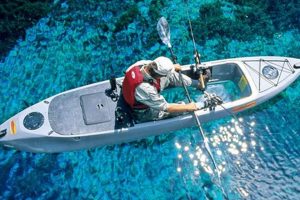
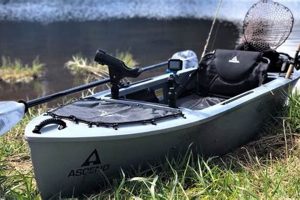
Small, easily transportable, and designed for angling, this type of watercraft offers a blend of portability and functionality. Imagine a vessel short enough to fit in the back of a small truck or even be carried on public transport, yet stable and equipped enough to handle rods, tackle boxes, and the rigors of reeling in a catch. This specialized vessel caters to anglers seeking convenient access to various waterways without the constraints of larger, less mobile boats.
The emergence of these smaller watercraft reflects a growing demand for accessible and adaptable fishing experiences. Their portability opens up angling opportunities in previously inaccessible locations, from small ponds and creeks to larger lakes and calm coastal waters. Furthermore, reduced storage requirements and ease of transport contribute to their increasing popularity. This shift toward more compact and manageable vessels democratizes the sport, making it more feasible for individuals with limited storage space or those who prefer simpler logistics.
This article will further delve into key aspects of these versatile vessels, covering topics such as selecting the right model, essential accessories, recommended fishing techniques, and safety considerations. A detailed exploration of these areas will equip readers with the knowledge necessary to maximize their on-the-water experiences.
Tips for Utilizing Compact Fishing Kayaks
Careful consideration of various factors contributes significantly to a successful and enjoyable fishing experience from a smaller, more portable watercraft. The following tips provide valuable insights for maximizing efficiency and safety on the water.
Tip 1: Prioritize Stability and Capacity: Hull design significantly impacts stability. Wider, flatter hulls generally offer greater stability, while narrower hulls provide better maneuverability. Payload capacity should accommodate the angler’s weight, fishing gear, and potential catch.
Tip 2: Select Appropriate Paddles: Paddle length and blade shape influence paddling efficiency. Shorter paddles are suitable for smaller kayaks and confined spaces, while longer paddles provide more power and reach. Lightweight, adjustable paddles offer versatility.
Tip 3: Equip with Essential Accessories: Rod holders, anchor systems, and dry storage compartments are crucial for a well-equipped vessel. Consider a fish finder and GPS for enhanced angling success and navigation.
Tip 4: Practice Launching and Landing Techniques: Mastering entry and exit techniques in various water conditions ensures safe and efficient transitions. Shallow-water launches and landings require different approaches compared to deeper water scenarios.
Tip 5: Understand Water Conditions and Safety Procedures: Check weather forecasts, water currents, and tidal patterns before embarking. Wearing a personal flotation device and carrying essential safety gear, such as a whistle and signaling device, is paramount.
Tip 6: Respect Wildlife and the Environment: Adhere to local fishing regulations and practice catch-and-release whenever possible. Minimize environmental impact by properly disposing of waste and avoiding disturbing natural habitats.
Tip 7: Plan Fishing Strategies Based on Kayak Type: Certain fishing techniques, such as trolling or sight casting, may be more suitable for specific hull designs and kayak configurations. Adapt fishing strategies to the chosen vessel’s capabilities.
By adhering to these guidelines, anglers can significantly enhance their fishing experience from their compact watercraft, ensuring both safety and success on the water.
These preparatory steps contribute to a more fulfilling and productive fishing experience. The following section will conclude this exploration by summarizing key takeaways and offering final recommendations.
1. Portability

Portability stands as a defining characteristic of compact fishing kayaks, directly influencing their appeal and practicality. Ease of transport and storage significantly expands angling opportunities, enabling access to diverse waterways often inaccessible to larger vessels. This section explores the multifaceted nature of portability within the context of these specialized kayaks.
- Transportation Methods
Transporting a compact fishing kayak presents several options. Roof racks on vehicles accommodate kayaks for longer journeys. Smaller, lighter models can be carried short distances by hand or using a kayak cart. This flexibility allows anglers to reach remote fishing spots or navigate areas with limited access points, significantly broadening angling horizons. For example, an angler might carry a lightweight model across a field to reach a secluded pond or utilize a roof rack for transportation to a coastal launch site.
- Storage Solutions
Compact size translates to simplified storage. These kayaks often fit within garages, sheds, or even apartments, eliminating the need for specialized storage facilities or trailers. This convenience lowers the barrier to entry for individuals with limited storage space. For instance, some models can be stored vertically against a wall or disassembled for compact storage under a bed or in a closet.
- Weight Considerations
Weight significantly influences portability. Lighter kayaks are easier to handle, transport, and launch, particularly for solo anglers. Manufacturers utilize lightweight materials, such as high-density polyethylene, to minimize weight without compromising durability. The weight difference between a 30-pound kayak and a 60-pound kayak can dramatically affect ease of transport, especially over longer distances or uneven terrain.
- Impact on Fishing Locations
Portability directly expands fishing possibilities. Compact kayaks grant access to small creeks, rivers, ponds, and lakes often unreachable by larger boats. This opens up new fishing grounds and diversifies angling experiences. An angler might paddle a compact kayak up a narrow creek to access a secluded fishing hole, a location inaccessible to larger, less maneuverable craft.
The portability of compact fishing kayaks fundamentally alters the angling experience. By facilitating access to diverse waterways and simplifying transport and storage, these versatile vessels empower anglers to explore new fishing grounds with unprecedented ease and convenience. This advantage contributes significantly to their growing popularity and emphasizes their role in making fishing more accessible and enjoyable.
2. Stability

Stability represents a critical performance attribute in compact fishing kayaks, directly influencing angler safety and fishing effectiveness. A stable platform enables anglers to cast, reel, and land fish without compromising balance, a crucial factor, especially in challenging conditions. Several design elements contribute to kayak stability, including hull shape, width, and length. Wider, flatter hulls generally provide greater initial stability, beneficial for stationary fishing or navigating calm waters. Longer, narrower hulls often exhibit superior secondary stability, recovering more effectively from larger disturbances, a valuable trait in rougher conditions or when encountering boat wakes. Understanding the interplay between these design elements empowers informed decision-making during kayak selection. For example, an angler fishing in sheltered bays might prioritize initial stability, while an angler navigating coastal waters might opt for enhanced secondary stability.
The impact of stability extends beyond basic balance. A stable kayak enables anglers to stand and fish, significantly expanding casting range and sight lines. This advantage can prove crucial in shallow-water environments or when targeting specific fish species. Furthermore, enhanced stability fosters confidence, particularly for novice kayakers or those fishing in unfamiliar waters. This sense of security allows anglers to focus on fishing techniques rather than maintaining balance, contributing to a more relaxed and enjoyable experience. Consider an angler attempting to photograph a catch; a stable kayak provides the necessary platform for secure camera operation.
In conclusion, stability stands as a cornerstone of effective kayak fishing, impacting both safety and performance. Careful consideration of hull design, kayak width and length, and individual fishing style contributes significantly to selecting the optimal vessel. A stable kayak enhances angler confidence, expands fishing possibilities, and ultimately contributes to a more successful and enjoyable on-the-water experience. The subsequent discussion will explore the storage capacity of compact fishing kayaks, another essential factor influencing their practical application.
3. Storage

Storage capacity significantly influences the practicality and versatility of compact fishing kayaks. Effective storage solutions accommodate essential gear, including tackle boxes, rods, safety equipment, and personal items, directly impacting organization and fishing efficiency. This section explores key facets of storage within the context of these specialized vessels.
- Types of Storage Compartments
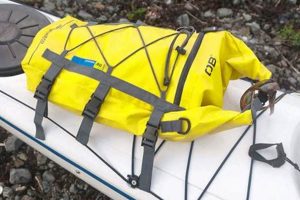
Compact fishing kayaks offer various storage options, each designed for specific purposes. Hatches provide secure, watertight storage for sensitive items like electronics or wallets. Tank wells, located behind the seat, accommodate larger items such as tackle crates or coolers. Bungee cord systems secure items on deck for quick access. Recessed storage areas offer dedicated spaces for smaller items, keeping them organized and within easy reach. For example, a hatch might hold a smartphone and car keys, while the tank well secures a tackle box, and bungee cords hold a spare paddle.
- Storage Capacity and Weight Distribution
The kayak’s overall storage capacity directly impacts how much gear can be carried comfortably. Proper weight distribution within storage compartments is crucial for stability and maneuverability. Overloading a kayak or unevenly distributing weight compromises performance and safety. Distributing heavier items lower in the hull improves stability. For instance, placing a heavier tackle box near the center of the kayak enhances balance compared to storing it at the bow or stern.
- Accessibility and Organization
Easy access to stored gear is essential for efficient fishing. Well-designed storage compartments allow anglers to quickly retrieve needed items without disrupting their fishing flow. Organization within storage compartments further enhances efficiency, preventing wasted time searching for specific lures or tools. Consider an angler needing a specific lure; organized storage enables quick retrieval, minimizing disruption to the fishing process.
- Integration with Fishing Features
Storage solutions often integrate with fishing-specific features. Rod holders, often positioned near storage areas, provide convenient access to rods while maintaining a clear deck space. Integrated tackle management systems within storage compartments keep lures and tools organized and readily available. For example, a kayak might feature rod holders directly behind the seat, adjacent to a tank well holding a tackle box, optimizing workflow during fishing.
In summary, storage considerations play a vital role in the overall functionality of compact fishing kayaks. The type, capacity, accessibility, and integration of storage solutions directly influence angler efficiency, organization, and overall fishing experience. By carefully evaluating these factors, anglers can select kayaks that optimally accommodate their gear and fishing styles, contributing to a more productive and enjoyable time on the water. This understanding of storage lays the groundwork for exploring the maneuverability of these specialized vessels, a crucial aspect influencing their effectiveness in diverse aquatic environments.
4. Fishing Features

Specialized features distinguish compact fishing kayaks from recreational models, optimizing them for angling pursuits. These integrated elements enhance functionality, efficiency, and the overall fishing experience. A fundamental connection exists between these features and the kayak’s compact nature; designers must carefully balance functionality with space constraints. This necessitates innovative design solutions that maximize utility within a limited footprint. For example, recessed rod holders maintain a low profile, minimizing interference with paddling while keeping rods secure and readily accessible. Similarly, integrated track systems allow for modular customization, enabling anglers to attach fish finders, GPS units, and other accessories without compromising stability or maneuverability.
Consider the impact of flush-mounted rod holders. These specialized holders secure rods horizontally along the deck, minimizing their profile and reducing the risk of entanglement while paddling or landing fish. This design allows anglers to carry multiple rods, rigged for different fishing techniques, without sacrificing deck space or stability. Similarly, integrated tackle storage systems, often located within easy reach of the seating area, keep essential lures and tools organized and accessible, minimizing disruption during critical moments. These purpose-built features enhance efficiency, allowing anglers to focus on fishing rather than managing gear. For instance, an angler targeting different species might carry rods equipped with various lines and lures, easily swapping between them thanks to conveniently located rod holders and organized tackle storage.
Understanding the integration and purpose of fishing features in compact kayaks is crucial for optimizing their utilization. These features, designed specifically for angling, transform a basic watercraft into a specialized fishing platform. Effective use of these features enhances efficiency, improves catch rates, and contributes to a more enjoyable and productive fishing experience. Challenges include balancing the desire for numerous features with the limitations of space and weight inherent in compact designs. This necessitates careful consideration of individual fishing styles and priorities when selecting a kayak. Ultimately, the successful integration of fishing features contributes significantly to the growing popularity of compact fishing kayaks, solidifying their position as versatile and effective tools for anglers seeking accessible and adaptable fishing experiences.
5. Maneuverability

Maneuverability represents a critical performance attribute in compact fishing kayaks, directly influencing their effectiveness in diverse aquatic environments. The ability to navigate tight spaces, swiftly change direction, and efficiently position the kayak for optimal casting angles significantly impacts fishing success. This discussion explores the multifaceted nature of maneuverability within the context of these specialized vessels.
- Hull Design and Water Resistance
Hull design significantly impacts a kayak’s maneuverability. Shorter kayaks with a more rounded or rockered hull tend to turn more easily, while longer kayaks with a flatter hull track more efficiently in a straight line. The kayak’s wetted surface area, the portion of the hull in contact with the water, influences water resistance and thus maneuverability. A smaller wetted surface area generally reduces drag and enhances maneuverability. For instance, a kayak with a shorter, rockered hull navigates tight creeks and rivers more effectively than a longer, flatter-hulled kayak designed for open water. The trade-off between maneuverability and tracking requires careful consideration based on intended fishing locations.
- Paddle Length and Technique
Paddle length and paddling technique directly influence maneuverability. Shorter paddles facilitate quicker, more precise strokes for turning and maneuvering in confined spaces. Proper paddling technique, including sweep strokes and draw strokes, enables efficient directional changes. A skilled angler utilizes these techniques to precisely position the kayak for optimal casting angles, even in challenging environments like swift currents or dense vegetation. For example, using a shorter paddle and employing sweep strokes allows for rapid turns in narrow waterways, while a longer paddle and forward strokes maintain speed and direction in open water.
- Impact of Water Conditions
Water conditions significantly impact maneuverability. Strong currents, wind, and waves can challenge even the most maneuverable kayak. Understanding how these factors influence kayak control is crucial for safe and effective navigation. Anglers must adapt paddling techniques and positioning strategies to compensate for challenging conditions. For instance, paddling against a strong current requires more power and precise angle adjustments, while navigating wind-blown waves necessitates maintaining a balanced posture and adjusting paddling rhythm to maintain stability and course.
- Relationship with Stability
Maneuverability and stability often present a design trade-off. Highly maneuverable kayaks, typically shorter and narrower, may sacrifice some stability for agility. Conversely, highly stable kayaks, often wider and flatter, may be less maneuverable. Finding the right balance between these attributes depends on individual fishing preferences and the typical water conditions encountered. An angler prioritizing stability might opt for a wider hull, sacrificing some turning ability for a more secure platform, while an angler prioritizing maneuverability might accept a slightly less stable platform for enhanced agility in tight spaces.
Maneuverability is an essential performance characteristic in compact fishing kayaks, directly impacting their effectiveness in diverse fishing environments. Balancing maneuverability with stability, considering hull design, utilizing appropriate paddling techniques, and adapting to prevailing water conditions are crucial for maximizing performance and achieving fishing success. The subsequent discussion will explore the durability of these specialized vessels, a critical factor influencing their lifespan and resilience in demanding environments.
6. Durability
Durability represents a critical factor influencing the lifespan and overall value of compact fishing kayaks. These vessels frequently encounter demanding conditions, including rocky shorelines, submerged obstacles, and transport-related wear and tear. Robust construction ensures long-term performance and resilience, minimizing repair costs and maximizing time on the water. This exploration delves into key aspects of durability within the context of these specialized kayaks.
- Material Selection and Construction Methods
Material choice significantly impacts kayak durability. High-density polyethylene (HDPE) offers a balance of impact resistance, affordability, and UV resistance. Thermoformed ABS and rotomolded polyethylene provide enhanced durability, albeit at a higher price point. Construction methods, including single-piece and multi-piece designs, influence structural integrity and resistance to stress. Rotational molding creates a seamless, highly durable hull, while thermoforming allows for intricate hull designs with varying thicknesses. For example, a rotomolded HDPE kayak withstands impacts against rocks better than a thinner, thermoformed ABS kayak. However, the thermoformed kayak might offer enhanced performance due to design intricacies enabled by the manufacturing process.
- UV Resistance and Environmental Factors
Exposure to sunlight degrades plastics over time. UV-resistant additives in the kayak’s construction mitigate this degradation, prolonging lifespan and maintaining color vibrancy. Environmental factors, such as extreme temperatures and saltwater exposure, also influence durability. Kayaks designed for saltwater environments often incorporate corrosion-resistant hardware and UV-stabilized pigments. For example, a kayak stored outdoors in a sunny climate benefits significantly from UV protection, while a kayak used frequently in saltwater requires corrosion-resistant fittings to prevent rust and degradation.
- Impact Resistance and Hull Design
The ability to withstand impacts from rocks, logs, or other obstacles is crucial for kayak longevity. Hull thickness and material composition directly influence impact resistance. Reinforced keels and chines provide additional protection in high-impact areas. Hull design also plays a role; rounded hulls tend to deflect impacts more effectively than flatter hulls. Consider a kayak encountering a submerged log; a rounded hull glides over the obstacle with minimal damage, while a flatter hull might sustain a deeper scratch or dent.
- Hardware and Fittings
Hardware components, such as handles, latches, and deck rigging, contribute to overall durability. High-quality, corrosion-resistant materials, like stainless steel or marine-grade aluminum, ensure long-term functionality and prevent premature failure. Proper installation and regular maintenance further enhance hardware longevity. For instance, stainless steel deck fittings withstand saltwater exposure better than less corrosion-resistant materials, while securely installed handles provide reliable grip during transport and launching.
Durability directly impacts the long-term value and performance of compact fishing kayaks. By carefully considering material selection, construction methods, UV resistance, impact resistance, and hardware quality, anglers can choose kayaks built to withstand the rigors of regular use in diverse environments. A durable kayak minimizes repair costs, maximizes time on the water, and provides a reliable platform for pursuing fishing adventures. Understanding the factors contributing to durability empowers informed decision-making and ensures a lasting investment in fishing enjoyment.
7. Affordability
Affordability plays a significant role in the accessibility and appeal of compact fishing kayaks. Cost considerations often influence purchasing decisions, especially for newcomers to the sport or those seeking a secondary vessel. Balancing cost with performance, features, and durability requires careful evaluation of various factors. This exploration delves into the multifaceted nature of affordability within the context of these specialized kayaks.
- Initial Purchase Price
The initial purchase price represents a primary affordability concern. Compact fishing kayaks span a wide price range, influenced by factors such as material, features, and brand recognition. Entry-level models offer basic functionality at lower price points, while higher-end models incorporate advanced features and premium materials, often commanding higher prices. For example, a basic, single-layer polyethylene kayak might cost significantly less than a rotomolded kayak with integrated fishing features. Understanding this price spectrum allows potential buyers to align their budget with desired features and performance characteristics.
- Long-Term Costs and Maintenance
Beyond the initial purchase price, long-term costs, including maintenance and storage, contribute to overall affordability. Durable kayaks constructed from robust materials minimize repair costs, while simpler designs often require less maintenance. Storage costs also vary; compact size often reduces or eliminates the need for specialized storage facilities or trailers, potentially offsetting a higher initial purchase price. For instance, a durable, rotomolded kayak might require fewer repairs over its lifespan compared to a less robust model, offsetting a higher upfront cost. Similarly, compact size allows for home storage, eliminating ongoing storage fees.
- Cost of Accessories and Gear
Essential accessories, such as paddles, life vests, and fishing-specific gear, contribute to the overall cost of kayak fishing. Compatibility with readily available, affordable accessories enhances affordability. Modular designs that accommodate aftermarket accessories offer flexibility and cost savings. For example, a kayak compatible with standard-sized rod holders allows anglers to utilize existing equipment or choose from a wider range of affordable options, compared to a kayak requiring specialized, proprietary accessories.
- Value Proposition and Resale Value
Assessing the value proposition involves weighing cost against features, performance, and durability. A well-priced kayak offering a balance of essential features and robust construction represents a strong value proposition. Resale value also contributes to long-term affordability; kayaks from reputable brands with proven durability often retain their value better, mitigating depreciation and potentially offsetting a higher initial investment. For instance, a durable kayak from a recognized brand, even at a higher initial price, might retain its value better than a lesser-known brand, offering a better return on investment if resold later.
Affordability represents a complex consideration within the context of compact fishing kayaks, encompassing not only the initial purchase price but also long-term costs, accessory expenses, and overall value. Carefully evaluating these factors empowers informed decision-making, enabling anglers to select kayaks that align with their budgetary constraints while meeting their fishing needs and performance expectations. Ultimately, understanding the nuances of affordability contributes significantly to the accessibility and appeal of compact fishing kayaks, broadening participation in the sport and enabling more individuals to experience the joys of kayak fishing.
Frequently Asked Questions
This section addresses common inquiries regarding compact fishing kayaks, providing concise and informative responses to facilitate informed decision-making and enhance understanding of these specialized vessels.
Question 1: What differentiates a compact fishing kayak from a recreational kayak?
Compact fishing kayaks prioritize features tailored for angling, such as rod holders, tackle storage, and often a more stable hull design. Recreational kayaks prioritize comfort and ease of paddling for general-purpose use.
Question 2: How is the portability of these kayaks typically achieved?
Portability derives from shorter lengths and lighter weights, often facilitated by material selection and design choices. Many models accommodate transportation on roof racks, in truck beds, or even by hand using specialized carts.
Question 3: Are these kayaks suitable for larger individuals or heavier loads?
Weight capacity varies significantly between models. Consulting manufacturer specifications regarding maximum payload is essential to ensure safe and effective use. Exceeding weight limits compromises stability and performance.
Question 4: What are the primary advantages of fishing from a compact kayak?
Key advantages include accessing shallower or more confined waterways often inaccessible to larger boats, enhanced maneuverability, simplified transport and storage, and generally lower costs compared to larger fishing vessels.
Question 5: What safety precautions should one consider when using a compact fishing kayak?
Essential safety precautions include wearing a personal flotation device, carrying a whistle and signaling device, checking weather conditions before embarking, informing someone of planned fishing locations and estimated return times, and adhering to local boating regulations.
Question 6: Do these kayaks require specialized paddling techniques?
While basic paddling skills suffice for calm water, mastering specific techniques, such as sweep strokes and draw strokes, enhances maneuverability and control, especially in currents or wind. Practice and experience improve paddling efficiency and control.
Addressing these common queries provides a foundational understanding of compact fishing kayaks. Further research and consultation with experienced anglers or retailers can provide additional insights tailored to individual needs and preferences.
The following section will offer concluding remarks and summarize key takeaways from this comprehensive exploration of compact fishing kayaks.
Conclusion
Compact fishing kayaks offer a unique blend of portability, affordability, and specialized functionality. Exploration of key attributes, including stability, maneuverability, storage capacity, and specialized fishing features, reveals their adaptability to diverse angling environments. Durability and cost considerations further underscore their value proposition for both novice and experienced anglers seeking accessible and efficient fishing experiences. Careful consideration of these factors empowers informed purchasing decisions and fosters successful utilization on the water.
The increasing popularity of compact fishing kayaks reflects a broader trend towards accessible and adaptable outdoor recreation. As technology continues to advance, further innovation in materials, design, and integration of fishing-specific features promises enhanced performance and expanded angling opportunities. The future of compact fishing kayaks appears bright, offering a promising pathway to connect with nature and pursue angling passions in diverse aquatic environments.