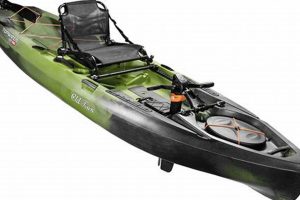
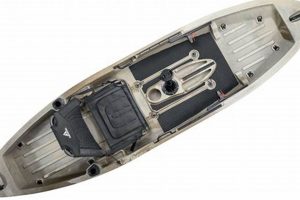
The specific model designation likely refers to a kayak designed for anglers pursuing larger fish species. Such kayaks are typically characterized by increased stability and load capacity compared to recreational models. They often feature specialized accessories such as rod holders, tackle storage, and perhaps even livewells or mounting points for fish finders. A hypothetical example could be a 10-foot, 3-inch long sit-on-top fishing kayak built with extra width for stability.
Enhanced stability provides a secure platform for casting and reeling, crucial when battling strong fish. A higher weight capacity allows anglers to carry necessary gear, including heavier tackle and coolers for preserving catches. The incorporation of fishing-specific features enhances angling efficiency and overall enjoyment. The development of specialized fishing kayaks reflects the growing popularity of kayak fishing, offering a versatile and accessible approach to the sport.
This discussion will further explore the specifics of kayaks designed for this purpose, examining design features, materials, and performance characteristics relevant to anglers targeting larger game fish. It will also consider factors influencing kayak selection, such as water conditions, fishing styles, and individual angler preferences.
Tips for Kayak Fishing Success
Effective kayak fishing requires preparation and attention to detail. The following tips offer guidance for maximizing angling success and safety.
Tip 1: Prioritize Stability: Kayak stability is paramount, especially when targeting larger fish. Select a kayak with a wider beam and consider adding outriggers for enhanced stability.
Tip 2: Organize Tackle Strategically: Efficient tackle organization is crucial in the confined space of a kayak. Utilize tackle boxes and storage solutions designed for kayaks, keeping frequently used items within easy reach.
Tip 3: Choose Appropriate Paddles: Paddle selection impacts efficiency and comfort. Consider paddle length, blade shape, and material based on individual needs and paddling style.
Tip 4: Master Kayak Control: Practice maneuvering the kayak effectively, including turning, reversing, and maintaining position in current. Consider using a rudder or pedal-driven system.
Tip 5: Emphasize Safety Equipment: Always wear a personal flotation device (PFD). Carry essential safety gear including a whistle, signaling device, and first-aid kit.
Tip 6: Understand Water Conditions: Be aware of weather forecasts, tides, and currents. Avoid fishing in hazardous conditions.
Tip 7: Respect Local Regulations: Familiarize oneself with fishing regulations and licensing requirements for the intended fishing area.
Adherence to these guidelines will enhance both safety and fishing success. Proper preparation enables anglers to focus on the enjoyment and challenge of the sport.
These practical tips provide a foundation for successful kayak angling. The following section will offer a concluding perspective on the overall topic.
1. Stability

Stability forms a cornerstone of successful angling from a kayak, particularly when targeting larger species. A stable platform allows anglers to focus on fishing techniques rather than constantly correcting balance. In the context of a “big fish 103 kayak,” stability becomes even more critical due to the increased forces exerted by powerful fish during the fight. Loss of balance could lead to capsizing, jeopardizing both angler safety and the potential capture of the fish. A wider hull design contributes significantly to primary stability, resisting initial tipping. Secondary stability, the ability to recover from a tilted position, is equally crucial. Consider a scenario where a large fish suddenly changes direction, creating a strong sideways pull. A kayak with high secondary stability will resist capsizing, allowing the angler to maintain control.
Several factors influence kayak stability, including hull design, weight distribution, and the presence of outriggers or stabilizers. Flat-bottomed hulls offer excellent initial stability but may be less forgiving in rougher water. Rounded or V-shaped hulls provide better performance in chop but sacrifice some initial stability. Proper weight distribution within the kayak is crucial for maintaining balance. Positioning heavier items low and centrally enhances stability. Outriggers or stabilizers provide additional support, significantly improving overall stability, especially valuable for anglers standing to cast or fight fish. For example, experienced anglers often prefer kayaks with a wider beam and added stability features when fishing for large, powerful species in open water.
Understanding the nuances of kayak stability is paramount for angler safety and effectiveness. Selecting a kayak with appropriate stability characteristics for the intended fishing conditions and target species is crucial. Proper weight distribution and the judicious use of stabilizing aids further enhance on-the-water performance. This focus on stability enables anglers to confidently engage with larger fish, maximizing the chances of a successful and safe fishing experience. It directly contributes to the core functionality of a “big fish 103 kayak” as a platform designed for pursuing larger game fish.
2. Capacity

Capacity, in the context of a “big fish 103 kayak,” refers to the maximum weight the kayak can safely support. This encompasses the combined weight of the angler, fishing gear, and potentially the catch. Adequate capacity is crucial for maintaining stability and preventing the kayak from sitting too low in the water, which can compromise performance and safety. Targeting large fish necessitates a higher capacity kayak due to the potential weight of the fish themselves, along with the heavier tackle often required. For instance, an angler pursuing large saltwater species might carry specialized rods, reels, and tackle boxes considerably heavier than those used for freshwater panfish. Furthermore, landing a substantial fish adds significant weight to the kayak, requiring sufficient capacity to prevent swamping or capsizing. Consider a scenario where an angler hooks a large tuna; the added weight of the fish, combined with the angler’s movements while fighting it, demands a kayak with ample capacity to handle the dynamic load.
Insufficient capacity can lead to several undesirable outcomes. A kayak overloaded beyond its safe limit sits lower in the water, increasing the risk of taking on water, especially in rough conditions. This reduced freeboard compromises stability, making the kayak more susceptible to tipping. Furthermore, an overloaded kayak becomes less maneuverable and more difficult to paddle efficiently. This sluggish performance can be particularly challenging when navigating currents, wind, or waves, or when attempting to land a large, active fish. For example, a kayak designed for a maximum capacity of 300 lbs. might become unstable and difficult to control with a 200-lb angler, 50 lbs. of gear, and a 75-lb fish, exceeding its safe operating range. Understanding the capacity limitations of a kayak and staying well within those limits is crucial for both safety and effective fishing.
Capacity considerations are therefore integral to the design and selection of a “big fish 103 kayak.” Manufacturers typically specify a maximum weight capacity for each kayak model, providing a crucial parameter for anglers. Selecting a kayak with sufficient capacity for the intended use, including the angler’s weight, gear, and anticipated catch size, is paramount. This ensures safe and efficient operation on the water, allowing anglers to confidently pursue larger fish without compromising stability or performance. Ignoring capacity limitations can have serious consequences, impacting both angler safety and fishing success. Therefore, careful consideration of capacity, alongside other key features, is essential for choosing the right kayak for targeting larger game fish.
3. Durability
Durability represents a critical attribute for kayaks designed to pursue large fish, exemplified by the hypothetical “big fish 103 kayak.” These kayaks frequently encounter demanding conditions, including impacts with rocks, submerged debris, and the powerful struggles of heavy fish. Robust construction ensures the kayak withstands these stresses without sustaining significant damage, maintaining its structural integrity and longevity. The materials used in construction play a crucial role in determining durability. High-density polyethylene (HDPE) is a common choice due to its impact resistance and resilience. Thermoformed ABS and composite materials offer increased stiffness and lighter weight, but may be more susceptible to damage from sharp impacts. Reinforced areas, particularly in the hull and deck, further enhance durability in high-stress zones. For example, a kayak designed for offshore fishing might incorporate reinforced keel protection to withstand abrasion from sand and rocks in shallow water.
The connection between durability and a “big fish 103 kayak” extends beyond simply withstanding impacts. Long-term exposure to UV radiation, saltwater, and temperature fluctuations can degrade kayak materials over time. Durable kayaks utilize UV-resistant additives in their construction to mitigate the effects of sunlight. Saltwater corrosion poses a threat to metal components, such as hardware and rudder systems. Choosing corrosion-resistant materials, like stainless steel or anodized aluminum, enhances long-term durability in saltwater environments. Furthermore, durable kayaks resist warping or deformation caused by temperature extremes, maintaining their structural integrity over extended periods. Consider a kayak stored outdoors year-round; durable construction ensures it withstands both freezing winter temperatures and intense summer heat without compromising performance.
The practical significance of durability in a “big fish 103 kayak” is readily apparent. A durable kayak requires less maintenance and repair, reducing long-term ownership costs and ensuring the kayak remains functional and safe for extended periods. This allows anglers to focus on fishing rather than constantly addressing repairs. Moreover, a durable kayak provides a reliable platform in challenging conditions, enhancing angler safety and confidence. When battling a large fish in rough water, a durable kayak offers the assurance of structural integrity, enabling the angler to focus on landing the fish without concern for the kayak’s ability to withstand the stress. Therefore, durability is not merely a desirable feature but a fundamental requirement for kayaks designed to pursue large fish. It directly contributes to the kayak’s longevity, performance, and the overall safety and success of the angler.
4. Storage
Storage solutions in a “big fish 103 kayak” directly impact angling efficiency and overall success. Effective organization of tackle and equipment allows anglers to quickly access necessary items without disrupting fishing flow. Sufficient storage capacity accommodates the specialized gear often required when targeting larger fish. Consider the array of rods, reels, lures, tackle boxes, and other accessories essential for pursuing specific species. Efficient storage keeps these items organized and readily available, maximizing fishing time and minimizing frustration.
- Tackle Organization:
Dedicated compartments and storage systems within the kayak facilitate organized tackle management. Examples include tackle boxes secured within recessed wells, specialized trays for lures and hooks, and side pockets for frequently accessed tools. This organization minimizes time spent searching for specific items, allowing anglers to remain focused on the water and respond quickly to changing fishing conditions. Imagine needing a specific lure quickly when a school of fish appears; efficient tackle organization allows for immediate retrieval, maximizing the opportunity.
- Rod Storage:
Secure rod holders, strategically positioned within easy reach, are essential for managing multiple rods while fishing. Flush-mounted rod holders minimize interference with paddling and casting, while adjustable rod holders accommodate different rod lengths and angling styles. For instance, an angler trolling might utilize multiple rods with different lures, requiring secure storage that keeps them readily accessible while preventing entanglement. Secure rod storage also safeguards valuable equipment from damage or loss.
- Gear Storage:
Dry storage compartments protect essential gear, such as electronics, clothing, and food, from water damage. These compartments, often equipped with waterproof hatches or seals, maintain the integrity of sensitive items, crucial for extended fishing trips. Consider a scenario where an unexpected wave washes over the kayak; dry storage ensures essential electronics and personal items remain dry and functional. This protection is vital for safety and comfort, particularly in challenging conditions.
- Catch Storage:
Dedicated storage for the catch, such as a livewell or cooler, becomes particularly important when targeting larger fish. Livewells maintain the health and vitality of caught fish intended for release, promoting conservation. Coolers preserve the quality of fish destined for the table. For example, an angler practicing catch and release would utilize a livewell to keep fish healthy until release, while an angler keeping fish for consumption would rely on a cooler to maintain freshness. These specialized storage solutions contribute to responsible angling practices and maximize the enjoyment of the catch.
These facets of storage contribute significantly to the functionality and effectiveness of a “big fish 103 kayak.” The ability to carry and organize essential gear, manage multiple rods, protect sensitive items, and properly handle the catch enhances the overall fishing experience. Efficient storage solutions allow anglers to focus on the pursuit of large fish without the distractions of disorganization or the risk of equipment damage. This attention to storage detail distinguishes specialized fishing kayaks from recreational models and contributes directly to their performance in demanding angling scenarios. By integrating effective storage solutions, the “big fish 103 kayak” becomes a well-equipped platform for pursuing and landing trophy fish.
5. Features (fishing-specific)
Specialized features distinguish a “big fish 103 kayak” from recreational models, optimizing its performance for pursuing larger game fish. These features enhance angling efficiency, comfort, and overall success in demanding fishing scenarios. They represent key considerations for anglers seeking a dedicated platform for targeting trophy-sized catches.
- Rod Holders:
Multiple rod holders, strategically positioned for easy access and secure storage, are essential. Flush-mounted rod holders minimize interference with paddling, while adjustable or rotating rod holders accommodate various fishing techniques, such as trolling or drift fishing. Specialized rod holders designed for specific rod types, like fly rods or heavy-duty saltwater rods, further enhance convenience and security. For example, a “big fish 103 kayak” might feature multiple adjustable rod holders positioned along the gunwales and within reach of the angler’s seated position, facilitating quick transitions between fishing techniques.
- Tackle Storage:
Integrated tackle storage systems maximize organization and efficiency. Recessed compartments, sealed hatches, and specialized trays accommodate tackle boxes, lures, tools, and other essential accessories. These storage solutions keep gear secure, organized, and readily accessible, minimizing time spent searching for specific items and maximizing time spent fishing. A well-designed “big fish 103 kayak” might incorporate a combination of sealed dry storage compartments for electronics and personal items, along with open compartments or trays for frequently accessed tackle.
- Mounting Systems:
Integrated mounting systems, such as tracks, rails, or inserts, provide versatile platforms for attaching accessories like fish finders, GPS units, cameras, and rod holders. These systems allow anglers to customize their kayak setup based on specific needs and preferences. For instance, a “big fish 103 kayak” might feature multiple mounting tracks along the gunwales and deck, enabling the angler to position accessories precisely for optimal functionality and access. This adaptability enhances the kayak’s versatility and allows for personalized customization.
- Specialized Seating:
Ergonomic seating designed for extended fishing trips enhances comfort and reduces fatigue. Adjustable seats with lumbar support and breathable fabric contribute to long-term comfort, especially during extended battles with powerful fish. Elevated seating positions improve visibility and casting range. For example, a “big fish 103 kayak” might incorporate a high-back, adjustable seat with breathable mesh fabric, promoting comfort and reducing fatigue during long hours on the water. This focus on comfort enhances the overall fishing experience, allowing anglers to remain focused and engaged.
These fishing-specific features collectively enhance the performance and utility of a “big fish 103 kayak,” transforming it into a dedicated angling platform. The integration of these specialized features differentiates it from recreational kayaks, reflecting its purpose-built design for targeting larger fish. By considering these features, anglers can select a kayak optimized for their specific fishing needs and preferences, maximizing their chances of success on the water. This combination of features contributes directly to the overall effectiveness, efficiency, and enjoyment of pursuing large game fish from a kayak.
6. Maneuverability
Maneuverability in a “big fish 103 kayak” plays a crucial role in angling success when targeting larger species. Effective maneuvering allows anglers to position the kayak optimally for casting, presenting lures, and fighting fish. Consider a scenario where a large fish surfaces near a structure like a submerged log or rock formation. A highly maneuverable kayak allows the angler to quickly and precisely position the vessel for an effective cast, maximizing the opportunity to hook the fish. Conversely, a less maneuverable kayak might hinder the angler’s ability to reach the desired location, potentially losing the chance to engage the fish.
Several factors influence kayak maneuverability, including hull design, length, and the presence of a rudder or skeg. Shorter kayaks generally offer greater maneuverability, allowing for tighter turns and quicker adjustments in direction. Longer kayaks track more effectively in a straight line but may be less responsive in tight quarters. Hull design also plays a significant role. A kayak with a pronounced keel or tracking channels will track well in a straight line but may be less agile in turning. A flatter hull design might sacrifice some tracking ability but offer enhanced maneuverability. Adding a rudder or skeg can significantly improve tracking and directional control, particularly in windy conditions or when paddling against currents. For example, a kayak equipped with a rudder allows the angler to maintain a desired course with minimal effort, freeing up focus for fishing rather than constant course correction.
The practical significance of maneuverability in a “big fish 103 kayak” becomes readily apparent when fighting larger fish. A highly maneuverable kayak allows the angler to adjust position quickly to maintain an optimal angle relative to the fish, minimizing line stress and maximizing control during the fight. This agility is crucial when battling powerful fish that might attempt to run under the kayak or around obstacles. Moreover, a maneuverable kayak allows the angler to follow the fish effectively as it moves, preventing slack line and maintaining pressure throughout the fight. This dynamic interaction between angler and fish underscores the importance of maneuverability as a key component of a successful fishing platform. The ability to react quickly and precisely to the fish’s movements significantly increases the chances of landing a trophy catch. Therefore, maneuverability, alongside stability, capacity, and specialized features, contributes significantly to the overall effectiveness of a “big fish 103 kayak” as a dedicated platform for pursuing large game fish.
7. Transportation

Transportation logistics significantly influence the practicality and overall effectiveness of using a “big fish 103 kayak.” Consider the weight and dimensions of such a kayak, likely exceeding those of standard recreational models. Transporting a larger, heavier kayak requires appropriate vehicle capacity and secure loading mechanisms. A roof rack system with sufficient weight capacity and properly secured tie-down straps is essential for safe transport. Alternatively, a trailer designed for kayak transport offers a more stable and convenient solution, particularly for longer distances or challenging terrain. Failure to secure the kayak adequately during transport can result in damage to both the kayak and the vehicle, jeopardizing safety and incurring costly repairs. For example, transporting a large fishing kayak on a small car without a suitable roof rack system could lead to instability and potential detachment during transit, posing a significant safety hazard.
Beyond simply transporting the kayak itself, consider the additional gear required for fishing. Rods, reels, tackle boxes, coolers, and other accessories add to the overall volume and weight being transported. Efficient packing and organization are crucial for maximizing available space and ensuring safe transport. Specialized kayak trailers often incorporate storage compartments for gear, streamlining transport logistics and minimizing loading time at the launch site. Furthermore, access to suitable launch points plays a vital role in determining fishing locations. Kayak weight and size may limit access to certain areas, necessitating careful consideration of launch site accessibility and potential portage requirements. For instance, a remote lake accessible only via a narrow, unpaved road might be unsuitable for transporting a large fishing kayak, limiting fishing options. Therefore, pre-planning and scouting potential launch sites are crucial for ensuring a smooth and efficient fishing experience.
Effective transportation strategies are therefore integral to the overall utility of a “big fish 103 kayak.” Addressing transportation logistics before heading out ensures a safe and efficient trip, allowing anglers to focus on the fishing experience rather than logistical challenges. Failure to adequately address transportation can lead to frustration, equipment damage, and safety risks, potentially negating the enjoyment and success of the fishing trip. Therefore, careful consideration of transportation requirements, including vehicle capacity, loading mechanisms, gear organization, and launch site accessibility, is essential for maximizing the potential of a “big fish 103 kayak” as a platform for pursuing large game fish. This understanding of transportation logistics contributes directly to the practical application and overall success of using a specialized fishing kayak.
Frequently Asked Questions
This section addresses common inquiries regarding kayaks designed for larger fish, using the hypothetical “big fish 103 kayak” as a representative example. The information provided aims to clarify key aspects and assist in informed decision-making.
Question 1: What differentiates a kayak designed for large fish from a standard recreational kayak?
Key distinctions include enhanced stability, increased weight capacity, specialized features like rod holders and tackle storage, and often a more robust construction to withstand the stresses of battling larger fish. These specialized features cater to the unique demands of pursuing larger species.
Question 2: How does kayak stability impact the ability to land large fish?
Stability is paramount when fighting powerful fish. A stable platform allows for effective hooksets, controlled maneuvering, and reduces the risk of capsizing during the fight. Features like a wider hull and potentially outriggers contribute to enhanced stability.
Question 3: What role does weight capacity play in selecting a kayak for large fish?
Weight capacity dictates the combined weight of the angler, gear, and potential catch the kayak can safely support. Exceeding the weight capacity compromises stability and performance. Selecting a kayak with ample capacity is crucial for safety and effective fishing.
Question 4: Are there specific features that enhance fishing efficiency in a kayak designed for larger species?
Features such as multiple rod holders, integrated tackle storage systems, mounting points for fish finders and other electronics, and specialized seating contribute to improved angling efficiency. These features allow for organized tackle management, convenient rod access, and enhanced comfort during extended fishing trips.
Question 5: How does kayak maneuverability influence success when targeting large fish?
Maneuverability allows anglers to position the kayak effectively for casting, presenting lures, and fighting fish. A maneuverable kayak enables quick adjustments in direction and precise control, crucial for responding to the movements of large, powerful fish.
Question 6: What transportation considerations are relevant for a larger fishing kayak?
Larger fishing kayaks require appropriate vehicle capacity, secure roof rack systems or trailers, and efficient packing strategies for transporting the kayak and associated gear. Access to suitable launch points also influences fishing location choices.
Understanding these key aspects facilitates informed decision-making regarding kayak selection and preparation for targeting larger fish species. Appropriate consideration of these factors enhances safety, efficiency, and the overall fishing experience.
The following section will offer concluding remarks and summarize key takeaways regarding kayaks designed for pursuing large fish.
Conclusion
This exploration of kayaks designed for larger fish, exemplified by the hypothetical “big fish 103 kayak,” highlights the critical interplay of design, features, and angler preparedness. Stability, capacity, durability, and specialized features like rod holders and tackle storage contribute significantly to angling effectiveness and safety. Maneuverability and transportation logistics further influence practical application and overall success on the water. Careful consideration of these factors is essential for anglers seeking a dedicated platform for targeting larger game fish.
Successful pursuit of large fish from a kayak requires a holistic approach encompassing equipment selection, strategic planning, and an understanding of fish behavior and habitat. The pursuit of these impressive species offers a unique challenge and reward, demanding both skill and respect for the targeted quarry. Continuous refinement of techniques and a commitment to responsible angling practices ensure the sustainability of this exciting and demanding pursuit.