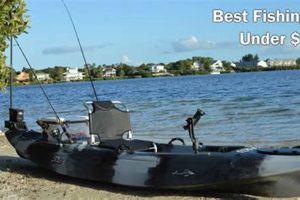
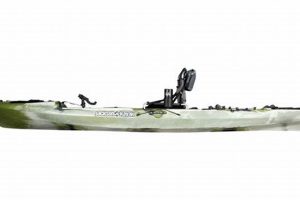
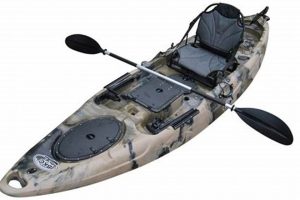
A high-quality, compact, fishing-oriented kayak represents a balance of portability, stability, and specialized features. Such vessels are designed for anglers seeking maneuverability in smaller bodies of water like ponds, creeks, and rivers, or those prioritizing easy transport and storage. They often include features like rod holders, tackle storage, and anchor trolleys.
Compact, purpose-built watercraft offer anglers significant advantages. Their smaller size allows for navigation through shallows and tight spaces inaccessible to larger boats. Portability simplifies transport, enabling access to remote fishing locations. Additionally, these kayaks often come at a lower price point than larger fishing kayaks or motorized boats, making them an attractive option for budget-conscious anglers. The growing popularity of kayak fishing has driven innovation in this area, leading to increasingly refined designs and features specifically tailored for anglers.
This discussion will delve into the key factors influencing the selection of an appropriate small fishing kayak. Topics include hull design, material construction, essential features, weight capacity, and top-rated models available on the market.
Tips for Choosing a Small Fishing Kayak
Selecting an appropriate small fishing kayak requires careful consideration of various factors to ensure optimal performance, stability, and enjoyment on the water. The following tips offer guidance through the selection process.
Tip 1: Prioritize Stability: Hull design significantly impacts stability. Wider, flatter hulls offer greater initial stability, ideal for calmer waters and stand-up fishing. Consider a “pontoon-style” hull for maximum stability.
Tip 2: Evaluate Maneuverability: Shorter kayaks generally offer enhanced maneuverability in tight spaces, while longer kayaks track better in open water. Consider the primary fishing environment when selecting length.
Tip 3: Assess Weight Capacity: Ensure the kayak’s weight capacity accommodates the angler’s weight, fishing gear, and any potential catch. Exceeding the capacity compromises stability and performance.
Tip 4: Consider Storage Options: Evaluate built-in storage compartments for tackle, rods, and other gear. Ample storage keeps essential items organized and accessible.
Tip 5: Examine Seating Comfort: A comfortable seat is crucial, especially for longer fishing trips. Look for adjustable seating systems and breathable materials.
Tip 6: Factor in Transportation: Consider the kayak’s weight and length relative to available transportation methods. Lighter kayaks are easier to load and transport.
Tip 7: Research Reputable Brands: Opt for established brands known for quality construction and durable materials. Read reviews and compare models before making a decision.
Tip 8: Test Before Purchasing (If Possible): A test paddle provides valuable insight into a kayak’s performance and comfort. It allows potential buyers to experience the kayak firsthand.
By considering these factors, anglers can select a small fishing kayak tailored to their specific needs and preferences, ultimately enhancing their fishing experience.
This information provides a solid foundation for making an informed decision. Further research and consideration of individual fishing styles will lead to the ideal small fishing kayak choice.
1. Stability

Stability stands as a paramount characteristic in a high-quality compact fishing kayak. It directly influences angler safety, casting effectiveness, and overall on-the-water confidence. A stable platform permits anglers to focus on fishing rather than constantly correcting balance, particularly crucial in dynamic fishing environments. Stability is influenced by hull design, kayak width, and weight distribution. Wider, flatter hulls generally offer greater initial stability, benefiting anglers new to kayaking or those preferring to stand while fishing. For instance, a wider, flatter hull provides a secure platform for sight casting in shallow flats, while a narrower, V-shaped hull, although less stable initially, might offer superior tracking in open water. The effective utilization of weight distribution through gear placement further enhances stability.
Compromised stability can lead to difficulties casting, retrieving fish, and even capsizing. In contrast, a stable kayak allows anglers to confidently execute various fishing techniques, including stand-up fishing, fly fishing, and fighting larger fish. Consider the scenario of hooking a powerful fish in choppy water. A stable kayak provides the necessary platform to manage the fight effectively and minimize the risk of capsizing. Furthermore, enhanced stability allows for smoother, more accurate casts, increasing fishing success. The trade-off between stability and maneuverability must be considered based on individual fishing styles and target environments.
Understanding the impact of stability on performance is essential for selecting the right kayak. Anglers prioritizing stability should opt for wider, flatter hulls, potentially sacrificing some maneuverability. Those comfortable with less initial stability might favor a more performance-oriented hull design. Ultimately, achieving optimal stability through appropriate kayak selection and mindful weight distribution enhances fishing experiences and ensures angler safety.
2. Maneuverability

Maneuverability represents a critical performance attribute in the context of small fishing kayaks, directly influencing an angler’s ability to navigate diverse water environments effectively. Efficient maneuvering enables access to secluded fishing spots, precise boat control in challenging conditions, and responsive adjustments to changing currents or fish behavior. A highly maneuverable kayak enhances fishing opportunities and overall on-the-water experience.
- Hull Design and Length
Hull design and length significantly impact maneuverability. Shorter kayaks generally exhibit greater agility in tight spaces, facilitating navigation through narrow creeks, around submerged obstacles, or in close proximity to vegetation. Longer kayaks, while potentially less nimble, often track better in open water and offer increased speed. A shorter kayak excels in navigating a densely vegetated marsh, while a longer kayak might prove advantageous when traversing larger lakes or rivers.
- Water Conditions
Prevailing water conditions influence the importance of maneuverability. Calm, open water presents fewer maneuvering challenges, while swift currents, confined spaces, or windy conditions demand heightened responsiveness. A highly maneuverable kayak becomes essential when navigating a fast-flowing river or contending with strong winds in a protected bay.
- Fishing Style
Specific fishing techniques often necessitate varying degrees of maneuverability. Trolling typically requires less maneuverability than techniques involving frequent repositioning, such as sight casting or fly fishing. A kayak angler pursuing bass in a complex, shallow-water environment benefits significantly from a highly maneuverable vessel, enabling precise positioning and lure presentation.
- Kayak Weight and Material
Kayak weight and material also play a role in maneuverability. Lighter kayaks respond more quickly to paddle strokes, enhancing agility. Material selection influences both weight and hull stiffness, indirectly impacting maneuverability. A lightweight, composite kayak allows for quicker turns and adjustments compared to a heavier, less responsive model. This difference becomes particularly noticeable when navigating rapidly changing currents or pursuing agile fish.
Considering these facets of maneuverability, alongside other critical factors like stability and storage capacity, allows anglers to select a small fishing kayak optimized for their specific needs and target fishing environments. Balancing maneuverability with other performance attributes ensures a productive and enjoyable fishing experience.
3. Storage Capacity
Ample storage capacity is a defining characteristic of a high-quality small fishing kayak. The ability to efficiently organize and access essential gear directly impacts fishing success and overall enjoyment on the water. Adequate storage minimizes clutter, reduces time spent searching for items, and allows anglers to focus on fishing. A well-designed storage system accommodates tackle boxes, rods, fishing electronics, safety equipment, and personal items. For instance, dedicated rod holders secure rods during transport and allow for quick access when a fish strikes. Dry storage compartments protect sensitive electronics and personal belongings from water damage, crucial in challenging conditions. Integrated tackle storage systems keep lures and tools organized and readily available, streamlining the fishing process.
Insufficient storage capacity negatively impacts fishing efficiency. A cluttered kayak impedes movement, creates frustration, and increases the risk of losing or damaging gear. Imagine navigating through tight mangroves with rods, tackle, and other equipment strewn across the deck. Such a scenario hinders maneuverability, increases the risk of entanglement, and detracts from the fishing experience. Conversely, a kayak with well-designed storage solutions allows anglers to carry a diverse selection of lures and tackle, adapt to changing conditions, and maximize fishing opportunities. Consider a fly fisherman navigating a remote river. Ample storage for fly boxes, lines, and other essential gear is paramount for a successful outing. The ability to quickly change flies and adapt to varying fish behavior enhances fishing success in dynamic environments.
Prioritizing storage capacity is essential when selecting a small fishing kayak. Evaluating storage options involves considering the types of fishing pursued, the amount of gear typically carried, and the desired level of organization. Anglers regularly carrying larger amounts of gear benefit from kayaks with larger storage compartments and multiple dedicated storage areas. Those prioritizing minimalist approaches may find smaller, more streamlined storage solutions sufficient. Careful consideration of storage needs contributes significantly to a positive and productive fishing experience.
4. Weight Capacity

Weight capacity stands as a critical factor in evaluating small fishing kayaks, directly influencing performance, safety, and overall suitability for intended use. This specification denotes the maximum combined weight of the angler, gear, and any potential catch the kayak can safely support. Exceeding the specified weight capacity compromises stability, reduces freeboard (the distance between the waterline and the top edge of the hull), and increases the risk of capsizing. A kayak operating at or near its maximum capacity sits lower in the water, impacting maneuverability and increasing susceptibility to swamping in rough conditions. Conversely, a kayak with ample weight capacity for its intended load performs optimally, offering enhanced stability, maneuverability, and a safer margin for unexpected conditions. Consider an angler planning to fish in open water with a substantial amount of gear. Choosing a kayak with insufficient weight capacity for the combined load would create an unstable and potentially dangerous situation, especially in challenging weather. Conversely, selecting a kayak with a higher weight capacity provides a safer and more stable platform, allowing the angler to confidently navigate and focus on fishing.
Understanding the practical implications of weight capacity is essential for selecting the right kayak. Anglers carrying heavier loads, including larger tackle boxes, battery-powered fish finders, or multiple rods, require kayaks with higher weight capacities. Those primarily fishing in calm, protected waters may prioritize maneuverability over maximum weight capacity, opting for a lighter, more agile kayak. For example, an angler targeting large game fish from a small kayak needs to consider not only their own weight and gear but also the potential weight of the catch. A kayak with insufficient capacity may prove inadequate for landing and handling a large fish safely. Conversely, a kayak with ample weight capacity provides the stability and control necessary for a successful and safe outcome. The interplay between kayak weight capacity and intended use must be carefully evaluated to ensure optimal performance and safety on the water.
Weight capacity is a non-negotiable element in selecting the appropriate kayak. Matching the kayak’s capacity to the anticipated load is fundamental for safe and effective operation. Overlooking this critical factor can lead to compromised performance, instability, and potentially dangerous situations. Careful consideration of weight capacity, combined with other essential factors such as hull design, stability, and maneuverability, ensures a well-informed decision and contributes significantly to a positive and safe kayaking experience.
5. Portability
Portability represents a defining characteristic of the best small fishing kayaks, significantly influencing accessibility and the practicalities of transport and storage. Ease of transport expands fishing location options, enabling anglers to reach remote waters inaccessible to larger vessels or those requiring trailers and specialized launch facilities. Reduced size and weight simplify storage, eliminating the need for extensive storage space or complex handling equipment. Consider an angler living in an apartment with limited storage. A portable kayak allows them to easily transport and store their vessel, expanding fishing opportunities without requiring dedicated storage space. Similarly, accessing remote mountain lakes or rivers often necessitates carrying a kayak over challenging terrain. Portability becomes essential in such scenarios, enabling anglers to reach otherwise inaccessible fishing destinations. The weight and dimensions of the kayak, coupled with available transport methods, influence portability. Roof racks, trailers, and even carrying the kayak by hand are viable options depending on the kayak’s size and the angler’s physical capabilities.
Several factors contribute to a kayak’s portability. Lighter materials, such as high-density polyethylene or composites, reduce overall weight, simplifying handling and transport. Shorter lengths contribute to easier maneuvering and storage, particularly in confined spaces. Integrated carrying handles and purpose-built transport accessories further enhance portability. For example, a kayak with integrated wheels allows for easy transport from a vehicle to the water’s edge, minimizing physical strain. Similarly, kayaks designed for modular breakdown or folding further enhance portability for those with limited storage space or relying on public transport. The trade-off between portability and other desirable characteristics, such as stability and storage capacity, influences kayak selection. Anglers prioritizing portability may opt for smaller, lighter kayaks, potentially sacrificing some stability or storage space. Conversely, those prioritizing stability and storage may choose slightly larger kayaks, accepting potential limitations in portability.
Portability directly influences the practicality and accessibility of kayak fishing. Understanding the factors influencing portability, combined with careful consideration of individual needs and fishing locations, enables anglers to select the most suitable small fishing kayak. Prioritizing portability expands fishing horizons, simplifies logistics, and enhances the overall fishing experience. Balancing portability with other essential characteristics ultimately determines the optimal kayak choice for each angler’s unique circumstances and fishing pursuits.
6. Durability

Durability represents a critical factor in assessing the long-term value and performance of small fishing kayaks. A durable kayak withstands the rigors of regular use, including impacts, abrasion, UV exposure, and fluctuating temperatures. Selecting a durable kayak minimizes repair costs, extends the lifespan of the vessel, and ensures reliable performance in diverse environments. Durability directly influences the overall cost-effectiveness and long-term enjoyment of kayak fishing.
- Material Selection
Kayak material construction significantly influences durability. High-density polyethylene (HDPE) offers excellent impact resistance and affordability, making it a popular choice for recreational kayaks. Composites, such as fiberglass or carbon fiber, provide enhanced strength and stiffness, but often come at a higher price point. Thermoformed plastics offer a balance of durability and affordability. For example, an HDPE kayak can withstand impacts against rocks or submerged logs with minimal damage, while a composite kayak might offer greater resistance to abrasion from dragging across sandy beaches. Material selection depends on anticipated usage and budget considerations.
- Construction Quality
Manufacturing processes and construction techniques influence a kayak’s overall durability. Well-constructed kayaks feature robust hull designs, reinforced seams, and high-quality hardware. Inspecting welds, fittings, and overall construction quality provides insights into a kayak’s long-term durability. A kayak with poorly sealed seams might experience water leakage, while a kayak with inferior hardware may suffer from premature failures. Evaluating construction quality requires careful examination and consideration of manufacturer reputation.
- UV Resistance
Exposure to ultraviolet (UV) radiation from sunlight degrades certain kayak materials over time. UV-resistant coatings and additives protect against fading, cracking, and loss of structural integrity. Storing kayaks out of direct sunlight when not in use further extends their lifespan. A kayak frequently exposed to intense sunlight without adequate UV protection may become brittle and prone to cracking, while a UV-resistant kayak retains its structural integrity and color vibrancy over extended periods. UV resistance becomes particularly critical in regions with high sun exposure.
- Maintenance and Care
Proper maintenance and care practices contribute significantly to a kayak’s durability. Regular cleaning, rinsing with fresh water after saltwater use, and proper storage protect against premature wear and tear. Addressing minor damage promptly prevents further deterioration. For example, rinsing a saltwater kayak after each use prevents corrosion of metal fittings and degradation of the hull material. Similarly, storing a kayak in a shaded area or using a UV-resistant cover protects against sun damage. Diligent maintenance practices extend a kayak’s lifespan and preserve its performance characteristics.
The durability of a small fishing kayak directly impacts its long-term value and performance. By carefully considering material selection, construction quality, UV resistance, and maintenance practices, anglers can choose kayaks built to withstand the rigors of regular use and provide years of reliable service. Prioritizing durability ensures a sound investment and contributes to a positive and sustainable fishing experience.
Frequently Asked Questions
Addressing common inquiries regarding compact, fishing-oriented kayaks provides clarity for prospective purchasers. The following questions and answers offer valuable insights for informed decision-making.
Question 1: What hull design is most suitable for a small fishing kayak intended for use in calm lakes and ponds?
Wider, flatter hulls offer enhanced stability, making them ideal for calm water conditions where anglers might stand to cast. However, maneuverability may be slightly reduced compared to kayaks with more streamlined hulls.
Question 2: How does kayak length influence performance in moving water environments?
Shorter kayaks offer increased maneuverability in tight spaces and moving water, allowing for quicker turns and adjustments. Longer kayaks generally track better in open water but may be less responsive in currents or confined areas.
Question 3: What weight capacity should be considered for an angler weighing 200 pounds, including gear?
A kayak with a weight capacity exceeding 200 pounds, including gear and potential catch, is recommended. A safety margin is crucial to maintain stability and performance. Consider potential increases in gear weight as fishing skills develop and equipment accumulates.
Question 4: What storage features are essential for a dedicated fishing kayak?
Essential storage features include dedicated rod holders, sealed compartments for electronics and personal items, and accessible storage for tackle boxes and frequently used gear. Specific storage needs vary depending on individual fishing styles and preferences.
Question 5: What materials offer the best balance of durability and affordability in kayak construction?
High-density polyethylene (HDPE) offers excellent impact resistance and affordability. Thermoformed plastics provide a balance of durability and cost-effectiveness. Composites offer superior strength and stiffness but typically come at a premium price.
Question 6: How does portability impact the accessibility of different fishing locations?
Highly portable kayaks expand fishing options by enabling access to remote or difficult-to-reach locations. Consider kayak weight, dimensions, and available transportation methods when evaluating portability relative to desired fishing destinations.
Careful consideration of these frequently asked questions empowers potential buyers to make informed decisions aligned with individual needs and intended usage scenarios. Understanding the nuances of kayak design and performance characteristics contributes significantly to a satisfying and productive fishing experience.
This concludes the frequently asked questions section. Further exploration of specific kayak models and features follows.
Conclusion
Careful evaluation of key attributes distinguishes superior compact fishing kayaks from less suitable alternatives. Prioritizing stability, maneuverability, storage capacity, weight capacity, portability, and durability ensures a vessel optimized for individual angling needs and target environments. Balancing these factors requires thoughtful consideration of fishing style, target species, and anticipated water conditions. Investing time in research and selection yields a fishing platform conducive to both enjoyment and success on the water.
The ideal compact fishing kayak enhances angling experiences, enabling access to diverse waters and facilitating efficient fishing techniques. Informed decision-making, grounded in a comprehensive understanding of performance characteristics, empowers anglers to select a kayak that serves as a reliable and effective tool for years to come. The pursuit of the optimal compact fishing kayak represents an investment in enhanced fishing opportunities and long-term enjoyment of the sport.