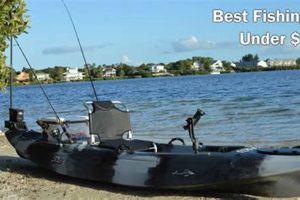
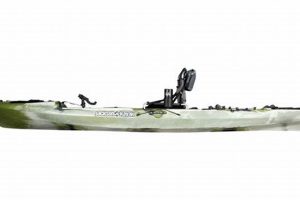
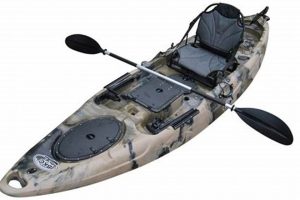
A high-quality fishing kayak measuring approximately 12 feet offers a balance of stability, maneuverability, and portability ideal for anglers. This size range typically accommodates ample storage for fishing gear and provides sufficient deck space for comfortable casting and reeling. A well-designed vessel in this category often includes features like rod holders, paddle clips, and potentially even a livewell or fish finder mount.
The selection of an appropriate fishing kayak greatly impacts the overall angling experience. A stable and efficient platform allows anglers to access a wider range of fishing spots, from calm lakes and ponds to slow-moving rivers and protected coastal waters. This opens up opportunities to target diverse species and explore varied aquatic environments. The evolution of kayak design and materials has led to increasingly specialized fishing kayaks, improving angler comfort, safety, and overall fishing success.
Factors influencing the selection of an optimal 12-foot fishing kayak include angler weight and size, intended fishing environment, desired features, and budget. Understanding these considerations will lead to informed decisions and ultimately, a more rewarding fishing experience. The subsequent sections will delve into specific features, popular models, and essential accessories for anglers seeking the ideal 12-foot fishing platform.
Tips for Selecting a 12-Foot Fishing Kayak
Choosing the right kayak is crucial for a successful and enjoyable fishing experience. Consider these essential factors to ensure an informed decision.
Tip 1: Consider Hull Design: Kayak hull designs significantly impact stability and maneuverability. A flatter hull offers greater stability, particularly beneficial for stand-up fishing, while a V-shaped hull provides better tracking and speed, suited for covering longer distances.
Tip 2: Evaluate Weight Capacity: Ensure the kayak’s weight capacity accommodates the combined weight of the angler, fishing gear, and any potential catch. Exceeding the capacity compromises stability and performance.
Tip 3: Assess Storage Options: Adequate storage is essential for carrying fishing tackle, safety equipment, and personal belongings. Consider the size, location, and accessibility of storage compartments.
Tip 4: Prioritize Comfort and Ergonomics: A comfortable seat and adjustable footrests contribute significantly to long days on the water. Look for features that promote proper posture and reduce fatigue.
Tip 5: Inspect Rod Holders and Mounting Options: Dedicated rod holders and mounting points for fish finders and other accessories enhance fishing efficiency. Consider the number, placement, and type of rod holders available.
Tip 6: Research Material and Durability: Kayaks are typically constructed from polyethylene or composite materials. Polyethylene offers excellent durability and affordability, while composites are lighter and offer enhanced performance, albeit at a higher cost.
Tip 7: Factor in Transportation and Storage: Consider the kayak’s weight and length for ease of transportation and storage. Roof racks, trailers, or specialized kayak carts might be necessary.
Careful consideration of these factors will lead to the selection of a 12-foot fishing kayak that optimizes on-the-water performance, comfort, and overall fishing success.
By understanding these key considerations, anglers can confidently choose a kayak that aligns with their individual needs and fishing preferences, ultimately enhancing their time on the water.
1. Stability

Stability represents a critical performance attribute in fishing kayaks, particularly in the 12-foot range. This length offers a balance between maneuverability and stability, but hull design, weight capacity, and intended use significantly influence overall stability. A stable platform allows anglers to stand and cast, fight fish effectively, and safely navigate varied water conditions. Compromised stability increases the risk of capsizing, especially when battling larger fish or encountering unexpected waves or currents. For example, a kayak with a flatter, wider hull provides inherent stability ideal for calmer waters and stand-up fishing, while a narrower, V-shaped hull sacrifices some stability for increased speed and tracking in open water. Anglers frequently prioritize stability when fishing in shallow water, rivers, or areas prone to boat wakes.
The relationship between stability and kayak performance is multifaceted. A stable kayak allows for more confident and efficient fishing, enabling anglers to focus on technique and strategy rather than maintaining balance. It also contributes to safety by reducing the likelihood of capsizing in challenging conditions. Consider the scenario of landing a large fish; a stable platform provides the angler with the leverage and balance necessary to control the fish and successfully bring it onboard. Conversely, an unstable kayak can make even simple tasks like changing lures or reaching for a drink precarious. Therefore, understanding the factors affecting stability and choosing a kayak appropriate for the intended fishing environment is crucial.
Ultimately, stability in a 12-foot fishing kayak is a foundational element that directly impacts safety, performance, and angler confidence. Evaluating stability requirements based on individual fishing styles, target species, and prevailing water conditions is essential for selecting a kayak that maximizes fishing success and on-the-water enjoyment. Recognizing the interplay between stability and other performance characteristics allows anglers to make informed decisions and optimize their kayak fishing experience.
2. Maneuverability

Maneuverability represents a critical performance characteristic in 12-foot fishing kayaks, directly influencing an angler’s ability to navigate diverse water environments and access prime fishing locations. Optimal maneuverability allows for efficient paddling, precise boat control, and quick adjustments in dynamic conditions, such as currents or wind. This characteristic is particularly important for anglers targeting specific structures, navigating tight waterways, or needing to reposition quickly in response to fish activity.
- Tracking and Turning Performance
Tracking refers to a kayak’s ability to maintain a straight course with minimal corrective strokes. Efficient tracking conserves energy and allows anglers to cover greater distances. Turning performance encompasses the speed and responsiveness of a kayak’s turning radius. A kayak with superior turning performance allows for quick adjustments in direction, crucial for navigating around obstacles or following fish movements. Shorter kayaks generally offer enhanced maneuverability in tight spaces, while longer kayaks provide better tracking across open water. For example, a kayak with a pronounced keel or tracking fin exhibits better tracking but sacrifices some turning agility. Conversely, a shorter, wider kayak turns quickly but may require more corrective strokes to maintain a straight course. The ideal balance between tracking and turning depends on the intended fishing environment.
- Influence of Hull Design
Hull design profoundly impacts maneuverability. A V-shaped hull generally provides better tracking and cuts through the water efficiently, making it suitable for open water or areas with currents. A flatter hull design, while inherently more stable, typically sacrifices some tracking and speed for enhanced maneuverability in shallows or tight spaces. Understanding the relationship between hull design and intended fishing environment is crucial for optimizing on-the-water performance. For instance, a kayak with a shallow-arch hull might be highly maneuverable in rivers or creeks but perform poorly in choppy conditions, where a deeper V-hull excels.
- Impact of Water Conditions
Prevailing water conditions significantly affect maneuverability. Currents, wind, and waves can challenge even the most maneuverable kayaks. Kayaks with sufficient tracking capabilities are less prone to being pushed off course by wind or current. Stability also plays a role in maneuverability, as a stable platform allows for more confident and controlled paddling strokes, even in challenging conditions. A kayak designed for river fishing, for instance, often features a rockered hull and defined chines to enhance maneuverability in currents and around obstacles. Conversely, a kayak intended for open water might prioritize tracking and speed over extreme turning capabilities.
- Importance of Paddling Technique
While kayak design significantly influences maneuverability, paddling technique remains a critical factor. Efficient paddling strokes maximize propulsion and minimize wasted energy, contributing to better control and maneuverability. Proper paddle selection and technique also enhance turning performance and overall boat control. For example, a longer paddle provides more leverage and power, while a shorter paddle allows for quicker strokes and increased maneuverability in tight spaces. Furthermore, mastering various paddling strokes, such as sweep strokes and draws, allows for precise maneuvering in challenging conditions.
The interplay between kayak design, water conditions, and paddling technique ultimately determines overall maneuverability. Selecting a 12-foot fishing kayak with appropriate maneuverability characteristics for the intended fishing environment significantly enhances angling efficiency, access to fishing spots, and overall enjoyment on the water. A well-balanced kayak, combined with proficient paddling skills, empowers anglers to navigate diverse waterways effectively and position themselves strategically for optimal fishing success. Prioritizing maneuverability contributes to a more rewarding and productive kayak fishing experience.
3. Storage Capacity

Storage capacity represents a critical factor in selecting a 12-foot fishing kayak, directly impacting an angler’s ability to carry essential gear, safety equipment, and personal belongings. Adequate storage ensures readily accessible equipment, promoting efficient fishing practices and enhancing overall on-the-water safety and comfort. Insufficient storage can lead to cluttered decks, hindering casting and reeling, and compromising stability. Optimizing storage capacity contributes significantly to a more organized, productive, and enjoyable fishing experience.
- Types of Storage
Fishing kayaks typically offer various storage solutions, including front and rear hatches, tank wells, side pockets, and dedicated compartments for tackle boxes. Front hatches often provide ample space for larger items like tackle bags or dry bags, while rear tank wells are suitable for crates or coolers. Smaller items like pliers, knives, and leader line find a place in side pockets or dedicated compartments. The type and configuration of storage options influence the organization and accessibility of gear. A well-designed storage system allows anglers to quickly locate and retrieve necessary equipment, minimizing disruption to the fishing process.
- Capacity and Accessibility
The overall storage capacity of a 12-foot kayak impacts the amount of gear an angler can comfortably carry. Longer fishing trips or excursions requiring more specialized equipment necessitate greater storage capacity. Equally important is the accessibility of storage compartments. Easy-to-open hatches and strategically placed pockets allow for quick retrieval of essential gear without compromising balance or requiring awkward reaching. For example, a readily accessible tackle box compartment within easy reach of the seated angler streamlines lure changes and maximizes fishing time.
- Weight Distribution and Stability
The distribution of weight within a kayak significantly influences stability. Proper weight distribution, achieved through strategic placement of gear within storage compartments, enhances balance and reduces the risk of capsizing. Overloading a kayak or concentrating weight in one area can compromise stability and maneuverability. Distributing heavier items low and towards the center of the kayak maximizes stability. For example, placing a heavy tackle bag in the front hatch and a cooler in the rear tank well helps balance the kayak and maintain optimal trim.
- Integration with Fishing Features
Storage solutions specifically designed for fishing equipment enhance efficiency and organization. Dedicated rod holders, tackle box compartments, and mounting points for fish finders contribute to a more streamlined and productive fishing experience. Integrated storage solutions minimize clutter on the deck, allowing for unhindered casting and reeling. For instance, recessed rod holders prevent lines from tangling and keep rods secure during transport, while specialized compartments for tackle trays keep lures and terminal tackle organized and readily available.
Careful consideration of storage capacity, types of storage, accessibility, and weight distribution is essential for optimizing a 12-foot fishing kayak’s performance and functionality. A well-designed storage system contributes significantly to angler efficiency, comfort, and safety, allowing for a more focused and rewarding fishing experience. Prioritizing storage solutions aligned with individual fishing styles and anticipated gear requirements ensures that anglers have the necessary equipment readily available while maintaining optimal kayak balance and stability.
4. Comfort

Comfort plays a pivotal role in determining the overall quality of a fishing kayak experience, particularly during extended outings. A comfortable kayak enables anglers to focus on fishing rather than physical discomfort, ultimately maximizing enjoyment and potentially improving performance. Discomfort, conversely, can lead to premature fatigue, reduced concentration, and a diminished appreciation of the angling experience. In the context of a 12-foot fishing kayak, comfort considerations are paramount due to the potential for prolonged periods seated or in a slightly crouched position. An uncomfortable seating arrangement, inadequate back support, or poorly positioned footrests can lead to backaches, leg cramps, and overall discomfort, effectively curtailing fishing time and diminishing the overall experience. For example, an angler experiencing persistent back pain due to poor seat design is less likely to maintain optimal casting form or react quickly to a fish strike.
Several factors contribute to comfort in a 12-foot fishing kayak. A well-designed seat with ample padding and adjustable back support provides crucial ergonomic benefits, promoting proper posture and reducing strain on the back and legs. Adjustable footrests allow anglers of varying heights to find a comfortable and stable paddling position, further enhancing comfort and control. Ample legroom within the cockpit allows for changes in posture and reduces feelings of confinement, contributing to overall well-being during long hours on the water. Consider an angler fishing in colder conditions; a kayak with a higher seat back provides better protection from wind and spray, significantly enhancing comfort and extending fishing time. Similarly, a well-ventilated seat can improve comfort in warmer weather by promoting airflow and reducing perspiration. The cumulative effect of these comfort features contributes to a more positive and productive fishing experience.
Prioritizing comfort in a 12-foot fishing kayak translates to improved endurance, enhanced focus, and a more enjoyable angling experience. Addressing comfort considerations through ergonomic seat design, adjustable footrests, and ample cockpit space enables anglers to remain on the water longer, focus on fishing, and ultimately maximize their chances of success. Disregarding comfort, conversely, can negatively impact performance and lead to a less satisfying experience. Understanding the significant contribution of comfort to the overall fishing kayak experience empowers anglers to make informed decisions and prioritize features that enhance their time on the water.
5. Durability
Durability represents a critical investment consideration when selecting a 12-foot fishing kayak. A durable kayak withstands the rigors of regular use, including impacts, abrasion, and exposure to diverse environmental conditions, ensuring a longer lifespan and preserving its performance capabilities. Conversely, a less durable kayak may require frequent repairs, potentially compromising safety and diminishing the overall enjoyment of the fishing experience. The initial investment in a durable kayak often translates to long-term cost savings and consistent performance over time. A kayak’s ability to withstand impacts from rocks, logs, or accidental groundings, along with resistance to UV degradation and wear from regular paddling and gear storage, directly impacts its long-term usability and value.
- Material Selection
Kayak construction materials significantly influence durability. Polyethylene kayaks offer excellent impact resistance and affordability, making them a popular choice for recreational anglers. Composite materials, such as fiberglass or carbon fiber, provide enhanced performance characteristics, including lighter weight and greater stiffness, but often come at a premium price and may be more susceptible to damage from impacts. Thermoformed kayaks, constructed from a single sheet of plastic, offer a balance of durability and performance. Choosing a material aligned with anticipated usage and budget considerations is crucial for maximizing the kayak’s lifespan.
- Construction Quality
Construction quality plays a vital role in determining a kayak’s durability. Well-constructed kayaks feature reinforced seams, robust hull designs, and high-quality hardware, contributing to overall structural integrity. Manufacturing processes, such as rotational molding or thermoforming, influence the final product’s strength and resistance to wear and tear. Examining the quality of welds, fittings, and overall construction provides insights into a kayak’s ability to withstand long-term use. For example, a kayak with poorly sealed seams may be prone to leaks, while a kayak with flimsy hardware may experience premature failures in critical components like handles or hatch latches.
- UV Resistance
Exposure to ultraviolet radiation from sunlight can degrade kayak materials over time, leading to fading, cracking, and reduced structural integrity. Kayaks specifically designed for outdoor use typically incorporate UV inhibitors in their construction to mitigate the damaging effects of sunlight. Storing a kayak out of direct sunlight when not in use further prolongs its lifespan. A kayak regularly exposed to intense sunlight without adequate UV protection may become brittle and prone to cracking, significantly reducing its lifespan and potentially compromising safety.
- Maintenance and Care
Proper maintenance and care practices contribute significantly to a kayak’s long-term durability. Regular cleaning, rinsing with fresh water after use in saltwater environments, and proper storage practices minimize wear and tear and prevent premature degradation of materials. Addressing minor scratches or damage promptly prevents further deterioration and preserves the kayak’s structural integrity. For instance, rinsing a kayak with fresh water after each use in saltwater environments prevents corrosion of metal components and minimizes the damaging effects of salt crystals on the hull.
Investing in a durable 12-foot fishing kayak ensures long-term performance, reliability, and safety on the water. By considering factors such as material selection, construction quality, UV resistance, and maintenance practices, anglers can choose a kayak that withstands the rigors of regular use and provides years of reliable service. A durable kayak represents a valuable asset, enabling anglers to explore diverse fishing environments with confidence, knowing their equipment can withstand the challenges of the aquatic environment and provide a safe and enjoyable fishing experience for years to come.
6. Fishing Features
Specialized fishing features distinguish a dedicated fishing kayak from a recreational model and contribute significantly to the definition of a “best” 12-foot fishing kayak. These features enhance angler efficiency, comfort, and overall fishing success. The presence, quality, and thoughtful integration of these features directly influence a kayak’s suitability for angling and impact the overall fishing experience. Cause and effect relationships exist between specific features and angling outcomes. For example, strategically placed rod holders allow for hands-free lure changes and efficient rod management, directly contributing to increased fishing time and potentially higher catch rates. Similarly, a well-designed fish finder mount facilitates the use of electronic fish-finding technology, leading to improved fish location and potentially increased angling success.
Fishing features are integral components of a “best” 12-foot fishing kayak. Rod holders, whether flush-mounted, adjustable, or rotating, provide secure storage for rods during paddling and allow for quick access when a fish strikes. Tackle storage compartments keep lures, hooks, and other essential gear organized and readily available, minimizing time spent searching for equipment. Integrated mounting points accommodate fish finders, GPS units, and other electronic accessories, enhancing situational awareness and fish-finding capabilities. A stable platform, often achieved through a wider hull design or outriggers, enables stand-up fishing, providing improved casting angles and visibility. Consider a kayak equipped with a livewell; this feature allows anglers to keep caught fish alive and fresh, crucial for tournament fishing or those practicing catch-and-release. These integrated features collectively elevate a kayak’s functionality and performance specifically for angling.
Understanding the practical significance of fishing features is paramount in selecting a suitable kayak. Prioritizing essential features based on individual fishing styles and target species optimizes on-the-water efficiency and enhances the overall fishing experience. Challenges can arise when attempting to balance desired features with budget constraints or weight limitations. However, careful consideration of fishing style, target species, and prevailing water conditions allows anglers to select a 12-foot fishing kayak equipped with the features most likely to contribute to angling success. This understanding ensures that the selected kayak aligns with individual angler needs and contributes meaningfully to a positive and productive fishing experience.
Frequently Asked Questions
This section addresses common inquiries regarding the selection and use of 12-foot fishing kayaks.
Question 1: What are the advantages of a 12-foot kayak for fishing compared to shorter or longer models?
Twelve-foot kayaks offer a balance of stability, maneuverability, and storage capacity ideal for many fishing environments. Shorter kayaks excel in maneuverability but may lack storage and tracking capabilities. Longer kayaks offer superior tracking and speed but can be cumbersome to transport and maneuver in tight spaces.
Question 2: How does hull design impact the performance of a 12-foot fishing kayak?
Hull design significantly influences stability, maneuverability, and speed. Flatter hulls maximize stability for stand-up fishing, while V-shaped hulls enhance tracking and speed in open water. A pontoon hull offers exceptional stability, while a tunnel hull enhances performance in shallow water.
Question 3: What weight capacity should one consider when selecting a 12-foot fishing kayak?
Weight capacity should accommodate the combined weight of the angler, all fishing gear, and potential catch. Exceeding the specified weight capacity compromises stability and performance, potentially leading to unsafe conditions.
Question 4: What essential features should one look for in a 12-foot fishing kayak?
Essential features include rod holders, ample storage compartments, a comfortable and adjustable seat, and durable construction. Additional features such as a rudder, anchor trolley system, and integrated fish finder mount enhance functionality and angling performance.
Question 5: What are the primary materials used in constructing 12-foot fishing kayaks, and how do they differ?
Common materials include polyethylene, which offers durability and affordability, and composite materials like fiberglass or carbon fiber, which provide enhanced performance characteristics but at a higher cost. Each material exhibits different strengths and weaknesses concerning weight, durability, and maintenance.
Question 6: How does one transport and store a 12-foot fishing kayak?
Transportation options include roof racks, trailers, and specialized kayak carts. Storage options include garages, sheds, or specialized kayak storage racks. Appropriate storage and transport practices protect the kayak and prolong its lifespan.
Careful consideration of these frequently asked questions enables informed decision-making and ultimately contributes to a more rewarding kayak fishing experience.
The subsequent section will provide concluding insights into selecting the optimal 12-foot fishing kayak.
Conclusion
Optimal 12-foot fishing kayak selection requires careful evaluation of individual needs and priorities. Factors such as hull design, stability, maneuverability, storage capacity, comfort, durability, and specialized fishing features contribute significantly to on-the-water performance and overall angling success. Balancing these elements within budgetary constraints and intended usage scenarios ensures a well-informed purchase decision. A thorough understanding of these key considerations equips anglers with the knowledge necessary to choose a kayak that enhances fishing experiences and contributes to positive outcomes on the water.
The pursuit of the ideal fishing kayak represents an investment in enhanced angling opportunities and enjoyment. Careful deliberation of the factors discussed empowers anglers to select a 12-foot kayak that aligns precisely with individual needs and aspirations. This informed approach fosters a deeper connection with the sport and maximizes the potential for rewarding experiences on the water. Ultimately, selecting the right kayak unlocks new possibilities for exploration, adventure, and connection with the aquatic environment.