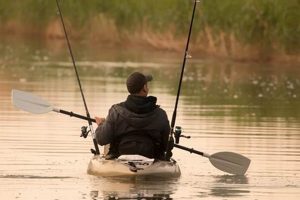
Integrating secure rod storage into a kayak enhances angling experiences. This involves attaching specialized mounts or holders designed to cradle fishing rods, freeing hands for paddling, landing fish, and other essential tasks. For example, flush-mounted rod holders offer a streamlined profile while adjustable holders provide flexibility for various rod lengths and angles.
Convenient rod storage is crucial for kayak anglers. It prevents rods from tangling, falling overboard, or obstructing paddling. Moreover, it allows for quick access to rods when fish strike, maximizing angling opportunities. Historically, anglers improvised rod storage solutions, but the advent of purpose-built kayak fishing accessories has revolutionized the sport, leading to more organized and efficient angling experiences.
This article will delve into various types of rod holders, installation methods, and factors influencing holder selection. It will also explore compatibility with different kayak types and provide practical tips for optimizing rod placement and security.
Tips for Kayak Fishing Rod Holder Integration
Proper rod holder selection and installation are crucial for a successful kayak fishing experience. These tips offer guidance on maximizing utility and ensuring equipment security.
Tip 1: Consider Kayak Compatibility: Rod holder compatibility varies based on kayak construction (sit-on-top, sit-inside) and hull material. Ensure chosen holders are suitable for the specific kayak type.
Tip 2: Evaluate Fishing Style: Angling techniques influence holder choice. Trolling requires sturdy, adjustable holders, while still-fishing benefits from flush-mounted or angled holders.
Tip 3: Prioritize Secure Mounting: Use appropriate mounting hardware and ensure secure attachment to the kayak. Reinforce mounting points if necessary, particularly for heavier rods and reels.
Tip 4: Optimize Placement for Accessibility: Position rod holders within easy reach while maintaining an unobstructed paddling stroke. Consider the angler’s dominant hand and preferred casting technique.
Tip 5: Choose Appropriate Holder Material: Select durable, corrosion-resistant materials such as marine-grade stainless steel or high-impact plastic. Consider UV resistance for long-term performance.
Tip 6: Plan for Rod Length and Type: Match holder size and design to the length and type of fishing rods used. Longer rods may require specialized holders or extensions.
Tip 7: Test and Adjust: After installation, conduct a test run to ensure rod holders function as intended. Adjust positioning and angles as needed for optimal performance.
Following these guidelines ensures efficient rod storage, enhances angling performance, and promotes safety on the water. A well-planned setup allows anglers to focus on the fishing experience, rather than equipment management.
By understanding the nuances of rod holder selection and integration, kayak anglers can create a customized setup that maximizes efficiency and enjoyment on the water. This article concludes with a summary of key takeaways and resources for further exploration.
1. Placement

Rod holder placement significantly impacts kayak fishing efficacy. Strategic positioning optimizes casting, retrieval, and overall angling ergonomics. Careful consideration of placement ensures an efficient and enjoyable fishing experience. This section explores key facets influencing optimal rod holder placement.
- Casting Arc Clearance:
Holders should not obstruct the angler’s casting motion. Sufficient clearance around the holder allows for unimpeded backcasts and forward casts, preventing tangles and equipment damage. For example, placing holders too far forward can interfere with paddle strokes, while positioning them too far back limits casting range. Careful consideration of casting mechanics informs ideal placement.
- Reach and Retrieval:
Rods should be readily accessible for both casting and fighting fish. Placement within comfortable reach minimizes strain and allows for quick reactions to strikes. For instance, positioning holders near the dominant hand facilitates efficient rod retrieval. Accessibility enhances responsiveness and angling success.
- Paddle Stroke Interference:
Rod holder placement must not impede paddling efficiency. Holders positioned too close to the paddling zone can interfere with paddle strokes, reducing maneuverability and stability. Proper spacing between holders and paddle arc ensures unobstructed paddling. This balance between accessibility and paddle clearance is crucial for effective kayak control.
- Line Management:
Holder placement influences fishing line management. Positioning holders to minimize line tangling with the kayak, paddle, or other gear streamlines fishing operations. For example, angling holders slightly outward can prevent lines from dragging along the kayak’s hull. Strategic placement enhances line control and reduces the risk of snags.
Effective rod holder placement integrates these facets, creating a balanced setup that maximizes angling efficiency and enjoyment. By considering casting mechanics, reach, paddle clearance, and line management, kayak anglers can optimize their setup for a seamless and productive fishing experience. This informed approach to placement contributes significantly to overall angling success.
2. Security
Secure rod storage is paramount when adding fishing pole holders to a kayak. Insecure setups risk rod loss or damage, potentially jeopardizing angling opportunities and incurring equipment replacement costs. A secure system prevents rods from dislodging due to impacts, sudden movements, or encounters with underwater obstacles. For example, a poorly secured rod bouncing out during navigation through rough waters could be lost or broken. Robust mounting hardware and appropriate holder designs tailored to rod types are essential for minimizing such risks. This directly impacts the longevity of fishing equipment and the overall success of fishing expeditions.
Several factors influence rod holder security. Holder material and construction play a vital role; robust materials like marine-grade stainless steel or high-impact plastic withstand environmental stresses and impacts. Mounting hardware should be chosen based on kayak construction and anticipated loads. Through-bolting offers superior strength for rigid kayaks, while specialized adhesives provide secure attachment points for inflatable models. Furthermore, proper installation techniques, including using backing plates and sealant, enhance the structural integrity of the mounting system. These combined measures contribute to a secure and reliable rod storage solution, safeguarding valuable equipment and enhancing the angler’s peace of mind.
Prioritizing security during rod holder installation safeguards investments and ensures uninterrupted fishing experiences. A well-secured system minimizes disruptions caused by equipment failure, allowing anglers to focus on the task at hand. Addressing potential security vulnerabilities proactively contributes to a safer and more efficient kayak fishing setup. This proactive approach ultimately enhances the overall enjoyment and success of angling excursions.
3. Accessibility

Effortless access to fishing rods is crucial for efficient kayak angling. Accessibility considerations influence rod holder placement and design, directly impacting an angler’s ability to react swiftly to strikes and manage equipment effectively. Strategic placement minimizes time spent retrieving rods, allowing for timely hooksets and reducing fish escapes. This section examines key accessibility facets integral to successful kayak fishing setups.
- Reach and Grip:
Rod holders should be positioned within easy reach, allowing anglers to grasp rods quickly and securely without excessive stretching or awkward movements. Optimal placement considers the angler’s seated position and paddling arc. For example, holders placed too far forward might obstruct paddling, while holders too far back hinder rapid retrieval. Proper reach minimizes response time, maximizing hook-up rates and angling efficiency.
- Obstruction-Free Retrieval:
The path from holder to fishing position should be unobstructed. Gear, kayak features, or the angler’s body should not impede swift rod retrieval. A clear retrieval path prevents tangles, delays, and potential equipment damage during critical moments. This streamlined access ensures the angler remains prepared for unexpected strikes and maintains control during fish fights.
- Holder Design and Functionality:
Holder design influences rod accessibility. Certain holder types, like angled or rotating holders, facilitate easier rod retrieval compared to flush-mounted designs. Choosing appropriate holder styles based on fishing techniques and personal preferences enhances accessibility and overall angling ergonomics. This informed selection streamlines equipment interaction, improving efficiency and reducing fatigue during extended fishing trips.
- Single-Handed Operation:
Ideally, rod retrieval should be achievable with one hand, leaving the other free for paddle control or other tasks. This single-handed accessibility is particularly crucial in dynamic fishing scenarios requiring quick reactions and maneuverability. This capability allows anglers to maintain kayak control while simultaneously addressing fish strikes, enhancing safety and angling effectiveness.
Prioritizing accessibility in rod holder selection and placement significantly enhances kayak fishing experiences. Streamlined access to rods translates to improved reaction times, increased hook-up ratios, and ultimately, greater angling success. By optimizing these accessibility factors, anglers create a more efficient and enjoyable fishing platform tailored to their individual needs and preferences. This thoughtful approach to equipment integration empowers anglers to fully focus on the pursuit of their target species.
4. Holder Type

Holder type selection is a critical aspect of integrating fishing rod storage into a kayak. Varying holder designs cater to different fishing styles, rod types, and kayak configurations. Choosing appropriate holders directly impacts angling efficiency, equipment security, and overall fishing experience. Understanding the nuances of various holder types empowers informed decision-making, leading to a customized setup optimized for individual needs.
- Flush Mount Holders
Flush mount holders integrate seamlessly with the kayak’s surface, minimizing profile and reducing snag potential. Ideal for trolling or drifting, these holders offer a streamlined setup for techniques where rods remain stationary for extended periods. They are often favored for their low-profile design, reducing wind resistance and line tangles. However, they may offer less flexibility in rod positioning compared to adjustable models.
- Adjustable Holders
Adjustable holders provide flexibility in rod angle and orientation. This adaptability caters to diverse fishing techniques, from casting to still-fishing. Anglers can fine-tune rod positioning to optimize line presentation and strike detection. This versatility makes them suitable for various fishing styles and environments, but they can add to the kayak’s overall profile.
- Rail Mount Holders
Rail mount holders attach to kayak track systems, offering flexibility in positioning along the rail. This adaptability allows for customization based on angler preference and fishing technique. They are particularly beneficial for kayaks equipped with extensive track systems, allowing for versatile rod placement and easy relocation. However, they require compatible track systems and may not be suitable for all kayak models.
- Rotating Holders
Rotating holders allow for 360-degree rod rotation, facilitating quick adjustments to changing fishing conditions or fish movements. This maneuverability is advantageous when fighting larger fish or targeting specific areas. They offer enhanced control and responsiveness during dynamic fishing scenarios, but they can be more complex to install and maintain compared to fixed holders.
Selecting appropriate holder types based on individual fishing styles and kayak configurations optimizes equipment integration and enhances angling performance. Careful consideration of holder features, such as adjustability, mounting options, and rotational capabilities, ensures a customized setup that maximizes efficiency and enjoyment on the water. By understanding the strengths and limitations of each holder type, kayak anglers can create a tailored system that meets their specific needs and enhances their overall fishing experience.
5. Kayak Compatibility

Kayak compatibility is paramount when considering fishing rod holder integration. Holder selection and installation must align with the kayak’s design and construction to ensure stability, functionality, and safety. Ignoring compatibility can compromise the kayak’s structural integrity and the angler’s fishing experience. This section explores key compatibility facets crucial for successful rod holder integration.
- Hull Material and Construction:
Kayak hull materials influence mounting options. Rigid kayaks (polyethylene, composite) accommodate various mounting methods, including through-bolting and track systems. Inflatable kayaks require specialized adhesives or clamp-on systems. Choosing incompatible mounting hardware risks damaging the kayak’s structure. For instance, attempting to through-bolt a holder onto an inflatable kayak would likely result in punctures and leaks. Careful consideration of hull material guides appropriate mounting hardware selection.
- Kayak Type (Sit-on-Top vs. Sit-Inside):
Kayak type influences holder placement and accessibility. Sit-on-tops offer greater flexibility in holder placement due to their open deck design. Sit-inside kayaks require strategic placement to avoid interference with the cockpit and paddling. Holder selection should align with the kayak’s design to optimize ergonomics and functionality. For example, flush-mounted holders might be preferable on sit-on-tops to minimize snag potential, while adjustable holders might suit sit-inside kayaks to maximize reach and adjustability.
- Kayak Width and Stability:
Kayak width and stability influence holder placement and the number of rods carried. Wider, more stable kayaks accommodate multiple rod holders without compromising balance. Narrower kayaks require careful rod placement to maintain stability, especially when fishing in challenging conditions. Excessive rod weight or poorly positioned holders can negatively impact kayak stability and maneuverability. Considering kayak dimensions and stability characteristics is crucial for safe and efficient rod holder integration.
- Existing Features and Accessories:
Pre-existing features, such as track systems or factory-installed inserts, influence holder selection. Utilizing existing features streamlines installation and minimizes the need for drilling or modifications. Compatibility with existing accessories, such as fish finders or paddle clips, should also be considered to avoid interference and optimize deck space utilization. Integrating rod holders seamlessly with existing features enhances functionality and maintains a clutter-free kayak setup.
Addressing kayak compatibility ensures secure, functional, and safe rod holder integration. Considering hull material, kayak type, stability, and existing features informs appropriate holder selection and placement. This meticulous approach maximizes angling efficiency while preserving the kayak’s integrity, contributing to a more enjoyable and productive fishing experience. By prioritizing compatibility, anglers create a seamless and customized setup optimized for their specific kayak and fishing style.
6. Installation Method
Installation method is integral to successfully adding a fishing pole holder to a kayak. The chosen method directly impacts holder stability, security, and longevity. A secure installation ensures reliable rod storage, preventing equipment loss and enhancing angling efficiency. Conversely, improper installation can compromise the kayak’s structural integrity, leading to leaks, instability, or holder failure. For instance, using inadequate hardware on a rigid kayak might result in the holder detaching during use, potentially leading to rod loss or damage. Alternatively, incorrectly applying adhesive on an inflatable kayak could cause leaks or premature bond failure.
Several factors influence installation method selection. Kayak construction material dictates appropriate hardware and techniques. Rigid kayaks typically accommodate through-bolting or track-mounted systems, offering robust attachment points. Inflatable kayaks require specialized adhesives or clamp-on systems designed for flexible surfaces. Holder type also influences installation; flush-mounted holders require precise positioning and secure fastening, while adjustable holders necessitate adaptable mounting systems that allow for angle adjustments. Furthermore, angler skill and available tools play a role; some methods, like through-bolting, require specialized tools and knowledge, whereas adhesive-based installations might be more accessible for novice DIY enthusiasts. Understanding these interconnected factors ensures appropriate method selection and successful integration of rod holders into the kayak system.
Correct installation is crucial for long-term performance and safety. A secure and properly installed rod holder enhances angling efficiency, reduces equipment-related disruptions, and contributes to a more enjoyable fishing experience. Addressing potential installation challenges proactively, such as ensuring proper surface preparation and using appropriate sealants, minimizes future maintenance and maximizes the lifespan of the rod holder system. This proactive approach safeguards equipment investments and promotes safe kayak operation, allowing anglers to focus on their fishing objectives.
Frequently Asked Questions
This section addresses common inquiries regarding kayak fishing rod holder integration. Clarity on these points facilitates informed decision-making and promotes safe and efficient equipment usage.
Question 1: How many rod holders can be added to a kayak?
The number of rod holders depends on kayak size, stability, and intended fishing style. Larger, more stable kayaks accommodate more holders. However, excessive holders can impede paddling and maneuverability. Careful consideration of balance and accessibility is crucial.
Question 2: Are specialized tools required for rod holder installation?
Required tools vary based on installation method. Through-bolting necessitates drills and appropriate bits. Adhesive installations might require surface preparation tools. Consulting manufacturer instructions provides specific tool requirements.
Question 3: Can rod holders be installed on inflatable kayaks?
Yes, specialized adhesives and mounting systems exist for inflatable kayaks. Ensuring compatibility with kayak material and following manufacturer guidelines is crucial for secure attachment and preventing leaks.
Question 4: What materials are best for kayak fishing rod holders?
Marine-grade stainless steel and high-impact plastics are preferred for their durability and corrosion resistance. Material choice should consider environmental conditions and potential exposure to saltwater or UV radiation.
Question 5: How does rod holder placement impact kayak stability?
Rod holder placement influences weight distribution and balance. Positioning holders too far outboard can compromise stability, particularly on narrower kayaks. Centering weight and considering rod length contribute to balanced kayak performance.
Question 6: Are rod holders universally compatible across all kayak brands?
No, compatibility varies based on kayak design, construction, and existing features. Consulting manufacturer specifications and considering kayak-specific mounting systems ensures proper fit and functionality.
Understanding these common considerations promotes informed decisions regarding rod holder selection and installation. Prioritizing compatibility, security, and functionality enhances angling experiences and safeguards equipment investments.
The subsequent section offers concluding remarks and additional resources for further exploration of kayak fishing rod holder integration.
Integrating Fishing Rod Holders into Kayaks
Successful integration of fishing rod holders into kayaks hinges upon careful consideration of several factors. Kayak compatibility dictates appropriate holder types and mounting methods. Holder placement significantly influences accessibility, casting efficiency, and overall kayak balance. Security measures, including robust mounting hardware and proper installation techniques, safeguard valuable equipment and ensure longevity. Understanding the interplay of these elements empowers informed decisions, resulting in a customized setup optimized for individual angling needs and kayak configurations. Careful planning and execution are essential for maximizing both enjoyment and success on the water.
Strategic rod holder integration elevates kayak fishing experiences. A well-planned setup enhances angling efficiency, improves safety, and allows for greater focus on the pursuit of targeted species. By understanding and addressing the nuances of holder selection, placement, and installation, kayak anglers can transform their vessels into highly effective and personalized fishing platforms. This thoughtful approach to equipment integration unlocks the full potential of kayak fishing, fostering deeper connections with the sport and the aquatic environment.