Evaluations of kayaks designed for larger individuals or challenging fishing conditions typically focus on stability, capacity, and specialized features like rod holders and gear storage. These assessments consider factors such as weight capacity, hull design, maneuverability, and comfort, offering prospective buyers valuable insights into a kayak’s suitability for angling in diverse environments.
Detailed analyses of fishing kayaks designed for demanding situations provide crucial information for anglers. Choosing the right watercraft impacts not only safety and comfort but also fishing success. Understanding the nuances of kayak design, including stability and specialized features, allows anglers to make informed purchasing decisions based on their individual needs and fishing styles. This knowledge has become increasingly important as kayak fishing has grown in popularity and manufacturers have responded with a wider variety of specialized models.
This discussion will delve into key aspects of selecting a suitable fishing kayak, including hull design, construction materials, essential features, and top-rated models. Furthermore, it will explore the growing market for these specialized kayaks and the factors driving innovation in their design and functionality.
Tips for Evaluating Fishing Kayaks
Choosing a fishing kayak requires careful consideration of various factors. The following tips provide guidance for selecting a suitable vessel for specific fishing needs and conditions.
Tip 1: Prioritize Stability: Consider the intended fishing environment. Calm lakes and rivers allow for greater flexibility in hull design, while ocean fishing demands exceptional stability. Look for features like a wider hull and a lower center of gravity.
Tip 2: Evaluate Weight Capacity: Account for the combined weight of the angler, gear, and potential catch. Exceeding the manufacturer’s specified capacity compromises stability and safety.
Tip 3: Assess Storage Options: Adequate storage is crucial for fishing gear, tackle boxes, and personal items. Consider the size, location, and accessibility of storage compartments.
Tip 4: Examine Comfort and Ergonomics: A comfortable seat and adjustable footrests are essential for long hours on the water. Look for features like adjustable backrests and ample legroom.
Tip 5: Consider Maneuverability: Kayaks designed for fishing in rivers and streams require greater maneuverability than those intended for open water. Shorter kayaks generally offer better maneuverability.
Tip 6: Factor in Propulsion: Choose a propulsion system suited to the fishing environment and personal preference. Paddle kayaks offer excellent exercise and control, while pedal-powered kayaks allow hands-free fishing.
Tip 7: Research Construction Materials: Consider the durability and weight of different materials. Polyethylene is a common choice for its affordability and impact resistance, while composite materials offer lighter weight and increased performance.
By considering these factors, anglers can select a fishing kayak that optimizes performance, safety, and comfort on the water. A well-chosen kayak enhances the overall fishing experience and contributes to a successful outing.
These tips offer a starting point for evaluating fishing kayaks. Further research and consideration of individual needs are essential for making an informed decision.
1. Stability

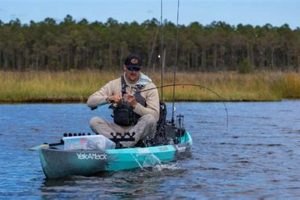
Stability forms a cornerstone of any comprehensive evaluation of kayaks designed for large fish. A kayak’s ability to remain upright and balanced, especially under stress, directly impacts angler safety and fishing success. Consider the scenario of hooking a powerful fish. The sudden force and ensuing struggle can destabilize a less stable kayak, potentially leading to capsizing. Conversely, a highly stable platform allows the angler to maintain control and focus on landing the fish. This stability is influenced by factors such as hull design (e.g., wider hulls generally offer greater stability), center of gravity, and weight distribution.
The importance of stability becomes even more pronounced when considering the dynamic environment of angling for large fish. Factors like strong currents, waves, and wind can further challenge a kayak’s stability. A stable kayak provides a secure platform, enabling the angler to confidently navigate these conditions and effectively manage the fight with a large fish. For instance, a kayak designed for offshore fishing typically features a broader beam and a lower center of gravity to maximize stability in challenging open-water conditions. Evaluating stability involves examining performance in various scenarios, including still water, choppy conditions, and during simulated fish fights.
In summary, stability is not merely a desirable feature but a critical performance aspect that must be thoroughly assessed in any serious evaluation of a kayak designed for large fish. Compromising stability can jeopardize safety and hinder fishing success. Therefore, understanding the factors influencing stability and their practical implications empowers informed decision-making and contributes to a safer and more rewarding angling experience.
2. Weight Capacity

Weight capacity plays a pivotal role in evaluations of kayaks designed for large fish. This specification, representing the maximum combined weight the kayak can safely support, directly influences stability, performance, and angler safety. A kayak’s weight capacity must accommodate not only the angler’s weight but also the combined weight of fishing gear, accessories, and potential catch. Exceeding this limit compromises stability, increases the risk of capsizing, and can even damage the kayak. Therefore, accurate assessment of weight capacity is paramount when evaluating kayaks intended for large fish.
Consider the scenario of an angler targeting large saltwater species. The combined weight of the angler, tackle, and a substantial fish can easily exceed the capacity of a smaller kayak. This overload significantly reduces freeboard (the distance between the waterline and the top edge of the hull), making the kayak more susceptible to swamping. Furthermore, a kayak operating near its maximum capacity becomes less responsive and more difficult to maneuver, hindering the angler’s ability to control the fight and increasing the risk of losing the fish. Conversely, a kayak with ample weight capacity provides a stable and responsive platform, enabling the angler to confidently handle large fish in challenging conditions. For example, a kayak with a higher weight capacity often features a wider beam and a more robust hull design, contributing to enhanced stability and load-bearing capability.
In conclusion, weight capacity is not merely a technical specification but a critical factor that directly impacts the safety, performance, and overall suitability of a kayak for targeting large fish. A thorough evaluation must consider weight capacity in relation to the angler’s size, the intended fishing environment, and the potential size of the target species. Understanding this relationship empowers informed decision-making, leading to a safer and more successful fishing experience.
3. Storage Space

Storage space is a critical aspect of big fish kayak reviews, directly influencing an angler’s preparedness and efficiency on the water. Sufficient and well-designed storage allows for organized transport and easy access to essential equipment, contributing significantly to a successful fishing experience, particularly when targeting large, powerful fish that demand specialized gear and quick access to tools.
- Rod Storage
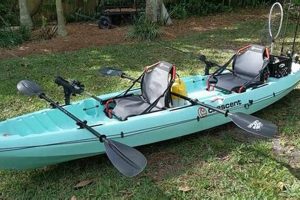
Secure and accessible rod storage is essential for protecting valuable fishing rods and ensuring they are readily available when needed. Dedicated rod holders, either flush-mounted or adjustable, prevent rods from tangling or being damaged during transit or while fighting a fish. Kayak reviews often assess the quantity, placement, and security of rod holders, considering their suitability for different rod types and fishing styles.
- Tackle Storage
Organized tackle storage is paramount for efficient lure and bait management. Dedicated compartments, often waterproof and removable, allow anglers to categorize and quickly access different lures, hooks, weights, and other essential tackle items. Reviews often evaluate the size, accessibility, and organization of tackle storage, considering factors such as ease of access and protection from the elements. For instance, a well-designed tackle storage system enables quick changes of lures based on fish behavior and water conditions, a crucial aspect when targeting large fish.
- Gear Storage
Ample gear storage facilitates carrying essential items such as safety equipment, first-aid kits, extra clothing, and food and water. Larger compartments, often located in the bow or stern, accommodate dry bags and other storage solutions. Reviews assess the capacity, accessibility, and water resistance of these compartments, evaluating their practicality for longer fishing trips. This becomes particularly important in scenarios involving remote locations or multi-day excursions.
- Specialized Storage
Specialized storage solutions cater to specific fishing needs. Examples include dedicated compartments for fish finders, battery storage, anchor trolleys, and even live wells for keeping bait or caught fish. Reviews analyze the availability and functionality of these specialized storage features, considering their relevance to specific fishing styles and target species. For instance, a kayak designed for kayak fishing tournaments may prioritize a large, easily accessible live well, while a kayak intended for deep-sea fishing might emphasize secure storage for electronic equipment.
In summary, storage space significantly impacts the functionality and overall fishing experience, especially when pursuing large fish. A comprehensive review analyzes the various storage options available, considering their capacity, accessibility, security, and suitability for different fishing scenarios. A well-designed storage system contributes to angler efficiency, safety, and overall success on the water.
4. Durability

Durability is a paramount concern in big fish kayak reviews, as these kayaks are subjected to significantly greater stresses than recreational models. Targeting large, powerful fish necessitates a robust construction capable of withstanding the intense forces encountered during the fight. A durable kayak ensures longevity, minimizes maintenance, and contributes to angler safety in demanding fishing environments.
- Hull Material
Hull material significantly influences a kayak’s durability. Polyethylene kayaks are common due to their impact resistance and affordability, while higher-end models often utilize composites like fiberglass or Kevlar for increased strength and lighter weight. A kayak’s ability to withstand impacts from rocks, submerged logs, or even the thrashing of a large fish depends heavily on the hull material’s resilience. For example, a polyethylene kayak might exhibit scratches and abrasions from contact with rocks, while a composite kayak might sustain more significant damage from the same impact. The choice of hull material directly impacts the kayak’s long-term performance and resistance to wear and tear.
- Construction Quality
Construction quality encompasses factors such as the joining methods used in assembling the kayak, the reinforcement of stress points, and the overall fit and finish. Properly sealed seams and robust hardware are crucial for preventing water intrusion and ensuring structural integrity. For instance, poorly sealed seams can lead to leaks and weakening of the hull over time, while inadequate hardware can fail under stress, particularly during the fight with a large fish. A high-quality construction translates to a longer lifespan and greater reliability in demanding fishing conditions.
- UV Resistance
Kayaks are constantly exposed to sunlight, making UV resistance a crucial factor in their long-term durability. UV radiation can degrade certain materials, leading to fading, brittleness, and reduced structural integrity. Kayaks designed for serious fishing often incorporate UV inhibitors in their construction to protect against sun damage. For example, a kayak lacking adequate UV protection might become brittle and crack over time, compromising its safety and performance. A UV-resistant kayak retains its structural integrity and aesthetic appeal, ensuring long-term performance and value.
- Hardware and Fittings
The durability of hardware and fittings, such as handles, latches, and rod holders, contributes significantly to the overall longevity of a fishing kayak. High-quality, corrosion-resistant materials like stainless steel or marine-grade aluminum ensure that these components withstand the harsh marine environment and the stresses of heavy use. For instance, rusting or corroding hardware can compromise functionality and even lead to structural failure. Durable hardware and fittings maintain their functionality over time, contributing to a reliable and enjoyable fishing experience.
In summary, durability represents a critical aspect of big fish kayak evaluations. A durable kayak withstands the rigors of pursuing large fish, providing anglers with a reliable platform for years to come. Evaluating hull material, construction quality, UV resistance, and hardware quality provides a comprehensive understanding of a kayak’s long-term performance and suitability for demanding fishing scenarios.
5. Maneuverability

Maneuverability represents a critical performance attribute in big fish kayak reviews, directly influencing an angler’s ability to control the kayak and effectively manage the fight with a large, powerful fish. Precise and responsive handling allows for quick adjustments in position, crucial for maintaining proper angling angles and preventing line breakage. A highly maneuverable kayak empowers the angler to navigate challenging currents, obstacles, and the unpredictable movements of a large fish, maximizing control and increasing the chances of a successful landing.
- Tracking and Turning
Tracking, the kayak’s ability to maintain a straight course, and turning responsiveness are fundamental aspects of maneuverability. A kayak that tracks well requires less effort to paddle in a straight line, conserving energy during long fishing trips. Responsive turning allows for quick adjustments in direction, crucial when following a fish or avoiding obstacles. In the context of big fish kayak reviews, these factors are evaluated in relation to the kayak’s length, hull design, and rudder or skeg system. For example, a longer kayak generally tracks better in open water but may be less maneuverable in tight spaces compared to a shorter kayak with a more pronounced rocker (upward curve of the hull).
- Stability and Responsiveness
While stability is often associated with resisting tipping, it also influences maneuverability. A stable kayak provides a secure platform for making quick turns and adjustments without compromising balance. Responsiveness, how quickly the kayak reacts to paddle input, is crucial for precise maneuvering and maintaining control during the fight with a powerful fish. Kayak reviews often consider the interplay between stability and responsiveness, recognizing that excessive stability can sometimes come at the expense of agility. For example, a wider, more stable kayak might feel less responsive to paddle input compared to a narrower, more agile design.
- Influence of Propulsion System
The kayak’s propulsion system significantly impacts maneuverability. Paddle kayaks offer direct control and allow for precise adjustments in speed and direction. Pedal-powered kayaks provide hands-free operation, beneficial for fishing but may limit maneuverability in tight spaces. Motorized kayaks offer increased speed and range but introduce factors like propeller torque and steering response that influence maneuverability. Reviews typically assess how the propulsion system affects turning radius, tracking, and overall handling in various fishing scenarios.
- Impact of Water Conditions
Maneuverability must be considered in the context of the intended fishing environment. A kayak that performs well in calm lakes might struggle in strong currents or choppy ocean conditions. Kayak reviews often evaluate performance in various water conditions, assessing how wind, waves, and currents affect tracking, turning, and overall control. For example, a kayak with a high-performance hull design might excel in rough water but may feel overly responsive and less stable in calm conditions.
In conclusion, maneuverability is a crucial factor in big fish kayak reviews, impacting the angler’s ability to control the kayak, effectively manage the fight, and ultimately succeed in landing a large fish. Evaluating maneuverability requires considering various factors, including tracking, turning responsiveness, stability, propulsion system, and the influence of water conditions. Understanding these elements empowers informed decision-making and contributes to a safer and more successful fishing experience.
6. Comfort Features
Comfort features play a crucial role in big fish kayak reviews, as angling for large species often requires extended periods on the water, sometimes in challenging conditions. A comfortable kayak enables anglers to maintain focus and stamina, crucial for successfully landing powerful fish after prolonged fights. Discomfort, conversely, can lead to fatigue, distraction, and a diminished fishing experience. Therefore, evaluating comfort features is essential for assessing a kayak’s suitability for extended fishing trips targeting large game.
- Seat Design
Seat design significantly impacts long-term comfort. Features like adjustable backrests, ample padding, and breathable fabrics contribute to proper posture and pressure distribution, minimizing fatigue and discomfort during extended fishing sessions. A well-designed seat allows anglers to maintain focus on fishing rather than discomfort, especially during prolonged fights with large fish. High-back seats offer additional support, while adjustable lumbar support further enhances comfort and reduces strain. Materials like breathable mesh fabric enhance ventilation and prevent overheating in warm climates.
- Footrests and Legroom
Adjustable footrests and ample legroom are essential for maintaining a comfortable and stable paddling position. Proper leg support enhances paddling efficiency and reduces fatigue, allowing anglers to cover greater distances and maintain control in challenging conditions. Adjustable footrests accommodate different leg lengths and paddling styles, while sufficient legroom prevents cramping and discomfort during long hours on the water. This is particularly important when battling large fish, as a stable and comfortable paddling position is crucial for maintaining control and leverage.
- Standing Platform
A stable standing platform, often integrated into the kayak’s design, offers significant advantages for sight fishing and casting. Standing provides a higher vantage point for spotting fish and allows for more powerful casts, increasing fishing effectiveness. A stable platform minimizes the risk of falling, particularly important when fighting a large fish from a standing position. Features like non-slip surfaces and strategically placed grab handles further enhance stability and safety. The ability to stand and fish comfortably can be a decisive factor in choosing a kayak designed for targeting larger species.
- Deck Layout and Accessibility
A well-designed deck layout with easy access to essential gear and accessories enhances angler efficiency and comfort. Strategically placed rod holders, tackle storage compartments, and other accessories minimize the need for excessive reaching or bending, reducing strain and fatigue. A clutter-free deck improves safety and allows for quick access to essential items during critical moments of the fight. For instance, readily accessible pliers or a landing net can be crucial for securing a large fish quickly and safely.
In summary, comfort features directly impact the overall fishing experience, especially when targeting large fish that demand extended periods on the water and intense physical exertion. A comfortable kayak allows anglers to maintain focus, stamina, and control, maximizing their chances of success. Therefore, evaluating comfort features like seat design, footrests, standing platform, and deck layout is essential in a comprehensive big fish kayak review.
7. Specialized Features (e.g., Rod Holders)

Specialized features significantly influence a big fish kayak’s effectiveness and overall performance. These features cater to the specific demands of angling for large, powerful species, enhancing angler efficiency, safety, and comfort. A comprehensive review must carefully consider these specialized features and their contribution to the overall fishing experience.
- Rod Holders
Rod holders secure fishing rods, keeping them readily accessible and preventing damage or loss. Different types of rod holders, including flush-mounted, adjustable, and rotating models, cater to various fishing techniques and rod types. Secure rod storage is crucial when battling large fish, as it allows anglers to maintain control of the kayak and focus on the fight. For example, adjustable rod holders allow for precise positioning of rods for trolling or drift fishing, maximizing effectiveness. The number, placement, and type of rod holders are important considerations in a big fish kayak review.
- Tackle Management Systems
Efficient tackle management systems are essential for organizing lures, hooks, weights, and other fishing accessories. Dedicated compartments, trays, and storage solutions keep tackle readily accessible, minimizing time spent searching for specific items and maximizing fishing time. In the context of big fish angling, quick access to the right tackle can be crucial for adapting to changing fish behavior or water conditions. Reviews consider the capacity, organization, and accessibility of tackle storage systems, evaluating their practicality and contribution to overall fishing efficiency. For instance, a well-organized tackle system allows for swift lure changes, crucial when targeting large, opportunistic feeders.
- Anchor Trolleys and Systems
Anchor trolleys allow anglers to control the kayak’s position in current or wind, maintaining an optimal fishing location. This feature is particularly valuable when targeting large fish in specific areas, such as near structure or along drop-offs. An effective anchor trolley system allows for precise positioning and quick adjustments, crucial for staying on the fish and maximizing fishing success. Reviews consider the ease of use, durability, and effectiveness of the anchor trolley system, evaluating its suitability for different fishing environments.
- Electronics Mounts and Integrations
Electronics like fish finders and GPS units provide valuable information about water depth, fish location, and navigation. Integrated mounting systems and transducer scuppers ensure secure and convenient placement of these electronics, maximizing their effectiveness and minimizing interference with other fishing activities. In big fish kayak reviews, the availability and design of electronics mounts are important considerations. Well-integrated electronics enhance situational awareness, improve fish-finding capabilities, and contribute to a more informed and successful fishing experience, particularly when targeting specific species in challenging environments.
In summary, specialized features are integral to the evaluation of big fish kayaks. These features, designed to enhance angler efficiency, safety, and comfort, contribute significantly to the overall fishing experience and the likelihood of success when targeting large, powerful fish. A comprehensive review carefully considers the design, functionality, and relevance of these features in relation to the intended fishing style and target species.
Frequently Asked Questions
This section addresses common inquiries regarding kayaks designed for targeting large fish, providing concise and informative responses to facilitate informed decision-making.
Question 1: What key features distinguish kayaks designed for large fish from recreational models?
Kayaks designed for large fish typically exhibit enhanced stability, higher weight capacities, specialized storage solutions for fishing gear, and reinforced construction for durability in demanding conditions. These features cater to the specific challenges of angling for powerful species, prioritizing safety and performance.
Question 2: How does hull design impact stability when fighting a large fish?
Hull design significantly influences stability. Wider hulls generally provide greater initial stability, while longer kayaks offer better tracking. Specialized hull designs, such as those with a flatter bottom or pronounced chines (edges where the hull sides meet the bottom), enhance secondary stability, crucial for maintaining balance when a large fish pulls the kayak to one side.
Question 3: What is the importance of weight capacity when targeting large fish?
Weight capacity dictates the maximum combined weight of the angler, gear, and potential catch that the kayak can safely support. Exceeding this limit compromises stability and increases the risk of capsizing, especially during the fight with a large fish. Choosing a kayak with ample weight capacity ensures safe and effective handling of heavy loads and unpredictable forces.
Question 4: What are the essential features to look for in a fishing kayak’s storage system?
Essential storage features include dedicated compartments for rods, tackle boxes, and other gear, ensuring organization and easy access. Waterproof compartments protect sensitive electronics and personal items from water damage. Sufficient storage space allows anglers to carry all necessary equipment for extended fishing trips targeting large species.
Question 5: How does maneuverability contribute to success when fishing for large fish?
Maneuverability allows anglers to quickly adjust position and maintain optimal angling angles during the fight. Responsive handling enables precise control, facilitating navigation through challenging currents, obstacles, and the unpredictable movements of a large fish, increasing the chances of a successful landing.
Question 6: Why is comfort important during long fishing expeditions targeting large fish?
Comfort features, such as an adjustable seat, supportive footrests, and ample legroom, significantly impact endurance and focus during long fishing trips. Reducing fatigue allows anglers to remain alert and responsive, maximizing their chances of success when battling large, powerful fish.
Careful consideration of these frequently asked questions empowers informed decisions regarding kayak selection, leading to a safer, more efficient, and ultimately more rewarding fishing experience.
The next section will provide a detailed comparison of several top-rated kayaks designed specifically for targeting large fish, offering further insights into their respective features, performance characteristics, and suitability for various fishing scenarios.
Big Fish Kayak Review
Evaluations of kayaks designed for pursuing large fish necessitate a comprehensive understanding of key performance attributes. Stability, weight capacity, storage solutions, durability, maneuverability, comfort features, and specialized design elements contribute significantly to angler safety, efficiency, and overall fishing success. A thorough assessment of these factors empowers informed purchasing decisions, aligning kayak selection with individual angler needs and target species.
Selecting the appropriate kayak is paramount for maximizing success and ensuring safety when targeting large fish. Careful consideration of the factors discussed in this reviewfrom stability and weight capacity to specialized features and comfortenables anglers to choose a kayak that optimizes performance in demanding fishing scenarios. This investment in research and careful selection contributes not only to a more productive fishing experience but also to enhanced safety on the water.