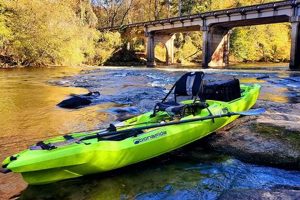
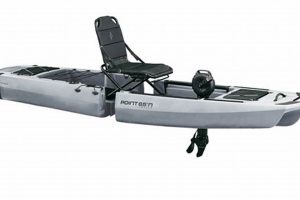
Angling from small, human-powered vessels on Lake Ontario offers a unique blend of sport and connection with nature. This approach allows anglers to access shallower waters and explore diverse habitats often unreachable by larger boats, targeting species such as bass, trout, and salmon. The quiet, non-motorized nature of these vessels allows for a stealthy approach, potentially increasing fishing success.
This style of fishing has gained popularity due to its affordability, accessibility, and environmentally friendly nature. Historically, smaller craft have been used for fishing on the lake, reflecting traditional fishing practices. Modern advancements in kayak design and fishing gear now provide anglers with specialized equipment designed for stability, comfort, and enhanced fishing capability. This evolution contributes to the growing appeal of this method on Lake Ontario, particularly for those seeking a more intimate and engaging fishing experience.
Further exploration of this topic will encompass discussions on suitable kayak types, essential safety measures, effective fishing techniques, recommended locations on Lake Ontario, and relevant regulations. Anglers can learn to maximize their experience while ensuring personal safety and responsible angling practices.
Tips for Angling from Kayaks on Lake Ontario
Careful planning and preparation are essential for a safe and successful fishing experience on Lake Ontario from a kayak. The following tips offer valuable guidance for anglers.
Tip 1: Check Weather Conditions: Prior to embarking on any fishing trip, consulting marine weather forecasts is crucial. Lake Ontario weather can change rapidly, impacting safety and fishing conditions. High winds and waves pose significant risks for kayakers.
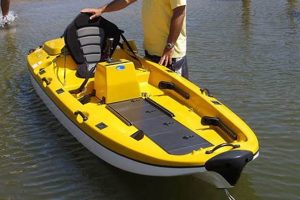
Tip 2: Choose the Right Kayak: Selecting a kayak appropriate for lake conditions and fishing style enhances stability and performance. Longer, wider kayaks offer greater stability, while sit-on-top kayaks provide better drainage and maneuverability.
Tip 3: Wear a Personal Flotation Device (PFD): Wearing a properly fitted PFD is paramount for safety. Unexpected capsizes can occur, and a PFD significantly increases survival chances in cold water.
Tip 4: Carry Essential Safety Equipment: A safety kit including a whistle, signaling devices, a first-aid kit, and a bilge pump or sponge is crucial for handling emergencies and ensuring a safe return.
Tip 5: Plan Your Route and Inform Others: Sharing a float plan, including intended fishing locations and estimated return time, with someone on shore enhances safety. This enables timely assistance if needed.
Tip 6: Understand Local Regulations: Familiarization with fishing license requirements, catch limits, and size restrictions specific to Lake Ontario ensures compliance with regulations and contributes to responsible fishing practices.
Tip 7: Practice Kayak Handling Skills: Practicing essential paddling and self-rescue techniques in calm water before venturing onto Lake Ontario improves control and preparedness for unexpected situations.
Adhering to these safety and planning recommendations can significantly enhance angling experiences and contribute to a safe and successful outing on Lake Ontario. Preparation mitigates risks and allows anglers to focus on enjoying their time on the water.
By following these guidelines, anglers can experience the unique rewards and challenges that this style of fishing offers, while prioritizing safety and responsible angling practices.
1. Safety Gear

Safety gear plays a critical role in mitigating risks inherent to kayak fishing on Lake Ontario. The lake’s unpredictable weather, cold water temperatures, and potential for vessel traffic necessitate careful consideration of safety equipment. A properly fitted personal flotation device (PFD) is non-negotiable. Should a capsize occur, a PFD provides essential buoyancy, significantly increasing survival chances, especially in cold water conditions that can quickly lead to hypothermia. A communication device, such as a VHF radio or waterproof cell phone in a floating pouch, enables contact with emergency services or shore support if needed. Visual signaling devices, like flares or a signal mirror, can further aid in attracting attention in distress situations. For instance, a capsized angler miles offshore, separated from their kayak in fog, relies heavily on such devices for rescue.
Beyond these essentials, additional safety equipment enhances preparedness. A first-aid kit equipped to handle common fishing-related injuries, such as hook removals and cuts, proves invaluable. A bilge pump or sponge assists in removing water from the kayak in the event of swamping, maintaining stability and preventing a potential capsize. Carrying a spare paddle addresses potential paddle breakage or loss. A tow rope allows for assisting other kayakers or being towed in case of difficulty. Navigational aids, such as a compass and chart, contribute to safe navigation, especially in conditions with reduced visibility. These measures contribute to a more secure fishing experience, enabling anglers to focus on the activity while minimizing potential hazards. Understanding the function and importance of each piece of equipment enables appropriate usage when necessary.
Careful attention to safety gear selection and usage directly impacts the outcome of kayak fishing trips on Lake Ontario. While experience and skill play important roles, appropriate safety precautions significantly reduce the likelihood of incidents escalating into life-threatening situations. Proper planning and preparation, combined with a thorough understanding of safety equipment, empower anglers to enjoy the sport responsibly and minimize risks associated with the dynamic lake environment. Regular equipment checks and familiarity with usage procedures further enhance safety protocols, ensuring readiness for unexpected events and contributing to a safer and more enjoyable angling experience.
2. Kayak Selection

Appropriate kayak selection significantly impacts safety and fishing success on Lake Ontario. Choosing a kayak suited to the lake’s conditions and the angler’s needs enhances stability, maneuverability, and overall fishing experience. Several key factors warrant consideration when selecting a kayak for use on this large body of water.
- Hull Design:
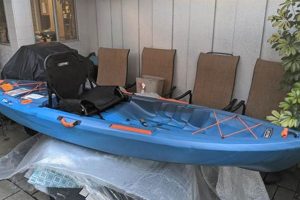
Hull design influences stability and tracking. Sit-on-top kayaks, known for self-bailing capabilities and ease of re-entry after a capsize, are favored by many anglers. Their open design allows for easy access to gear and facilitates casting. Sit-inside kayaks offer protection from the elements and a drier ride but can be more challenging to recover after a capsize. For Lake Ontario, wider, longer kayaks generally provide enhanced stability in waves and chop compared to shorter, narrower models. A longer kayak may also track better in wind, requiring less correction and reducing fatigue.
- Length and Width:
Kayak dimensions directly correlate with stability and maneuverability. Longer kayaks (12+ feet) generally track better in a straight line, beneficial for trolling or covering longer distances. Wider kayaks (30+ inches) offer greater stability, crucial for casting and reeling in fish, especially in rougher conditions. Shorter kayaks provide enhanced maneuverability in tight spaces but may sacrifice stability in open water. The choice depends on the anglers fishing style and the anticipated conditions on Lake Ontario. A balance between stability and maneuverability often proves ideal.
- Weight Capacity:
Weight capacity dictates the total load a kayak can safely carry, encompassing the angler’s weight, fishing gear, and any additional equipment. Exceeding the weight capacity compromises stability and increases the risk of capsizing. Anglers should carefully consider the combined weight of all items they intend to carry and choose a kayak with sufficient capacity. This ensures safe operation and prevents potential instability, especially when maneuvering in waves or handling fish.
- Storage:
Adequate storage space is crucial for accommodating fishing gear, safety equipment, and personal items. Kayaks designed for fishing often feature built-in rod holders, tackle storage compartments, and dry hatches for protecting sensitive items from water. Sufficient storage keeps gear organized and accessible, enhancing fishing efficiency and minimizing clutter. Anglers should consider the type and amount of gear they typically carry and select a kayak with appropriate storage solutions for their needs. This contributes to a more organized and productive fishing experience.
Careful consideration of these factors ensures the selection of a kayak suitable for Lake Ontario’s often challenging conditions. A stable, maneuverable, and appropriately equipped kayak contributes significantly to both angler safety and fishing success, facilitating a more enjoyable and productive experience on the water.
3. Fishing Techniques

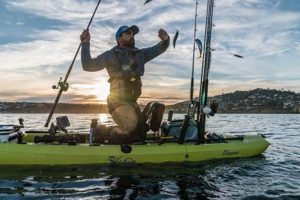
Effective fishing techniques are crucial for successful angling from a kayak on Lake Ontario. The lake’s diverse fish species and varying depths require anglers to adapt their methods. Two primary techniques dominate: trolling and casting. Trolling involves dragging lures or baited lines behind a moving kayak, covering a wider area and targeting pelagic species like salmon and trout. Casting, on the other hand, focuses on presenting lures or bait to specific locations, often near structures or in shallower waters, attracting species like bass and walleye. Understanding fish behavior and habitat preferences influences technique selection. For example, trolling along drop-offs or near temperature breaks targets salmonids that frequent these zones, while casting near weed beds or rocky shorelines proves effective for bass seeking cover and ambush points.
Specific tackle and equipment further refine these techniques. Trolling often utilizes downriggers or planer boards to control lure depth and presentation. Heavier lines and rods handle larger fish like salmon. Casting employs a variety of lures and bait presentations, from crankbaits and spinnerbaits to live bait rigs, tailored to target species and water conditions. Lighter tackle and rods offer greater sensitivity and control for smaller fish and finesse presentations. Adapting techniques to seasonal changes is equally crucial. Spring fishing may focus on shallower waters where fish spawn, while summer patterns often shift to deeper, cooler areas. Understanding seasonal fish behavior and adjusting techniques accordingly maximize success.
Mastering these techniques requires practice and observation. Learning to control kayak movement while trolling, maintaining proper lure depth, and reading fish finders enhances trolling effectiveness. Refining casting accuracy, lure retrieval techniques, and understanding fish behavior near structures improves casting success. Combining these skills with knowledge of Lake Ontario’s specific conditions, including water temperature, currents, and prevailing winds, maximizes angling opportunities. Adaptability remains key to consistent success on this dynamic body of water, underscoring the importance of a well-rounded approach to fishing techniques.
4. Location Scouting

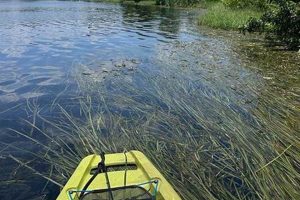
Effective location scouting is paramount for successful kayak fishing on Lake Ontario. Anglers must identify productive areas holding target species. Understanding fish behavior and habitat preferences guides scouting efforts. Fish tend to congregate around structures providing cover, foraging opportunities, or suitable water conditions. Examples include rocky reefs, shoals, drop-offs, weed beds, and river mouths. These locations often harbor baitfish, attracting larger predatory species. Scouting involves utilizing maps, charts, online resources, and local knowledge to pinpoint potential hotspots. Observing bird activity, baitfish schools, or changes in water temperature can further refine location choices. For instance, locating a thermal break, where warmer and cooler water masses meet, often reveals prime fishing grounds for salmonids. Scouting trips dedicated solely to exploring potential areas, rather than immediate fishing, prove invaluable for long-term success. This proactive approach reduces time spent searching during actual fishing excursions, maximizing angling opportunities.
Technological tools significantly aid in location scouting. Fish finders and GPS units assist in identifying underwater structures, depth changes, and fish concentrations. Mapping software with bathymetric data provides detailed underwater terrain information, allowing anglers to pinpoint likely fish-holding areas before launching. Online forums and fishing reports offer insights from local anglers, revealing current fishing patterns and productive locations. Combining these resources with direct observation of water conditions and environmental factors, such as wind direction and current flow, enhances scouting effectiveness. Recognizing how these factors influence fish behavior and distribution is critical for consistent success. For example, understanding how wind-driven currents affect baitfish movement informs decisions about where to position the kayak for optimal casting or trolling.
Thorough location scouting directly translates to increased fishing success on Lake Ontario. By investing time and effort in identifying productive areas, anglers maximize their chances of encountering target species. This preparation mitigates the challenges posed by the lake’s vastness and variable conditions. While luck always plays a role in angling, strategic location scouting transforms a passive approach into a proactive pursuit, placing anglers in the best possible position to connect with fish. This understanding of pre-fishing preparation is fundamental to consistently successful kayak fishing on Lake Ontario. It separates opportunistic fishing from strategic angling, maximizing the rewards and minimizing the frustrations often associated with fishing a large and complex body of water.
5. Regulations Awareness
Regulations awareness is essential for responsible and legal kayak fishing on Lake Ontario. Compliance with established rules ensures the sustainability of fish populations and respects the shared use of this valuable resource. Regulations govern aspects such as fishing license requirements, catch limits for specific species (e.g., salmon, trout, bass), size restrictions, permitted fishing seasons, and designated fishing zones. Ignorance of these regulations carries potential legal consequences, including fines and suspension of fishing privileges. For example, exceeding the daily catch limit for lake trout could result in a significant fine. Moreover, fishing in restricted areas, such as spawning grounds during closed seasons, can negatively impact fish populations and ecosystem health.
Understanding specific regulations applicable to kayak fishing is crucial. While general fishing regulations apply, some rules may pertain specifically to non-motorized vessels. These might include designated launch areas, restricted zones within the lake, or specific equipment requirements. Checking with local authorities or the relevant ministry responsible for natural resources provides up-to-date information on current regulations. Consulting official websites or contacting park offices ensures anglers possess accurate information. Staying informed about regulation changes, which can occur seasonally or annually, is essential for maintaining compliance and avoiding unintended violations. For instance, specific areas may be temporarily closed due to environmental concerns or ongoing research projects, necessitating anglers’ awareness of such temporary restrictions.
Responsible angling practices extend beyond mere compliance with regulations. Ethical considerations, such as catch-and-release principles for certain species or using barbless hooks to minimize fish injury, demonstrate respect for the resource and contribute to its long-term health. Participating in local conservation efforts, like shoreline cleanups or habitat restoration projects, further reinforces a commitment to sustainable angling practices. Regulations awareness, combined with ethical considerations and responsible actions, ensures the preservation of Lake Ontario’s fishery for future generations. This understanding fosters a sense of stewardship among anglers, promoting a sustainable approach to enjoying the recreational opportunities provided by this valuable ecosystem.
Frequently Asked Questions
This section addresses common inquiries regarding kayak fishing on Lake Ontario, providing concise and informative responses.
Question 1: What are the primary safety concerns for kayak anglers on Lake Ontario?
Key safety concerns include rapidly changing weather conditions, cold water temperatures, potential vessel traffic, and the lake’s considerable size and depth. Proper safety equipment, including a PFD, communication device, and signaling devices, are essential. Awareness of weather forecasts and adherence to safe boating practices are crucial for mitigating risks.
Question 2: What type of kayak is best suited for fishing Lake Ontario?
Longer, wider, and more stable kayaks are generally recommended due to the lake’s potential for waves and chop. Sit-on-top kayaks offer advantages in terms of self-bailing and ease of re-entry after a capsize. Weight capacity should accommodate angler weight, gear, and potential catch. Adequate storage for fishing equipment is essential.
Question 3: Are there specific fishing regulations for kayaks on Lake Ontario?
General fishing regulations, including licensing requirements, catch limits, size restrictions, and permitted seasons, apply to all anglers, including kayakers. Specific regulations pertaining to non-motorized vessels, such as designated launch areas or restricted zones, may exist. Checking with local authorities or the relevant ministry provides current information.
Question 4: What fish species are commonly targeted by kayak anglers on Lake Ontario?
Popular target species include salmon, trout, bass, and walleye. Specific techniques and locations vary depending on the target species. Understanding fish behavior and habitat preferences informs effective angling strategies.
Question 5: Where are productive fishing locations typically found on Lake Ontario?
Productive areas often feature structures like reefs, shoals, drop-offs, weed beds, and river mouths. These areas attract baitfish and provide cover for larger predatory species. Utilizing maps, charts, fish finders, and local knowledge aids in identifying promising fishing spots.
Question 6: What essential gear is recommended for kayak fishing on Lake Ontario?
Essential gear includes a properly fitted PFD, a paddle, a communication device (VHF radio or waterproofed cell phone), signaling devices (whistle, flares, mirror), a first-aid kit, a bilge pump or sponge, and appropriate fishing tackle based on target species. Navigation tools like a compass, chart, and GPS are also beneficial.
Careful consideration of these frequently asked questions enhances angler preparedness and promotes a safer, more enjoyable, and successful kayak fishing experience on Lake Ontario.
The subsequent section will provide a checklist of essential items to ensure anglers are well-equipped for their fishing trips on Lake Ontario. This checklist serves as a practical tool to enhance safety and preparedness.
Kayak Fishing Lake Ontario
This exploration of kayak fishing on Lake Ontario has highlighted key aspects of a safe and rewarding experience. Emphasis has been placed on safety equipment, kayak selection, effective fishing techniques, location scouting strategies, and the critical importance of regulations awareness. Anglers are reminded that thorough preparation, combined with a respect for the environment and adherence to established rules, contributes significantly to a positive outcome. Understanding the dynamic nature of Lake Ontario, its diverse fishery, and the inherent challenges associated with this style of fishing empowers anglers to make informed decisions, maximizing both safety and fishing success.
Kayak fishing on Lake Ontario offers a unique opportunity to connect with nature and experience the thrill of angling in a personal and engaging manner. As this activity continues to gain popularity, responsible angling practices become increasingly crucial for preserving the lake’s ecosystem and ensuring the sustainability of its valuable fishery. Anglers are encouraged to embrace a conservation-minded approach, promoting responsible use and contributing to the long-term health of Lake Ontario for the benefit of current and future generations. Continued learning and adaptation to evolving conditions remain essential components of a rewarding and sustainable kayak fishing experience on this magnificent body of water.