Navigating whitewater in a small, human-powered vessel designed for angling presents unique challenges and rewards. This activity involves specialized equipment and techniques, differing significantly from both flatwater kayaking and river running in larger craft. Anglers employ highly maneuverable kayaks designed for stability in turbulent flows, often targeting species that thrive in oxygen-rich, fast-moving water.
This specialized pursuit offers access to remote fishing grounds and a thrilling, immersive experience in nature. The ability to precisely position a kayak within complex currents provides distinct advantages for presenting lures or bait to target species. Historically, indigenous cultures worldwide have utilized small craft to fish rivers, demonstrating a longstanding connection between humans and this practice.
This article will explore the specialized equipment, safety considerations, and advanced techniques necessary for successfully and safely navigating challenging river environments while fishing from a kayak. Topics covered include kayak selection and outfitting, paddle strokes specific to whitewater, reading river currents, understanding safety protocols, and strategies for catching fish in dynamic currents.
Tips for Whitewater Kayak Fishing
Successfully navigating rapids while fishing requires careful preparation and adherence to essential safety practices. The following tips provide a foundation for a safe and rewarding experience.
Tip 1: Dress for the Water Temperature, Not the Air Temperature. Cold water immersion can rapidly lead to hypothermia. A wetsuit or drysuit is recommended, even in seemingly mild weather.
Tip 2: Always Wear a Properly Fitted Personal Flotation Device (PFD). A PFD is essential safety equipment and should be worn at all times while on the water.
Tip 3: Carry Essential Safety Gear. This includes a whistle, throw rope, first-aid kit, and a knife or multi-tool. A communication device, such as a waterproof VHF radio or satellite messenger, is also highly recommended for remote areas.
Tip 4: Scout Rapids Beforehand. Walking or paddling downstream to visually inspect rapids before attempting to navigate them is crucial for identifying hazards and planning a safe route.
Tip 5: Master Basic Paddle Strokes. Proficiency in essential paddle strokes, such as the forward stroke, sweep stroke, and draw stroke, provides control and maneuverability in moving water.
Tip 6: Understand River Dynamics. Learning to read currents, identify eddies, and recognize potential hazards like strainers and undercuts is essential for safe navigation.
Tip 7: Start on Easier Rapids and Gradually Progress to More Challenging Ones. Building experience progressively allows skills to develop safely and reduces the risk of incidents.
Tip 8: Never Fish Alone. Paddling with a partner enhances safety and provides assistance in case of an emergency.
By adhering to these guidelines, anglers can significantly increase their safety margin and enjoyment while navigating moving water. Preparation and a cautious approach are key to a successful and rewarding experience.
Equipped with these safety precautions and practical tips, anglers can confidently approach the exciting challenge of combining whitewater navigation with the pursuit of fish in dynamic river environments.
1. Stable Kayak Selection

Kayak stability forms the foundation of a successful and safe fishing experience in rapids. An unstable platform compromises an angler’s ability to cast, land fish, and react effectively to dynamic water conditions. Selecting a kayak with appropriate stability characteristics is therefore paramount when navigating moving water.
- Hull Design
Hull design significantly influences stability. Wider, flatter hulls offer primary stability, resisting initial tipping. Rounded or rockered hulls provide secondary stability, aiding recovery from larger destabilizing forces. River-specific kayaks often incorporate a combination of these features to balance initial stability with maneuverability in turbulent flows. A wider, flatter hull is beneficial for casting in calmer sections, while a rockered hull allows for quick turns and adjustments in faster currents. Choosing the right balance depends on the specific river conditions and fishing techniques employed.
- Length and Width
Kayak dimensions directly impact stability. Shorter kayaks tend to be more maneuverable but less stable in a straight line. Longer kayaks track better but sacrifice some turning ability. Wider kayaks offer greater initial stability, while narrower designs are faster and more efficient in calmer waters. The optimal length and width depend on the intended use and the paddler’s physique. A shorter, wider kayak might be preferable for technical rapids, while a longer, narrower kayak might be better suited for larger rivers with less technical whitewater.
- Weight Capacity
Weight capacity dictates how much gear and angler weight the kayak can safely carry. Exceeding the recommended capacity significantly compromises stability and can lead to capsizing. Calculating the total weight of the angler, fishing gear, and any additional equipment ensures safe operation within the kayak’s designed limits. This factor is especially critical in rapids, where unexpected waves or currents can further destabilize an overloaded vessel.
- Material and Construction
Kayak construction influences both durability and performance. Durable materials like polyethylene are ideal for rocky river environments, while lighter materials like composites offer increased performance but may be less resistant to impacts. The choice of material depends on the expected conditions and the angler’s priorities. A robust polyethylene kayak may be preferable for navigating shallow, rocky rapids, while a lighter composite kayak might be more suitable for larger rivers with fewer obstacles.
Careful consideration of these factors ensures selection of a kayak with appropriate stability for navigating rapids, maximizing both fishing success and overall safety. A stable platform allows anglers to focus on fishing techniques and river navigation, enhancing the overall experience and minimizing the risk of incidents in dynamic whitewater environments.
2. Essential Safety Gear

Safety equipment plays a vital role in mitigating risks inherent to navigating whitewater in a fishing kayak. The dynamic environment of rapids presents specific hazards, including swift currents, submerged obstacles, and cold water immersion. Essential safety gear provides crucial protection and increases the likelihood of a positive outcome in the event of an incident. For example, a properly fitted personal flotation device (PFD) provides buoyancy in the event of a capsize, while a throw rope allows others to assist a swimmer from a safe distance. A first-aid kit enables immediate response to minor injuries, while a whistle or other signaling device facilitates communication in emergency situations. The combination of these items works synergistically to enhance overall safety.
Beyond the fundamental items, additional safety gear can further enhance preparedness. A helmet protects against head injuries in the event of a collision with rocks or other obstacles. A dry suit or wetsuit mitigates the effects of cold water immersion, significantly reducing the risk of hypothermia. Carrying a waterproof communication device, such as a VHF radio or satellite messenger, enables communication with emergency services or other members of the fishing party, especially in remote locations. These additional layers of safety equipment contribute to a more comprehensive risk management strategy.
Proper selection, maintenance, and understanding of how to use safety gear are crucial for its effectiveness. A PFD must fit correctly to provide adequate flotation, and regular inspection for wear and tear is essential. Throw ropes should be practiced with regularly to ensure accurate deployment in an emergency. Familiarity with the contents and use of a first-aid kit is paramount for effective injury management. Ultimately, the efficacy of safety gear depends not only on its presence but also on the user’s understanding of its function and proper application in challenging whitewater environments. Preparation and proactive safety measures significantly contribute to a positive and safe experience while fishing from a kayak in rapids.
3. Effective Paddling Techniques

Effective paddling techniques are essential for safely and successfully navigating rapids while fishing from a kayak. Precise paddle control allows anglers to maintain position, maneuver through complex currents, and avoid hazards. The ability to execute specific strokes efficiently directly impacts boat control and stability within dynamic whitewater environments. For instance, a strong forward stroke provides momentum for paddling upstream or ferrying across currents, while a well-executed sweep stroke enables quick turns and adjustments in fast-moving water. The draw stroke allows for precise lateral movement, aiding in positioning the kayak for optimal casting angles near promising fishing spots. Mastery of these techniques transforms a passive passenger into an active participant in navigating challenging river conditions.
Beyond basic strokes, advanced techniques significantly enhance control and safety in rapids. The high brace and low brace provide corrective support when the kayak tips, preventing capsizes. Eddy turns and peel-outs allow for smooth transitions into and out of eddies, conserving energy and providing strategic positioning options for accessing fishing locations. Duffek strokes combine forward momentum with a turning motion, facilitating navigation in confined spaces and around obstacles. These advanced maneuvers provide a higher degree of control in complex currents, enabling anglers to confidently target fish in specific locations while minimizing the risk of unintentional drifts or collisions.
Proficient paddling technique enhances not only navigation but also fishing effectiveness. Precise boat control allows anglers to hold position in ideal fishing locations, maximizing casting opportunities. The ability to subtly adjust position within a current seam allows for precise presentation of lures or bait to target species. Quiet, efficient paddling minimizes disturbance to the water, reducing the likelihood of spooking fish. Ultimately, skillful paddling technique seamlessly integrates with fishing strategy, enabling anglers to effectively target fish within the dynamic and challenging environment of whitewater rapids.
4. River Current Understanding

A comprehensive understanding of river currents is paramount for safe and effective navigation while fishing from a kayak in rapids. Currents are complex, three-dimensional forces shaped by riverbed topography, water volume, and obstructions. Reading the wateridentifying different current types, understanding their influence on kayak movement, and anticipating their effectsforms the basis of safe passage and effective fishing strategies. For example, recognizing the faster, turbulent flow of a main current versus the slower, recirculating flow of an eddy allows anglers to choose efficient routes and position the kayak for optimal casting presentations. Failing to understand these dynamics can lead to loss of control, collisions with obstacles, or even capsizing. The ability to predict how a current will affect the kayak’s trajectory is crucial for maneuvering into desired positions and avoiding hazards. This predictive capacity is developed through experience and observation, paying close attention to the interplay of water flow, river features, and kayak response.
Different current types present distinct opportunities and challenges for anglers. Fast-flowing chutes offer opportunities to cover water quickly and access productive fishing zones, but require precise maneuvering to maintain control and avoid submerged rocks. Eddies provide relatively calm areas for resting, observing fish behavior, and making precise casts, but require specific techniques for entering and exiting. Understanding how currents interact with river features like bends, constrictions, and obstructions further enhances navigational decision-making. For instance, recognizing the formation of upstream Vs and downstream Vs around rocks allows anglers to predict areas of faster flow and potential hydraulics, informing route selection and paddling effort. Leveraging this knowledge allows for more efficient travel and safer engagement with the dynamic forces at play.
Ultimately, successful navigation and effective fishing in rapids hinge on a deep understanding of river currents. This understanding is developed through a combination of theoretical knowledge, practical experience, and continuous observation. Anglers who invest in developing their ability to read the water significantly increase their safety margin and enhance their ability to locate and catch fish in dynamic whitewater environments. This understanding transcends simple route finding; it becomes a foundational element of efficient and safe river travel, allowing anglers to fully appreciate the dynamic interplay between kayak, current, and the pursuit of fish in challenging and rewarding environments.
5. Strategic Fishing Approach
A strategic fishing approach is essential for success when fishing from a kayak in rapids. The dynamic nature of moving water influences fish behavior and requires anglers to adapt their techniques. Precise boat control and a keen understanding of river currents combine with targeted presentations to effectively locate and catch fish in this challenging environment. Simply casting randomly is unlikely to yield positive results. A well-defined strategy considers the specific characteristics of the river and the target species to maximize fishing success.
- Reading the Water
Understanding how currents interact with river features is crucial. Fish often position themselves in specific locations relative to current flow, such as behind rocks or in eddies, where they can conserve energy while still accessing food. Identifying these holding lies and targeting presentations to those specific areas greatly increases the likelihood of a successful hookup. For example, targeting the seam between fast and slow-moving water can be highly effective, as fish often congregate in these transition zones.
- Lure and Bait Selection
Lure and bait choices should consider both the target species and the prevailing conditions. Fast-moving water often necessitates the use of lures or bait that can be effectively presented in the current, such as weighted flies or streamlined lures that maintain their intended depth and action. Brightly colored lures or those with strong vibrations can be effective in attracting attention in turbulent water. Matching the lure or bait to the local forage base increases the likelihood of enticing a strike.
- Presentation Techniques
Adapting presentation techniques to the current is crucial. Upstream presentations, downstream presentations, and across-current presentations each have their own advantages and disadvantages in different scenarios. Upstream presentations allow lures to drift naturally with the current, mimicking the movement of prey, while downstream presentations can be effective for covering a wider area quickly. Across-current presentations allow for precise control of depth and speed. Selecting the appropriate technique based on the current and target species is essential for maximizing effectiveness.
- Boat Control and Positioning
Precise boat control is paramount for effective presentations in rapids. Maintaining a stable position while casting and retrieving, even in turbulent currents, allows for accurate lure placement and optimal hooksets. Utilizing eddies and other current features for temporary respite provides opportunities to observe fish behavior and plan strategic casts. For instance, positioning the kayak slightly upstream of a target area allows for a controlled drift into the prime fishing zone, maximizing presentation time and minimizing disturbance to the fish.
By integrating these elements, anglers develop a comprehensive strategy for successfully fishing from a kayak in rapids. A strategic approach that considers fish behavior, river dynamics, and appropriate techniques leads to a more rewarding and effective fishing experience in these challenging but productive environments. This targeted strategy contrasts sharply with less effective approaches and often leads to increased success, demonstrating the value of careful planning and adaptation to the unique demands of fishing in moving water. The ability to adapt and adjust tactics based on real-time observations further refines the strategic approach, leading to a more dynamic and engaging fishing experience.
6. Respectful River Etiquette
Respectful river etiquette is integral to the sustainability and enjoyment of fishing kayak rapids. Navigating shared waterways requires consideration for other users, including anglers, rafters, kayakers, and landowners. Adhering to established etiquette minimizes conflicts, preserves the natural environment, and fosters a positive experience for all. For example, yielding right-of-way to downstream boaters prevents collisions and maintains safe passage for everyone. Respecting private property boundaries by avoiding trespassing and launching or landing only in designated areas preserves landowner rights and access for future users. Minimizing noise pollution through respectful conversation and avoiding loud music contributes to a tranquil environment for wildlife and other river users. These actions, while seemingly small, collectively contribute to a positive and sustainable river environment.
Practical applications of respectful river etiquette extend beyond simple courtesy. Proper waste disposal, including packing out all trash and fishing line, prevents pollution and protects aquatic ecosystems. Avoiding disturbing natural habitats by refraining from trampling vegetation or disturbing wildlife preserves the integrity of the riparian zone. Practicing catch-and-release fishing, when appropriate, helps maintain healthy fish populations for future generations. These actions demonstrate a commitment to environmental stewardship and contribute to the long-term health of the river system. Furthermore, respectful interactions with other river users, such as offering assistance when needed and communicating intentions clearly, foster a sense of community and shared responsibility for the well-being of the river. This collective approach enhances the overall experience for everyone and promotes a culture of respect and cooperation on shared waterways.
Respectful river etiquette is not merely a set of rules, but a reflection of a deeper understanding of the interconnectedness of human actions and environmental health within a shared space. Challenges may arise when etiquette is disregarded, leading to conflicts, environmental damage, and restricted access. Promoting education and awareness surrounding respectful river practices is crucial for ensuring the long-term sustainability and enjoyment of these valuable resources. By embracing these principles, anglers contribute to a positive and sustainable future for fishing kayak rapids, ensuring continued access and enjoyment for generations to come. This commitment to responsible use strengthens the connection between humans and the natural environment, fostering a sense of stewardship and shared responsibility for the well-being of our rivers.
Frequently Asked Questions about Fishing Kayak Rapids
This section addresses common inquiries regarding the specialized activity of fishing from a kayak in whitewater rapids. Clear and concise responses aim to provide a deeper understanding of the associated challenges, necessary preparations, and safety considerations.
Question 1: What type of kayak is best suited for fishing in rapids?
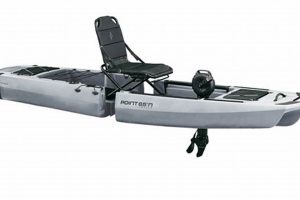
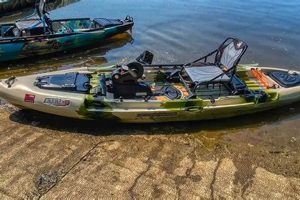
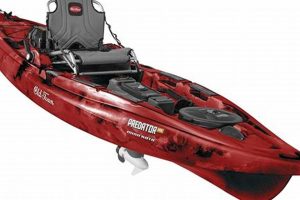
Kayaks designed specifically for whitewater fishing typically offer a balance of stability, maneuverability, and storage capacity. Shorter, wider hulls provide enhanced stability in turbulent water, while rockered hulls aid in navigating waves and holes. Consider models with ample storage for fishing gear and specialized features such as rod holders and anchor systems.
Question 2: What essential safety gear is required?
A properly fitted personal flotation device (PFD) is paramount. A helmet, throw rope, whistle, first-aid kit, and river knife are also essential. A communication device, such as a VHF radio or satellite messenger, is strongly recommended, especially in remote areas. Cold water conditions necessitate appropriate immersion gear, such as a wetsuit or drysuit.
Question 3: What paddling skills are necessary for navigating rapids?
Proficiency in basic paddle strokes, including forward, reverse, sweep, and draw strokes, is fundamental. Advanced techniques such as eddy turns, peel-outs, and bracing maneuvers are highly beneficial for navigating complex currents and maintaining control in challenging whitewater environments.
Question 4: How does one learn to read river currents effectively?
Understanding river dynamics involves recognizing different current types, such as eddies, chutes, and hydraulics. Observing water surface features, identifying upstream and downstream Vs around obstacles, and understanding how currents interact with riverbed topography are crucial elements of effective river reading. Formal swiftwater rescue training is highly recommended.
Question 5: What are the specific fishing techniques for rapids?
Fishing techniques in rapids require adaptation to current flow. Upstream, downstream, and across-current presentations each have their own advantages in specific situations. Precision casting, accurate lure placement, and the ability to maintain boat position in dynamic currents are crucial for success.
Question 6: What are the key principles of river etiquette for kayakers?
Respectful river conduct includes yielding right-of-way to downstream boaters, avoiding disturbing wildlife, packing out all trash, respecting private property boundaries, and minimizing noise pollution. Communicating effectively with other river users and offering assistance when needed fosters a positive and collaborative river environment.
Careful preparation, appropriate equipment, and a thorough understanding of river dynamics and safety protocols are crucial for a rewarding and incident-free experience while fishing from a kayak in whitewater. Continual learning and skill development are essential for progressively challenging oneself in dynamic river environments.
The next section will provide a detailed gear checklist for fishing kayak rapids, ensuring anglers are fully equipped for a safe and productive outing.
Fishing Kayak Rapids
Navigating turbulent waters in a fishing kayak presents unique challenges and rewards. This pursuit demands a specialized skill set, encompassing boat control, river reading, safety consciousness, and strategic fishing techniques. Choosing appropriate equipment, understanding river dynamics, and prioritizing safety enhance the experience and mitigate inherent risks. Successful anglers adapt their approach to dynamic currents and fish behavior, demonstrating a deep understanding of the interplay between human action and the natural environment.
The confluence of skill, preparation, and respect for the river environment defines the experience. Continued learning and a commitment to responsible river practices ensure the sustainability of this demanding yet rewarding pursuit. Through careful consideration of these elements, anglers can experience the thrill of navigating whitewater while engaging in the challenging and fulfilling pursuit of fishing in dynamic river systems.