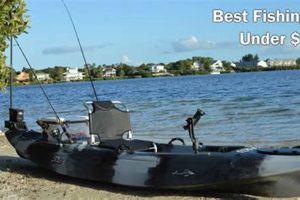
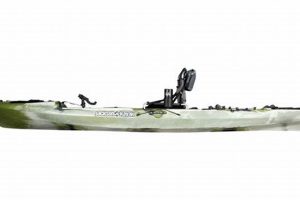
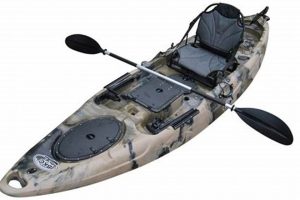
High-quality kayaks designed specifically for river fishing prioritize stability, maneuverability, and storage capacity. These specialized vessels often feature design elements like flatter hulls for stability in moving water, shorter lengths for agile turning, and ample storage for fishing gear and catches. A well-equipped river fishing kayak might include rod holders, tackle storage compartments, and anchor trolleys.
Choosing appropriate watercraft significantly enhances angler success and safety on rivers. Stable platforms allow for easier casting and fish fighting, while maneuverability is crucial for navigating currents, obstacles, and shallows. Adequate storage ensures essential gear remains organized and accessible. Historically, river fishing relied on less specialized craft, but advancements in kayak design now offer tailored solutions that improve the overall fishing experience.
This article will delve into the key features to consider when selecting a river fishing kayak, including hull design, length, and storage options. Further discussion will cover popular models, essential accessories, and safety considerations for navigating various river environments.
Tips for Selecting River Fishing Kayaks
Choosing the right kayak for river fishing requires careful consideration of several factors to ensure both safety and a successful angling experience.
Tip 1: Prioritize Stability: A stable hull design, often featuring a flatter bottom, is crucial for navigating moving water and remaining upright while casting and reeling. Consider wider kayaks for enhanced stability.
Tip 2: Consider Maneuverability: Rivers present obstacles like rocks and currents. Shorter kayaks offer superior maneuverability, allowing for quicker turns and adjustments in challenging conditions.
Tip 3: Evaluate Storage Capacity: Ample storage is essential for carrying fishing gear, tackle boxes, and any caught fish. Look for kayaks with dedicated storage compartments and bungee systems.
Tip 4: Assess Weight Capacity: Ensure the kayak’s weight capacity accommodates the angler’s weight, plus the weight of gear and potential catches, to maintain optimal performance and safety.
Tip 5: Choose Appropriate Seating: A comfortable and adjustable seat is essential for long hours on the river. Look for seating options that offer good back support and adjustability.
Tip 6: Inspect Hull Material: Durable materials like polyethylene and rotomolded plastic offer impact resistance and longevity, essential for navigating rocky riverbeds.
Tip 7: Consider Added Features: Features like rod holders, anchor trolleys, and paddle clips enhance the fishing experience and improve efficiency on the water.
By considering these tips, anglers can select a river fishing kayak tailored to their specific needs, ensuring a safe and productive time on the water. A well-chosen vessel enhances stability, maneuverability, and overall fishing performance.
The following section will explore specific kayak models recommended for river fishing, providing further guidance in the selection process.
1. Stability

Stability forms a cornerstone of effective river fishing kayaks. A stable platform provides a secure base for casting, reeling, and landing fish, especially crucial in dynamic river currents. Compromised stability not only hinders fishing performance but also presents safety risks, particularly in turbulent waters or when handling active catches. Kayak stability is significantly influenced by hull design, width, and weight distribution. Wider, flatter hulls generally offer greater initial stability, beneficial in calmer river sections, while rounded or V-shaped hulls, though less initially stable, can provide secondary stability helpful in rougher conditions.
Consider a scenario where an angler hooks a large fish in a fast-flowing river. A stable kayak allows the angler to maintain balance and control during the fight, increasing the likelihood of a successful landing. Conversely, an unstable kayak might capsize under the strain, leading to lost gear and potential danger. Similarly, casting accuracy improves significantly with a stable platform, allowing for precise presentations critical for enticing fish in specific river features like eddies or seams. The ability to stand up in certain kayak designs, beneficial for sight fishing and casting, also relies heavily on inherent stability.
Understanding the nuanced relationship between stability and river fishing kayak performance allows for informed decision-making. Matching the degree of stability to the intended river environmentcalm stretches versus rapidsdirectly impacts fishing effectiveness and angler safety. Prioritizing stability, alongside other crucial factors like maneuverability and storage, ultimately optimizes the river fishing experience.
2. Maneuverability

Maneuverability represents a critical attribute in kayaks designed for river fishing. Rivers, unlike stillwater environments, present unique navigational challenges, including currents, obstacles like rocks and submerged logs, and varying water depths. A highly maneuverable kayak allows anglers to navigate these complexities effectively, accessing prime fishing locations, avoiding hazards, and maintaining precise boat control. The degree of maneuverability directly influences an angler’s ability to respond to changing river conditions and target specific fish-holding areas.
Consider a scenario where an angler needs to navigate a narrow, winding river channel with overhanging branches. A maneuverable kayak, typically shorter in length and with a responsive hull design, enables precise adjustments and quick turns, allowing passage through tight spaces. Conversely, a longer, less maneuverable kayak would struggle in such conditions, potentially grounding on obstacles or becoming entangled in vegetation. Similarly, maneuvering through rapids or swift currents requires a kayak that responds quickly to paddle input, allowing for course corrections and maintaining desired positioning within the flow. The ability to hold position in a current, crucial for presenting lures effectively, also hinges on kayak maneuverability.
Optimizing maneuverability in a river fishing kayak necessitates careful consideration of design elements like length, hull shape, and rocker profile. Shorter kayaks generally offer enhanced maneuverability, while longer kayaks prioritize tracking and speed in open water. Hull shapes, such as those with defined chines or a multi-chine design, contribute to maneuverability by allowing for sharper turns. The rocker profile, referring to the curvature of the hull from bow to stern, also influences turning performance. A higher rocker profile generally enhances maneuverability, while a lower rocker profile improves tracking. Understanding the interplay of these factors allows anglers to select a kayak best suited to the specific demands of their target river environments.
3. Storage
Ample, well-designed storage is integral to the effectiveness of river fishing kayaks. Unlike bank or boat fishing, where gear remains readily accessible, kayak anglers must carry all essential equipment on board. Rods, reels, tackle boxes, safety gear, and potentially caught fish necessitate dedicated storage solutions within the kayak’s limited space. Insufficient or poorly planned storage compromises efficiency, potentially leading to tangled lines, lost gear, or difficulty accessing essential items quickly. The degree and type of storage directly influence an angler’s preparedness and ability to adapt to changing river conditions or fishing opportunities.
Consider an angler targeting different species throughout a river float, requiring various rod and lure combinations. A kayak with specialized rod holders, dry storage compartments for tackle boxes, and bungee systems for securing extra gear allows for seamless transitions between techniques without disrupting the fishing flow. Conversely, a lack of organized storage would necessitate constant rummaging through gear, increasing the risk of tangles, lost items, and valuable fishing time wasted. Furthermore, securing caught fish safely and efficiently requires dedicated storage, whether a live well, cooler, or designated storage area. Proper storage maintains fish freshness and prevents spoilage, especially important during longer outings.
Optimizing storage in a river fishing kayak requires careful consideration of carrying capacity, storage compartmentalization, and accessibility. Evaluating the volume and type of gear typically carried dictates the necessary storage space. Dedicated compartments for specific items, such as tackle boxes or electronic devices, improve organization and prevent damage. Easy access to frequently used items, like pliers or lures, minimizes disruption during critical fishing moments. Well-designed storage solutions contribute significantly to an efficient and productive river fishing experience, allowing anglers to focus on the task at hand rather than managing gear. This understanding of storage requirements allows for informed decisions when selecting a river fishing kayak, ensuring the vessel adequately supports individual angling needs and enhances overall performance on the water.
4. Durability

Durability stands as a paramount consideration when selecting a kayak for river environments. Rivers present inherent challenges, including rocks, submerged logs, and abrasive sandbars, all posing potential threats to a kayak’s hull integrity. A durable kayak withstands these rigors, ensuring longevity and safe navigation through challenging river conditions. Compromised durability leads to costly repairs, potential safety hazards, and a shortened lifespan of the vessel. Evaluating kayak construction materials and manufacturing processes allows for informed decisions that prioritize long-term performance in demanding river settings.
- Material Selection
Kayak hull materials directly influence durability. Polyethylene, a common choice, offers a balance of impact resistance and affordability. Higher-density polyethylene provides enhanced durability, albeit at increased weight. Rotomolded plastic, known for its uniform thickness and impact resistance, excels in demanding river environments. Composite materials, such as fiberglass or carbon fiber, offer superior strength and lighter weight but often come at a premium cost.
- Construction Methods
Manufacturing processes significantly impact a kayak’s structural integrity. Rotomolding creates a seamless, one-piece hull with uniform thickness, maximizing impact resistance. Thermoforming, while generally less expensive, can result in variations in hull thickness, potentially creating weaker points susceptible to damage. Examining construction details, like seam welds and reinforcement points, provides insights into a kayak’s overall durability.
- UV Resistance
Extended exposure to sunlight degrades certain plastics, compromising hull integrity over time. UV-resistant coatings or additives incorporated into the plastic during manufacturing mitigate sun damage, extending the kayak’s lifespan. Proper storage practices, such as covering the kayak when not in use, further protect against UV degradation.
- Abrasion Resistance
Dragging a kayak across rocks, sand, or gravel during launching, landing, or shallow-water maneuvering subjects the hull to abrasion. Materials with inherent abrasion resistance, along with features like keel guards or skid plates, minimize wear and tear, preserving the kayak’s structural integrity over time. Careful handling practices also contribute to minimizing abrasive damage.
The long-term value of a river fishing kayak hinges significantly on its durability. Investing in a durable kayak constructed from robust materials and employing sound manufacturing techniques minimizes repair costs and extends the vessel’s usable lifespan. Prioritizing durability ensures the kayak withstands the inherent challenges of river environments, providing years of reliable performance and contributing to a safe and enjoyable fishing experience.
5. Comfort

Comfort plays a pivotal role in the overall experience of river fishing from a kayak. Extended periods sitting in a confined space, often under varying weather conditions, necessitate a comfortable seating arrangement and ample freedom of movement. A lack of comfort can lead to fatigue, discomfort, and a shortened fishing trip, ultimately diminishing the enjoyment and effectiveness of the angler. Prioritizing comfort features in a river fishing kayak enhances endurance, allowing for longer, more productive outings.
- Seating Design and Adjustability
Seating design significantly impacts long-term comfort. Adjustable seats, allowing for customization of back support, legroom, and seat height, accommodate individual body types and preferences. Features like padded seats and breathable mesh fabric enhance comfort, particularly in warmer climates. A well-designed seat minimizes pressure points and promotes proper posture, reducing fatigue and discomfort during extended fishing sessions.
- Legroom and Cockpit Space
Adequate legroom and cockpit space contribute to overall comfort and freedom of movement within the kayak. Anglers require sufficient space to shift position, extend legs, and access gear without feeling confined. Larger cockpits provide easier entry and exit, particularly advantageous for anglers with mobility limitations. The balance between cockpit space and kayak stability requires careful consideration, ensuring ample room without compromising performance.
- Footrests and Thigh Braces
Adjustable footrests and thigh braces offer crucial support and control, enhancing comfort and paddling efficiency. Properly positioned footrests allow for efficient power transfer during paddling, reducing leg fatigue. Thigh braces provide additional leverage and control, especially important in challenging river conditions. These features contribute to a more secure and comfortable paddling experience, allowing for extended periods on the water without discomfort.
- Deck Layout and Accessibility
A well-designed deck layout prioritizes easy access to essential gear and equipment. Strategically placed rod holders, tackle storage compartments, and accessory mounts minimize reaching and bending, enhancing comfort and efficiency. Intuitive deck layouts allow anglers to focus on fishing rather than searching for gear, contributing to a more relaxed and enjoyable experience on the river.
Prioritizing comfort in a river fishing kayak directly translates to longer, more enjoyable, and ultimately more productive fishing trips. A comfortable angler remains focused and energized, maximizing their time on the water and increasing their chances of success. Investing in a kayak with comfortable seating, ample space, and ergonomic features significantly enhances the overall river fishing experience.
6. River Suitability

River suitability represents a crucial factor when selecting the best fishing kayak for a specific river environment. Different rivers present unique characteristics, including flow rate, water level fluctuations, obstacles, and prevailing weather conditions. Matching kayak features to these specific river characteristics optimizes performance, safety, and overall fishing success. Ignoring river suitability can lead to inefficient paddling, difficulty navigating obstacles, and potential safety hazards. A thorough assessment of the intended river environment informs appropriate kayak selection.
- Flow Rate and Water Level
River flow rate significantly influences kayak selection. Fast-flowing rivers necessitate kayaks with excellent maneuverability and tracking capabilities, allowing anglers to maintain control and navigate swift currents effectively. Slower-moving rivers, conversely, allow for wider, more stable kayaks prioritizing stability for casting and fishing. Water level fluctuations also play a role; kayaks with higher ground clearance perform better in shallow rivers prone to changing depths, minimizing the risk of grounding.
- Obstacles and Hazards
Rivers often contain obstacles like rocks, submerged logs, and overhanging branches. Kayaks designed for navigating such environments typically feature durable hulls, reinforced keels, and excellent maneuverability. Shorter kayaks excel in navigating tight spaces and maneuvering around obstacles, while longer kayaks might struggle in confined areas. Understanding the types and frequency of obstacles in a target river informs appropriate kayak selection.
- Weather Conditions
Prevailing weather conditions, including wind and temperature, also factor into river suitability. Windy conditions necessitate kayaks with good tracking and stability to minimize drift and maintain course. In colder climates, kayaks with enclosed cockpits or spray skirts provide added protection from the elements. Considering typical weather patterns in the target river area ensures angler comfort and safety.
- Fishing Style and Target Species
The intended fishing style and target species influence river kayak suitability. Anglers targeting larger fish in strong currents benefit from kayaks with enhanced stability and tracking. Anglers practicing techniques requiring frequent position changes, such as fly fishing, prioritize maneuverable kayaks. Matching kayak features to specific fishing styles maximizes efficiency and effectiveness on the water.
Matching kayak characteristics to the specific demands of a target river environment optimizes performance and enhances safety. A well-suited kayak allows anglers to navigate efficiently, access desired fishing locations, and focus on the task at hand. Careful consideration of river suitability ensures a productive and enjoyable fishing experience, minimizing potential challenges and maximizing success on the water.
Frequently Asked Questions
This section addresses common inquiries regarding the selection and use of kayaks designed for river fishing.
Question 1: What hull design is most suitable for river fishing?
Optimal hull design depends on the specific river characteristics. Flatter hulls provide enhanced stability in calmer waters, while moderate V-hulls or multi-chine hulls offer greater maneuverability in moving water and rapids. Consider the typical river conditions encountered when selecting hull design.
Question 2: How does kayak length influence river performance?
Shorter kayaks generally offer superior maneuverability in tight spaces and around obstacles, crucial for navigating narrow river channels. Longer kayaks provide better tracking and speed in open water sections but may be less agile in confined areas. Balance maneuverability needs with anticipated river conditions.
Question 3: What safety features are essential for river fishing kayaks?
Essential safety features include high visibility colors, sturdy grab handles, and secure storage compartments for essential safety gear like a first-aid kit, whistle, and throw rope. A personal flotation device (PFD) is paramount and should always be worn.
Question 4: How does weight capacity impact kayak performance on rivers?
Exceeding a kayak’s specified weight capacity compromises stability and performance. Ensure the kayak’s capacity accommodates the combined weight of the angler, gear, and potential catches. Overloading reduces freeboard, increasing the risk of capsizing, especially in turbulent water.
Question 5: What materials offer the best durability for river kayaks?
Rotomolded polyethylene and high-density polyethylene are popular choices for river kayaks due to their impact resistance and durability. These materials withstand impacts from rocks and other river obstacles, ensuring longevity and reliable performance in demanding environments.
Question 6: What essential accessories enhance river fishing from a kayak?
Essential accessories include a paddle designed for river use, an appropriately sized PFD, rod holders tailored to river fishing techniques, and an anchor trolley system for maintaining position in current. Dry bags or waterproof cases protect valuables and electronic devices from water damage.
Careful consideration of these frequently asked questions ensures informed decision-making when selecting and utilizing a kayak for river fishing. Prioritizing safety, performance, and suitability to the specific river environment optimizes the overall fishing experience.
The following section will offer concluding remarks and summarize key takeaways regarding optimal kayak selection for river fishing.
Conclusion
Optimal selection among the best fishing kayaks for rivers hinges on a comprehensive understanding of the interplay between kayak design, river characteristics, and angler needs. Prioritizing stability, maneuverability, storage, durability, comfort, and river suitability ensures a safe, efficient, and ultimately rewarding fishing experience. Careful consideration of hull design, length, weight capacity, and additional features like rod holders and anchor trolleys allows anglers to tailor kayak selection to specific river environments and fishing styles. Understanding the nuances of each aspect, from the importance of a stable platform for casting in moving water to the necessity of durable construction for navigating river obstacles, empowers informed decision-making and contributes to long-term satisfaction on the water.
Investing in a well-suited river fishing kayak unlocks access to diverse fishing opportunities and enhances angler performance in dynamic river environments. Continued exploration of kayak features and advancements in design further refines the pursuit of the optimal river fishing platform, enabling anglers to navigate waterways effectively and connect with the natural world. Careful consideration of these factors empowers anglers to make informed choices, fostering a deeper appreciation for the sport and the unique challenges and rewards of river fishing.