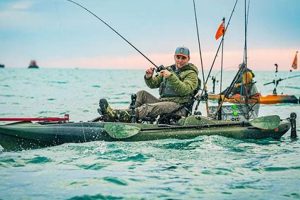
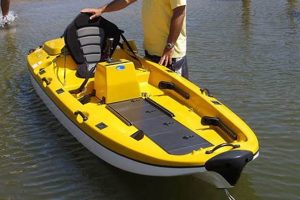
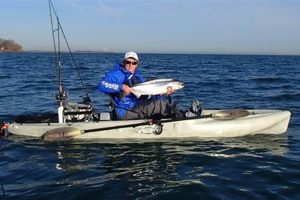
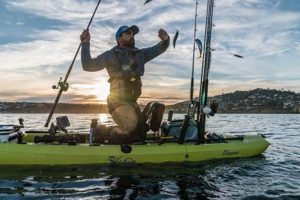
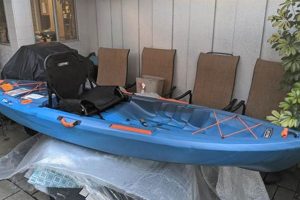
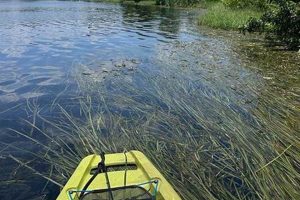
This specific model denotes a recreational watercraft designed for angling, manufactured by Lifetime Products. The “10” likely designates a ten-foot length, a common size for this type of vessel, offering balance between stability and maneuverability. These kayaks are typically constructed from high-density polyethylene (HDPE), a durable and UV-resistant plastic known for its impact resistance and affordability.
Compact, sit-on-top kayaks offer anglers convenient access to calm waters and provide a stable platform for casting. Their manageable size often translates to ease of transport and storage, making them a popular choice for recreational fishing. The affordability and durability of HDPE construction broaden accessibility to the sport, appealing to both novice and experienced anglers. Historically, fishing kayaks have evolved from traditional canoes and smaller boats, incorporating design features specifically tailored for anglers, such as rod holders, storage compartments, and comfortable seating.
The following sections will delve deeper into the key features, advantages, and potential drawbacks of this class of fishing kayak, providing a thorough understanding of its suitability for various fishing environments and user needs.
Tips for Utilizing a 10-Foot Fishing Kayak
Effective use of a compact fishing kayak maximizes enjoyment and angling success. Consider these practical tips to enhance on-the-water experiences.
Tip 1: Prioritize Safety Gear: Always wear a personal flotation device (PFD). Carry a whistle, signaling device, and basic first-aid kit. Inform someone of planned fishing locations and estimated return times.
Tip 2: Master Basic Paddling Techniques: Efficient paddling conserves energy and allows for greater range. Practice proper stroke technique and learn ruddering and bracing maneuvers for optimal control.
Tip 3: Plan and Organize Gear: Limited space necessitates careful gear selection and organization. Prioritize essential tackle and arrange items for easy access. Utilize waterproof bags and containers to protect valuables from splashes and submersion.
Tip 4: Understand Water Conditions: Check weather forecasts and be aware of currents, tides, and wind patterns. Avoid paddling in conditions exceeding skill level and kayak capabilities. Respect local regulations and waterway restrictions.
Tip 5: Practice Launching and Landing: Shallow, stable water offers the best environment for practicing launching and landing techniques. Develop a smooth, controlled process to avoid capsizing or damaging the kayak.
Tip 6: Respect Wildlife and the Environment: Maintain a safe distance from wildlife and avoid disturbing natural habitats. Pack out all trash and fishing line. Adhere to catch-and-release guidelines where applicable.
Tip 7: Regularly Inspect and Maintain Equipment: Rinse the kayak with fresh water after each use. Inspect for damage and address any necessary repairs promptly. Store the kayak properly to prevent warping or degradation.
By adhering to these guidelines, anglers can enhance safety, improve performance, and foster responsible enjoyment of the sport.
The following section concludes with additional resources and considerations for selecting and utilizing a 10-foot fishing kayak.
1. Compact and Stable

The relationship between compactness and stability is paramount in the design and functionality of the Lifetime 10 fishing kayak. These attributes directly influence maneuverability, user comfort, and overall performance on the water. Understanding this interplay is essential for prospective buyers and experienced users alike.
- Maneuverability in Confined Spaces
The compact size of the kayak allows for navigation through narrow waterways, inlets, and areas dense with vegetation. This agility is advantageous for accessing secluded fishing spots often unreachable by larger vessels. For instance, navigating a shallow creek or maneuvering around fallen trees becomes significantly easier with a shorter, more responsive kayak.
- Stability for Casting and Landing Fish
Stability is crucial for maintaining balance while casting and reeling in fish. The Lifetime 10’s design prioritizes stability, providing a secure platform even when shifting weight or encountering unexpected movements from hooked fish. This stability minimizes the risk of capsizing, particularly important for novice anglers or when fishing in challenging conditions.
- Ease of Transport and Storage
Compactness simplifies transportation and storage. The kayak’s reduced length and weight allow for easier car-topping or carrying short distances. Storage within garages, sheds, or even apartments becomes less demanding compared to larger kayaks. This convenience makes spontaneous fishing trips more feasible and reduces storage-related constraints.
- Impact on Speed and Tracking
While compactness enhances maneuverability, it can impact straight-line tracking and maximum speed compared to longer kayaks. Shorter hulls generally track less efficiently in open water and may require more frequent corrective strokes. However, the Lifetime 10’s design balances compactness with stability, making it suitable for calm waters where optimal tracking is less critical.
The combination of compactness and stability defines the Lifetime 10 fishing kayak’s niche within the recreational angling market. Its maneuverability, ease of transport, and secure platform cater to anglers seeking a user-friendly experience in calm waters, particularly those prioritizing convenience and stability over outright speed and long-distance performance.
2. Sit-on-Top Design

The sit-on-top design is a defining feature of the Lifetime 10 fishing kayak, significantly impacting its functionality and suitability for specific angling scenarios. This design choice directly influences stability, accessibility, and overall user experience. Understanding the implications of this design is crucial for informed evaluation.
Unlike traditional sit-inside kayaks, the sit-on-top configuration places the angler above the hull on a molded seat. This elevated position offers several advantages. Enhanced stability derives from a higher center of gravity, making it less prone to tipping. Self-recovery in the event of a capsize is simplified; re-entry requires minimal effort compared to enclosed cockpit designs. This self-bailing characteristic further improves stability, allowing water to drain through scupper holes, preventing accumulation and maintaining buoyancy. Consider an angler unexpectedly encountering a wave or wake. The sit-on-top design provides inherent stability and simplifies recovery, reducing the risk of complete capsize. Furthermore, this open design offers superior ventilation, reducing heat buildup during warmer weather. Ease of entry and exit is particularly beneficial for anglers with mobility limitations or those who prefer a more accessible platform.
While the sit-on-top design provides numerous advantages, certain trade-offs exist. Anglers are exposed to the elements, requiring appropriate clothing and gear for sun, wind, and water exposure. Storage space within the hull is often limited compared to sit-inside kayaks. However, the Lifetime 10 incorporates molded storage compartments and bungee cord systems to partially mitigate this limitation. The sit-on-top design, coupled with the kayak’s compact size, makes it an ideal platform for calm water fishing in warmer climates. Its stability and ease of use cater to anglers of varying experience levels, emphasizing safety and accessibility. While less suited for cold water or challenging conditions requiring a dry cockpit, the Lifetime 10 excels in its intended environment: stable, protected waters where maneuverability and user-friendliness are paramount.
3. Durable HDPE Construction

High-density polyethylene (HDPE) construction is integral to the Lifetime 10 fishing kayak’s resilience and longevity. HDPE exhibits remarkable resistance to impact, ultraviolet radiation, and abrasion, contributing significantly to the kayak’s ability to withstand the rigors of regular use. This material choice directly influences the kayak’s overall lifespan and suitability for diverse aquatic environments. The inherent impact resistance of HDPE allows the kayak to endure collisions with rocks, submerged debris, or accidental groundings without sustaining significant structural damage. UV resistance safeguards against degradation from prolonged sun exposure, preserving the material’s integrity and preventing cracking or fading. Consider, for instance, a kayak frequently used in rocky riverbeds or shallow coastal areas. HDPE construction minimizes the risk of punctures or cracks from impacts, extending the kayak’s usable life. Similarly, kayaks stored outdoors benefit from UV resistance, maintaining structural integrity despite prolonged sun exposure. This durability translates to a lower overall cost of ownership due to reduced repair and replacement needs.
The practical significance of HDPE construction extends beyond impact and UV resistance. HDPE’s relative lightness contributes to the kayak’s portability and ease of handling. This characteristic simplifies transport and launching, particularly for individuals without specialized loading equipment. Furthermore, HDPE is recyclable, aligning with environmentally conscious manufacturing practices. However, HDPE’s flexibility, while advantageous for impact absorption, can influence hull rigidity. In certain conditions, this flexibility might slightly impact tracking performance compared to kayaks constructed from more rigid materials. Nonetheless, the Lifetime 10’s design balances flexibility with structural integrity, offering sufficient rigidity for its intended use in calm waters.
In summary, HDPE construction contributes significantly to the Lifetime 10 fishing kayak’s durability, affordability, and portability. This material’s resistance to impact, UV radiation, and abrasion ensures a long lifespan, reducing maintenance and replacement costs. While slight compromises in hull rigidity might exist, the overall benefits of HDPE construction align with the kayak’s intended use as a robust, user-friendly platform for recreational fishing in calm waters. This construction method is a key factor in the kayak’s appeal to a broad range of anglers, from beginners to seasoned enthusiasts seeking a reliable and low-maintenance watercraft.
4. Targeted for Recreational Fishing
The Lifetime 10 fishing kayak’s design and features deliberately target recreational angling, differentiating it from specialized kayaks intended for professional guides, tournament competitors, or demanding expeditions. This focus on recreational use influences key design choices, impacting functionality, affordability, and overall user experience. Cause and effect relationships exist between this targeted design and specific kayak attributes. For instance, the kayak’s compact size and sit-on-top design prioritize stability and ease of use, characteristics valued by casual anglers, but potentially limiting for those requiring high speeds or extensive storage capacity. The inclusion of features like flush-mounted rod holders and integrated tackle storage directly caters to angling needs, while excluding specialized features found in competition-oriented kayaks, like advanced rudder systems or livewells. This targeted approach allows for cost optimization, making the kayak accessible to a wider audience.
Consider a weekend angler seeking a stable platform for fishing local ponds or slow-moving rivers. The Lifetime 10 provides adequate functionality for such environments, offering a comfortable and accessible fishing experience without the complexity and expense of specialized features required for more demanding scenarios. Conversely, a professional guide navigating challenging open water conditions or requiring substantial gear storage would likely find the Lifetime 10’s design limitations prohibitive. The practical significance of understanding this targeted design lies in informed product selection. Anglers recognizing their specific needs within the recreational fishing spectrum can accurately assess the kayak’s suitability. Evaluating intended fishing environments, required gear capacity, and desired performance characteristics against the Lifetime 10’s capabilities ensures a satisfactory user experience and avoids mismatched expectations.
In summary, the Lifetime 10 fishing kayak’s focus on recreational angling dictates its design features, performance characteristics, and target user profile. This specialization results in a balanced combination of affordability, stability, and ease of use, catering specifically to casual anglers prioritizing convenient and accessible fishing experiences in calm waters. Recognizing this targeted design is crucial for informed purchase decisions and aligning product capabilities with individual angling needs.
5. Affordable Entry Point

The Lifetime 10 fishing kayak distinguishes itself through affordability, presenting a viable entry point for individuals interested in kayak fishing without substantial upfront investment. This accessibility expands the sport’s reach, enabling broader participation across diverse economic backgrounds. Understanding the multifaceted implications of this affordability is crucial for appreciating the kayak’s role in democratizing access to on-the-water angling.
- Reduced Financial Barriers
The Lifetime 10’s price point significantly lowers the financial barrier to entry compared to higher-end kayaks equipped with advanced features or premium construction materials. This reduced cost allows budget-conscious individuals or families to experience kayak fishing without compromising essential functionality or safety. For example, aspiring anglers can allocate saved funds towards necessary safety gear, fishing licenses, or other related expenses.
- Opportunities for Experimentation and Skill Development
The affordable nature of the Lifetime 10 reduces the financial risk associated with exploring a new hobby. Beginners can gain experience and refine their paddling and fishing techniques without a significant investment, allowing them to determine their long-term interest before committing to more expensive equipment. This fosters skill development and informed decision-making regarding future kayak purchases.
- Focus on Essential Features
The Lifetime 10 prioritizes essential features directly relevant to recreational fishing while excluding non-essential, cost-inflating additions. This streamlined approach maintains affordability while providing adequate functionality for casual anglers. Inclusion of features such as rod holders, paddle clips, and basic storage compartments addresses core angling needs without unnecessary complexity or expense.
- Trade-offs and Considerations
While affordability is a significant advantage, potential trade-offs exist. Material choices, design simplicity, and limited storage capacity reflect cost-saving measures. Understanding these compromises allows prospective buyers to make informed decisions based on individual needs and priorities. For instance, anglers prioritizing advanced features or premium materials might find the Lifetime 10’s simplified design less appealing. However, for those seeking a functional and affordable entry point to the sport, these trade-offs are often acceptable.
The Lifetime 10 fishing kayak’s affordability directly impacts its accessibility within the recreational angling community. By lowering financial barriers and emphasizing essential functionality, it provides an inclusive entry point for beginners and casual anglers. Recognizing the interplay between cost, features, and potential trade-offs empowers individuals to make informed decisions aligned with individual needs and budgetary constraints, ultimately contributing to a more accessible and inclusive angling experience.
6. Easy Transport and Storage
The Lifetime 10 fishing kayak’s portability and storage convenience significantly influence its practicality and appeal, particularly for individuals with limited storage space or transportation capabilities. Facilitating spontaneous outings and minimizing storage constraints, these attributes contribute substantially to the kayak’s user-friendly nature and overall ownership experience. The following facets explore the components, examples, and implications of easy transport and storage within the context of the Lifetime 10 fishing kayak.
- Compact Dimensions and Lightweight Construction
The kayak’s compact ten-foot length and relatively lightweight HDPE construction facilitate effortless handling and transportation. Unlike longer, heavier kayaks requiring specialized trailers or rooftop carriers, the Lifetime 10 can often be transported on standard car roof racks or even carried short distances by a single individual. This portability expands access to various launch points, including those inaccessible to larger vessels. For example, an angler can easily transport the kayak to remote ponds, small lakes, or secluded river access points without requiring complex logistics or assistance.
- Simplified Storage Solutions
Compact dimensions translate directly to simplified storage solutions. The Lifetime 10 can be stored vertically or horizontally in garages, sheds, or even within apartments without consuming excessive space. This convenient storage minimizes clutter and eliminates the need for dedicated storage facilities, a significant advantage for urban dwellers or individuals with limited storage options. Consider an angler living in an apartment with limited storage space. The Lifetime 10’s compact size allows for convenient storage within a closet or against a wall, eliminating the need for external storage units or complex hoisting systems.
- Impact on Spontaneous Outings
The ease of transport and storage encourages spontaneous fishing trips. Reduced setup and transportation time allows anglers to react quickly to favorable weather conditions or capitalize on unexpected free time. This spontaneity enhances the recreational aspect of kayak fishing, eliminating logistical barriers that might otherwise discourage impromptu outings. An angler, for instance, can readily load the kayak onto a vehicle and depart for a nearby fishing spot without extensive planning or preparation, maximizing opportunities for on-the-water enjoyment.
- Considerations for Long-Distance Transport
While the Lifetime 10 excels in short-distance transport and compact storage, limitations exist for extended journeys. For long-distance travel, appropriate roof rack systems and secure tie-down straps remain essential for safe and efficient transport. Furthermore, storage considerations during extended trips might necessitate planning and appropriate storage solutions at the destination. Anglers embarking on longer journeys should therefore assess transport and storage logistics in advance to ensure a smooth and trouble-free experience.
The Lifetime 10 fishing kayak’s ease of transport and storage directly contributes to its user-friendly nature and overall practicality. By minimizing logistical constraints and facilitating spontaneous outings, these attributes enhance the recreational fishing experience. While considerations for long-distance transport and storage remain relevant, the kayak’s compact design and lightweight construction offer significant advantages for anglers prioritizing convenience and accessibility within their fishing pursuits. This emphasis on portability and ease of storage distinguishes the Lifetime 10 within the recreational kayak market, appealing to anglers seeking a versatile and user-friendly platform for exploring diverse aquatic environments.
Frequently Asked Questions
This section addresses common inquiries regarding the Lifetime 10 fishing kayak, providing concise and informative responses to facilitate informed decision-making.
Question 1: What is the weight capacity of the Lifetime 10 fishing kayak?
Weight capacity varies slightly depending on the specific model, but generally falls within the 275-300 pound range. Consulting the manufacturer’s specifications for the precise model in question is recommended.
Question 2: Is the Lifetime 10 fishing kayak suitable for ocean use?
While capable of handling calm bays or protected coastal waters, the Lifetime 10 is primarily designed for lakes, ponds, and slow-moving rivers. Ocean use in challenging conditions, such as strong currents, significant wave action, or exposed open water, is not recommended.
Question 3: What materials are used in the construction of the Lifetime 10 fishing kayak?
The Lifetime 10 is typically constructed from high-density polyethylene (HDPE), a durable and UV-resistant plastic known for its impact resistance and affordability.
Question 4: Does the Lifetime 10 fishing kayak come with a paddle?
Some models include a basic paddle, while others require separate purchase. Verifying included accessories with the retailer before purchase is advised. Upgrading to a higher-quality paddle can significantly enhance paddling efficiency and comfort.
Question 5: How stable is the Lifetime 10 fishing kayak?
The sit-on-top design and relatively wide hull contribute to significant stability, making it suitable for novice kayakers and facilitating activities like casting and reeling in fish. However, stability can be influenced by factors like weight distribution and water conditions.
Question 6: Can the Lifetime 10 fishing kayak be used for tandem paddling?
The Lifetime 10 is designed as a single-person kayak. Attempting tandem paddling could compromise stability and safety, potentially leading to capsizing. Selecting a tandem kayak specifically designed for two paddlers is recommended for shared paddling experiences.
Understanding these key aspects of the Lifetime 10 fishing kayak contributes to realistic expectations and informed purchase decisions. Thorough research and careful consideration of individual needs and intended use remain crucial for maximizing enjoyment and safety on the water.
This concludes the FAQ section. The following section offers concluding remarks and recommendations for prospective kayak anglers.
Conclusion
Exploration of the Lifetime 10 fishing kayak reveals a strategically designed watercraft tailored for recreational angling in calm waters. Compact dimensions, sit-on-top design, durable HDPE construction, and an affordable price point converge to offer an accessible entry point for novice and casual anglers. Emphasis on stability and ease of use prioritizes a user-friendly experience, facilitating confident navigation and on-the-water enjoyment. While trade-offs exist regarding storage capacity and performance in challenging conditions, the kayak’s strengths reside in its designated niche: providing a stable, portable, and affordable platform for recreational fishing in protected environments.
Careful consideration of individual angling needs, intended usage scenarios, and budgetary constraints remains paramount for informed purchase decisions. Prospective kayak anglers are encouraged to thoroughly research available models, compare features, and assess alignment between product capabilities and personal requirements. Informed selection ensures a satisfying and safe on-the-water experience, fostering responsible enjoyment of the sport and promoting long-term engagement within the angling community.