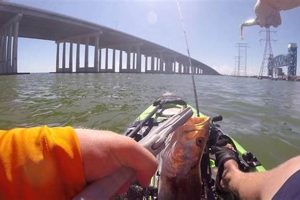
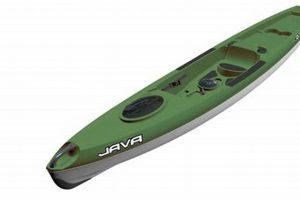
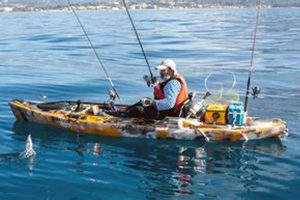
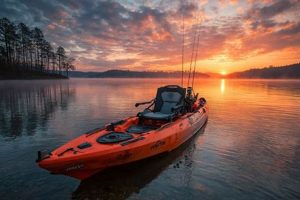
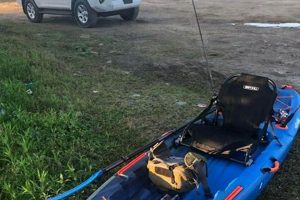
Maintaining a livewell or employing effective fish-handling techniques while kayak fishing ensures the freshness and quality of the catch until reaching shore. This might involve using a specialized kayak with a built-in livewell, a portable livewell, a cooler with ice, or stringers/kuli bags for temporary storage. For example, anglers targeting delicate species may opt for a livewell system to maximize survival rates, while those fishing for more robust species could employ a cooler with ice for preservation.
Preserving the catch contributes to responsible fishing practices by minimizing wastage and allowing for selective harvest. Freshly caught fish retain optimal flavor and texture, enhancing the overall culinary experience. Historically, anglers have employed various methods to keep their catch viable during fishing trips, from traditional woven baskets and stringers to modern, insulated containers and aerated livewells. The development of specialized kayak fishing gear has further refined these techniques, allowing for greater efficiency and convenience on the water.
This article will delve into various methods of preserving fish onboard a kayak, encompassing both traditional and modern approaches. Furthermore, it will discuss species-specific considerations, ethical practices, and relevant regulations to ensure responsible and enjoyable kayak fishing experiences.
Tips for Preserving Fish on a Kayak
Maintaining the quality of caught fish is crucial for both ethical and culinary reasons. The following tips offer guidance for effectively preserving fish while kayak fishing.
Tip 1: Choose an Appropriate Method: Select a fish preservation method suited to the target species and fishing duration. Livewells are ideal for delicate species requiring a controlled environment. Coolers with ice are suitable for robust species intended for immediate consumption. Stringers or kill bags offer a short-term solution, but require careful monitoring to prevent spoilage, especially in warm water.
Tip 2: Prioritize Fish Health (Livewells): If using a livewell, ensure adequate oxygenation and circulation. Monitor water temperature and change the water regularly to minimize stress on the fish. Consider adding a livewell additive to neutralize ammonia and other harmful byproducts.
Tip 3: Proper Chilling (Coolers): When using a cooler, layer ice generously and distribute fish evenly throughout. Avoid overcrowding, which can hinder efficient cooling. Pre-chilling the cooler before departure is essential for optimal temperature maintenance.
Tip 4: Secure Storage (Stringers/Kill Bags): Ensure stringers and kill bags are securely attached to the kayak to prevent loss or entanglement. Keep them submerged in the water to maintain a cooler temperature and prevent exposure to direct sunlight. Regularly inspect fish for signs of deterioration.
Tip 5: Species-Specific Handling: Handle fish gently and minimize air exposure. Some species are more susceptible to stress and injury than others. Employ species-specific handling techniques, such as using wet hands or a landing net, to minimize harm.
Tip 6: Adhere to Regulations: Familiarize oneself with local fishing regulations regarding catch limits, size restrictions, and permitted preservation methods. Responsible angling practices contribute to the long-term health of fish populations.
Tip 7: Minimize Waste: Practice selective harvest and only keep fish intended for consumption. Proper preservation techniques further minimize waste by ensuring the quality of the catch until it reaches the table.
By implementing these strategies, anglers can ensure their catch remains fresh and contributes to a positive and ethical fishing experience. These techniques promote responsible angling, maximize enjoyment of the sport, and uphold the quality of the harvested fish.
The following section will conclude with a summary of key takeaways and reinforce the importance of proper fish handling and preservation during kayak fishing excursions.
1. Livewell

Livewells represent a crucial component in maintaining fish viability, particularly during extended kayak fishing trips. These self-contained systems provide a controlled aquatic environment onboard, allowing for the temporary storage of live fish. This functionality directly addresses the core challenge of preserving catch quality, especially for sensitive species susceptible to rapid deterioration. A livewell’s efficacy stems from its ability to mimic natural habitat conditions, minimizing stress and maximizing survival rates. For example, anglers targeting bass or trout, species prone to stress-induced mortality, often rely on livewells to ensure a healthy catch. This practice also aligns with ethical fishing principles by enabling catch-and-release practices without compromising fish welfare.
Several factors contribute to livewell effectiveness. Adequate oxygenation, achieved through aeration systems or regular water changes, is paramount. Maintaining appropriate water temperature through insulation or periodic replenishment with fresh water minimizes thermal stress. Livewell size and capacity should be carefully considered in relation to the target species and anticipated catch volume. Overcrowding can lead to oxygen depletion and increased stress, negating the benefits of the system. Furthermore, employing specialized livewell additives can help neutralize harmful ammonia and other metabolic byproducts, further enhancing fish health and survival. Careful consideration of these aspects ensures optimal livewell performance and maximizes the viability of the catch.
In summary, livewells provide a vital solution for preserving live fish on kayaks. Their ability to replicate natural aquatic environments minimizes stress and maximizes fish survival. Selecting an appropriate livewell system, coupled with diligent maintenance and monitoring, significantly enhances the quality and ethical implications of kayak fishing excursions. This contributes not only to a more successful fishing experience but also to the long-term health and sustainability of fish populations.
2. Cooler

Coolers serve as a practical and effective method for preserving caught fish on kayak fishing excursions, especially when immediate consumption is intended. Unlike livewells, which maintain fish alive, coolers focus on rapid chilling and preservation of the catch. This approach offers advantages in terms of simplicity, affordability, and versatility, making it a popular choice among kayak anglers.
- Temperature Management
Effective temperature management is paramount for maintaining fish quality in a cooler. Pre-chilling the cooler with ice before departure ensures a rapid drop in temperature upon introducing the catch. Generous layering of ice throughout the cooler, interspersed with the fish, promotes even cooling and inhibits bacterial growth. Factors such as ambient temperature, cooler insulation quality, and ice type (e.g., cubed, block, reusable ice packs) influence the overall effectiveness of temperature control. Maintaining a consistently low temperature is crucial for preserving fish freshness and minimizing spoilage.
- Cooler Size and Capacity
Cooler selection involves considering size and capacity in relation to the anticipated catch volume and kayak storage limitations. Overfilling a cooler restricts airflow and reduces cooling efficiency. Conversely, an excessively large cooler occupies valuable kayak space and adds unnecessary weight. Balancing these factors is crucial for optimizing both cooling performance and kayak stability. Anglers targeting smaller species or practicing catch-and-release may opt for smaller coolers, while those anticipating larger catches or longer trips might prioritize larger capacity.
- Fish Handling Practices
Proper fish handling practices complement cooler usage and contribute significantly to preserving catch quality. Minimizing air exposure, handling fish with wet hands, and promptly placing them in the cooler on ice reduces stress and enzymatic activity that can negatively impact flavor and texture. Bleeding certain species immediately after capture can also enhance flavor and preservation. Integrating these practices with cooler usage maximizes the effectiveness of the preservation process.
- Cooler Accessories and Enhancements
Various accessories and enhancements can optimize cooler performance and convenience. Dividers or trays compartmentalize the cooler, preventing fish from crushing or damaging each other. Drain plugs facilitate easy removal of melted ice water, maintaining a sanitary environment. Insulated cooler bags offer additional temperature control, particularly during transport to and from the kayak. Integrating these accessories can further enhance the overall effectiveness of cooler-based fish preservation.
In conclusion, coolers represent a versatile and practical solution for preserving caught fish on kayak fishing trips. Careful consideration of temperature management, cooler size, fish handling practices, and accessory utilization maximizes their effectiveness. By integrating these factors, anglers can ensure their catch remains fresh and palatable until preparation, enhancing the overall enjoyment and success of their kayak fishing adventures.
3. Stringer
Stringers offer a traditional, readily accessible method for keeping fish on a kayak, particularly suited for short trips and robust species. A stringer consists of a flexible cord or wire with pointed clips or barbs designed to pierce and secure the fish through the jaw or gill area. While simple and cost-effective, stringer use necessitates careful consideration of fish welfare and potential environmental impacts. For example, stringers may not be suitable for delicate species susceptible to injury or stress, nor for extended periods, especially in warm water conditions, due to the increased risk of spoilage. Stringer placement also requires attention; improper positioning can lead to entanglement with the kayak or surrounding vegetation.
The effectiveness of a stringer as a fish-keeping solution on a kayak is directly related to several factors. Stringer material plays a crucial role; stainless steel offers durability and corrosion resistance in saltwater environments, while nylon or braided cords provide flexibility and ease of use. Clip design is also significant; sharp, robust clips ensure secure attachment and minimize fish detachment, reducing the risk of loss. Stringer length should align with the anticipated catch size and kayak dimensions, preventing excessive drag or entanglement. Proper fish placement on the stringer, ensuring adequate spacing and minimizing crowding, contributes to better water circulation and reduces stress on the catch. Furthermore, regular monitoring of the fish on the stringer for signs of deterioration is essential, especially in warmer climates. Ignoring these factors can compromise fish quality and undermine the intended purpose of the stringer.
Despite its simplicity, stringer use on a kayak presents inherent challenges. Ensuring responsible and ethical application requires careful species selection, minimizing fish struggling and stress during attachment, and regular monitoring for signs of distress or spoilage. Furthermore, local regulations may restrict or prohibit stringer use in certain areas, reflecting conservation concerns or specific species protection measures. Understanding and adhering to these regulations are crucial for responsible angling practices. While stringers offer a viable option for short-term fish storage on a kayak, their limitations necessitate careful consideration of species suitability, environmental conditions, and ethical implications. Alternative methods, such as livewells or coolers, may offer more suitable solutions for certain species or extended kayak fishing trips.
4. Kayak Crate

Kayak crates offer a versatile storage solution integral to successful kayak fishing and directly impact the ability to effectively manage catches. These crates, typically constructed from durable, weather-resistant materials like plastic or aluminum, provide organized storage for various fishing essentials, including tackle boxes, tools, and importantly, fish-handling equipment. This organized approach facilitates efficient access to necessary gear, streamlining processes and minimizing disruption during critical fishing moments. For instance, a well-organized crate might hold a dedicated compartment for a fish-handling glove, lip gripper, and measuring device, enabling swift and responsible handling of the catch. Furthermore, crates themselves can contribute to fish preservation. Some anglers adapt crates to hold smaller coolers or insulated bags, providing a dedicated space for keeping catches fresh. Others utilize crates to secure and organize stringers or kill bags, minimizing entanglement and facilitating efficient management of retained fish.
Several factors influence the effectiveness of kayak crates for fish management. Crate size and configuration should align with kayak dimensions and individual fishing styles. Larger crates offer greater storage capacity but may impede paddling or access to other onboard equipment. Smaller, modular crates allow for customization and flexibility, enabling anglers to tailor their setup to specific needs and target species. Secure attachment points are crucial for preventing crate movement during paddling or rough water conditions. Bungee cords, straps, or integrated mounting systems ensure stability and minimize the risk of equipment loss. Proper weight distribution within the crate contributes to kayak balance and stability, impacting overall maneuverability and safety. Uneven weight distribution can compromise kayak performance and potentially lead to capsizing, especially in challenging conditions.
Optimizing kayak crate utilization for fish management requires strategic planning and consideration of various factors. Integrating a crate system enhances organization, streamlines fish handling processes, and contributes to overall fishing efficiency. Understanding crate dimensions, attachment methods, and weight distribution principles maximizes stability and safety on the water. By thoughtfully integrating a kayak crate system, anglers can improve their fishing experience and contribute to the responsible and efficient management of their catch.
5. Proper Handling

Proper fish handling techniques are essential for preserving fish quality and ensuring ethical treatment during kayak fishing excursions. These techniques directly influence the effectiveness of various fish-keeping methods employed on kayaks, impacting both the viability of live fish and the quality of those intended for consumption. Mishandling can lead to stress, injury, and premature mortality, compromising conservation efforts and diminishing the overall fishing experience. Understanding and implementing appropriate handling procedures is crucial for responsible and successful kayak angling.
- Minimizing Air Exposure
Reducing the duration a fish spends out of water is paramount. Air exposure disrupts the delicate balance of a fish’s respiratory and circulatory systems, leading to stress and potential organ damage. Efficiently unhooking and returning fish to the water, or swiftly transferring them to a livewell or cooler, minimizes this exposure and its associated risks. Utilizing tools like lip grips or dehooking mats further streamlines the process and reduces handling time. For example, quickly releasing an undersized or unwanted fish demonstrates responsible angling and prioritizes fish welfare.
- Supporting the Fish’s Body
Supporting a fish’s body weight properly during handling prevents injury and reduces stress. Larger fish, in particular, require adequate support to avoid internal organ damage or spinal injuries. Using both hands, one beneath the belly and the other cradling the head region, distributes weight evenly and minimizes pressure on vulnerable areas. This practice is especially crucial when handling species known for their delicate bone structures, such as trout or salmon.
- Using Wet Hands or Gloves
Dry hands or gloves can remove a fish’s protective slime coat, leaving it vulnerable to infection and disease. Wetting hands or wearing wet gloves before handling fish preserves this crucial protective layer, enhancing their chances of survival upon release. This practice also minimizes the risk of transferring harmful bacteria or chemicals from human hands to the fish.
- Avoiding Contact with Gills or Eyes
The gills and eyes of a fish are highly sensitive areas. Direct contact with these regions can cause significant injury and stress. Carefully handling fish by avoiding these vulnerable areas demonstrates respect for the animal and promotes ethical fishing practices. Using appropriate tools, such as lip grips or dehookers, allows for secure control without compromising delicate tissues.
These proper handling techniques are fundamental to maximizing the effectiveness of any fish-keeping method employed on a kayak. Whether utilizing a livewell, cooler, stringer, or other storage solution, minimizing stress and injury through careful handling ensures optimal fish health and preservation. Integrating these practices contributes not only to successful fishing outcomes but also to responsible angling and the long-term sustainability of fish populations.
Frequently Asked Questions
This section addresses common inquiries regarding maintaining fish viability on a kayak, providing concise and informative responses to enhance understanding and promote responsible angling practices.
Question 1: What is the most effective method for keeping fish alive on a kayak?
A properly maintained and appropriately sized livewell offers the optimal environment for preserving live fish on a kayak, particularly for sensitive species. Adequate oxygenation, temperature control, and regular water changes are crucial for maximizing fish survival.
Question 2: What is the best approach for keeping fish fresh for consumption on a kayak if a livewell is not available?
A cooler with ample ice is the most effective method for preserving fish for consumption in the absence of a livewell. Layering ice and distributing fish evenly within the cooler ensures consistent chilling and minimizes spoilage.
Question 3: Are stringers a humane method for keeping fish on a kayak?
Stringer suitability depends on species, environmental conditions, and trip duration. Robust species can tolerate stringers for short periods in cool water. Delicate species or extended durations in warm water necessitate alternative methods like livewells or coolers to minimize stress and mortality.
Question 4: How does one choose the right size cooler for kayak fishing?
Cooler size selection involves balancing storage capacity with kayak space and weight limitations. Anticipated catch volume, target species size, and trip duration should guide cooler selection. Overfilling compromises cooling efficiency, while excessive size reduces kayak maneuverability.
Question 5: What are essential fish handling practices for preserving fish quality on a kayak?
Minimizing air exposure, supporting the fish’s body weight, using wet hands or gloves, and avoiding contact with gills or eyes are crucial handling practices. These techniques reduce stress, prevent injury, and maximize both survival rates and the quality of fish intended for consumption.
Question 6: How do local fishing regulations impact fish-keeping practices on a kayak?
Local regulations may restrict or prohibit certain fish-keeping methods, such as stringer use or livewell size limitations, for specific species or conservation areas. Adhering to these regulations is essential for responsible angling and resource sustainability. Consulting local authorities or reviewing published regulations ensures compliance and promotes ethical fishing practices.
Understanding these common inquiries and their corresponding answers contributes to informed decision-making, promoting responsible angling practices, and maximizing the enjoyment and success of kayak fishing experiences.
This concludes the FAQ section. The following section will provide a comprehensive summary of key takeaways and practical recommendations for optimizing fish preservation techniques on kayak fishing excursions.
Conclusion
Effective fish preservation on kayaks requires a multifaceted approach encompassing appropriate equipment selection, proper handling techniques, and adherence to ethical and regulatory guidelines. Whether employing a livewell, cooler, stringer, or kayak crate system, each method presents unique advantages and limitations. Careful consideration of target species, trip duration, and environmental conditions informs optimal strategy selection. Minimizing stress and injury through proper handling techniques, such as minimizing air exposure and supporting the fish’s body weight, further enhances preservation efforts. Integrating these practices with responsible angling principles, including adherence to catch limits and size restrictions, contributes to the long-term health and sustainability of fish populations.
Preserving fish effectively on a kayak transcends mere convenience; it signifies a commitment to responsible resource management and ethical angling practices. Prioritizing fish welfare, minimizing waste, and respecting regulatory frameworks ensure the continued enjoyment and sustainability of kayak fishing for future generations. Continuous refinement of fish-handling techniques and exploration of innovative preservation methods further enhance these efforts, contributing to a positive and impactful legacy within the kayak angling community.