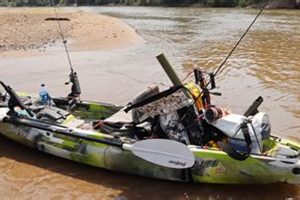
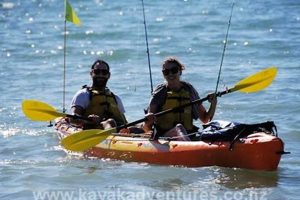
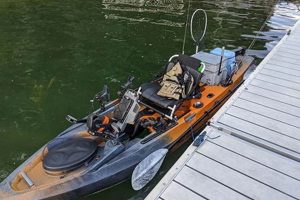
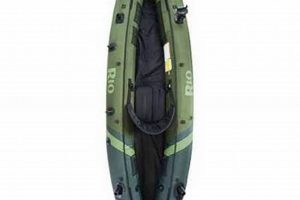
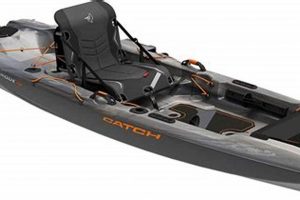
This specific model is a sit-on-top style vessel designed for angling in coastal waters. Characterized by its 12.6-foot length, it offers stability and ample storage for fishing gear. Such kayaks are typically constructed from durable, lightweight materials like high-density polyethylene, making them easy to transport and maneuver.
The manageable size and open design of this type of watercraft provide anglers with excellent access to the water and a comfortable platform for casting. Compared to larger boats, kayaks allow for stealthy approach in shallow waters, often preferred habitats for various fish species. This quiet approach minimizes disturbance and maximizes fishing success. Historically, kayaks have been used for fishing and transportation for millennia, with modern iterations evolving to incorporate advanced materials and features for enhanced performance and comfort.
Further exploration of this kayak model will cover key features, performance characteristics, user experiences, and comparisons with similar products. This information will empower potential buyers to make informed decisions based on individual needs and preferences.
Tips for Kayak Fishing
Effective angling from a kayak requires preparation and adherence to specific safety and efficiency guidelines. These tips offer valuable insights for enhancing the kayak fishing experience.
Tip 1: Prioritize Safety Gear: Always wear a personal flotation device (PFD). Carry a whistle for signaling, and a waterproof communication device for emergencies. A first aid kit should also be readily accessible.
Tip 2: Plan the Trip: Check weather forecasts, tides, and water currents before heading out. Inform someone of the intended fishing location and estimated return time.
Tip 3: Balance and Stability: Distribute weight evenly within the kayak. Avoid sudden movements that could compromise stability. Practice entering and exiting the kayak in shallow water before venturing further.
Tip 4: Essential Gear Organization: Secure fishing rods, tackle boxes, and other equipment to prevent loss or damage. Utilize designated storage compartments and bungee cords effectively.
Tip 5: Paddle and Navigation: Learn basic paddling techniques for efficient maneuvering. Utilize a GPS or chart plotter for navigation, especially in unfamiliar waters. Be mindful of marked channels and restricted areas.
Tip 6: Respect Wildlife and the Environment: Adhere to catch and release guidelines where appropriate. Properly dispose of fishing line and other waste. Minimize disturbance to natural habitats.
Tip 7: Stay Hydrated and Sun-Protected: Carry ample water and snacks for sustained energy. Apply sunscreen, wear protective clothing, and consider a hat with a wide brim.
Adhering to these guidelines will contribute to a safer and more successful kayak fishing experience. Careful planning and execution are essential for maximizing enjoyment and minimizing potential risks.
By implementing these strategies, anglers can confidently embark on their kayak fishing adventures, equipped with the knowledge and preparedness necessary for an enjoyable and rewarding experience.
1. Sit-on-top Design

The Trophy Beach 126 fishing kayak utilizes a sit-on-top design, a key feature influencing its suitability for angling. This design differs fundamentally from traditional sit-inside kayaks, where the user’s lower body is enclosed within the hull. The sit-on-top configuration positions the angler above the deck, offering several advantages specific to fishing activities. This open design promotes self-bailing, crucial in coastal environments where waves and splashes are common. Water drains through scupper holes, preventing the kayak from becoming swamped and maintaining stability. Anglers benefit from increased freedom of movement, facilitating casting, reeling, and landing fish. Furthermore, re-entry is significantly easier from the water, a critical safety aspect in open water conditions.
Consider a scenario where an angler hooks a large fish. The sit-on-top design allows for greater range of motion during the fight, enabling the angler to adjust position and leverage effectively. This freedom of movement minimizes the risk of capsizing, particularly in challenging sea conditions. Another practical advantage lies in the ease of entry and exit. Anglers can quickly and easily board or disembark the kayak, even in shallow water or from a dock. This simplifies launching and landing, enhancing the overall fishing experience.
The sit-on-top design of the Trophy Beach 126 contributes significantly to its functionality as a fishing platform. Self-bailing capabilities enhance safety and stability in coastal waters. Unrestricted movement improves angler performance, while ease of access simplifies operation. Understanding this design element provides valuable insight into the kayak’s intended purpose and suitability for various fishing scenarios. This awareness allows potential users to evaluate its benefits and limitations in relation to individual needs and preferences.
2. 12.6-foot Length

The 12.6-foot length of the Trophy Beach 126 fishing kayak represents a deliberate design choice impacting performance characteristics. This length influences maneuverability, tracking, and speed, key factors affecting the kayak’s suitability for specific fishing environments. Shorter kayaks are generally more agile, allowing for quick turns and navigation in tight spaces, beneficial in mangrove forests or rocky shorelines. Longer kayaks tend to track straighter and glide more efficiently, covering greater distances with less effort, advantageous in open water or when paddling against currents. The 12.6-foot length of this model positions it within a moderate range, balancing maneuverability and tracking for versatile performance in diverse coastal conditions.
Consider navigating a shallow, winding creek. A shorter kayak would offer greater agility, allowing for precise maneuvering through narrow passages. Conversely, when paddling across a bay to reach a distant fishing spot, the 12.6-foot length provides sufficient hull speed and tracking for efficient travel. This length becomes a compromise, offering acceptable performance in both scenarios without specializing in either extreme. This versatility makes the Trophy Beach 126 suitable for a broader range of fishing environments.
Understanding the relationship between kayak length and performance characteristics is essential for selecting the appropriate vessel. The 12.6-foot length of the Trophy Beach 126 contributes to its balanced performance profile, suitable for diverse coastal fishing environments. This length provides adequate maneuverability for navigating complex shorelines while maintaining sufficient tracking and speed for open water paddling. Recognizing this balance allows potential users to assess the kayak’s suitability in relation to individual fishing styles and preferred locations. This informed perspective facilitates effective decision-making based on specific needs and anticipated usage scenarios.
3. Fishing-Specific Features
The efficacy of a fishing kayak hinges on its specialized features, designed to enhance angler performance and convenience. These features differentiate a fishing kayak from recreational models, equipping anglers with the necessary tools and functionalities to maximize their on-water experience. Analysis of these features in the context of the Trophy Beach 126 fishing kayak provides crucial insights into its suitability for dedicated angling pursuits.
- Rod Holders
Dedicated rod holders, typically integrated into the kayak’s hull or deck, securely hold fishing rods while paddling or when attending to other tasks. This frees the angler’s hands for navigation, baiting hooks, or landing fish. Multiple rod holders accommodate diverse fishing techniques and allow for quick transitions between setups. The Trophy Beach 126 typically includes flush-mounted rod holders, contributing to a streamlined profile and minimizing line entanglement.
- Storage Compartments
Storage compartments, including hatches, tank wells, and dry bags, provide secure stowage for tackle boxes, gear, and personal items. These compartments ensure essential equipment remains organized, accessible, and protected from the elements. Waterproof hatches safeguard sensitive electronics and valuables from splashes and submersion. The Trophy Beach 126 typically features a rear tank well suitable for storing a crate or cooler, maximizing on-board capacity.
- Paddle Holders/Clips
Secure paddle parks or clips allow for convenient stowage of the paddle when not in use. This prevents the paddle from drifting away and keeps the deck clear for fishing activities. Easily accessible paddle holders facilitate smooth transitions between paddling and fishing. The presence of these features on the Trophy Beach 126 enhances angler efficiency and minimizes disruptions during fishing.
- Anchor System
An anchor system, often consisting of a small anchor, anchor trolley, and cleats, enables anglers to maintain position in desired fishing locations. This is crucial in currents, windy conditions, or when targeting specific structures or depths. The Trophy Beach 126 may include pre-installed anchor trolley systems, simplifying setup and deployment.
These fishing-specific features collectively contribute to the Trophy Beach 126’s functionality as a dedicated fishing platform. The integration of rod holders, storage compartments, paddle holders, and anchor systems optimizes the angler’s experience by promoting efficiency, organization, and control. Understanding these specialized features empowers potential buyers to assess the kayak’s alignment with their individual fishing styles and preferences, facilitating informed purchasing decisions.
4. Stability and Maneuverability
Stability and maneuverability represent critical performance attributes of the Trophy Beach 126 fishing kayak, directly influencing its suitability for various fishing environments and angler preferences. Understanding the interplay between these characteristics provides valuable insights for evaluating the kayak’s overall performance and its applicability to diverse fishing scenarios. The following facets explore this relationship in detail.
- Primary Stability
Primary stability refers to the kayak’s initial resistance to tipping when at rest. A wider hull generally provides greater primary stability, instilling confidence when casting, reeling, or landing fish. Imagine an angler standing to sight-cast in shallow water. A stable platform minimizes the risk of capsizing, allowing for focused fishing. The Trophy Beach 126, with its relatively wide beam, offers enhanced primary stability compared to narrower, performance-oriented kayaks, promoting a secure and comfortable fishing experience.
- Secondary Stability
Secondary stability describes the kayak’s resistance to tipping when leaned or tilted. This characteristic becomes crucial when navigating waves, currents, or maneuvering in challenging conditions. Consider paddling through choppy water. A kayak with strong secondary stability will provide a reassuring feel, reducing the likelihood of capsizing even when subjected to significant lean angles. The hull design of the Trophy Beach 126 contributes to its secondary stability, allowing anglers to navigate varied water conditions with confidence.
- Tracking
Tracking refers to the kayak’s ability to maintain a straight course with minimal paddling adjustments. Efficient tracking conserves energy and allows for precise navigation, crucial when covering longer distances or paddling against currents. Visualize paddling across a large bay. A kayak that tracks well will require fewer corrective strokes, minimizing fatigue and maximizing efficiency. The Trophy Beach 126, with its moderate length and hull design, balances tracking performance with maneuverability, suitable for navigating diverse coastal environments.
- Maneuverability
Maneuverability describes the kayak’s responsiveness to turning inputs from the paddle. Enhanced maneuverability allows for quick turns and precise navigation in tight spaces, essential in complex shorelines, mangrove forests, or rocky areas. Picture navigating a narrow creek lined with overhanging branches. A maneuverable kayak allows for quick adjustments and precise control, minimizing the risk of collisions. The Trophy Beach 126, while prioritizing stability, maintains adequate maneuverability for navigation in moderately challenging environments.
The interplay between stability and maneuverability defines the Trophy Beach 126’s versatile performance profile. Its emphasis on stability provides a secure and comfortable platform for fishing activities, while its moderate maneuverability allows for navigation in a variety of coastal environments. Understanding these characteristics empowers anglers to evaluate the kayak’s suitability in relation to their individual fishing styles and preferred locations. This balanced approach makes the Trophy Beach 126 a suitable option for anglers seeking a stable and predictable fishing platform without compromising essential maneuverability.
5. Coastal Water Performance

Coastal water performance is a defining characteristic of the Trophy Beach 126 fishing kayak, directly influencing its suitability for the intended environment. Coastal waters present unique challenges, including varying wave conditions, currents, tides, and wind patterns. A kayak designed for coastal performance must address these factors to ensure angler safety and effective fishing. The Trophy Beach 126’s design incorporates features intended to mitigate these challenges, enabling successful navigation and fishing in coastal environments. Its moderate length and relatively wide beam contribute to stability in chop and waves, while the sit-on-top design facilitates self-bailing, preventing water accumulation from swamping the vessel. The kayak’s tracking performance allows anglers to maintain course against currents and wind, optimizing efficiency during longer paddles. Consider a scenario where an angler encounters moderate waves and wind while fishing near shore. The Trophy Beach 126’s stability and self-bailing capabilities provide a secure platform, minimizing the risk of capsizing and maintaining angler confidence.
The Trophy Beach 126’s coastal water performance extends beyond basic stability and self-bailing. Maneuverability in currents and around structures, such as reefs or jetties, is essential for effective fishing. The kayak’s design allows for reasonable responsiveness to paddle inputs, enabling anglers to navigate complex shorelines and position themselves strategically for optimal fishing opportunities. Imagine an angler targeting fish around a rocky outcrop exposed during low tide. The Trophy Beach 126’s maneuverability allows for precise positioning in close proximity to the structure, maximizing casting accuracy and fishing success. Furthermore, the kayak’s storage capacity accommodates essential gear, including tackle boxes, safety equipment, and fish handling tools, ensuring anglers are prepared for various fishing scenarios in coastal waters.
Effective coastal water performance is paramount for a fishing kayak intended for this environment. The Trophy Beach 126 incorporates design elements aimed at mitigating challenges posed by waves, currents, wind, and varying tidal conditions. Its stability, self-bailing capabilities, maneuverability, and storage capacity contribute to a balanced performance profile, suitable for diverse coastal fishing scenarios. Understanding this relationship between design and performance empowers potential buyers to assess the kayak’s suitability in relation to anticipated usage and individual preferences. Recognizing the importance of coastal water performance is crucial for informed decision-making and ensuring a safe and successful fishing experience in these dynamic environments.
Frequently Asked Questions
This section addresses common inquiries regarding the Trophy Beach 126 fishing kayak, providing concise and informative responses to facilitate informed decision-making.
Question 1: What is the weight capacity of the Trophy Beach 126?
Weight capacity varies depending on the specific model year and manufacturer specifications, but generally falls within the range of 400-500 lbs. Consulting official product documentation is recommended for precise figures.
Question 2: Is the Trophy Beach 126 suitable for beginners?
Its stability and ease of use make it a suitable option for beginners. However, prior experience with kayaking is always beneficial. Practicing basic paddling techniques and safety procedures in calm water is recommended before venturing into more challenging conditions.
Question 3: What type of fishing is the Trophy Beach 126 best suited for?
Its design caters to various fishing styles in coastal environments, including inshore fishing, estuary fishing, and protected bay fishing. The kayak’s stability makes it suitable for stand-up fishing, while its maneuverability allows for navigation in moderately complex shorelines.
Question 4: What materials are used in its construction?
High-density polyethylene (HDPE) is the most common construction material, offering durability, impact resistance, and UV protection. Specific model variations may incorporate additional materials for reinforcement or enhanced performance.
Question 5: What are the transportation and storage considerations?
Roof racks or trailers are typically required for transportation. Storage options include garages, sheds, or specialized kayak storage racks. Securing the kayak properly during transport and storage prevents damage and extends its lifespan.
Question 6: What maintenance is required for the Trophy Beach 126?
Regular rinsing with fresh water after each use removes salt and debris, preventing corrosion and material degradation. Periodic inspection of hull fittings, hardware, and storage compartments ensures optimal functionality and safety. Following manufacturer guidelines for maintenance ensures long-term performance and extends the kayak’s lifespan.
Addressing these common inquiries provides a foundational understanding of the Trophy Beach 126 fishing kayak. Further research and consultation with authorized dealers are recommended for comprehensive product knowledge.
The subsequent sections will delve deeper into specific aspects of the Trophy Beach 126, offering a comprehensive overview for prospective buyers.
Conclusion
This exploration of the Trophy Beach 126 fishing kayak encompassed key features contributing to its suitability for coastal angling. The sit-on-top design, 12.6-foot length, fishing-specific features, stability, maneuverability, and coastal water performance were examined in detail. These attributes collectively define a kayak designed for versatile performance in diverse coastal environments. Understanding these characteristics empowers potential users to assess its alignment with individual fishing styles and preferences.
The Trophy Beach 126 presents a balanced approach to kayak fishing, prioritizing stability and practicality without compromising essential performance characteristics. Further research, including user reviews and comparisons with similar models, is recommended for informed purchasing decisions. Careful consideration of individual needs and intended usage scenarios ensures selection of the appropriate kayak for optimal fishing experiences.