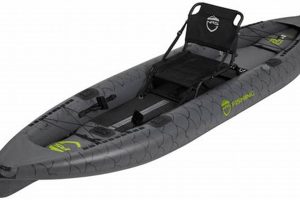
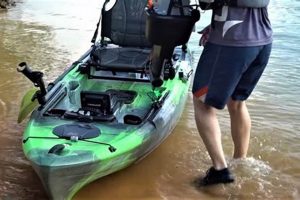
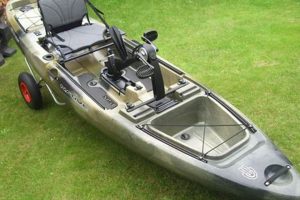
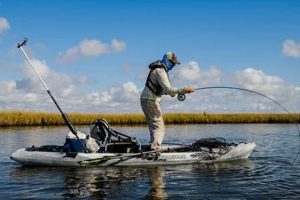
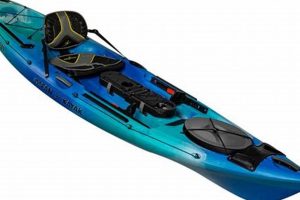
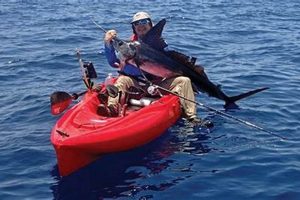
A container designed to hold captured fish within a kayak offers anglers the ability to maintain their catch in a healthy state throughout a fishing trip. This specialized equipment typically incorporates aeration or circulation systems, ensuring sufficient oxygen levels for the fish’s survival. These containers come in various sizes and designs, from simple buckets with battery-powered aerators to integrated systems built directly into the kayak hull.
Maintaining the viability of captured fish provides multiple advantages. It allows for selective harvesting, enabling anglers to release undersized or unwanted fish unharmed. It also ensures the freshness of the kept catch, improving the quality of the fish for consumption. The development of these on-board holding systems reflects an increasing emphasis on conservation and responsible angling practices.
The following sections will delve into the different types of these systems, factors to consider when choosing one, proper usage and maintenance, and their impact on the overall kayak fishing experience.
Tips for Utilizing Onboard Fish Holding Systems
Proper use and maintenance of onboard fish holding systems are essential for ensuring fish health and maximizing their effectiveness. These tips offer guidance on optimizing the use of these valuable tools.
Tip 1: Choose the Right Size: Selecting an appropriately sized container depends on the target species, typical catch size, and duration of fishing trips. Overcrowding can stress and harm fish.
Tip 2: Prioritize Oxygenation: Ensure adequate oxygen supply through a reliable aeration system. Regularly check battery levels or the functionality of other aeration methods.
Tip 3: Manage Water Quality: Regularly exchange or refresh the water within the container, particularly in warmer conditions. Adding ice can help maintain a cooler temperature.
Tip 4: Minimize Handling: Handle fish gently and minimize air exposure during transfer to the holding system. Use a net with rubberized or knotless mesh to reduce injury.
Tip 5: Consider Water Circulation: Systems with recirculating pumps offer enhanced oxygenation and waste removal, contributing to better fish health.
Tip 6: Secure the System: Ensure the container is securely fastened to the kayak to prevent shifting or tipping during movement.
Tip 7: Adhere to Regulations: Familiarize oneself with local regulations regarding catch limits, size restrictions, and the use of live wells.
Following these practices will ensure fish remain healthy and vibrant throughout the fishing trip, promoting responsible angling and a higher quality catch.
By implementing these strategies, anglers can enjoy the benefits of keeping their catch fresh while upholding ethical fishing practices. This concluding section will summarize key considerations for selecting and using onboard fish holding systems.
1. Aeration
Maintaining adequate oxygen levels within a kayak fishing live well is crucial for fish survival and well-being. Aeration systems address this need, playing a vital role in responsible angling practices and preserving catch quality. Understanding the components and functionalities of these systems is essential for effective kayak fishing.
- Aeration Methods
Various aeration methods exist, each with its own benefits and drawbacks. Battery-powered aerators, recirculating pumps, and manual pumps are common options. Battery-powered systems offer convenience, while recirculating pumps provide continuous water movement and filtration. Manual pumps offer a non-powered alternative, but require regular user input. Choosing the appropriate method depends on factors like kayak size, fishing duration, and target species.
- Oxygen Saturation
Maintaining optimal oxygen saturation levels within the live well is essential for fish health. Factors like water temperature, fish species, and stocking density influence oxygen demand. Warm water holds less dissolved oxygen, increasing the importance of effective aeration in warmer climates. Overcrowding a live well depletes oxygen rapidly, highlighting the importance of choosing an appropriately sized system and managing catch limits.
- Water Circulation
Effective water circulation promotes even oxygen distribution and prevents stagnant areas within the live well. Recirculating pumps excel in this aspect, creating continuous water movement and enhancing oxygen exchange. Proper circulation also aids in waste removal, contributing to a healthier environment for the fish. Systems without circulation may require periodic manual stirring to ensure oxygen reaches all areas.
- System Maintenance
Regular maintenance of aeration systems is essential for reliable performance. Battery-powered systems require periodic battery checks and replacements. Recirculating pumps may need occasional cleaning to prevent clogging. Proper maintenance ensures the system functions optimally, providing consistent oxygen supply throughout the fishing trip. Neglecting maintenance can lead to system failure and compromise fish health.
By understanding and implementing appropriate aeration strategies, anglers can ensure a healthy and vibrant live well environment. This contributes not only to the well-being of the catch but also to a more responsible and enjoyable kayak fishing experience. Choosing the correct aeration system and maintaining it properly directly impacts the quality and survival of the catch.
2. Capacity
Live well capacity significantly impacts kayak fishing practicality and ethical considerations. Sufficient capacity ensures fish are held comfortably, minimizing stress and mortality. Capacity limitations necessitate careful catch management, promoting selective harvesting and adherence to regulations. For instance, a smaller live well might suit anglers targeting panfish, while larger game fish require significantly more space. Overcrowding, irrespective of species, depletes oxygen and increases the risk of injury or disease transmission. Balancing catch volume with available capacity directly affects fish welfare and conservation efforts.
Selecting appropriate live well capacity requires considering target species size and anticipated catch volume. Kayak size and weight capacity also constrain live well dimensions. Larger kayaks accommodate larger live wells, but maneuverability considerations may favor smaller, more portable options. Anglers frequently targeting larger fish, or engaging in longer trips, benefit from higher capacity systems. Conversely, those focusing on smaller species, or shorter excursions, might prioritize portability over maximum capacity. Ultimately, optimizing capacity involves balancing fish welfare, kayak stability, and individual fishing preferences.
Understanding the interplay between capacity and kayak fishing underscores the importance of responsible angling practices. Matching live well capacity to target species and anticipated catch volume safeguards fish health and promotes conservation. Careful consideration of capacity limitations encourages selective harvesting and responsible catch-and-release practices. This informed approach ensures a sustainable and ethical kayak fishing experience, preserving fish populations for future generations. Prioritizing capacity alongside other live well features, like aeration and insulation, contributes significantly to overall fishing success and ethical angling practices.
3. Portability
Live well portability significantly influences kayak fishing logistics and overall experience. Transporting, storing, and deploying the live well efficiently are key considerations for anglers. Portability considerations encompass factors such as weight, size, and ease of integration with the kayak system. Balancing portability with capacity and functionality is essential for optimizing the kayak fishing experience.
- Weight and Size
The weight and size of a live well directly impact kayak maneuverability and storage requirements. Lightweight, compact systems simplify transport to and from the water. Bulkier systems, while potentially offering greater capacity, can hinder kayak portability and storage. Inflatable live wells offer a lightweight alternative, but require inflation and deflation procedures. Rigid live wells, though more robust, may pose transport challenges depending on their size and the angler’s vehicle capacity.
- Integration with Kayak
Seamless integration with the kayak system is crucial for efficient live well deployment and stability. Dedicated mounting points or straps secure the live well, preventing shifting or tipping during paddling. Integrated systems, built into the kayak’s hull, offer optimal stability but limit flexibility in terms of positioning and removal. Portable systems offer greater placement flexibility but require secure attachment mechanisms to maintain stability during kayak movement. Well-integrated systems minimize interference with paddling and other fishing activities.
- Material and Construction
Live well material and construction influence both durability and portability. Lightweight materials, such as plastic or fabric, enhance portability but might sacrifice durability. Heavier materials, like rotomolded plastic, offer increased robustness but add to the overall system weight. Collapsible designs optimize portability for transport and storage but may be less durable than rigid alternatives. The balance between material properties and portability depends on individual angler needs and preferences.
- Ease of Setup/Breakdown
Efficient setup and breakdown procedures streamline live well usage and minimize preparation time. Quickly deployable systems allow anglers to focus on fishing rather than equipment management. Complicated setups, involving multiple components or intricate assembly, can detract from the overall fishing experience. Easily stowable systems simplify transport and storage, minimizing clutter and maximizing space efficiency. The ease of setup and breakdown directly contributes to a more convenient and enjoyable kayak fishing experience.
Prioritizing portability in live well selection enhances the overall kayak fishing experience. Balancing portability with capacity and functionality allows anglers to effectively manage their catch while maintaining kayak maneuverability and ease of transport. Considering these factors ensures a seamless integration of the live well within the kayak fishing system, optimizing efficiency and enjoyment on the water.
4. Durability
Durability is a critical factor in evaluating kayak fishing live wells. These systems are subjected to harsh conditions, including saltwater exposure, impacts from fish, and the general wear and tear of transport and usage. A durable live well ensures long-term functionality, minimizing replacement costs and ensuring consistent performance throughout numerous fishing trips. Construction material plays a significant role in determining durability. High-quality plastics, such as rotomolded polyethylene, offer superior impact resistance and UV protection compared to lower-grade plastics prone to cracking or fading. Reinforced seams and robust hardware further enhance overall durability. For example, a well-constructed live well can withstand accidental drops during transport or impacts from larger, active fish within the well, preserving its structural integrity and functionality. A poorly constructed live well, conversely, might crack under stress or develop leaks, compromising its ability to hold water and maintain a healthy environment for the catch.
Evaluating live well durability extends beyond material considerations to encompass design features and construction quality. Features like reinforced corners, heavy-duty latches, and robust hinges contribute to overall system resilience. Double-walled construction or added insulation layers, while primarily enhancing temperature control, can also improve impact resistance. Examining the quality of welds, seams, and hardware provides further insights into potential longevity. A live well designed with these features can withstand the rigors of frequent use and transport, providing reliable performance for extended periods. Conversely, a live well with subpar construction, even if made from durable materials, might exhibit premature wear in high-stress areas, leading to leaks or structural failures. Therefore, assessing overall build quality, in conjunction with material selection, is essential for determining long-term durability.
Investing in a durable kayak fishing live well minimizes the risk of unexpected failures during fishing trips, preserving catch viability and enhancing the overall fishing experience. Robust construction ensures consistent performance, reducing the need for frequent repairs or replacements. While initial costs might be higher for durable systems, the long-term benefits, including extended lifespan and reliable functionality, outweigh the initial investment. A durable live well contributes to responsible angling by ensuring fish are held in optimal conditions, minimizing stress and mortality, thereby supporting conservation efforts. Choosing a durable system represents a commitment to both practical functionality and ethical fishing practices, ensuring a positive and sustainable kayak fishing experience.
5. Installation

Proper installation of a kayak fishing live well is crucial for both functionality and safety. A secure and correctly positioned live well ensures the system operates effectively, maintains stability on the water, and minimizes interference with paddling and other fishing activities. Installation considerations vary depending on the type of live well, the kayak’s design, and individual angler preferences. Improper installation can lead to instability, leaks, or damage to the kayak, compromising both safety and fishing success.
- Mounting Location
Selecting an appropriate mounting location balances accessibility, stability, and kayak balance. Positioning the live well near the angler allows for easy access while minimizing reach and movement. However, placing excessive weight towards one side of the kayak can compromise stability. Central mounting positions, while potentially less accessible, offer better weight distribution and minimize the impact on kayak balance. Factors such as kayak width, hull design, and the live well’s size and weight influence the optimal mounting location. For example, a larger, heavier live well might necessitate a central mounting position to maintain stability, even if it reduces angler access.
- Attachment Methods
Secure attachment methods are essential for preventing live well movement or detachment during paddling or maneuvering. Common attachment methods include straps, clamps, and dedicated mounting tracks. Straps offer flexibility in terms of placement but require careful tensioning and securing to prevent slippage. Clamps provide a more rigid attachment but might require specific mounting points on the kayak. Dedicated mounting tracks, often integrated into the kayak’s design, offer the most secure and stable attachment solutions but limit placement flexibility. The chosen attachment method must be compatible with both the live well and the kayak’s structure.
- Integration with Kayak Features
Integrating the live well installation with existing kayak features enhances both functionality and aesthetics. Utilizing existing scupper holes or mounting points simplifies installation and minimizes modifications to the kayak. Customizing the installation to accommodate rod holders, transducer mounts, or other accessories streamlines the fishing setup and maximizes deck space efficiency. Careful planning and consideration of existing kayak features ensures a well-integrated and functional live well installation that complements the overall kayak design and angler’s fishing style.
- Electrical Connections (if applicable)
For live wells with aeration or recirculation systems, proper electrical connections are essential for safe and reliable operation. Wiring should be routed away from potential water exposure and secured to prevent entanglement or damage. Using marine-grade wiring and connectors ensures corrosion resistance and longevity in harsh saltwater environments. Fuses or circuit breakers protect the system from overloads, safeguarding both the kayak’s electrical system and the angler. Correctly installed electrical connections provide reliable power to the live well’s systems while minimizing safety risks.
Careful consideration of these installation factors ensures optimal live well performance, maintains kayak stability, and maximizes angler safety. A properly installed live well seamlessly integrates into the kayak fishing system, providing a reliable and convenient solution for maintaining a live catch. Correct installation contributes to a more enjoyable and successful kayak fishing experience while upholding responsible angling practices by ensuring the health and well-being of captured fish.
6. Regulations
Regulations governing kayak fishing live wells vary by jurisdiction and are essential for maintaining healthy fish populations and ecosystems. Compliance with these regulations is crucial for ethical angling and ensures sustainable fishing practices. Understanding and adhering to these rules contributes significantly to responsible kayak fishing. Ignoring regulations can lead to penalties and damage the environment.
- Catch Limits and Size Restrictions
Regulations often stipulate catch limits per species and minimum/maximum size restrictions. These limits prevent overfishing and protect breeding populations. For example, a regulation might limit the catch of a specific species to five fish per day and mandate a minimum size of 12 inches. Using a live well allows anglers to selectively harvest, ensuring compliance by releasing undersized or excess catches unharmed. Ignoring catch limits or size restrictions depletes fish populations and disrupts ecosystem balance.
- Permitted Species
Regulations may prohibit the harvest of certain species altogether, particularly endangered or threatened populations. Live wells should not contain prohibited species, even temporarily. For instance, if a protected species is inadvertently caught, it must be immediately released, regardless of the live well’s presence. Retaining prohibited species, even within a live well, violates regulations and can result in penalties. Understanding permitted species within a given fishing area is paramount for legal compliance.
- Live Well Requirements
Some jurisdictions mandate specific live well features, such as minimum sizes or aeration requirements, to ensure fish welfare. These regulations aim to minimize stress and mortality during holding. For example, a regulation might require a minimum live well volume per fish or mandate the use of a functioning aeration system. Complying with these requirements ensures humane treatment of captured fish and promotes responsible angling practices. Failure to meet these requirements can result in penalties, even if other regulations, like catch limits, are followed.
- Transport and Release Restrictions
Regulations may restrict the transport of live fish or mandate specific release procedures. These rules aim to prevent the spread of invasive species or diseases. For instance, transporting live fish across jurisdictional boundaries might be prohibited, or anglers might be required to release fish within a designated area. Adhering to these regulations prevents ecological damage and maintains the integrity of local fish populations. Ignoring transport or release restrictions can have far-reaching consequences for aquatic ecosystems.
Adhering to regulations pertaining to kayak fishing live wells is fundamental for responsible angling. Compliance not only avoids legal penalties but also contributes to the long-term health and sustainability of fish populations and aquatic environments. Understanding and respecting these regulations ensures a positive and ethical kayak fishing experience while protecting natural resources for future generations. By prioritizing legal compliance alongside practical considerations, anglers contribute to a sustainable and enjoyable fishing environment.
Frequently Asked Questions
Addressing common inquiries regarding kayak fishing live wells provides clarity for anglers seeking to enhance their fishing experience while adhering to best practices.
Question 1: How does one choose the right live well size for a kayak?
Live well size selection depends on target species, average catch size, and trip duration. Larger species and longer trips necessitate greater capacity. Kayak size and weight capacity also factor into the decision. Overcrowding compromises fish health and well-being.
Question 2: What are the primary types of live well aeration systems available?
Common aeration methods include battery-powered aerators, recirculating pumps, and manual pumps. Battery-powered systems offer convenience, while recirculating pumps excel at water circulation and filtration. Manual pumps provide a non-powered option but require consistent user effort.
Question 3: How is water quality maintained within a kayak fishing live well?
Regular water exchanges or the use of ice are crucial, especially in warmer conditions. Recirculating pumps with filtration enhance water quality by removing waste. Minimizing fish handling and using appropriate nets reduces stress and potential contamination.
Question 4: What are the key considerations for installing a live well on a kayak?
Key installation considerations include mounting location, attachment methods, integration with kayak features, and electrical connections (if applicable). Stability, accessibility, and security are paramount for optimal performance and safety.
Question 5: How does one ensure compliance with regulations concerning live wells?
Compliance necessitates awareness of local regulations regarding catch limits, size restrictions, permitted species, live well requirements, and transport/release procedures. Consulting local fishing authorities ensures adherence to current rules and promotes responsible angling.
Question 6: What are the advantages of using a live well for kayak fishing?
Live wells enable selective harvesting, promoting conservation by allowing the release of undersized or unwanted fish. They also maintain catch freshness, enhancing the quality of fish for consumption. Furthermore, they allow anglers to comply with regulations by retaining fish within legal limits until the end of the fishing trip.
Prioritizing fish health and regulatory compliance ensures a responsible and enjoyable kayak fishing experience. Selecting an appropriate live well system and employing best practices contributes significantly to successful angling and conservation efforts.
This concludes the FAQ section. The next section will delve into advanced techniques for maximizing live well effectiveness and optimizing catch care.
Kayak Fishing Live Well
Effective utilization of kayak fishing live wells hinges on a comprehensive understanding of several key factors. Proper selection based on capacity, portability, and durability ensures long-term functionality and angler satisfaction. Correct installation, considering mounting location and secure attachment methods, is crucial for both safety and performance. Aeration and water quality management are paramount for maintaining catch viability and promoting ethical angling practices. Adherence to local regulations regarding catch limits, size restrictions, and permitted species is non-negotiable for responsible fishing. Integrating these elements ensures optimal live well performance, contributing significantly to a successful and sustainable kayak fishing experience.
Successful integration of live wells into kayak fishing practices reflects a commitment to responsible angling and resource conservation. Prioritizing fish health through proper live well management ensures a higher quality catch while minimizing environmental impact. Continued advancements in live well technology promise further improvements in functionality and portability, enhancing the kayak fishing experience while promoting sustainable practices for future generations. Emphasis on responsible use and adherence to regulations will remain critical for preserving aquatic ecosystems and ensuring the enjoyment of kayak fishing for years to come.