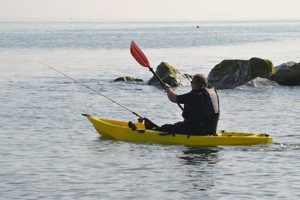
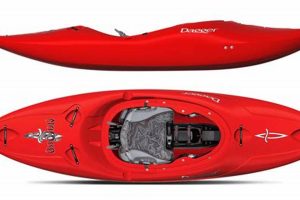
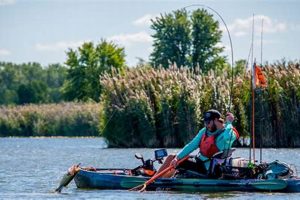
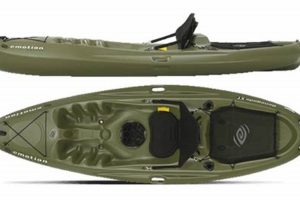
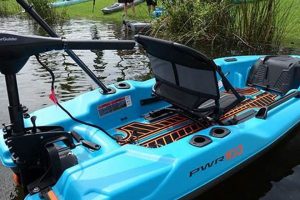
This inflatable vessel, designed for angling activities, combines portability with stability and performance. Lightweight and compact when deflated, it allows for easy transport and storage, making it a practical choice for anglers on the move. Once inflated, the rigid floor and streamlined hull provide a stable platform for casting and reeling, even in challenging water conditions. Specialized features such as rod holders, storage compartments, and adjustable seating enhance the fishing experience.
The convenience and adaptability of such portable watercraft have broadened access to fishing locations previously inaccessible with traditional hard-shell kayaks. This offers anglers the ability to explore remote waters, small ponds, or navigate shallow areas with ease. The durability and robust construction of these inflatable designs allow them to handle a variety of water conditions, expanding fishing opportunities. This evolution in kayak design contributes significantly to the accessibility and enjoyment of the sport.
Further exploration of inflatable fishing kayaks can cover topics such as material construction, inflation methods, safety precautions, essential accessories, and ideal fishing locations. A comprehensive understanding of these aspects will equip anglers with the knowledge to choose the appropriate vessel and maximize their on-the-water experience.
Tips for Inflatable Kayak Fishing
Proper preparation and technique enhance the inflatable kayak fishing experience. These tips offer guidance for maximizing safety and enjoyment on the water.
Tip 1: Practice Inflation and Setup: Familiarization with the inflation process and assembly of accessories before reaching the fishing destination saves valuable time and prevents frustration on the water.
Tip 2: Choose Appropriate Water Conditions: Consider wind speed, current strength, and water temperature when selecting fishing locations. Inflatable kayaks perform best in calm to moderately choppy conditions.
Tip 3: Prioritize Safety Gear: Always wear a personal flotation device (PFD) and carry essential safety equipment, including a whistle, signaling device, and first-aid kit. Check local regulations for specific safety requirements.
Tip 4: Distribute Weight Evenly: Balance gear and equipment within the kayak to maintain stability and prevent tipping. Consider using dry bags to protect belongings from water.
Tip 5: Master Basic Paddling Techniques: Learning efficient paddling strokes conserves energy and improves maneuverability. Practice different strokes for navigating various water conditions.
Tip 6: Respect Wildlife and the Environment: Maintain a safe distance from wildlife and avoid disturbing natural habitats. Pack out all trash and leave the fishing area cleaner than it was found.
Tip 7: Check Weather Forecasts: Monitor weather conditions before and during the fishing trip. Be prepared to adjust plans or return to shore if conditions deteriorate.
Tip 8: Secure Equipment: Utilize onboard storage compartments and tie-down points to secure fishing gear and prevent loss or damage.
Adherence to these guidelines contributes to a safer and more successful inflatable kayak fishing experience. Careful planning and responsible practices ensure enjoyable outings on the water.
By incorporating these strategies, anglers can focus on the enjoyment of the sport and the pursuit of their catch. This preparation allows for a more fulfilling and rewarding experience overall.
1. Portability

Portability represents a defining characteristic of the Aquaglide Blackfoot fishing kayak, significantly influencing its appeal among anglers. Unlike traditional hard-shell kayaks, the inflatable design of the Blackfoot allows for compact storage and easy transport. This portability expands fishing access to remote locations often inaccessible with bulkier vessels. The deflated Blackfoot packs down small enough to fit within a vehicle’s trunk or even be carried as a backpack, eliminating the need for specialized roof racks or trailers. This advantage proves particularly valuable for anglers seeking secluded fishing spots in lakes, rivers, or coastal areas, reachable only on foot or by smaller vehicles.
The practical implications of this portability extend beyond simple transportation. Consider an angler traveling by public transport or airplane; a deflated kayak presents a viable option where a rigid hull would be impractical. Similarly, individuals with limited storage space at home benefit from the compact nature of the inflatable design. The reduced weight of the Blackfoot, compared to traditional kayaks, further enhances portability, easing handling during transport and launch. This feature becomes particularly advantageous for individuals kayaking solo or those with physical limitations.
In summary, the portability of the Aquaglide Blackfoot fishing kayak significantly broadens angling opportunities. The compact and lightweight design facilitates transport to diverse locations, regardless of vehicle type or storage limitations. This advantage translates to increased access to remote fishing spots and greater flexibility for anglers seeking new and challenging experiences. The Blackfoot’s portability, therefore, constitutes a key factor driving its popularity and contributing to its overall success as a specialized fishing vessel.
2. Stability

Stability represents a critical performance attribute for fishing kayaks, directly impacting angler safety, comfort, and fishing effectiveness. For the Aquaglide Blackfoot, stability considerations are paramount due to its inflatable design. Understanding the factors contributing to the Blackfoot’s stability provides valuable insight into its suitability for various fishing conditions and angler preferences.
- Hull Design and Construction:
The Blackfoot’s wide, flat-bottom hull design contributes significantly to primary stability, resisting initial tipping motions. The high-pressure drop-stitch floor further enhances rigidity and provides a stable platform for standing or casting. This rigid inflatable structure mimics the stability of a hard-shell kayak while retaining the portability benefits of an inflatable design. The multiple air chambers within the hull also contribute to overall buoyancy and stability, even in the event of a puncture.
- Center of Gravity:
A lower center of gravity enhances stability. The Blackfoot’s seating position, combined with the wide hull, keeps the angler’s weight low and centered, promoting stability. Proper weight distribution of gear within the kayak further optimizes balance and minimizes the risk of capsizing. Anglers should be mindful of their movements and avoid sudden shifts in weight, which could compromise stability, particularly when standing to cast.
- Water Conditions:
While the Blackfoot offers inherent stability due to its design, external factors such as wind and waves can influence its performance. Calm water conditions generally provide the most stable experience. In choppy water or strong winds, the kayak may experience more rocking or drifting. Understanding the limitations imposed by prevailing water conditions is essential for safe and effective fishing from an inflatable kayak like the Blackfoot. Choosing sheltered locations or avoiding adverse weather conditions contributes significantly to maintaining stability and angler safety.
- Angler Behavior:
Angler actions play a crucial role in maintaining kayak stability. Smooth, controlled movements are essential, particularly when casting, reeling, or retrieving a fish. Avoid leaning too far over the side or making abrupt shifts in weight. Maintaining a balanced posture within the kayak significantly contributes to overall stability. Experience and familiarity with the Blackfoot’s handling characteristics improve an angler’s ability to maintain balance and react effectively to unexpected movements or changes in water conditions.
These combined factors contribute to the overall stability of the Aquaglide Blackfoot fishing kayak. While the inherent design features provide a stable platform, angler behavior and environmental conditions play significant roles in maintaining balance. Understanding these interacting elements empowers anglers to maximize stability, ensuring a safe and enjoyable fishing experience. By considering these elements, anglers can confidently utilize the Blackfoot’s stability advantages to enhance their fishing performance and explore diverse aquatic environments.
3. Fishing Features

Specialized features distinguish fishing kayaks from recreational models, enhancing angler convenience and effectiveness. The Aquaglide Blackfoot fishing kayak incorporates several key features that contribute to its utility as a dedicated fishing platform. Examining these features provides insights into the Blackfoot’s design and its suitability for various angling styles and preferences.
- Rod Holders:
Integrated rod holders provide secure storage and easy access to fishing rods. Flush-mounted or adjustable rod holders allow anglers to troll, cast, or keep multiple rods rigged and ready for action. The Blackfoot typically incorporates multiple rod holders, strategically positioned for optimal angler convenience and efficient fishing techniques. This feature frees anglers’ hands for other tasks, like paddling, managing tackle, or landing fish.
- Storage Options:
Dedicated storage compartments, including tank wells, dry bags, or integrated storage pockets, provide ample space for tackle boxes, fishing gear, and personal belongings. Secure storage keeps essential items within easy reach while protecting them from water damage. The Blackfoot’s storage capacity allows anglers to carry sufficient gear for extended fishing trips without compromising stability or maneuverability. Well-designed storage systems contribute to organization and efficiency on the water.
- Accessory Mounts:
Integrated accessory mounts, such as D-rings or track systems, allow for the customization and attachment of additional fishing accessories. These mounts accommodate fish finders, GPS units, cameras, or other specialized equipment, enhancing the fishing experience and providing valuable information for anglers. The versatility offered by accessory mounts allows individuals to tailor the Blackfoot to their specific fishing needs and preferences. This customization potential extends the kayak’s functionality beyond basic fishing applications.
- Adjustable Seating:
Adjustable seating systems contribute to angler comfort and support during long hours on the water. Comfortable seating enhances endurance and reduces fatigue, allowing anglers to focus on fishing. The Blackfoot’s seating system may offer adjustable backrests, footrests, or seat height adjustments, catering to individual preferences and promoting proper posture. Ergonomic seating design contributes significantly to the overall enjoyment and success of a fishing trip.
These integrated fishing features contribute significantly to the Aquaglide Blackfoot’s effectiveness as a dedicated fishing platform. By carefully considering these features, anglers can assess the Blackfoot’s suitability for their specific fishing style, target species, and preferred techniques. The combination of rod holders, storage options, accessory mounts, and adjustable seating enhances functionality, convenience, and overall fishing performance. The thoughtful integration of these features positions the Blackfoot as a versatile and capable fishing kayak, catering to the diverse needs of anglers in various aquatic environments.
4. Durability
Durability constitutes a critical factor in evaluating inflatable kayak performance, particularly for fishing applications. The Aquaglide Blackfoot fishing kayak addresses durability concerns through material selection and construction techniques. Understanding these aspects provides valuable insights into the kayak’s resilience and suitability for various fishing environments.
The Blackfoot typically utilizes rugged, abrasion-resistant materials designed to withstand punctures, tears, and UV degradation. Reinforced seams and high-frequency welding techniques further enhance structural integrity. The drop-stitch floor construction, featuring thousands of internal fibers connecting the top and bottom layers, creates a rigid, durable platform resistant to deformation under pressure. This robust construction enables the Blackfoot to handle contact with rocks, submerged debris, and other potential hazards encountered in diverse fishing environments. For example, navigating shallow, rocky rivers requires a durable hull capable of withstanding abrasion and impacts. The Blackfoot’s construction addresses these demands, ensuring reliable performance in challenging conditions.
The practical significance of the Blackfoot’s durability extends beyond mere longevity. A durable kayak provides a reliable platform for anglers, promoting safety and confidence on the water. Resistance to punctures and tears minimizes the risk of disruptions during fishing trips, allowing anglers to focus on their pursuit. The robust construction also contributes to the kayak’s overall performance, maintaining its shape and stability even under load or in challenging water conditions. Furthermore, a durable kayak represents a long-term investment, offering extended value and minimizing the need for frequent replacements. The combination of material selection and construction techniques contributes significantly to the Blackfoot’s durability, making it a suitable choice for anglers seeking a reliable and resilient fishing platform.
5. Inflatable Design

The inflatable design of the Aquaglide Blackfoot fishing kayak directly influences its portability, storage, and deployment characteristics. Unlike rigid kayaks requiring specialized transport and storage solutions, the Blackfoot’s deflated form allows for compact packing and easy transport in standard vehicles. This portability expands access to remote fishing locations, eliminating the constraints imposed by bulky, rigid hulls. Once at the desired location, the inflation process, typically involving a high-pressure pump, transforms the compact package into a rigid, functional fishing platform. This ease of setup and deployment further enhances the Blackfoot’s appeal for anglers seeking efficient and convenient access to the water. For example, an angler can easily transport the deflated Blackfoot in a backpack to access a remote mountain lake or pack it in a car trunk for a weekend fishing trip. This contrasts sharply with the logistical challenges of transporting a rigid kayak, often requiring roof racks or trailers.
The inflatable design’s practical implications extend beyond simple transport and setup. The reduced weight compared to traditional kayaks simplifies handling, particularly during launch and retrieval. This characteristic proves advantageous for individuals kayaking solo or those with physical limitations. Furthermore, the inflatable construction contributes to the kayak’s buoyancy and impact absorption, enhancing safety in challenging water conditions. While punctures present a potential concern, modern inflatable kayaks utilize durable materials and construction techniques to minimize this risk. Moreover, the multiple air chambers within the Blackfoot’s hull maintain buoyancy even in the event of a puncture, providing added safety and stability. The inherent flexibility of the inflatable design also contributes to its performance in shallow water or over obstacles, where a rigid hull might sustain damage. This adaptability expands the Blackfoot’s range of suitable fishing environments.
The inflatable design of the Aquaglide Blackfoot fishing kayak represents a defining characteristic, influencing its portability, deployment, and overall performance. By understanding the advantages and limitations inherent in this design, anglers can make informed decisions regarding its suitability for their specific needs and fishing environments. The Blackfoot’s inflatable design prioritizes portability and ease of use, broadening access to fishing opportunities and simplifying the logistics of kayak transport and deployment. While durability considerations remain relevant, advancements in materials and construction techniques mitigate puncture risks and enhance overall resilience, solidifying the inflatable design’s role in the evolution of modern fishing kayaks.
6. Targeted use (angling)
The Aquaglide Blackfoot fishing kayak’s design explicitly caters to angling requirements, differentiating it from recreational kayak models. This targeted design philosophy influences feature integration, hull characteristics, and overall performance. Cause and effect relationships exist between angling demands and the Blackfoot’s specialized features. For instance, the need for hands-free fishing necessitates integrated rod holders. Similarly, the requirement for stable casting platforms drives the design of the wide, flat-bottom hull. Consider a fly fisherman wading in a fast-moving river; the inherent stability of the Blackfoot allows for precise casting and line management, critical for success in this demanding fishing environment.
The importance of “targeted use (angling)” as a core component of the Blackfoot’s identity cannot be overstated. It shapes the kayak’s value proposition for anglers seeking a dedicated fishing platform. Practical implications of this targeted design extend to enhanced fishing efficiency, improved angler comfort, and increased safety. For example, the integrated storage compartments facilitate organized tackle management, reducing time spent searching for equipment and maximizing fishing time. Similarly, the adjustable seating system promotes proper posture and reduces fatigue, contributing to longer, more productive fishing sessions. In contrast, a recreational kayak lacking these specialized features might prove cumbersome and less effective for serious angling pursuits. The Blackfoot’s targeted design directly addresses these limitations, optimizing the kayak for its intended purpose.
Understanding the connection between targeted use and design features empowers anglers to select appropriate equipment for their specific needs. Recognizing the Blackfoot’s angling-specific features allows potential users to evaluate its suitability for their preferred fishing styles and target species. The challenges of balancing performance characteristics with portability and affordability influence design choices. The Blackfoot addresses these challenges by providing a portable, stable, and feature-rich platform at a competitive price point. Ultimately, the Blackfoot’s targeted design reinforces its value as a specialized tool for anglers seeking to maximize their on-the-water experience. This focus on angling-specific features differentiates the Blackfoot from general-purpose recreational kayaks, solidifying its position within the fishing kayak market.
Frequently Asked Questions
This section addresses common inquiries regarding inflatable fishing kayaks, specifically focusing on aspects relevant to the Aquaglide Blackfoot model. Clear and concise answers aim to provide comprehensive information for prospective buyers and current owners.
Question 1: How durable is an inflatable fishing kayak compared to a traditional hard-shell kayak?
While hard-shell kayaks generally offer greater resistance to sharp objects, modern inflatable kayaks utilize durable materials and construction techniques minimizing puncture risks. Proper care and adherence to manufacturer guidelines ensure comparable longevity.
Question 2: How stable is an inflatable kayak, especially when standing to fish?
Inflatable fishing kayaks, like the Blackfoot, feature wide, flat-bottom hulls and rigid inflatable floors enhancing stability. Proper weight distribution and adherence to recommended capacity limits contribute to a secure platform for standing and casting.
Question 3: How long does it take to inflate and deflate the kayak?
Inflation time varies depending on kayak size and pump type, typically ranging from 5 to 10 minutes. Deflation takes considerably less time. Practice streamlines the process.
Question 4: What type of pump is recommended for inflating the kayak?
A high-pressure hand pump or electric pump designed for inflatable kayaks is recommended. The manufacturer often specifies recommended pump types and pressures. Using an inappropriate pump may damage the kayak or result in improper inflation.
Question 5: Can an inflatable kayak be used in saltwater environments?
Yes, many inflatable kayaks, including the Blackfoot, are designed for use in both freshwater and saltwater. Thorough rinsing with fresh water after saltwater use prevents corrosion and prolongs the kayak’s lifespan.
Question 6: What safety precautions should be taken when using an inflatable fishing kayak?
Always wear a personal flotation device (PFD). Check weather conditions before embarking. Carry essential safety equipment like a whistle, signaling device, and first-aid kit. Inform someone of your fishing plans and estimated return time. Adhere to local boating regulations.
Addressing these common concerns clarifies potential misconceptions regarding inflatable fishing kayaks and highlights the Blackfoot’s suitability for various angling scenarios.
Further exploration of inflatable fishing kayak accessories, maintenance procedures, and advanced fishing techniques will provide a more comprehensive understanding of their potential and broaden angling opportunities.
Conclusion
Exploration of the Aquaglide Blackfoot fishing kayak reveals a vessel designed for portability, stability, and angling functionality. Its inflatable design facilitates convenient transport and storage, expanding access to diverse fishing locations. Specialized features, including rod holders and storage compartments, enhance on-the-water efficiency for anglers. Durability considerations, addressed through robust material selection and construction techniques, ensure resilience in various aquatic environments. The Blackfoot’s targeted design for angling differentiates it from recreational kayaks, optimizing its performance for dedicated fishing pursuits.
The Aquaglide Blackfoot fishing kayak represents a significant development in angling technology, merging portability with performance. Continued advancements in materials and design promise further enhancements in inflatable kayak technology, broadening angling opportunities and accessibility for enthusiasts of all skill levels. Careful consideration of individual fishing styles and preferences, coupled with informed evaluation of kayak features, empowers anglers to select the optimal vessel for maximizing their on-the-water experiences.