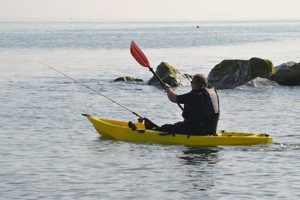
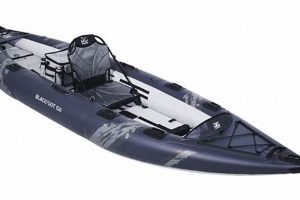
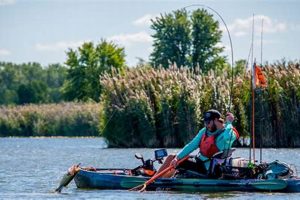
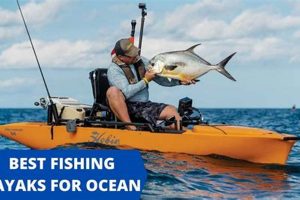
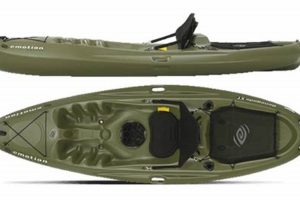
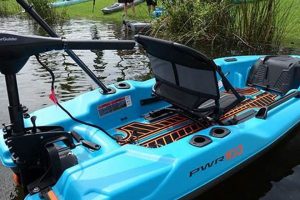
This specific type of watercraft blends the speed and efficiency of a touring kayak with the stability and specialized features required for angling. These vessels are typically designed with a sit-inside configuration, a narrow hull for streamlined movement, and a rudder or skeg system for enhanced tracking in various water conditions. They often incorporate features like rod holders, gear tracks, and ample storage for tackle and equipment.
The combination of maneuverability and stability makes this style of boat well-suited for diverse fishing environments, from calm lakes and rivers to open ocean waters. This adaptability allows anglers to pursue a wider range of species and fishing techniques. Historically, fishing from kayaks has ancient roots, but the development of specialized designs like this specific boat type reflects a modern evolution in the sport, providing anglers with enhanced performance and comfort. The increasing popularity of this category highlights the growing demand for efficient and adaptable watercraft in recreational fishing.
The following sections will explore key aspects of selecting, outfitting, and safely operating this style of watercraft, including a detailed examination of design features, propulsion systems, and essential safety equipment. Further discussion will cover various fishing techniques adaptable to this platform and insights into choosing appropriate locations for successful angling excursions.
Tips for Selecting and Utilizing a Fishing Kayak
Careful consideration of several factors contributes significantly to a successful and enjoyable fishing experience from this type of specialized watercraft. The following tips offer guidance for optimizing vessel selection and usage.
Tip 1: Hull Design Considerations: Evaluate hull design based on intended fishing environment. A shorter, wider hull offers greater stability in calm waters, while a longer, narrower hull provides better tracking and speed in open water or currents. Consider a “pontoon” style hull for maximum stability, especially when standing is desired.
Tip 2: Propulsion Choices: Paddle propulsion offers quiet, eco-friendly operation and excellent maneuverability. Pedal-powered systems allow hands-free fishing and faster speeds. Motorized options offer extended range and power against currents but require additional maintenance and considerations.
Tip 3: Feature Evaluation: Prioritize essential features such as rod holders, gear tracks, and storage compartments based on specific fishing needs. Consider integrated fish finders and GPS systems for enhanced angling capabilities.
Tip 4: Safety Equipment: Always wear a personal flotation device (PFD) and carry essential safety gear, including a whistle, signaling device, and first-aid kit. Familiarize oneself with local boating regulations and navigation rules.
Tip 5: Practice and Preparation: Practice paddling and maneuvering the vessel in calm water before venturing into challenging conditions. Plan fishing trips carefully, considering weather forecasts, tides, and potential hazards.
Tip 6: Responsible Angling Practices: Adhere to catch-and-release guidelines when appropriate. Dispose of fishing line and tackle responsibly to minimize environmental impact. Respect wildlife and natural habitats.
By carefully evaluating these factors, anglers can select and effectively utilize a fishing kayak appropriate for their specific needs and enhance their overall fishing experience. These considerations contribute to safety, efficiency, and environmental responsibility on the water.
The insights provided throughout this article aim to empower anglers with the knowledge necessary to make informed decisions regarding fishing kayak selection, outfitting, and safe operation. Careful planning and preparation are crucial for successful and enjoyable angling excursions.
1. Stability

Stability represents a critical performance attribute in dagger fishing kayaks, directly influencing angler safety and fishing effectiveness. A stable platform allows for comfortable casting, retrieval, and landing of fish, particularly in challenging conditions or when engaging larger species. It also contributes significantly to angler confidence, enabling more focused fishing and reducing the risk of capsizing. The hull design plays a pivotal role in determining stability. Wider hulls generally provide greater initial stability, resisting tipping, while longer hulls often offer improved secondary stability, recovering more effectively from leans or external forces. The interplay of hull shape, length, and width determines the overall stability profile of the kayak. Specific design features such as pontoon hulls or outriggers further enhance stability but may impact maneuverability.
Consider an angler sight-fishing in shallow, open water. A stable kayak allows for comfortable standing and casting, offering improved visibility and precise lure placement. Conversely, in windy conditions or when battling strong currents, a stable kayak minimizes the risk of capsizing, ensuring angler safety and preserving valuable equipment. Understanding the nuances of stability allows anglers to select a dagger fishing kayak appropriate for their intended fishing environment and target species. Choosing a kayak with inadequate stability can lead to discomfort, reduced fishing effectiveness, and potentially dangerous situations.
In summary, stability in a dagger fishing kayak is essential for both safety and performance. Hull design plays a crucial role in determining stability characteristics, and anglers must carefully evaluate these characteristics in relation to their intended fishing style and environment. Prioritizing stability contributes to a more confident, comfortable, and ultimately successful angling experience.
2. Maneuverability

Maneuverability represents a critical performance attribute in dagger fishing kayaks, significantly influencing an angler’s ability to navigate diverse water environments and access prime fishing locations. Efficient maneuvering enables precise boat control in challenging conditions such as tight rivers, winding creeks, and obstacle-laden waters. It facilitates effective exploration of shallow areas, precise lure presentation, and efficient retrieval of hooked fish. The interplay of hull design, rudder or skeg systems, and paddle length contribute significantly to a kayak’s overall maneuverability.
- Hull Design Influence:
Shorter kayaks with a rockered hull (upward curve at the bow and stern) generally offer enhanced maneuverability, allowing for tighter turns and quicker pivoting. Longer kayaks with a flatter hull track more effectively in open water but may sacrifice turning responsiveness. Consider navigating a narrow, winding creek; a shorter, rockered hull enables efficient turning and obstacle avoidance, maximizing access to productive fishing spots.
- Rudder and Skeg Systems:
Rudders and skegs significantly enhance tracking and directional control, particularly in windy conditions or strong currents. A rudder provides active control, allowing for course corrections with foot pedals, while a skeg offers passive directional stability. These systems allow anglers to maintain desired headings, minimizing drift and maximizing fishing time on target locations. For example, when fishing in a river with a strong current, a rudder allows for precise boat positioning and efficient upstream or downstream movement.
- Paddle Length and Technique:
Paddle length and paddling technique directly influence maneuverability. Shorter paddles offer quicker strokes and tighter turning radii, while longer paddles generate more power for straight-line speed. Proper paddling technique, including sweep strokes and draws, further enhances turning precision and control. Consider maneuvering through dense vegetation; a shorter paddle facilitates quick, controlled movements, minimizing entanglement and maximizing stealth.
- Impact on Fishing Success:
Enhanced maneuverability allows anglers to exploit diverse fishing environments and access difficult-to-reach areas, expanding angling opportunities and potentially increasing catch rates. Precise boat control enables accurate lure placement, efficient drift fishing, and effective retrieval of hooked fish in challenging conditions. For example, maneuvering a kayak close to submerged structures or overhanging vegetation allows for targeted presentations and improves the likelihood of enticing strikes.
These interconnected facets of maneuverability contribute significantly to the overall performance and versatility of a dagger fishing kayak. Matching maneuverability characteristics to the intended fishing environment and target species is crucial for maximizing fishing effectiveness and overall enjoyment on the water. A kayak with appropriate maneuverability empowers anglers to explore diverse waters, access prime fishing locations, and effectively present lures or bait, ultimately enhancing their chances of angling success.
3. Speed
Speed, in the context of dagger fishing kayaks, represents a crucial performance attribute influencing an angler’s efficiency on the water. Reaching distant fishing grounds quickly conserves valuable time and energy, maximizing opportunities to explore diverse locations and locate active fish. Speed also plays a vital role in specific fishing techniques like trolling, allowing for effective lure presentation and coverage of larger areas. Furthermore, the ability to swiftly navigate changing weather conditions or unexpected situations contributes significantly to angler safety.
- Hull Design Impact:
Hull design significantly influences a kayak’s speed potential. Longer, narrower hulls with a streamlined profile generally exhibit greater speed and efficiency, minimizing water resistance and maximizing glide. Conversely, shorter, wider hulls prioritize stability over speed. A longer, narrower hull proves advantageous when paddling across larger bodies of water or covering extensive distances to reach offshore fishing grounds.
- Propulsion System Influence:
The chosen propulsion system directly impacts achievable speeds. Paddle propulsion relies solely on angler effort, with speed limited by paddling technique and physical exertion. Pedal-powered systems offer increased speed and hands-free operation, facilitating efficient trolling or covering greater distances with less fatigue. Motorized kayaks provide the highest speeds, enabling rapid travel across vast expanses of water or against strong currents. When trolling for pelagic species, a pedal or motor-driven system allows for consistent lure presentation at optimal speeds.
- Water Conditions Impact:
Water conditions, including currents, wind, and chop, significantly influence kayak speed. Paddling against strong currents or headwinds reduces speed and requires greater exertion. Conversely, favorable currents or tailwinds can significantly enhance speed and efficiency. Understanding these factors allows anglers to adjust paddling strategies and optimize travel time. Navigating through strong currents or wind necessitates adjustments in paddling cadence and boat positioning to maintain course and speed.
- Weight Capacity Influence:
The total weight carried, including angler, gear, and catch, impacts a kayak’s speed. Heavier loads displace more water, increasing resistance and reducing speed. Careful consideration of weight capacity and efficient gear organization contributes to maximizing speed and performance. Minimizing unnecessary gear and distributing weight evenly within the kayak enhances speed and maneuverability.
These interconnected facets of speed significantly influence the versatility and effectiveness of a dagger fishing kayak. Balancing speed with other essential attributes like stability and maneuverability is crucial for selecting a kayak appropriate for specific fishing styles and environments. Prioritizing speed enhances an angler’s ability to reach distant fishing grounds quickly, effectively employ specific fishing techniques, and navigate changing water conditions, ultimately contributing to a more efficient and successful angling experience.
4. Storage Capacity
Storage capacity in a dagger fishing kayak directly impacts an angler’s ability to carry essential gear and provisions, influencing both the duration and effectiveness of fishing excursions. Adequate storage facilitates organized transport of tackle boxes, rods, reels, safety equipment, personal items, and potentially harvested fish. This organizational capacity streamlines access to necessary equipment, minimizes clutter, and enhances overall fishing efficiency. Insufficient storage can limit trip duration, restrict the variety of fishing techniques employed, and compromise safety by hindering access to essential gear in critical situations. Consider a multi-day fishing expedition; ample storage accommodates camping gear, food supplies, and multiple fishing setups, enabling extended trips to remote locations. Conversely, limited storage restricts gear choices and necessitates frequent returns to shore for resupply, reducing overall fishing time.
Several factors contribute to effective storage solutions in dagger fishing kayaks. Dedicated compartments, such as waterproof hatches, offer secure storage for sensitive electronics or essential items. Bungee cord systems provide convenient storage for readily accessible gear like paddles or landing nets. Recessed areas within the hull maximize storage volume without compromising stability or maneuverability. The strategic placement and design of storage compartments optimize weight distribution, enhancing kayak balance and performance. For example, distributing heavier items low and centrally improves stability, while readily accessible storage for frequently used items streamlines fishing operations. Utilizing dry bags or waterproof containers within storage compartments further protects gear from water damage, ensuring functionality and longevity. Customizable storage solutions, such as modular tackle boxes or gear tracks, allow anglers to tailor storage arrangements to specific fishing needs and preferences.
In summary, sufficient and well-designed storage capacity is crucial for successful and enjoyable dagger fishing kayak excursions. Adequate storage facilitates extended trips, supports diverse fishing techniques, and enhances safety by ensuring readily accessible equipment. Strategic storage design and utilization optimize weight distribution, enhance kayak performance, and protect valuable gear from the elements. Matching storage capacity to anticipated fishing needs and trip duration is essential for maximizing efficiency, comfort, and overall angling success.
5. Fishing Features
Specialized fishing features distinguish dagger fishing kayaks from recreational models, optimizing their performance and angler effectiveness. These features directly impact fishing success, angler comfort, and overall efficiency on the water. They represent critical considerations for anglers selecting a kayak tailored to specific fishing styles and target species. The integration of these specialized features transforms a standard kayak into a dedicated fishing platform, enhancing functionality and angler experience.
Several key fishing features contribute significantly to the enhanced functionality of dagger fishing kayaks. Rod holders secure fishing rods, allowing for hands-free operation during paddling, trolling, or other activities. Flush-mounted rod holders minimize line entanglement and optimize casting angles. Adjustable rod holders accommodate different rod lengths and fishing techniques. Gear tracks provide versatile mounting points for accessories like fish finders, GPS units, camera mounts, and other equipment. This modularity allows anglers to customize their kayak setup based on individual preferences and target species. Tackle storage compartments offer organized storage for lures, hooks, weights, and other essential fishing tackle, ensuring quick access and minimizing clutter. Livewells maintain the health and vitality of caught fish, crucial for tournament fishing or catch-and-release practices. These dedicated compartments circulate water, ensuring oxygenation and minimizing stress on the fish. Consider a fly fisherman wading a shallow river; strategically placed rod holders allow for easy access and prevent rod damage while navigating challenging terrain. Alternatively, a bass angler utilizing a fish finder benefits from integrated gear tracks, enabling optimal transducer placement and maximizing sonar effectiveness.
Careful consideration of these fishing features allows anglers to select a dagger fishing kayak optimized for their specific needs and target species. Prioritizing essential features enhances fishing efficiency, improves comfort, and maximizes the probability of success on the water. Understanding the functionality and practical application of these features empowers anglers to make informed decisions and invest in a kayak that aligns with their individual fishing styles and objectives. The strategic integration of fishing features represents a significant advancement in kayak design, transforming a versatile watercraft into a dedicated and highly effective fishing platform.
6. Durability

Durability represents a critical factor in the evaluation of dagger fishing kayaks, directly influencing the vessel’s lifespan, resilience against environmental factors, and overall cost-effectiveness. These kayaks frequently encounter harsh conditions, including exposure to UV radiation, saltwater corrosion, impacts with rocks or submerged obstacles, and abrasion from transport and storage. A durable construction minimizes the risk of damage, reduces maintenance requirements, and ensures reliable performance over extended periods. This characteristic allows anglers to confidently navigate challenging environments and focus on fishing, rather than equipment concerns. Consider a kayak frequently used in rocky rivers or coastal surf zones; a robust construction resists abrasion and impact damage, maintaining structural integrity and preventing leaks. Conversely, a less durable kayak may require frequent repairs, potentially shortening its lifespan and disrupting fishing excursions.
Several factors contribute to enhanced durability in dagger fishing kayaks. High-quality materials, such as rotomolded polyethylene or composite constructions, offer superior strength and impact resistance. Reinforced hulls and decks further enhance structural integrity, protecting against damage from impacts or stress. UV-resistant coatings minimize fading and material degradation from prolonged sun exposure, preserving the kayak’s appearance and structural integrity. Corrosion-resistant hardware, including stainless steel fasteners and fittings, ensures long-term functionality in saltwater environments. Proper storage and maintenance practices further contribute to kayak longevity. Storing the kayak out of direct sunlight and rinsing it with freshwater after saltwater use minimizes material degradation and corrosion. Regular inspections and timely repairs address minor damage before it escalates into major structural issues. Investing in a durable kayak minimizes long-term costs associated with repairs and replacements, maximizing the return on investment and ensuring years of reliable performance.
In summary, durability is a critical attribute for dagger fishing kayaks, ensuring reliable performance, longevity, and resistance to environmental challenges. High-quality materials, robust construction, and proper maintenance practices contribute significantly to kayak durability, minimizing the risk of damage and maximizing lifespan. Prioritizing durability empowers anglers to confidently explore diverse fishing environments, focus on angling pursuits, and minimize long-term costs associated with equipment maintenance and replacement. Understanding the factors contributing to durability enables informed purchasing decisions and ensures a reliable and long-lasting fishing platform.
7. Comfort
Comfort in a dagger fishing kayak directly influences angler endurance, focus, and overall enjoyment on the water. Extended fishing trips often involve prolonged periods seated in a relatively confined space, emphasizing the importance of a comfortable and supportive seating system. Discomfort can lead to fatigue, reduced fishing effectiveness, and potentially premature termination of outings. Prioritizing comfort enhances angler experience, enabling longer, more productive, and ultimately more enjoyable fishing excursions.
- Seat Design and Adjustability:
Seat design plays a pivotal role in overall comfort. A well-designed seat provides adequate cushioning, lumbar support, and adjustable features to accommodate individual body types and preferences. High-quality materials, such as breathable mesh or padded foam, enhance comfort and minimize pressure points during extended periods on the water. Adjustable backrests and seat heights allow anglers to customize their seating position for optimal comfort and support. Consider an angler spending hours on the water; a comfortable, adjustable seat minimizes fatigue and allows for sustained focus on fishing.
- Legroom and Footrests:
Adequate legroom and adjustable footrests contribute significantly to angler comfort, particularly during long paddling sessions. Sufficient legroom prevents cramping and allows for comfortable changes in posture. Adjustable footrests provide essential leverage for paddling and bracing, enhancing stability and control. Consider paddling against strong currents; properly positioned footrests provide essential leverage and support, reducing fatigue and maximizing paddling efficiency.
- Cockpit Design and Ergonomics:
The cockpit design, including the shape and size of the seating area and the placement of footrests and other controls, influences overall comfort and ergonomics. A well-designed cockpit provides ample space for movement and easy access to essential gear, while maintaining a secure and supportive feel. Ergonomically designed features minimize strain and promote a natural, comfortable paddling posture. Consider an angler retrieving a large fish; a spacious cockpit allows for comfortable maneuvering and efficient handling of the catch.
- Impact on Fishing Performance:
Enhanced comfort directly translates to improved fishing performance. Reduced fatigue allows for longer fishing sessions, increased focus on fishing techniques, and quicker reaction times when a fish strikes. A comfortable angler is a more effective angler, capable of making precise casts, effectively working lures, and efficiently landing fish. Consider an angler sight-fishing in shallow water; a comfortable and stable seating position allows for prolonged observation and precise lure presentation, maximizing the chances of success.
These interconnected facets of comfort significantly influence the overall experience of using a dagger fishing kayak. Prioritizing comfort enhances angler endurance, focus, and enjoyment, enabling longer, more productive, and more fulfilling fishing trips. A comfortable angler is a more effective and engaged angler, capable of fully appreciating the nuances of the sport and the surrounding environment. Investing in a kayak with a comfortable and supportive seating system contributes significantly to long-term satisfaction and enjoyment on the water.
Frequently Asked Questions
This section addresses common inquiries regarding dagger fishing kayaks, providing concise and informative responses to facilitate informed decision-making and enhance understanding of these specialized watercraft.
Question 1: What differentiates a dagger fishing kayak from a recreational kayak?
Dagger fishing kayaks incorporate specialized features designed for angling, including rod holders, gear tracks, tackle storage, and often enhanced stability for casting and landing fish. Recreational kayaks prioritize general paddling and exploration, typically lacking these specialized features.
Question 2: Are dagger fishing kayaks suitable for beginners?
Certain models cater specifically to beginners, offering enhanced stability and user-friendly features. Prior experience with kayaking, however, is generally beneficial for navigating various water conditions and effectively utilizing specialized fishing features.
Question 3: What is the average weight capacity of a dagger fishing kayak?
Weight capacity varies depending on the specific model and hull design. Generally, fishing kayaks accommodate weight ranges between 300 and 500 pounds, including angler weight, gear, and potential catch.
Question 4: What are the primary propulsion options for dagger fishing kayaks?
Common propulsion options include paddle power, pedal-driven systems, and motorized configurations. Paddle propulsion offers simplicity and affordability, while pedal drives provide hands-free fishing and increased speed. Motorized options offer the greatest range and power but require additional maintenance.
Question 5: What safety precautions should one take when using a dagger fishing kayak?
Always wear a personal flotation device (PFD), carry essential safety gear (whistle, signaling device, first-aid kit), check weather forecasts before embarking, inform someone of intended fishing locations, and adhere to local boating regulations.
Question 6: How does one maintain a dagger fishing kayak?
Regular maintenance includes rinsing the kayak with freshwater after use, especially in saltwater environments. Inspecting and addressing any damage promptly, storing the kayak out of direct sunlight, and lubricating moving parts ensures optimal performance and longevity.
Understanding these key aspects of dagger fishing kayaks facilitates informed selection, safe operation, and effective utilization on the water. Careful consideration of individual needs and preferences, combined with appropriate safety precautions, contributes significantly to a rewarding and enjoyable fishing experience.
The next section will delve into specific dagger fishing kayak models, offering detailed comparisons of features, performance characteristics, and suitability for various fishing styles.
Dagger Fishing Kayaks
This exploration of dagger fishing kayaks has highlighted their specialized design, emphasizing key features that contribute to enhanced angling performance. From stability and maneuverability to storage capacity and integrated fishing features, these kayaks offer distinct advantages for anglers seeking efficient and adaptable watercraft. Durability and comfort considerations further underscore the importance of selecting a kayak tailored to individual needs and preferences. Understanding the interplay of these attributes empowers informed decision-making, maximizing on-the-water effectiveness and enjoyment.
The evolution of dagger fishing kayaks reflects a growing recognition of the sport’s specialized demands. As technology advances and design innovations continue, these kayaks will likely play an increasingly prominent role in the future of angling. Careful consideration of the factors discussed herein empowers anglers to select the ideal vessel, maximizing their potential for successful and fulfilling fishing experiences.