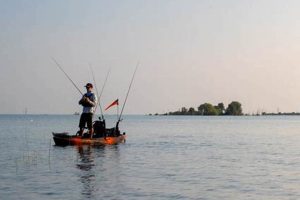
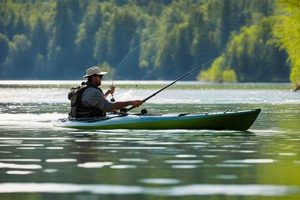
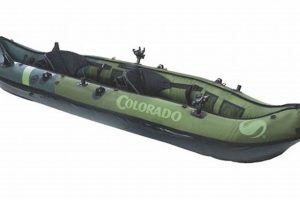
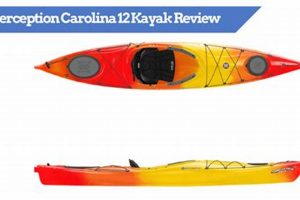
This activity involves the use of a kayak, a small, narrow watercraft propelled by a double-bladed paddle, as a platform for angling. A kayak angler might target a wide variety of species depending on the environment, from freshwater fish like bass and trout in rivers and lakes, to saltwater species like redfish and tarpon in coastal estuaries and the open ocean. Specialized kayaks designed for angling often feature built-in rod holders, storage compartments for tackle and gear, and even livewells to keep catches fresh.
The combination of quiet propulsion and maneuverability allows anglers to access shallow, secluded areas often unreachable by larger motorized boats. This approach minimizes disturbance to fish and their habitat, increasing the likelihood of a successful catch. Additionally, the physical exercise involved in paddling contributes to a healthy lifestyle. While traditional angling from boats has a long history, the rise of specialized kayak designs and accessories has made this pursuit increasingly popular in recent decades, creating a vibrant community and industry dedicated to the sport.
This article will further explore the nuances of this specialized form of angling, covering topics such as essential gear, popular techniques, recommended locations, and responsible practices. It will also delve into the evolution and growing popularity of this exciting outdoor activity.
Tips for Kayak Angling
Proper preparation and technique are crucial for a safe and successful experience on the water. The following tips offer valuable insights for anglers of all skill levels.
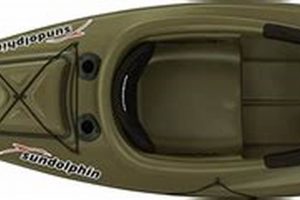
Tip 1: Choose the Right Kayak: Kayak selection depends on the intended fishing environment. Sit-on-top kayaks offer stability and ease of re-entry in calmer waters, while sit-inside kayaks provide better protection in colder conditions. Pedal-driven kayaks allow hands-free fishing, while traditional paddle kayaks offer excellent maneuverability.
Tip 2: Prioritize Safety Equipment: A personal flotation device (PFD) is essential and should always be worn. Carry a whistle for signaling, a first-aid kit for emergencies, and navigation tools such as a compass or GPS device, particularly in unfamiliar waters.
Tip 3: Organize Tackle and Gear: Keep essential fishing gear readily accessible in a tackle box or dedicated storage compartments. Rod holders, paddle leashes, and anchor systems enhance efficiency and safety.
Tip 4: Practice Paddle Strokes and Kayak Control: Mastering basic paddle strokes allows for efficient and quiet movement, minimizing disturbance to fish. Understanding how wind and currents affect kayak positioning improves angling precision.
Tip 5: Understand Local Regulations and Respect the Environment: Obtain necessary fishing licenses and familiarize oneself with local fishing regulations. Practice catch-and-release whenever possible and minimize environmental impact by properly disposing of waste and avoiding sensitive habitats.
Tip 6: Check Weather Conditions and Plan Accordingly: Avoid venturing out in adverse weather conditions, such as strong winds or thunderstorms. Check forecasts before departure and have a contingency plan in case of unexpected changes.
Tip 7: Consider Fishing with a Buddy: Kayak angling with a partner enhances safety and provides assistance in case of emergencies. Sharing knowledge and experiences also contributes to a more enjoyable outing.
By following these tips, anglers can enhance their skills, improve their catch rates, and ensure a safer and more enjoyable experience on the water. Proper preparation and technique contribute significantly to successful kayak angling.
This concludes the practical advice section. The following section will delve into specific techniques and strategies for various fish species and environments.
1. Specialized Kayaks

Specialized kayaks play a pivotal role in the effectiveness and enjoyment of kayak angling. Unlike recreational kayaks, these purpose-built vessels incorporate features designed to enhance fishing capabilities and overall experience. The connection between specialized kayaks and successful angling lies in their ability to address specific needs and challenges inherent to the activity.
Key design elements contribute significantly to this specialized functionality. Integrated rod holders offer convenient storage and quick access to fishing rods. Ample storage compartments accommodate tackle boxes, gear, and personal items. Stability-enhancing features, like wider hulls or outriggers, provide a secure platform for casting and reeling. Furthermore, specialized kayaks often incorporate features like anchor trolleys for controlled drift fishing and livewells for keeping catches fresh. For instance, a kayak angler targeting large game fish in offshore waters benefits from a stable, pedal-driven kayak with multiple rod holders and a large storage capacity. Conversely, an angler fishing in shallow rivers or lakes might prefer a maneuverable, sit-on-top kayak with a shallow draft.
Understanding the relationship between specialized kayaks and the specific demands of kayak angling is crucial for maximizing success and safety on the water. The selection of an appropriate kayak directly influences an angler’s ability to navigate diverse environments, target specific species, and manage equipment effectively. While cost can be a factor, the long-term benefits of a purpose-built kayak, including improved performance, safety, and overall enjoyment, significantly outweigh the initial investment. This understanding empowers anglers to make informed decisions and contributes to a more fulfilling and productive experience.
2. Essential Fishing Gear

The success of a kayak angling excursion hinges significantly on the selection and utilization of essential fishing gear. This specialized equipment, tailored to the unique demands of fishing from a kayak, directly impacts an angler’s ability to target specific species, navigate diverse environments, and ultimately, achieve a productive and enjoyable experience. The connection between essential gear and successful kayak angling lies in the interplay of functionality, portability, and adaptability.
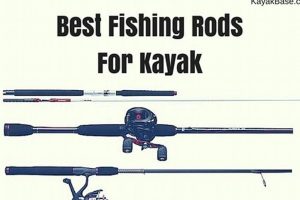
Several key items comprise the core of essential fishing gear for kayak anglers. Rods and reels, selected based on target species and fishing techniques, form the foundation of any angler’s setup. A well-stocked tackle box, containing a variety of lures, hooks, weights, and lines, provides versatility and adaptability to changing conditions. Essential safety gear, such as a sharp knife for cutting lines, pliers for removing hooks, and a first-aid kit for addressing minor injuries, ensures preparedness for unexpected situations. Furthermore, tools like a fish finder, GPS unit, and VHF radio enhance navigational capabilities and safety, particularly in open water or challenging environments. For example, an angler targeting trout in a mountain lake might utilize a lightweight spinning rod and reel paired with small lures and flies, while an angler pursuing saltwater species might opt for a heavier-duty setup with larger hooks and braided fishing line.
Understanding the practical significance of selecting and utilizing appropriate fishing gear is paramount for kayak anglers. This knowledge translates to increased efficiency, improved catch rates, and a safer overall experience. Challenges such as limited storage space and the need for readily accessible equipment necessitate careful planning and organization. By prioritizing essential gear and adapting it to specific fishing scenarios, anglers can overcome these challenges and maximize their success on the water. This informed approach reinforces the critical connection between essential fishing gear and the overall effectiveness and enjoyment of kayak angling.
3. Safety Precautions

Safety precautions form an integral part of kayak angling, directly influencing the outcome of any excursion. The inherent risks associated with on-water activities necessitate a proactive approach to safety, ensuring both a productive and incident-free experience. The relationship between safety precautions and successful kayak angling rests on the understanding that preparedness and vigilance contribute significantly to mitigating potential hazards. Neglecting these precautions can lead to serious consequences, ranging from equipment damage and lost catches to severe injuries and even fatalities.
Several key safety precautions warrant careful consideration. Wearing a personal flotation device (PFD) is paramount, providing essential buoyancy in the event of capsizing or accidental immersion. Carrying a communication device, such as a VHF radio or a waterproof cell phone, enables contact with emergency services or fellow anglers in distress. Checking weather forecasts before embarking and remaining aware of changing conditions throughout the trip helps avoid hazardous situations. Carrying essential safety gear, including a first-aid kit, signaling devices, and navigation tools, further enhances preparedness. For instance, an angler venturing offshore should not only wear a PFD but also carry a VHF radio, file a float plan, and inform someone onshore of their intended route and return time. Similarly, an angler navigating unfamiliar waters benefits from carrying a GPS device and a chart or map of the area.
Prioritizing safety precautions in kayak angling underscores a commitment to responsible and informed practice. Addressing potential hazards proactively minimizes risks and contributes to a more enjoyable and productive experience. Challenges such as changing weather conditions, unexpected encounters with wildlife, or equipment malfunctions can be effectively managed through preparedness and adherence to safety guidelines. Understanding the practical significance of safety precautions empowers anglers to make informed decisions, fostering a culture of safety within the kayak angling community and ensuring the well-being of all participants. This informed approach strengthens the crucial link between safety precautions and the overall success and sustainability of kayak angling.
4. Kayak Control Techniques
Kayak control techniques are fundamental to successful fish kayaking, forming a direct link between angler skill and effective fishing. Precise maneuvering enables anglers to position themselves strategically for optimal casting, presentation, and fish fighting. This mastery of kayak control directly influences catch rates and overall angling success. A clear understanding of these techniques separates proficient kayak anglers from those struggling to maintain position or approach fish effectively. The importance of kayak control as a component of fish kayaking stems from the dynamic interplay between angler, vessel, and environment.
Several core techniques illustrate the practical significance of kayak control. Effective paddling strokes, including forward, reverse, and sweep strokes, allow anglers to navigate efficiently and quietly, minimizing disturbance to fish. Understanding how wind and currents affect kayak positioning enables anglers to anticipate drift and maintain desired locations. Techniques like anchoring or using a stake-out pole provide stability in specific areas, crucial for targeting structure or presenting bait effectively. For instance, an angler proficient in paddle strokes can silently approach a shallow cove holding fish, while an angler unskilled in these techniques might inadvertently spook their target. Similarly, understanding current flow allows an angler to position their kayak for a natural drift presentation, enhancing lure effectiveness.
Proficiency in kayak control techniques translates directly to improved angling outcomes. The ability to hold position in windy conditions, navigate tight quarters, and approach fish stealthily significantly increases the likelihood of success. Challenges such as maintaining stability while casting or landing fish become manageable with proper technique and practice. This mastery enhances not only fishing effectiveness but also safety, allowing anglers to navigate challenging environments with confidence and control. By prioritizing the development and refinement of kayak control techniques, anglers elevate their skills, enhance their fishing experience, and contribute to a safer and more productive pursuit.
5. Respect for Environment
Respect for the environment represents a cornerstone of responsible fish kayaking, inextricably linked to the long-term health and sustainability of aquatic ecosystems. This ethical approach to angling recognizes the interconnectedness between human actions and the delicate balance of natural environments. Prioritizing environmental stewardship ensures the preservation of these valuable resources for future generations of anglers and contributes to the overall health of the planet. Neglecting this responsibility can lead to habitat degradation, declining fish populations, and ultimately, the erosion of the very resources that support the sport.
- Minimizing Disturbance to Aquatic Life
Reducing noise and commotion minimizes stress on fish and other aquatic organisms. Avoiding sudden movements or loud noises near shorelines and nesting areas contributes to a healthier ecosystem. For example, paddling quietly instead of using a motorized boat reduces noise pollution and minimizes disturbance to fish spawning beds. This practice contributes to healthier fish populations and preserves the natural balance of the ecosystem.
- Proper Waste Disposal
Properly disposing of fishing line, hooks, and other tackle prevents entanglement and ingestion by wildlife. Packing out all trash, including food wrappers and beverage containers, minimizes pollution and preserves the aesthetic integrity of natural environments. For example, discarded fishing line can entangle birds, turtles, and other aquatic animals, causing injury or death. Responsible anglers carry a small container to collect discarded line and dispose of it properly onshore. This seemingly small act contributes significantly to the well-being of wildlife and the overall cleanliness of the environment.
- Catch-and-Release Practices
Practicing catch-and-release whenever possible helps maintain healthy fish populations. Handling fish gently, minimizing air exposure, and using appropriate release tools promotes their survival after capture. Educating oneself on proper handling techniques for different species further reduces stress and injury. For example, using barbless hooks minimizes injury to fish, increasing their chances of survival after release. Similarly, supporting the fish’s body weight during handling reduces stress and prevents internal injuries. These practices contribute directly to the sustainability of fish populations and the long-term viability of the sport.
- Respecting Sensitive Habitats
Avoiding sensitive habitats like spawning beds, nesting areas, and protected zones minimizes disturbance to vulnerable ecosystems. Educating oneself on local regulations and adhering to designated no-fishing zones demonstrates respect for environmental conservation efforts. For example, avoiding shallow grass beds during spawning season protects vulnerable fish eggs and fry, contributing to the long-term health of the fish population. Respecting these sensitive areas demonstrates a commitment to environmental stewardship and ensures the sustainability of the resource.
These interconnected facets of environmental respect underscore the importance of responsible angling practices within the fish kayaking community. By embracing these principles, anglers contribute not only to the health of aquatic ecosystems but also to the longevity of the sport itself. This commitment to environmental stewardship safeguards the natural resources that sustain fish populations and ensures future generations can enjoy the rewarding experience of kayak angling in thriving natural environments.
Frequently Asked Questions
This section addresses common inquiries regarding kayak angling, providing concise and informative responses to clarify potential uncertainties and enhance understanding of this specialized pursuit.
Question 1: What are the advantages of fishing from a kayak compared to a traditional motorized boat?
Kayaks offer stealthy access to shallow or secluded waters often inaccessible to larger vessels. Their quiet propulsion minimizes disturbance to fish, enhancing angling success. Lower costs associated with purchase, maintenance, and operation represent another significant advantage. Additionally, the physical exercise inherent in paddling provides health benefits.
Question 2: What type of kayak is best suited for fishing?
The optimal kayak type depends on individual needs and the intended fishing environment. Sit-on-top kayaks offer stability and ease of re-entry, making them suitable for calmer waters. Sit-inside kayaks provide better protection from the elements in colder conditions or rougher waters. Pedal-driven kayaks allow hands-free fishing, while traditional paddle kayaks offer excellent maneuverability in tight spaces.
Question 3: What essential safety equipment should one carry while kayak fishing?
Essential safety gear includes a personal flotation device (PFD), a whistle, a first-aid kit, and navigation tools such as a compass or GPS device. A communication device, like a VHF radio or waterproof cell phone, is crucial for emergencies. Checking weather conditions before departure and informing someone of the intended route and return time are also essential safety practices.
Question 4: What are the basic fishing techniques employed in kayak angling?
Common techniques include still fishing, drift fishing, trolling, and casting various lures or bait. The specific techniques employed depend on the target species, water conditions, and personal preferences. Adaptability is key to successful kayak angling, requiring anglers to adjust techniques based on prevailing circumstances.
Question 5: How does one choose appropriate fishing gear for kayak angling?
Gear selection depends on target species and fishing style. Rods and reels should be appropriately sized and balanced for the intended use. A variety of lures, hooks, lines, and weights provides versatility. Specialized kayak fishing gear, such as rod holders and anchor trolleys, enhances efficiency. Prioritizing quality and durability ensures long-lasting performance.
Question 6: What are the environmental considerations associated with kayak fishing?
Minimizing environmental impact is crucial for responsible kayak angling. Practicing catch-and-release whenever possible, properly disposing of waste, and avoiding sensitive habitats preserve the health of aquatic ecosystems. Adhering to local fishing regulations demonstrates respect for conservation efforts.
Careful consideration of these frequently asked questions provides prospective kayak anglers with valuable insights into the essential aspects of this specialized pursuit, enabling them to approach the activity with greater understanding, preparedness, and respect for the environment.
The following section will provide a comprehensive guide to choosing the right kayak for specific fishing needs and preferences.
Conclusion
This exploration of kayak angling has highlighted its multifaceted nature, encompassing specialized equipment, refined techniques, and a crucial emphasis on safety and environmental responsibility. From the selection of appropriate kayaks and essential gear to the mastery of control techniques and adherence to ethical practices, successful kayak angling demands a comprehensive understanding of its core elements. The advantages offered by this specialized pursuit, including access to secluded waters and a close connection with nature, are balanced by the responsibilities inherent in engaging with fragile ecosystems.
The future of kayak angling rests on the continued commitment to sustainable practices and the fostering of a responsible angling community. Through education, awareness, and a shared dedication to preserving aquatic environments, kayak angling can continue to thrive as a rewarding and sustainable recreational activity. The pursuit’s evolution hinges on embracing innovation while upholding the core values of respect for nature and the responsible enjoyment of this unique angling experience.