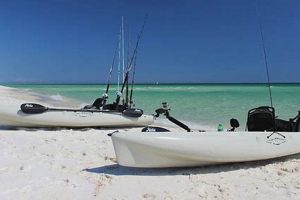
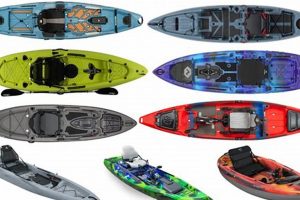
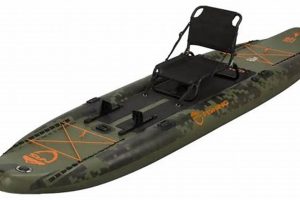
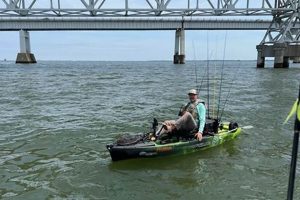
Evaluations of tandem kayaks designed for angling provide consumers with valuable insights into various models. These assessments typically cover aspects such as stability, maneuverability, comfort, storage capacity, and specialized fishing features like rod holders and livewells. A practical example would be an online review comparing the performance and features of two different brands of two-person fishing kayaks.
Access to these critiques empowers informed purchasing decisions. Potential buyers can compare different kayaks based on their individual needs and preferences, considering factors such as budget, fishing style, and water conditions. Historically, information sharing about outdoor gear relied on limited resources like print magazines and word-of-mouth. The digital age has revolutionized this process, providing a wealth of easily accessible information through online platforms, forums, and dedicated review websites.
Further exploration of this topic will delve into specific features to consider when selecting a tandem fishing kayak, popular models currently available, and reputable sources for unbiased evaluations.
Tips for Utilizing Tandem Fishing Kayak Evaluations
Potential purchasers of tandem fishing kayaks can benefit significantly from understanding how to effectively utilize available review resources. Careful consideration of the following points will assist in making informed decisions.
Tip 1: Identify Specific Needs: Before consulting reviews, clearly define the intended use of the kayak. Consider the type of water (calm lakes, rivers, ocean), fishing style (trolling, casting, fly fishing), and storage requirements.
Tip 2: Focus on Reputable Sources: Seek reviews from established publications, experienced anglers, and trusted online platforms known for unbiased assessments. Be wary of overly promotional content.
Tip 3: Compare Multiple Reviews: Avoid relying on a single review. Comparing perspectives from various sources provides a more comprehensive understanding of a kayak’s strengths and weaknesses.
Tip 4: Consider Reviewer Experience: Evaluate the reviewer’s background and experience. Reviews from anglers with similar fishing styles and preferences will be more relevant.
Tip 5: Pay Attention to Specific Features: Focus on reviews that address key features important for tandem fishing kayaks, such as stability, weight capacity, storage space, and specialized fishing accessories.
Tip 6: Analyze Verified Purchases: Where possible, prioritize reviews marked as “verified purchase” to ensure feedback comes from actual owners with firsthand experience.
Tip 7: Look Beyond Star Ratings: Read the full reviews to understand the reasoning behind the ratings. A lower rating with detailed explanations can be more insightful than a high rating with little supporting information.
By following these guidelines, prospective buyers can effectively leverage available resources to select a tandem fishing kayak that best suits their specific needs and enhances their on-the-water experience.
This informed approach to research contributes significantly to making a satisfying purchase and enjoying countless hours of successful fishing from a well-chosen tandem kayak.
1. Stability

Stability stands as a critical factor in tandem fishing kayak evaluations. A stable platform is essential for safe and effective angling, particularly when two individuals are onboard. Reviews frequently assess stability through various metrics, including resistance to tipping, performance in different water conditions (calm lakes versus choppy ocean waters), and the impact of angler movement. Cause and effect relationships are readily apparent: a kayak lacking sufficient stability can lead to angler discomfort, difficulty casting and reeling, and even capsizing, posing significant safety risks. Conversely, a highly stable kayak promotes confidence, allowing anglers to focus on fishing rather than maintaining balance. For example, a review might describe how a particular kayak model exhibits minimal rocking even when one angler stands up to cast, illustrating its superior stability. Another might discuss how a kayak’s wider hull design contributes to enhanced stability, especially in windy conditions.
The practical significance of understanding stability in these reviews is paramount. Anglers often engage in activities that compromise stability, such as casting, reeling in large fish, and entering or exiting the kayak. A stable platform minimizes the risks associated with these actions, enabling a safer and more enjoyable fishing experience. Reviews that analyze stability characteristics using real-life scenarios, such as navigating through wakes or encountering unexpected waves, offer valuable insights for potential buyers. Further, understanding the specific design features that contribute to stability, such as hull shape, weight distribution, and outrigger systems, allows informed decision-making tailored to individual fishing styles and water conditions. For instance, anglers fishing in open ocean environments will prioritize stability differently than those fishing in calm lakes.
In summary, stability plays a crucial role in tandem fishing kayak evaluations. Reviews that thoroughly examine and articulate a kayak’s stability characteristics empower informed purchasing decisions. This emphasis on stability contributes directly to safer and more effective fishing experiences, enhancing overall enjoyment on the water. Stability, therefore, remains a central concern for prospective buyers and a key focus within comprehensive tandem fishing kayak assessments.
2. Comfort

Comfort significantly influences the overall enjoyment and effectiveness of tandem fishing kayak excursions. Evaluations of these kayaks often dedicate considerable attention to comfort features, recognizing their importance for extended trips. Understanding how comfort is assessed in reviews allows potential buyers to prioritize features aligned with individual preferences and physical requirements.
- Seating
Seating comfort is paramount, particularly for longer fishing trips. Reviews typically examine seat design, including adjustability, cushioning, and back support. A well-designed seat can significantly reduce fatigue and discomfort, allowing anglers to focus on fishing. Reviews often compare different seating systems, highlighting advantages and disadvantages of various materials and configurations. For example, a review might contrast a molded plastic seat with an adjustable padded seat, discussing the trade-offs between durability and comfort. Practical examples might include an angler experiencing back pain after a short time in a poorly designed seat, versus another angler remaining comfortable throughout a full day of fishing in a kayak with superior seating. The implications for purchase decisions are clear: prioritizing seating comfort contributes directly to a more enjoyable and less physically demanding fishing experience.
- Legroom and Space
Adequate legroom and overall space within the kayak significantly impact comfort, especially for taller individuals or those who prefer more freedom of movement. Reviews frequently assess the cockpit dimensions, noting available legroom, footrest adjustability, and the ability to shift positions comfortably. Practical implications include the ability to stand up for casting, the ease of entering and exiting the kayak, and the overall feeling of spaciousness or confinement. A review might describe how a particular kayak model offers ample legroom even for taller anglers, or it might highlight a kayak’s cramped cockpit, potentially leading to discomfort during longer trips. Understanding these spatial considerations allows potential buyers to choose a kayak that accommodates their physical stature and preferred fishing style.
- Deck Layout and Accessibility
The layout of the kayak’s deck and the accessibility of essential gear contribute significantly to comfort and fishing efficiency. Reviews often evaluate the placement of rod holders, storage compartments, and other fishing-specific features, noting their ease of reach and usability. A well-designed deck layout minimizes awkward reaching and bending, enhancing both comfort and safety. For example, a review might discuss the convenient placement of rod holders within easy reach of the seated angler, or it might criticize a kayak for having poorly positioned storage compartments that are difficult to access. These practical considerations impact the angler’s ability to focus on fishing without constantly adjusting their position or struggling to reach essential gear.
- Weight Capacity and Stability Impact on Comfort
While not directly related to comfort features, a kayak’s weight capacity and stability indirectly influence overall comfort. A kayak exceeding its weight limit can sit lower in the water, potentially leading to a wet ride and discomfort. Similarly, a less stable kayak requires more effort to maintain balance, contributing to fatigue. Reviews addressing these factors provide insight into the kayak’s performance under load and its impact on angler comfort. For example, a review might describe how a kayak felt sluggish and unstable when fully loaded, indirectly impacting comfort. Understanding these performance characteristics assists potential buyers in selecting a kayak appropriately sized for their needs, enhancing both comfort and safety.
These comfort-related factors, as evaluated in tandem fishing kayak reviews, play a crucial role in the overall fishing experience. By carefully considering these aspects, potential buyers can make informed decisions that prioritize comfort, contributing to longer, more enjoyable, and ultimately more successful fishing trips. A comfortable angler is a more focused and effective angler.
3. Maneuverability
Maneuverability represents a critical performance attribute in tandem fishing kayaks, significantly influencing angling effectiveness and overall on-water experience. Evaluations of these kayaks frequently emphasize maneuverability, recognizing its importance for navigating various water conditions and accessing desired fishing locations. The connection between maneuverability and tandem fishing kayak reviews lies in the practical implications for anglers. A kayak’s ability to track straight, turn efficiently, and navigate tight spaces directly impacts fishing success. Cause and effect relationships are evident: a less maneuverable kayak might struggle in windy conditions, requiring significant effort to maintain course, while a highly maneuverable kayak allows effortless navigation, enabling anglers to reach prime fishing spots efficiently. Reviews often assess maneuverability through practical tests, such as navigating obstacle courses or performing tight turns, providing valuable insights for potential buyers.
The importance of maneuverability as a component of tandem fishing kayak reviews stems from its direct impact on fishing outcomes. Consider a scenario where anglers need to navigate through a narrow channel lined with vegetation to reach a secluded fishing spot. A highly maneuverable kayak allows precise navigation, minimizing disruption to the surrounding environment and maximizing fishing opportunities. Conversely, a less maneuverable kayak might struggle in such conditions, potentially damaging the kayak, disturbing the fish, and hindering access to the desired location. Reviews often provide real-life examples, describing how a particular kayak performed in various on-water scenarios, offering practical insights for potential buyers. For instance, a review might describe how a kayak’s shorter length and well-designed hull contributed to exceptional maneuverability in tight spaces, while another might highlight a kayak’s sluggish performance in windy conditions due to its longer length and less responsive hull design.
The practical significance of understanding maneuverability within these reviews lies in the ability to match a kayak’s performance characteristics to specific fishing needs and water conditions. Anglers fishing in rivers or areas with dense vegetation will prioritize maneuverability differently than those fishing in open lakes or oceans. Reviews that thoroughly analyze maneuverability, using real-world examples and explaining the contributing design factors (hull shape, length, rudder system), empower informed purchasing decisions. This understanding ultimately contributes to enhanced fishing efficiency and a more enjoyable experience on the water. Maneuverability, therefore, remains a central concern for prospective buyers and a key focus within comprehensive tandem fishing kayak evaluations.
4. Storage Capacity
Storage capacity plays a crucial role in tandem fishing kayak evaluations, directly impacting the practicality and enjoyment of fishing trips. Reviews often emphasize storage options, recognizing the need to accommodate gear for two anglers. The connection between storage capacity and these reviews lies in the practical limitations imposed by inadequate storage. Cause and effect relationships are clear: insufficient storage can lead to a cluttered cockpit, hindering movement and fishing efficiency, while ample storage allows organized gear placement, promoting a safer and more enjoyable experience. Reviews frequently assess storage capacity by describing the size and accessibility of storage compartments, including hatches, tank wells, and bungee systems. Real-life examples, such as the ability to store two tackle boxes, fishing rods, and personal items comfortably, illustrate the practical implications of varying storage capacities. For instance, a review might describe how a particular kayak’s large rear tank well easily accommodated a cooler and several dry bags, while another might highlight a kayak’s limited storage, restricting the amount of gear that could be carried comfortably.
The importance of storage capacity as a component of tandem fishing kayak reviews stems from its impact on fishing success and overall enjoyment. Consider a scenario where two anglers embark on a multi-day fishing expedition. A kayak with ample storage allows them to carry sufficient food, water, and camping gear, enhancing their self-sufficiency and comfort. Conversely, a kayak with limited storage might force them to compromise on essential supplies, potentially impacting their safety and enjoyment. Reviews that analyze storage options, using real-world examples and considering the needs of two anglers, provide valuable insights. For example, a review might discuss the advantages of a kayak with dedicated rod storage, protecting valuable fishing equipment and keeping the cockpit clutter-free. Another might highlight the convenience of a kayak with multiple sealed hatches, safeguarding electronic devices and other sensitive items from water damage.
The practical significance of understanding storage capacity within these reviews lies in the ability to select a kayak that meets the specific needs of two anglers. Reviews that thoroughly examine storage options, using practical examples and considering various fishing scenarios, empower informed purchasing decisions. This understanding contributes to enhanced organization, increased safety, and a more enjoyable fishing experience. Storage capacity, therefore, remains a central concern for prospective buyers and a key focus within comprehensive tandem fishing kayak evaluations.
5. Fishing Features
Specialized fishing features significantly differentiate tandem fishing kayaks from recreational models. Evaluations of these kayaks dedicate considerable attention to these features, recognizing their importance for angling effectiveness. Understanding how these features are assessed in reviews allows potential buyers to choose kayaks equipped for specific fishing styles and preferences. These features directly influence fishing success and overall enjoyment on the water.
- Rod Holders
Rod holders are essential for hands-free fishing and safe rod storage. Reviews typically evaluate the number, placement, and type of rod holders, considering their accessibility and security. Flush-mounted, adjustable, and rotating rod holders offer varying levels of convenience and functionality. A review might compare the advantages of adjustable rod holders for trolling versus flush-mounted holders for casting. Practical examples might include an angler easily reaching for a rod stored in a conveniently placed holder versus struggling to access a rod stored in a poorly positioned or obstructed holder. The implications for fishing are clear: well-designed rod holders enhance fishing efficiency and minimize the risk of losing or damaging rods.
- Tackle Storage
Dedicated tackle storage solutions contribute significantly to organization and fishing efficiency. Reviews assess the size, accessibility, and design of tackle storage compartments, considering their ability to accommodate various tackle boxes, lures, and tools. Waterproof compartments and removable tackle trays offer additional convenience and protection. A review might describe a kayak’s spacious tackle storage system capable of holding multiple tackle boxes and accessories, contrasting it with a kayak offering limited storage options. Practical examples include an angler quickly locating a specific lure in a well-organized tackle storage system versus rummaging through a cluttered cockpit, wasting valuable fishing time. Efficient tackle storage enhances fishing preparedness and minimizes frustration.
- Fish Finders and Electronics Mounts
Modern fishing kayaks often incorporate mounting options for fish finders, GPS units, and other electronic devices. Reviews evaluate the suitability of these mounts, considering their stability, accessibility, and compatibility with various electronics. Integrated wiring systems and transducer mounts further enhance convenience. A review might discuss the advantages of a stable transducer mount that provides accurate sonar readings versus a flimsy mount that compromises performance. Practical examples include an angler easily interpreting data from a securely mounted fish finder versus struggling with a vibrating or poorly positioned display, hindering fish identification. Well-designed electronics mounts enhance fishing effectiveness by providing crucial information and maximizing the utility of electronic devices.
- Other Specialized Features
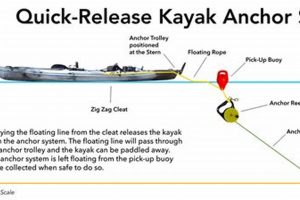
Other fishing-specific features frequently evaluated in reviews include anchor trolleys, livewells, paddle parks, and gear tracks. Anchor trolleys assist in controlled drifting, livewells maintain caught fish, paddle parks secure paddles during fishing, and gear tracks offer versatile mounting options for accessories. A review might describe the convenience of an integrated anchor trolley system for precise positioning in current versus the challenges of managing an anchor without a dedicated trolley. Practical examples include an angler easily deploying and retrieving an anchor using an efficient trolley system versus struggling with tangled anchor lines, disrupting fishing. These specialized features cater to specific fishing styles and preferences, enhancing overall effectiveness and enjoyment on the water.
These fishing-specific features, as evaluated in tandem fishing kayak reviews, contribute significantly to the overall angling experience. By carefully considering these aspects, potential buyers can make informed decisions that prioritize features aligned with their fishing styles, enhancing their chances of success and maximizing enjoyment on the water. A well-equipped kayak transforms a simple fishing trip into a productive and fulfilling adventure.
6. Durability/Build quality
Durability and build quality represent critical factors in tandem fishing kayak evaluations, directly impacting the kayak’s lifespan and overall value. Reviews often emphasize construction materials, manufacturing processes, and overall robustness, recognizing the demanding conditions these kayaks often endure. The connection between durability/build quality and these reviews lies in the long-term implications for kayak ownership. Cause and effect relationships are evident: a poorly constructed kayak might suffer cracks, leaks, or structural failures under stress, leading to costly repairs or premature replacement, while a durable, well-built kayak withstands years of use, providing reliable performance and long-term value. Reviews frequently assess durability by examining the kayak’s construction materials (polyethylene, fiberglass, composites), analyzing joint construction, and considering the manufacturer’s reputation for quality. Real-life examples, such as a kayak withstanding impacts from rocks or rough water conditions without damage, illustrate the practical implications of varying build qualities. For instance, a review might describe how a kayak’s rotomolded polyethylene hull exhibited exceptional resistance to abrasion, while another might highlight a kayak’s flimsy hull construction that showed signs of stress cracking after minimal use.
The importance of durability/build quality as a component of tandem fishing kayak reviews stems from its impact on long-term ownership costs and overall satisfaction. Consider a scenario where anglers frequently fish in rocky rivers or coastal areas. A durable kayak constructed from high-quality materials withstands these harsh environments, minimizing the risk of damage and ensuring years of reliable service. Conversely, a less durable kayak might require frequent repairs or replacement, leading to increased expenses and frustration. Reviews that analyze construction methods, materials, and stress testing provide valuable insights. For example, a review might discuss the advantages of a kayak with reinforced seams and a robust hull design, capable of withstanding impacts and abrasion. Another might highlight a kayak’s susceptibility to UV degradation or its vulnerability to punctures, potentially leading to costly repairs or premature failure. Understanding these factors allows potential buyers to evaluate long-term value and avoid costly mistakes.
The practical significance of understanding durability/build quality within these reviews lies in the ability to make informed purchasing decisions that consider long-term value and performance. Reviews that thoroughly examine construction techniques, materials, and real-world durability testing empower informed choices. This understanding contributes to increased confidence in the kayak’s ability to withstand demanding conditions, minimizing the risk of unexpected failures and maximizing long-term enjoyment. Durability/build quality, therefore, remains a central concern for prospective buyers and a key focus within comprehensive tandem fishing kayak evaluations.
7. Price/Value
Price/Value represents a crucial consideration within tandem fishing kayak evaluations, influencing purchasing decisions and overall satisfaction. Reviews often analyze this aspect by balancing a kayak’s features, performance, and durability against its cost. Understanding how price/value is assessed in reviews empowers informed choices aligned with budgetary constraints and desired features. This analysis provides crucial insights for prospective buyers seeking the best return on their investment.
- Budgetary Considerations
Reviews frequently categorize kayaks based on price ranges, allowing potential buyers to focus on options within their budget. Examples include entry-level kayaks offering basic features at lower price points, mid-range kayaks balancing performance and affordability, and high-end kayaks incorporating premium materials and advanced features at higher costs. The implications for purchase decisions are clear: understanding budgetary categories allows focused research and avoids wasted time evaluating kayaks outside one’s financial reach. For instance, a review might highlight an entry-level kayak as an excellent value for beginners, while cautioning against expecting premium features found in higher-priced models.
- Feature Set Comparison
Reviews often compare kayaks within similar price ranges, analyzing the features offered by each. This analysis reveals which kayaks provide the best value in terms of included features. Examples include comparing the number of rod holders, storage capacity, and seating comfort across different models within the same price bracket. This comparison allows potential buyers to identify kayaks offering superior feature sets for the same price, maximizing their investment. For instance, a review might highlight a mid-range kayak offering more fishing-specific features than its competitors at the same price point, representing excellent value.
- Durability and Long-Term Value
Durability directly impacts long-term value. Reviews often assess the build quality and materials used in kayak construction, considering their impact on lifespan and maintenance costs. A more durable kayak, even at a higher initial cost, might represent better long-term value due to reduced repair and replacement expenses. Examples include comparing the expected lifespan of a rotomolded polyethylene kayak versus a fiberglass kayak, considering their resistance to impacts, UV degradation, and other wear factors. Understanding these factors allows potential buyers to make informed decisions that balance initial cost with long-term durability and value.
- Resale Value
While not always explicitly addressed, resale value contributes to overall price/value considerations. Reviews sometimes discuss the potential resale value of certain kayak brands or models, recognizing that buyers might eventually sell their kayaks. Factors influencing resale value include brand reputation, build quality, and overall condition. Understanding potential resale value allows buyers to factor in the long-term cost of ownership and make more informed decisions. For instance, a review might mention that kayaks from a particular brand tend to hold their value well, providing additional incentive for purchase.
These price/value considerations, as evaluated in tandem fishing kayak reviews, contribute significantly to informed purchasing decisions. By carefully analyzing price in relation to features, performance, durability, and potential resale value, potential buyers can maximize their investment and choose a kayak that provides the best balance of cost and benefit. This informed approach empowers buyers to find a kayak that meets both their budgetary constraints and their fishing needs, contributing to long-term satisfaction and enjoyment on the water.
Frequently Asked Questions about Tandem Fishing Kayak Evaluations
This section addresses common inquiries regarding the evaluation of kayaks designed for two-person fishing expeditions. Clear and concise responses aim to provide practical guidance for prospective purchasers.
Question 1: What key features differentiate tandem fishing kayaks from recreational models?
Tandem fishing kayaks typically incorporate specialized features like rod holders, tackle storage compartments, fish finder mounts, and anchor trolleys, enhancing angling functionality compared to recreational models. These features prioritize fishing efficiency and convenience.
Question 2: How does kayak stability influence fishing performance and safety?
Stability directly impacts safety and fishing effectiveness. A stable platform allows anglers to cast, reel, and land fish without compromising balance, reducing the risk of capsizing, especially in challenging conditions or when engaging in activities that shift weight distribution.
Question 3: What role does storage capacity play in tandem fishing kayak selection?
Adequate storage capacity is essential for accommodating gear for two anglers, including tackle boxes, rods, personal items, and potentially camping equipment for longer excursions. Sufficient storage contributes to organization, efficiency, and overall enjoyment on the water.
Question 4: How do reviews typically assess the maneuverability of tandem fishing kayaks?
Maneuverability assessments often involve practical tests, such as navigating obstacle courses or performing tight turns. Reviews typically describe how a kayak handles in various water conditions, including wind, current, and tight spaces, providing insights into its responsiveness and ease of control.
Question 5: How is the comfort of a tandem fishing kayak typically evaluated in reviews?
Comfort assessments focus on seat design, adjustability, cushioning, and back support, as well as legroom, cockpit space, and overall ergonomics. Reviews often consider the impact of these factors on long-term comfort, particularly during extended fishing trips.
Question 6: Why is the durability and build quality of a tandem fishing kayak important to consider?
Durability directly impacts a kayak’s lifespan and resistance to damage from impacts, abrasion, and UV exposure. Reviews often analyze construction materials and manufacturing processes to assess long-term durability, influencing overall value and minimizing the risk of costly repairs or premature replacement.
Careful consideration of these frequently asked questions empowers informed decision-making, contributing to the selection of a tandem fishing kayak that optimizes performance, safety, and enjoyment on the water.
Further exploration might involve researching specific kayak models, comparing features and pricing, or consulting expert opinions to refine selection criteria.
Conclusion
Comprehensive evaluations of tandem fishing kayaks provide crucial insights for informed purchasing decisions. Analyses of stability, comfort, maneuverability, storage capacity, fishing-specific features, durability, and price/value empower potential buyers to select kayaks aligned with individual needs and preferences. Thorough assessments consider diverse fishing styles, water conditions, and budgetary constraints, facilitating optimal kayak selection.
Investing time in researching and understanding these evaluations ultimately contributes to enhanced fishing experiences. A well-chosen tandem fishing kayak, matched to specific requirements, unlocks opportunities for shared adventures and successful angling, fostering lasting enjoyment on the water. The informed consumer benefits from increased safety, improved fishing efficiency, and long-term satisfaction derived from a well-made, appropriately equipped tandem kayak.