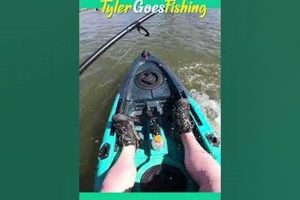
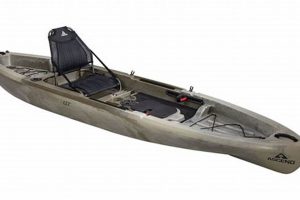
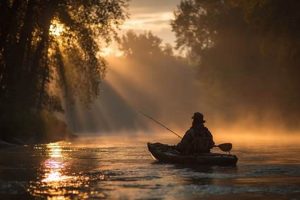
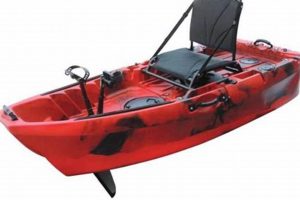
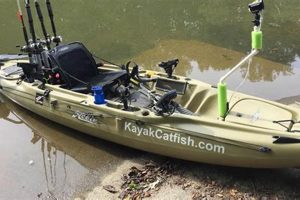
This activity involves angling from a small, human-powered watercraft in the coastal waters surrounding Fort Myers, Florida. It offers a unique way to experience the diverse marine ecosystems of Southwest Florida, from the Caloosahatchee River to the Gulf of Mexico’s estuaries and shallows. Anglers target a variety of species, including redfish, snook, tarpon, and seatrout, often employing specialized tackle and techniques adapted for this style of fishing.
The accessibility and affordability of this pursuit contribute to its popularity. It allows individuals to explore areas inaccessible to larger vessels, fostering a closer connection with nature. The relatively low cost of entry compared to traditional boat fishing makes it an attractive option for both residents and visitors. Historically, small boats have been used for fishing in the region for centuries, with modern iterations incorporating advancements in kayak design and fishing technology. This evolution has broadened the activity’s appeal and contributed to its growth as a recreational pastime.
This article will delve deeper into specific aspects of this popular activity, covering topics such as choosing appropriate equipment, recommended locations, effective fishing techniques, necessary safety precautions, and relevant local regulations.
Tips for Kayak Fishing in Fort Myers
Successful angling from a kayak in Fort Myers requires preparation and adherence to best practices. The following tips offer guidance for a safe and productive experience.
Tip 1: Prioritize Safety Equipment. Always wear a personal flotation device (PFD). Carry a whistle, signaling mirror, and a waterproof communication device. Inform someone of the intended fishing location and estimated return time.
Tip 2: Choose the Right Kayak. Consider stability and storage capacity when selecting a kayak. Sit-on-top kayaks are generally preferred for their self-bailing capabilities and ease of re-entry. Pedal-driven kayaks offer hands-free fishing and increased range.
Tip 3: Understand Local Regulations. Obtain the necessary fishing licenses and familiarize oneself with local fishing regulations, including size and bag limits for targeted species.
Tip 4: Plan for Tides and Weather. Consult tide charts and weather forecasts before embarking on a fishing trip. Avoid fishing in strong winds or thunderstorms. Be aware of currents and potential hazards.
Tip 5: Employ Effective Fishing Techniques. Utilize appropriate tackle and techniques for the target species. Consider using artificial lures, live bait, or a combination of both. Learn to read the water and identify productive fishing spots.
Tip 6: Practice Proper Kayak Handling. Become proficient in paddling and maneuvering a kayak. Practice launching and landing techniques. Understand how wind and currents affect kayak movement.
Tip 7: Respect the Environment. Practice catch-and-release fishing whenever possible. Dispose of fishing line and other waste responsibly. Minimize disturbance to wildlife and their habitats.
By following these tips, anglers can enhance their enjoyment and success while contributing to a safe and sustainable fishing environment.
These guidelines provide a strong foundation for successful kayak fishing in Fort Myers. The following section will offer concluding thoughts and additional resources.
1. Location

Estero Bay stands as a prime location for kayak fishing within the greater Fort Myers area. The bay’s shallow, protected waters and intricate network of mangrove islands create a rich ecosystem, attracting a diverse range of fish species sought by anglers. This sheltered environment also provides favorable conditions for kayak navigation, mitigating the impact of strong winds and waves often encountered in more exposed coastal areas. The confluence of these factors establishes Estero Bay as a highly desirable destination. The shallows provide excellent sight-fishing opportunities for species like redfish and snook, while the mangrove roots offer shelter for these fish and their prey. Kayaks grant access to these shallow, often inaccessible areas that larger boats cannot reach. This accessibility, combined with the bay’s abundant fish populations, underscores its importance for kayak fishing in the region.
Several launch points around Estero Bay provide convenient access for kayak anglers. These locations offer varying amenities, including parking, restrooms, and kayak rentals. Some popular launch sites include Lovers Key State Park and Koreshan State Historic Site. Anglers often target specific areas within the bay known for holding particular species, such as the flats around Black Island or the channels near Mound Key Archaeological State Park. Understanding the nuances of these different areas, including tidal flows and bottom structure, enhances fishing success. For instance, fishing the edges of mangrove islands during a falling tide can yield excellent results as baitfish are flushed out into deeper water, attracting predatory species like snook and redfish.
Effective kayak fishing in Estero Bay necessitates careful consideration of tides, weather patterns, and local regulations. Anglers should consult tide charts to plan their trips around optimal fishing times, often coinciding with moving water. Monitoring weather forecasts is crucial for safety and ensuring comfortable fishing conditions. Adherence to all local fishing regulations, including licensing requirements and size/bag limits, contributes to the long-term health and sustainability of the fishery. Through a combination of environmental awareness, strategic planning, and skilled angling techniques, Estero Bay offers exceptional opportunities for rewarding kayak fishing experiences within the Fort Myers area.
2. Target Species

Snook and redfish represent key target species for kayak anglers in Fort Myers. Their prevalence in the region’s inshore waters, combined with their sporting qualities, makes them highly desirable catches. Understanding their habitat preferences and feeding behaviors is crucial for successful kayak fishing excursions.
- Habitat Preference
Both snook and redfish thrive in the diverse estuarine environments characteristic of Southwest Florida. Snook often congregate around mangrove shorelines, oyster bars, and docks, utilizing these structures for ambush predation. Redfish, similarly, frequent shallow grass flats, oyster beds, and mangrove-lined creeks. Kayaks offer a significant advantage in accessing these shallow, structure-rich areas often inaccessible to larger vessels, increasing the likelihood of encountering these prized gamefish.
- Feeding Behavior
Snook are opportunistic predators, feeding on a variety of baitfish, crustaceans, and even small mollusks. Their feeding patterns are influenced by tides and water temperature, with increased activity during periods of moving water. Redfish primarily consume crustaceans, small fish, and mollusks, foraging in the shallows by using their tail to stir up the bottom. Knowledge of these feeding habits informs lure and bait selection, enhancing angling success.
- Seasonal Patterns
Snook and redfish exhibit seasonal movement patterns influenced by water temperature and breeding cycles. Snook become more active in warmer months, while redfish exhibit year-round activity, although their distribution may shift within the estuary depending on seasonal conditions. Understanding these patterns allows anglers to target specific areas based on the time of year, maximizing their chances of a successful catch.
- Fishing Techniques
Effective techniques for targeting snook and redfish from a kayak include sight fishing, drift fishing, and anchoring near structure. Sight fishing, facilitated by the clear shallow waters, involves visually locating fish and presenting lures or bait directly to them. Drift fishing allows anglers to cover a wider area, presenting their offerings to fish holding along shorelines or over grass flats. Anchoring near structure, such as mangroves or oyster bars, concentrates fishing efforts in areas where these species are likely to ambush prey.
By considering these factors habitat preference, feeding behavior, seasonal patterns, and effective fishing techniques kayak anglers can significantly increase their chances of successfully targeting snook and redfish in the Fort Myers area. This knowledge, combined with the maneuverability and stealth offered by kayaks, creates a unique and rewarding angling experience.
3. Equipment

Lightweight tackle plays a crucial role in kayak fishing around Fort Myers. The confined space and dynamic nature of kayak fishing necessitate specialized equipment that maximizes efficiency and minimizes encumbrance. Heavier tackle, designed for larger vessels, proves cumbersome and impractical in a kayak environment. Lightweight rods, reels, and lines allow for greater casting precision and control, essential for targeting species like snook and redfish in the shallow, structure-rich waters characteristic of the region. For example, a medium-light spinning rod paired with a 2500-size reel spooled with 10-pound braided line provides the sensitivity and strength needed to handle these fish while remaining manageable from a kayak. This setup allows anglers to make accurate casts to tight pockets in mangroves or beneath overhanging docks, maximizing their chances of success.
The choice of lightweight lures and terminal tackle further enhances the effectiveness of kayak fishing. Smaller, more compact lures are easier to cast and retrieve with lighter gear. These lures also tend to mimic the natural prey found in the area, increasing their attractiveness to target species. For instance, soft plastic jerkbaits, topwater plugs, and small jigs prove highly effective for snook and redfish in Fort Myers. Selecting appropriate hooks, weights, and leaders further optimizes presentations and ensures successful hookups. Using lighter fluorocarbon leaders, for example, reduces visibility and improves the natural presentation of lures, increasing the likelihood of enticing wary fish.
Understanding the importance of lightweight tackle contributes significantly to a positive kayak fishing experience in Fort Myers. It allows anglers to effectively target desired species while maintaining comfort and control within the confines of a kayak. This specialized equipment, combined with appropriate fishing techniques and knowledge of local waters, maximizes the potential for success and enjoyment on the water. Choosing appropriate lightweight gear ultimately enhances angling efficiency and contributes to a more streamlined and enjoyable experience. This consideration, coupled with other essential preparations, allows anglers to fully appreciate the unique opportunities afforded by kayak fishing in the Fort Myers area.
4. Technique
Drift fishing represents a highly effective technique within the context of kayak fishing in Fort Myers. Leveraging natural currents and tides, drift fishing allows anglers to cover extensive areas, presenting baits or lures to a wider range of fish. This method proves particularly advantageous in the shallow flats, estuaries, and mangrove-lined shorelines prevalent throughout the region. The inherent maneuverability of kayaks complements drift fishing, enabling precise navigation through complex waterways and maximizing exposure to productive fishing zones. This technique’s effectiveness hinges on understanding tidal flows, wind patterns, and bottom structure, contributing significantly to angling success in the Fort Myers area.
- Tidal Flow and Current Dynamics
Understanding tidal currents is paramount for effective drift fishing. Incoming tides bring baitfish and predatory species closer to shore, while outgoing tides flush them back out. Positioning the kayak to drift along channels or edges of flats during these tidal transitions maximizes the likelihood of encountering actively feeding fish. Knowledge of local current patterns, influenced by channels, inlets, and wind, further refines drift fishing strategies. For instance, positioning the kayak up-current of a point or oyster bar allows the current to carry the bait or lure naturally through the target zone.
- Bait and Lure Selection
Choosing the right bait or lure is crucial for successful drift fishing. Live or artificial shrimp, small baitfish, and jigs are popular choices for targeting species commonly found in Fort Myers, such as snook, redfish, and trout. Matching the bait or lure to the prevailing forage in the area increases its effectiveness. For example, if small crabs are prevalent, using a crab imitation lure can entice strikes. The weight and type of lure or bait also influence the drift’s depth and presentation, requiring adjustments based on the target species and water conditions.
- Kayak Control and Positioning
Maintaining control and proper positioning of the kayak during a drift is essential for maximizing fishing effectiveness. Using a drift sock or anchor trolley system helps control the kayak’s speed and direction in relation to the current, ensuring optimal bait or lure presentation. Adjusting the kayak’s position with subtle paddle strokes allows anglers to target specific areas within the drift, such as pockets of deeper water or structure-rich zones. This level of control ensures the bait or lure remains in the strike zone for extended periods, increasing the chances of attracting fish.
- Reading the Water and Identifying Structure
Observing the water and identifying underwater structure is key to maximizing drift fishing success. Look for signs of baitfish activity, such as ripples or disturbances on the surface, which often indicate the presence of predatory fish. Identifying submerged structure, including oyster bars, grass beds, and drop-offs, provides further insight into potential fish-holding areas. Adjusting the drift path to intersect these areas increases the likelihood of encountering fish. Understanding how water depth, clarity, and bottom composition influence fish behavior allows anglers to refine their drift fishing strategies and target specific locations with greater precision.
By combining knowledge of tidal flows, appropriate bait selection, precise kayak control, and astute observation of the water, drift fishing becomes a highly effective technique for targeting a variety of species in the Fort Myers area. This method’s inherent adaptability to diverse environments, combined with the maneuverability of a kayak, makes it a valuable tool for anglers seeking to explore the rich fishing grounds of Southwest Florida. The nuances of drift fishing, when applied strategically, contribute significantly to increased angling success in this region.
5. Safety

Safety, particularly regarding personal flotation devices (PFDs) and communication, is paramount in kayak fishing around Fort Myers. The inherent risks associated with on-water activities are amplified by the often-isolated nature of kayak fishing. Sudden weather changes, vessel traffic, and potential encounters with marine life underscore the necessity of prioritizing safety precautions. A properly fitted PFD, worn consistently, provides essential buoyancy in the event of capsizing or unforeseen emergencies. This simple precaution can significantly increase the chances of survival. Reliable communication methods, such as a waterproof VHF radio or a charged mobile phone in a waterproof case, enable anglers to contact emergency services or other boaters if assistance is required. These tools become critical in situations like unexpected storms, equipment malfunctions, or navigational challenges. For example, an angler experiencing engine trouble in a remote area of Estero Bay can use a VHF radio to call for assistance, potentially preventing a dangerous situation from escalating. Similarly, a PFD can prove life-saving if an angler is unexpectedly thrown from their kayak in rough waters.
Beyond emergency situations, effective communication enhances overall safety awareness. Informing someone onshore of intended fishing locations and estimated return times establishes a critical safety net. This practice allows for timely assistance if an angler fails to return as planned. Weather forecasts should be checked before departing, and anglers should be prepared to adjust plans based on changing conditions. Awareness of local maritime regulations, including navigation rules and restricted areas, further contributes to a safe boating environment. Neglecting these precautions can have severe consequences. For example, failing to monitor weather forecasts could lead anglers into dangerous storms, while disregarding navigational rules increases the risk of collisions with other vessels. Consistent adherence to safety protocols, including proper use of PFDs and communication equipment, mitigates these risks and contributes to a more secure and enjoyable experience. Regularly inspecting equipment for wear and tear, ensuring proper functionality, and understanding emergency procedures further strengthens preparedness.
Prioritizing safety through consistent PFD use and reliable communication is not merely a recommendation but a critical element of responsible kayak fishing in Fort Myers. Understanding the potential hazards and implementing appropriate safety measures ensures not only personal well-being but also contributes to a safer boating environment for all. This proactive approach to safety fosters peace of mind, allowing anglers to fully appreciate the unique and rewarding experience of kayak fishing in this vibrant coastal region. The importance of safety in kayak fishing cannot be overstated; it forms the foundation upon which all other aspects of the activity rest.
6. Regulations
Adhering to fishing regulations, specifically licensing requirements and catch limits, is essential for the sustainability of kayak fishing in Fort Myers. These regulations, enforced by the Florida Fish and Wildlife Conservation Commission (FWC), aim to protect fish populations, maintain ecosystem balance, and ensure equitable access to resources for all anglers. Ignoring these regulations can lead to fines, penalties, and ultimately contribute to the depletion of fish stocks, jeopardizing the future of the sport.
- Licensing Requirements
Obtaining the appropriate fishing license is a legal prerequisite for kayak fishing in Fort Myers. Different license types exist depending on residency status, age, and fishing methods employed. Anglers must possess a valid license before casting a line, ensuring compliance with state regulations. Information regarding license types, fees, and purchasing options is readily available on the FWC website. Carrying a physical or digital copy of the license while fishing is essential for demonstrating compliance during potential inspections by law enforcement officials. Failure to produce a valid license can result in citations and penalties.
- Catch Limits and Size Restrictions
Regulations dictate catch limits and size restrictions for various species to prevent overfishing and protect breeding populations. These limits specify the number and size of fish that an angler can legally harvest within a given timeframe. For example, redfish regulations in Southwest Florida may stipulate a one-fish-per-person daily bag limit and a slot size restriction, meaning only fish within a specific size range can be kept. Adhering to these limits ensures the continued health and abundance of these species for future generations of anglers. Exceeding catch limits or harvesting undersized fish carries significant penalties, contributing to the depletion of fish stocks and potentially impacting the overall ecosystem.
- Closed Seasons and Protected Species
Certain species are subject to closed seasons, during which harvesting is prohibited to protect vulnerable populations during spawning or other critical life stages. Snook, for instance, has designated closed seasons in Southwest Florida to safeguard their breeding populations. Understanding and respecting these closures is essential for maintaining healthy fish populations. Additionally, some species are designated as protected, meaning they cannot be harvested at any time. Awareness of these regulations is crucial for responsible angling practices and avoiding unintended violations. Consulting the FWC regulations before each fishing trip ensures compliance and contributes to conservation efforts.
- Reporting Requirements
In some cases, specific reporting requirements exist for certain species, particularly those of conservation concern. Anglers may be required to report catches of tagged fish or participate in data collection programs to aid in research and management efforts. These reporting mechanisms provide valuable information for assessing fish populations, monitoring movement patterns, and evaluating the effectiveness of conservation measures. Participating in these programs contributes to a broader understanding of the fishery and aids in its long-term sustainability. By fulfilling these reporting obligations, anglers actively contribute to the management and preservation of the resource.
Understanding and adhering to these regulations is integral to the ethical and sustainable practice of kayak fishing in Fort Myers. Compliance not only avoids legal repercussions but also contributes to the long-term health of the fishery, ensuring its continued enjoyment for future generations. By respecting these regulations, anglers actively participate in the stewardship of this valuable resource and contribute to the overall health of the marine environment. This responsible approach safeguards the future of kayak fishing and preserves the ecological integrity of the region.
Frequently Asked Questions
This section addresses common inquiries regarding kayak fishing in Fort Myers, providing concise and informative responses.
Question 1: What are the primary target species for kayak anglers in Fort Myers?
Targeted species often include snook, redfish, speckled trout, and tarpon, among others. Specific locations and seasons influence species availability.
Question 2: Are specific fishing licenses required for kayak fishing in this area?
A valid Florida fishing license is mandatory. License requirements vary based on residency and fishing methods, so checking current regulations with the Florida Fish and Wildlife Conservation Commission (FWC) is recommended.
Question 3: What essential safety equipment should one carry while kayak fishing?
Essential safety gear includes a personal flotation device (PFD), a whistle, a visual distress signal (such as a mirror or flare), and a waterproof communication device. Informing someone of fishing plans and estimated return time is also crucial.
Question 4: What are the recommended kayak types for fishing in Fort Myers?
Sit-on-top kayaks are generally preferred for their stability and self-bailing design. Pedal-driven kayaks offer advantages in maneuverability and hands-free fishing, but their suitability depends on individual preferences and fishing locations.
Question 5: Where are suitable launch points for kayak fishing access in Fort Myers?
Public boat ramps and kayak launch sites provide access to various fishing areas. Locations like Lovers Key State Park, Bunche Beach Preserve, and the Caloosahatchee River offer diverse fishing opportunities. Researching launch sites based on target species and desired fishing environment is advisable.
Question 6: Are guided kayak fishing tours available in Fort Myers?
Numerous local outfitters offer guided kayak fishing tours catering to various skill levels. Guided tours provide valuable insights into local fishing hotspots, techniques, and regulations. Researching and selecting reputable tour operators is recommended.
Addressing these common inquiries provides foundational knowledge for planning a safe and successful kayak fishing trip in Fort Myers. Thorough preparation, adherence to regulations, and a focus on safety enhance the overall fishing experience.
The following section will offer concluding thoughts and additional resources for those interested in exploring kayak fishing in the Fort Myers area.
Kayak Fishing Fort Myers
This exploration of kayak fishing in Fort Myers has highlighted the activity’s unique appeal, emphasizing the blend of accessible angling, diverse ecosystems, and targeted species like snook and redfish. Key considerations, from equipment selection and drift fishing techniques to safety protocols and regulatory compliance, underscore the multifaceted nature of this pursuit. The analysis of Estero Bay as a prime location exemplifies the importance of understanding local environments and their specific characteristics. Furthermore, the discussion of lightweight tackle emphasizes the need for specialized gear adapted to the demands of kayak angling.
Kayak fishing in Fort Myers offers a rewarding way to connect with the natural beauty and abundant marine life of Southwest Florida. Responsible angling practices, informed by knowledge and respect for the environment, ensure the sustainability of this activity for future generations. One’s journey into this popular pursuit promises an enriching experience that combines the thrill of the catch with the tranquility of navigating serene coastal waterways. Further exploration of local resources and continued learning will enhance one’s appreciation and enjoyment of this unique angling experience.