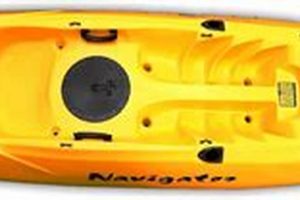
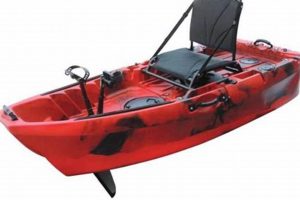
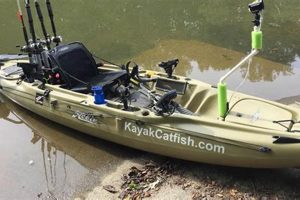
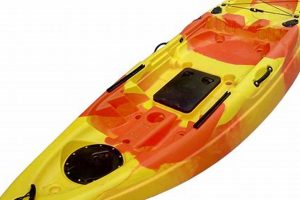
This specific model of watercraft is designed for angling activities. A compact vessel, typically constructed from durable, lightweight materials like polyethylene, it offers stability and maneuverability for anglers on lakes, rivers, and calm coastal waters. Often equipped with features like rod holders, storage compartments, and comfortable seating, this type of kayak prioritizes functionality for a focused fishing experience.
Smaller vessels like this one provide an accessible and efficient means of reaching fishing spots often inaccessible to larger boats. Their portability allows for easy transport and launch, expanding angling opportunities. Historically, kayaks have been employed for fishing and transportation for millennia, with modern designs incorporating advanced materials and features to enhance performance and comfort. This compact size contributes to a closer connection with nature and a more immersive fishing experience.
The subsequent sections will delve deeper into the specifics of this type of watercraft, covering topics such as construction materials, design features, performance characteristics, and essential accessories. Further exploration will also address proper usage, maintenance, and safety considerations.
Tips for Kayak Fishing
Effective angling from a compact kayak requires a specialized approach. These tips offer guidance for a safe and productive fishing experience.
Tip 1: Balance and Stability: Maintaining equilibrium is paramount. Distribute weight evenly and avoid sudden movements. Practice entering and exiting the vessel in shallow water before venturing into deeper areas. A lower center of gravity enhances stability.
Tip 2: Paddle Selection: Choose a paddle appropriate for the kayak’s width and the angler’s physique. Proper paddling technique conserves energy and increases efficiency.
Tip 3: Essential Gear Storage: Securely stow tackle, safety equipment, and personal items in waterproof compartments or dry bags. Organization minimizes clutter and ensures quick access to necessary gear.
Tip 4: Navigation and Planning: Research fishing locations, water conditions, and weather forecasts. Carry a chart, compass, or GPS device, especially in unfamiliar waters. Inform someone of the planned route and estimated return time.
Tip 5: Anchor Positioning: Deploy an anchor system suited for the water body’s bottom composition. Position the anchor effectively to maintain the desired fishing location, accounting for wind and current.
Tip 6: Respectful Angling Practices: Adhere to local fishing regulations and practice catch-and-release principles when appropriate. Minimize environmental impact by properly disposing of waste and avoiding disturbance of wildlife.
Tip 7: Safety First: Wear a personal flotation device (PFD) at all times. Carry a whistle, signaling device, and first-aid kit. Be aware of changing weather conditions and potential hazards.
By adhering to these guidelines, anglers can significantly improve their chances of a successful and enjoyable outing while prioritizing safety and environmental responsibility.
These tips provide a foundation for safe and productive kayak fishing. The following section will offer concluding remarks and additional resources for continued learning.
1. Stability

Stability is a critical performance characteristic for fishing kayaks, directly influencing angler safety and fishing effectiveness. A stable platform allows for comfortable casting, reeling, and landing fish, minimizing the risk of capsizing. The specific design of this kayak model contributes to its stability. Features such as a flat-bottom hull, a wide beam, and strategically placed seating contribute to a lower center of gravity, enhancing balance. This inherent stability is further augmented by design elements like chines or pontoon-style hulls in some models. These factors combine to offer a secure and balanced platform, even in challenging conditions such as currents or wind. For example, an angler standing to cast in a stable kayak maintains balance and control, whereas instability could lead to a fall or capsize.
The practical implications of this stability are significant. Enhanced balance translates to improved casting accuracy and more effective fish fighting techniques. Anglers can confidently focus on the task at hand, rather than constantly compensating for instability. This is particularly crucial when dealing with larger fish or navigating challenging waters. Moreover, increased stability enhances safety, reducing the likelihood of tipping and allowing for more comfortable movement within the kayak. This added security is especially important for anglers fishing in remote locations or less-than-ideal conditions.
In summary, stability is a defining feature of this kayak model, significantly impacting angler safety, comfort, and overall fishing success. The design prioritizes balance through features like a wide hull and low center of gravity. This stability allows anglers to focus on fishing techniques and enhances safety, particularly in challenging conditions. Understanding the connection between design and stability is essential for maximizing the benefits of this kayak and ensuring a safe and enjoyable fishing experience.
2. Maneuverability

Maneuverability represents a critical performance attribute, particularly in fishing kayaks where precise positioning and efficient navigation are essential. This characteristic influences the angler’s ability to access desired fishing locations, navigate complex waterways, and respond effectively to changing conditions. The hull design and length of this specific kayak model directly impact its maneuverability. A shorter length generally translates to increased maneuverability, allowing for tighter turns and quicker adjustments in direction. Conversely, longer kayaks tend to track straighter and offer increased speed but may be less nimble in confined areas or moving water. The hull design, incorporating features like a shallow-V or flat bottom, further affects maneuverability. A shallow-V hull typically provides a balance between tracking and maneuverability, while a flat bottom enhances stability but might sacrifice some responsiveness. Consider a scenario where an angler needs to navigate through dense vegetation or around submerged obstacles. A highly maneuverable kayak enables precise navigation, minimizing the risk of entanglement or collision. Conversely, a less maneuverable vessel might struggle in such situations, potentially hindering access to prime fishing spots.
The practical implications of kayak maneuverability extend beyond simply reaching a fishing destination. Precise boat control is crucial for techniques like drift fishing, where maintaining a specific position relative to the current is paramount. Similarly, in situations requiring quick adjustments, such as following a moving school of fish or avoiding sudden hazards, maneuverability becomes a decisive factor. The ability to execute tight turns and rapid directional changes allows anglers to react effectively, maximizing fishing opportunities and enhancing safety. For example, quickly repositioning the kayak to follow a fish pursuing a lure necessitates nimble handling, directly impacting the chance of a successful hookup.
In conclusion, maneuverability is an essential performance characteristic influencing fishing effectiveness and safety. This specific kayak model’s design considerations directly impact maneuverability. The ability to navigate tight spaces, respond to changing conditions, and maintain precise boat control enhances angling opportunities and overall fishing experience. Understanding the connection between design, maneuverability, and practical application is crucial for selecting the appropriate kayak and maximizing its potential on the water. Further investigation into specific hull designs and their influence on maneuverability can provide additional insights for anglers seeking to optimize their equipment choices.
3. Compact Size
The compact size of this specific kayak model presents distinct advantages and disadvantages within the context of fishing functionality. Reduced length and width contribute to enhanced portability and maneuverability, while potentially compromising stability and storage capacity. This inherent trade-off necessitates careful consideration of individual angling needs and preferences. A shorter length facilitates easier transport and storage. Loading onto a vehicle roof rack or carrying short distances becomes significantly less cumbersome compared to larger kayaks. This portability expands access to remote fishing locations, particularly those inaccessible to larger watercraft. For instance, smaller rivers, ponds, or lakes with limited access points become viable fishing destinations. Increased maneuverability in tight spaces, such as navigating through dense vegetation or around fallen trees, further enhances the compact kayak’s versatility.
However, the compact size also presents limitations. Reduced deck space restricts storage capacity for fishing gear and equipment. Anglers must prioritize essential items and adopt efficient organization strategies to maximize available space. Stability can also be affected by the smaller dimensions, particularly in rougher water conditions or when standing to cast. While designs often incorporate features to enhance stability, the inherent limitations of a compact hull must be acknowledged. Consider an angler targeting larger fish species; a smaller, less stable platform can present challenges during the fight, potentially increasing the risk of capsizing. Similarly, carrying additional equipment like fish finders or battery packs further reduces available space and may affect stability.
Understanding the trade-offs associated with compact size is crucial for selecting the appropriate kayak for specific fishing applications. Portability and maneuverability benefit anglers seeking access to remote locations or requiring nimble navigation. However, limitations in storage and potential stability compromises must be carefully weighed against these advantages. Evaluating individual fishing styles, target species, and typical water conditions allows for informed decision-making. Ultimately, the optimal kayak size represents a balance between portability, maneuverability, stability, and storage capacity, tailored to the angler’s specific needs and preferences.
4. Fishing Features
Specialized features distinguish fishing kayaks from recreational models, enhancing angler effectiveness and overall experience. These features, integral to the design of the Ascend 12 fishing kayak, directly impact functionality and contribute to a more productive and enjoyable fishing outing. Understanding these features and their practical applications is crucial for maximizing the kayak’s potential.
- Rod Holders:
Integrated rod holders provide secure storage and convenient access to fishing rods. Flush-mounted or adjustable rod holders accommodate various fishing techniques and rod lengths. For example, trolling requires readily accessible rods, while stationary fishing benefits from secure storage to prevent loss or damage during transport. The Ascend 12 typically offers multiple rod holders, strategically placed for diverse angling styles.
- Storage Compartments:
Dedicated storage compartments, including dry hatches and tank wells, safeguard tackle, gear, and personal items from water damage. Dry storage protects sensitive electronics, while larger compartments accommodate tackle boxes and other essential equipment. Ample storage contributes to organization and efficiency on the water. The Ascend 12 offers various storage options, balancing dry storage with open access for frequently used items.
- Mounting Tracks and Gear Attachment Points:
Integrated mounting tracks and gear attachment points provide versatile customization options for fish finders, GPS units, cameras, and other accessories. These mounting systems allow anglers to personalize their kayak setup to match specific fishing styles and preferences. For example, mounting a fish finder requires a stable platform and convenient access to power sources, while a camera mount captures underwater footage or scenic views. The Ascend 12 offers ample mounting options, facilitating personalized configurations.
- Paddle Holders/Leashes:
Secure paddle holders or leashes prevent paddle loss during fishing activities. This seemingly minor feature ensures the paddle remains readily accessible when needed, preventing drift or the need for retrieval. Paddle management is crucial for maintaining boat control and responding effectively to changing conditions. The Ascend 12 often includes paddle holders or attachment points for leashes, ensuring the paddle remains within easy reach.
These integrated fishing features significantly enhance the Ascend 12’s functionality as a dedicated fishing platform. The combination of rod holders, storage solutions, mounting options, and paddle management systems contributes to a more organized, efficient, and ultimately more productive fishing experience. Consideration of these features in relation to individual fishing styles and target species allows for optimal utilization of the kayak’s capabilities.
5. Durability
Durability is a critical factor influencing the lifespan and overall value of the Ascend 12 fishing kayak. The kayak’s construction materials and manufacturing processes directly impact its ability to withstand the rigors of regular use, including exposure to UV radiation, impacts with rocks or submerged objects, and the stresses of transport and storage. The Ascend 12 typically utilizes roto-molded high-density polyethylene (HDPE), a material known for its impact resistance, durability, and UV stability. This construction method creates a seamless, one-piece hull with consistent wall thickness, enhancing structural integrity. For example, HDPE’s resilience allows the kayak to withstand minor impacts without sustaining significant damage, crucial when navigating shallow waters or rocky shorelines. Furthermore, UV resistance prevents material degradation from prolonged sun exposure, preserving the kayak’s structural integrity and aesthetics over time. This durability translates to a longer lifespan, reducing the frequency of repairs or replacements and maximizing the return on investment.
The practical implications of a durable kayak extend beyond mere longevity. A robust construction minimizes the risk of leaks, cracks, or other damage that could compromise safety on the water. This reliability is particularly crucial in remote locations or challenging conditions where repairs might be difficult or impossible. For instance, a durable hull can withstand scraping against rocks or submerged logs without sustaining punctures, allowing the angler to continue fishing safely. Moreover, a well-maintained, durable kayak retains its value over time, potentially offering a higher resale value compared to less durable models. Regular cleaning and proper storage practices further contribute to the kayak’s long-term durability, minimizing wear and tear and preserving its appearance.
In summary, durability represents a key consideration in the evaluation of the Ascend 12 fishing kayak. The utilization of roto-molded HDPE and robust construction techniques contributes to its resistance to impacts, UV degradation, and general wear and tear. This durability translates to a longer lifespan, enhanced safety, and a higher resale value. Understanding the connection between material selection, construction methods, and practical durability is essential for making informed purchase decisions and maximizing the long-term enjoyment of the kayak.
6. Portability
Portability significantly influences the accessibility and overall usability of the Ascend 12 fishing kayak. Its relatively compact size and lightweight construction contribute to ease of transport and handling, expanding fishing opportunities and minimizing logistical challenges. This characteristic facilitates access to remote or otherwise difficult-to-reach fishing locations. Weighing approximately 70 pounds (depending on the specific model and configuration), the Ascend 12 can be car-topped, transported in a truck bed, or even carried short distances by a single individual. This ease of transport contrasts with larger, heavier kayaks or traditional boats, which often require trailers or specialized lifting equipment. Consider, for example, an angler seeking access to a secluded mountain lake; the portability of the Ascend 12 enables transport across uneven terrain, expanding angling opportunities beyond easily accessible waterways.
The practical implications of this portability extend beyond simply reaching the water’s edge. Reduced weight and manageable dimensions simplify launching and retrieval processes. A single person can readily launch and retrieve the Ascend 12, minimizing the need for assistance. This independence expands fishing opportunities for solo anglers or those without access to boat ramps or launch facilities. Furthermore, the compact size facilitates storage in garages, sheds, or even apartments, reducing storage constraints often associated with larger watercraft. This convenient storage encourages more frequent usage, transforming spontaneous fishing trips from logistical challenges into readily achievable excursions. For instance, an angler living in an urban environment can easily store the Ascend 12 in a limited space, enabling quick access for after-work fishing sessions.
In conclusion, portability represents a defining characteristic of the Ascend 12 fishing kayak. Its manageable weight and compact size enhance accessibility, simplify transport and storage, and expand angling opportunities. This focus on portability directly addresses the logistical challenges often associated with kayak fishing, allowing anglers to prioritize the fishing experience itself. The ability to access remote locations, launch and retrieve independently, and store conveniently transforms the Ascend 12 into a versatile and accessible fishing platform, suitable for diverse angling environments and individual preferences. Understanding the relationship between portability and practical application allows anglers to maximize the benefits of this kayak and fully appreciate its contribution to a more convenient and rewarding fishing experience.
7. Affordability
Affordability positions the Ascend 12 fishing kayak as an accessible entry point into the sport of kayak fishing. Its price point, generally lower than many comparable models, expands participation by reducing the financial barrier to entry. This accessibility broadens the angling community, attracting individuals who might otherwise be deterred by the higher costs associated with specialized fishing kayaks or traditional boats. Lower cost does not necessarily equate to compromised quality; rather, it reflects design and manufacturing choices that prioritize value. For example, utilizing roto-molded HDPE offers a durable construction at a lower cost compared to more complex manufacturing processes. This cost-effectiveness benefits anglers seeking reliable performance without premium pricing. Consider a novice angler exploring the sport; the Ascend 12’s affordability allows participation without a significant upfront investment, fostering growth within the angling community.
The practical implications of affordability extend beyond initial purchase considerations. Lower cost often translates to reduced financial risk associated with damage or loss. While proper care and maintenance remain essential, the lower replacement cost of the Ascend 12 alleviates concerns about significant financial setbacks in the event of unforeseen damage. This reduced financial burden encourages more frequent usage and exploration of diverse fishing environments, potentially leading to greater enjoyment and skill development. For example, an angler navigating challenging shallows might be less apprehensive about potential hull scratches on a more affordable kayak, fostering a more adventurous approach to fishing. Further, the lower cost allows for allocation of budget towards essential accessories like paddles, personal flotation devices, and fishing gear, enhancing overall safety and fishing effectiveness.
In summary, affordability represents a key advantage of the Ascend 12 fishing kayak. Its accessible price point expands participation in the sport, reduces financial barriers, and allows for budget allocation towards other essential equipment. While cost-effectiveness influences purchase decisions, it does not necessarily compromise quality or performance. Understanding the balance between affordability, durability, and performance is crucial for evaluating the Ascend 12 within the broader context of kayak fishing. This accessibility ultimately fosters growth within the angling community, encouraging wider participation and enjoyment of the sport.
Frequently Asked Questions
This section addresses common inquiries regarding the Ascend 12 fishing kayak, providing concise and informative responses to facilitate informed decision-making and enhance user understanding.
Question 1: What is the weight capacity of this specific kayak model?
The weight capacity typically ranges from 400 to 500 pounds, depending on the specific model year and configuration. Consulting the manufacturer’s specifications provides precise weight limits for individual models.
Question 2: Is this kayak suitable for use in saltwater environments?
While primarily designed for freshwater use, this kayak can be used in saltwater with proper care and maintenance. Thorough rinsing after saltwater exposure prevents corrosion and prolongs the lifespan of the kayak.
Question 3: What is the typical lifespan of this type of kayak with proper care?
With proper care and maintenance, including regular cleaning, UV protection, and appropriate storage, the kayak can provide many years of reliable service. Durable construction and high-quality materials contribute to its longevity.
Question 4: Can this kayak accommodate aftermarket accessories and modifications?
The kayak typically features multiple mounting points and accessory tracks, allowing for customization with aftermarket accessories such as fish finders, rod holders, and storage solutions. Compatibility with specific accessories should be verified before purchase.
Question 5: What safety precautions should be observed when operating this kayak?
Standard safety precautions for kayak operation apply, including wearing a personal flotation device (PFD), carrying a whistle or signaling device, informing someone of the planned route and estimated return time, and checking weather forecasts before embarking.
Question 6: How does this kayak compare to other similarly priced fishing kayaks on the market?
Competitive analysis requires consideration of specific features, performance characteristics, and individual angler preferences. Researching comparable models and comparing specifications provides insights into relative strengths and weaknesses.
Addressing these frequently asked questions aims to provide a clearer understanding of the Ascend 12 fishing kayak, its capabilities, and its suitability for various angling applications. Careful consideration of these points empowers informed purchase decisions and enhances the overall fishing experience.
The following section will offer concluding remarks and additional resources for prospective kayak anglers.
Conclusion
This exploration of the Ascend 12 fishing kayak has highlighted key features contributing to its popularity among anglers. Durability, stability, maneuverability, specialized fishing features, portability, and affordability combine to offer a versatile and accessible platform for diverse fishing environments. From its roto-molded HDPE construction to integrated rod holders and ample storage, the Ascend 12 prioritizes functionality and value. Its compact size facilitates transport and storage, while design considerations enhance stability and maneuverability, crucial for navigating various waterways and accessing remote fishing locations. Affordability further expands accessibility, encouraging broader participation in the sport of kayak fishing.
Careful consideration of individual angling needs, target species, and preferred fishing styles remains essential for informed purchase decisions. Understanding the Ascend 12’s strengths and limitations empowers anglers to maximize its potential and fully appreciate its contribution to a rewarding and efficient fishing experience. Continued exploration of kayak fishing techniques, safety practices, and environmental stewardship further enhances enjoyment and promotes responsible angling practices.