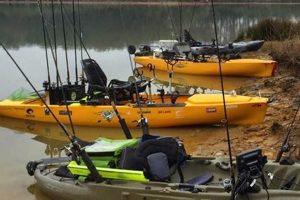
This specialized personal flotation device (PFD) is designed for anglers using kayaks, particularly in demanding conditions. Built for comfort and mobility during long hours on the water, it often features specialized pockets and attachments for fishing gear, along with a high level of buoyancy for enhanced safety. Such PFDs represent an evolution from basic life vests, incorporating design elements specific to the needs of kayak anglers.
A properly fitted and inherently buoyant PFD is crucial for safety in kayak fishing. It provides essential flotation assistance in case of capsizing or unexpected immersion, particularly in cold water or challenging currents. The evolution of these specialized PFDs has significantly improved angler safety and comfort, allowing for more extended and productive fishing trips. Their development reflects a growing awareness of the specific safety requirements of this increasingly popular sport.
This discussion will delve deeper into the key features of specialized fishing PFDs, including design considerations, material selection, and the importance of proper fit and maintenance. Further topics will address best practices for PFD use in various fishing environments and selecting the appropriate PFD for individual needs and conditions.
Tips for Selecting and Using a Fishing Kayak PFD
Choosing and utilizing a PFD designed for kayak fishing requires careful consideration of several factors to ensure optimal safety and performance on the water.
Tip 1: Prioritize Fit and Buoyancy: A properly fitted PFD allows for a full range of motion while providing adequate flotation. Ensure the PFD fits snugly without restricting movement and provides the appropriate buoyancy for the user’s weight and anticipated water conditions.
Tip 2: Consider Fishing-Specific Features: High-quality fishing PFDs often incorporate features like multiple pockets for tackle storage, attachment points for tools and accessories, and high-visibility colors for enhanced safety in low-light conditions.
Tip 3: Check for Comfort and Ventilation: Long hours on the water necessitate a comfortable and breathable PFD. Look for designs with mesh panels, adjustable straps, and lightweight construction to minimize discomfort and maximize airflow.
Tip 4: Regularly Inspect and Maintain the PFD: Check the PFD for signs of wear and tear, including frayed straps, damaged buckles, and compromised flotation foam. Follow the manufacturer’s instructions for cleaning and storage to ensure its longevity and effectiveness.
Tip 5: Practice Self-Rescue Techniques: Familiarize oneself with self-rescue techniques, including re-entering a kayak after capsizing while wearing the PFD. Practice in calm, controlled environments before venturing into more challenging waters.
Tip 6: Understand Local Regulations: Be aware of and comply with local regulations regarding PFD usage and requirements for specific waterways. Regulations may vary depending on location and type of watercraft.
Tip 7: Dress for Immersion: Recognize that even with a PFD, immersion in cold water can be dangerous. Dress appropriately for the water temperature, considering layers of insulating clothing or a dry suit for added protection.
Adhering to these guidelines contributes significantly to angler safety and preparedness on the water. Selecting the correct PFD and understanding its proper usage are essential for a safe and enjoyable fishing experience.
This information provides a foundational understanding of safe PFD practices. Consulting with experienced kayak anglers or professionals in water safety can provide further insights and guidance tailored to specific needs and environments.
1. Safety

Safety represents a paramount concern in kayak fishing, and the design of the NRS Chinook fishing PFD directly addresses this. Inherently buoyant materials ensure flotation in the event of capsizing or accidental immersion. This fundamental safety feature provides crucial time for self-rescue or assistance from others, mitigating the risk of drowning, particularly in cold water conditions where hypothermia can rapidly set in. A secure fit, achieved through adjustable straps and buckles, prevents the PFD from shifting or riding up, maintaining optimal buoyancy and reducing the risk of entanglement. High-visibility colors and reflective accents enhance visibility in low-light or foggy conditions, increasing the likelihood of being spotted by other boaters or rescue personnel. For instance, a brightly colored PFD with reflective strips can be crucial in a situation where a kayak angler is separated from their vessel in overcast conditions.
Beyond inherent buoyancy and visibility, the NRS Chinook addresses safety through features that enhance stability and reduce the risk of injury. Its design allows for a full range of motion, crucial for paddling and casting, while minimizing bulk to avoid entanglement with fishing gear or other equipment. Strategic placement of pockets and attachment points keeps essential tools and accessories within easy reach, reducing the need for disruptive movements that could compromise balance. Consider an angler navigating through strong currents; a well-designed PFD allows for unimpeded paddling, enhancing stability and control in demanding conditions.
The practical significance of prioritizing safety in PFD design is undeniable. It allows anglers to focus on the activity of fishing with reduced risk, enhancing the overall experience and contributing to a culture of responsible angling. While the NRS Chinook addresses many safety considerations, it’s crucial to remember that a PFD is just one element of a comprehensive safety approach. Regular practice of self-rescue techniques, adherence to safe boating practices, and awareness of environmental conditions remain paramount for mitigating risks associated with kayak fishing. The NRS Chinook, through its design and functionality, provides a significant contribution to angler safety but should be considered within a broader framework of responsible on-water practices.
2. Comfort

Comfort plays a pivotal role in the efficacy of a fishing kayak life jacket, directly impacting an angler’s performance and endurance. The NRS Chinook addresses comfort through several key design elements. Mesh panels promote ventilation, reducing heat buildup and perspiration during extended periods on the water. Adjustable straps allow for a customized fit, minimizing chafing and pressure points. Lightweight construction reduces overall bulk and fatigue, allowing for greater freedom of movement. Consider a scenario where an angler spends hours casting and reeling in warm weather. A PFD lacking adequate ventilation can lead to discomfort and distraction, hindering focus and potentially shortening the fishing trip. The Chinook’s focus on breathability contributes to sustained comfort, allowing anglers to remain engaged and productive.
Beyond physical comfort, the Chinook’s design contributes to a sense of security and confidence. A well-fitting PFD allows anglers to move freely and naturally, without feeling restricted or encumbered. This enhanced mobility fosters a sense of assurance and control, particularly in challenging conditions such as navigating strong currents or rough waters. Furthermore, the strategic placement of pockets and attachment points keeps essential tools and gear readily accessible, minimizing disruptive movements and maximizing efficiency. An angler can quickly access lures or tools without awkward reaching or shifting, maintaining focus and enhancing the overall fishing experience.
The emphasis on comfort in the NRS Chinook demonstrates a comprehensive approach to PFD design, recognizing its impact on angler performance and safety. By prioritizing ventilation, adjustability, and a lightweight construction, the Chinook enhances both physical comfort and psychological well-being, contributing to a more positive and productive fishing experience. While specialized features cater to the specific needs of kayak anglers, the underlying principle of comfort translates to any on-water activity where a PFD is essential. A comfortable PFD encourages consistent wear, promoting safety without compromising performance or enjoyment. This holistic approach underscores the understanding that comfort is not merely a convenience but a crucial element in promoting responsible and sustainable angling practices.
3. Storage

Ample and well-organized storage is a defining feature of the NRS Chinook fishing kayak life jacket, directly impacting angling efficiency and safety. Dedicated pockets and attachment points accommodate essential fishing tools and accessories, keeping them readily accessible while maintaining a streamlined profile. This integrated storage system minimizes the need for separate tackle boxes or bags, reducing clutter and enhancing mobility within the confined space of a kayak. Consider a fly fisherman needing quick access to various flies and tools; strategically placed pockets allow for efficient retrieval without disrupting casting rhythm or compromising balance. Similarly, a bass angler can readily switch lures without searching through a cluttered tackle box, maximizing fishing time and responsiveness to changing conditions.
The Chinook’s storage design reflects a deep understanding of kayak angling workflows. Pockets are often sized and positioned to accommodate specific items like fly boxes, pliers, line cutters, and small tackle containers. Attachment points, such as D-rings and lash tabs, provide secure locations for securing tools or attaching accessories like rod holders or landing nets. This thoughtful design promotes organization and minimizes the risk of losing essential gear, contributing to a more focused and productive fishing experience. For example, an angler navigating through dense vegetation can confidently rely on securely attached tools, reducing the risk of losing them in the event of an unexpected snag or maneuver. This level of preparedness enhances both efficiency and safety, allowing anglers to focus on fishing rather than managing equipment.
The practical significance of integrated storage extends beyond mere convenience. By keeping essential tools readily accessible, it minimizes disruptive movements and maintains a balanced center of gravity within the kayak. This enhanced stability is crucial, particularly in challenging conditions like strong currents or windy environments. Furthermore, efficient storage contributes to a safer angling experience by reducing clutter and minimizing the risk of entanglement with fishing lines or other equipment. Ultimately, the Chinook’s storage solutions reflect a holistic approach to PFD design, recognizing its interconnectedness with safety, efficiency, and overall angling performance. This integrated approach allows for a more streamlined and focused fishing experience, contributing to both angler satisfaction and responsible on-water practices.
4. Durability

Durability is paramount for a fishing kayak life jacket, ensuring reliable performance and longevity in demanding environments. The NRS Chinook addresses this through robust construction and high-quality materials. Abrasion-resistant fabrics withstand the wear and tear of regular use, including contact with rough surfaces, fishing gear, and abrasive kayak interiors. Reinforced stitching and heavy-duty buckles further enhance structural integrity, ensuring the PFD remains functional despite repeated stress and exposure to the elements. Consider a scenario where an angler frequently fishes in rocky, shallow areas; a durable PFD resists punctures and tears, maintaining its protective capabilities over extended periods. Similarly, exposure to saltwater, sun, and fluctuating temperatures requires materials that resist degradation and maintain their structural integrity. The Chinook’s robust construction addresses these challenges, providing lasting protection and value.
The practical implications of a durable PFD extend beyond simple longevity. Consistent performance in challenging conditions provides a critical safety margin, ensuring reliable flotation and protection when needed most. A durable PFD maintains its structural integrity and buoyancy even after repeated exposure to harsh elements, providing consistent performance in emergency situations. Furthermore, a well-constructed PFD resists fading and discoloration, maintaining its visibility and enhancing safety in low-light conditions. This sustained performance translates to a greater sense of security and confidence on the water, allowing anglers to focus on fishing without concern for the reliability of their safety equipment. For example, in remote fishing locations where access to replacement gear is limited, the durability of a PFD becomes even more critical. The Chinook’s robust design addresses this need, providing reliable performance in demanding and unpredictable environments.
The emphasis on durability in the NRS Chinook highlights the importance of long-term performance and value. Investing in a well-constructed PFD minimizes the need for frequent replacements, reducing long-term costs and environmental impact. Furthermore, durable construction ensures consistent safety and performance, providing peace of mind and allowing anglers to focus on the experience of fishing. This focus on durability aligns with a broader commitment to sustainable practices and responsible angling, promoting long-term enjoyment of the sport. The Chinooks design embodies this ethos, reflecting an understanding that durability is not merely a desirable feature but an essential element of a safe, reliable, and environmentally conscious approach to kayak fishing.
5. Mobility

Mobility is a critical factor in kayak fishing, and the NRS Chinook fishing kayak life jacket is designed specifically to maximize it. Unrestricted movement is essential for paddling, casting, and retrieving lines, as well as for reacting to unexpected situations like changes in current or encounters with obstacles. The Chinook achieves this through a tailored fit that avoids excess bulk and strategically placed flotation panels that do not impede arm movement. A low-profile design minimizes interference with paddling strokes, allowing for efficient propulsion and maneuverability. This is particularly important in challenging environments like swift rivers or windy lakes, where precise paddle control is essential for maintaining stability and navigating safely. Imagine a scenario where an angler needs to execute a quick brace stroke to prevent capsizing; a bulky or restrictive PFD could hinder this crucial maneuver, increasing the risk of immersion. The Chinook’s design mitigates this risk by prioritizing mobility and allowing for a full range of motion.
Furthermore, the Chinook’s design considers the specific movements required for various fishing techniques. Strategically placed pockets and attachment points keep essential tools and gear within easy reach, minimizing the need for twisting or reaching that could compromise balance. This streamlined design allows anglers to maintain a stable and comfortable fishing posture, even during extended periods on the water. For instance, a fly fisherman requires a high degree of upper body mobility for casting; a restrictive PFD would hinder this motion and reduce casting accuracy. The Chinook’s design accommodates these specialized movements, allowing anglers to execute complex techniques without impediment. Similarly, a bass angler making frequent lure changes benefits from readily accessible pockets, maximizing fishing time and efficiency.
The emphasis on mobility in the NRS Chinook’s design translates directly to enhanced safety and performance. Unrestricted movement allows for quick reactions to unexpected events, enhancing self-rescue capabilities and mitigating the risk of accidents. Furthermore, increased mobility contributes to a more comfortable and enjoyable fishing experience, allowing anglers to focus on their technique and the surrounding environment. This focus on mobility underscores the Chinook’s comprehensive approach to PFD design, recognizing its integral role in both safety and performance. By prioritizing mobility, the Chinook empowers anglers to navigate challenging conditions, execute complex techniques, and react effectively to unexpected situations, contributing to a safer, more efficient, and ultimately more rewarding fishing experience.
Frequently Asked Questions
This section addresses common inquiries regarding specialized fishing personal flotation devices (PFDs), focusing on aspects crucial for safe and effective kayak angling.
Question 1: How does one determine the correct fit for a fishing kayak PFD?
Proper fit is crucial for both safety and comfort. The PFD should fit snugly without restricting movement, allowing for a full range of motion during paddling and casting. Manufacturers provide sizing charts based on chest circumference and weight; consulting these charts and trying on different sizes are essential for determining the optimal fit. A properly fitted PFD will stay secure and provide consistent buoyancy, even in dynamic conditions.
Question 2: What are the key features to consider when selecting a fishing kayak PFD?
Essential features include high buoyancy, ample storage for fishing gear, comfortable design with adequate ventilation, and high visibility for enhanced safety. Consider specialized features like attachment points for tools, rod holders, and hydration packs depending on individual angling needs and preferences.
Question 3: How is a fishing kayak PFD different from a standard life vest?
Fishing kayak PFDs often incorporate specialized features like multiple pockets for tackle storage, attachment points for tools and accessories, and a design optimized for paddling and casting comfort. They typically offer a higher level of buoyancy and mobility compared to standard life vests, catering specifically to the demands of kayak fishing.
Question 4: How should a fishing kayak PFD be maintained to ensure optimal performance and longevity?
Regular inspection and maintenance are essential. Rinse the PFD with fresh water after each use, especially after exposure to saltwater. Allow it to air dry thoroughly in a shaded area, avoiding direct sunlight. Inspect buckles, straps, and flotation foam for signs of wear and tear, replacing any damaged components promptly. Store the PFD in a cool, dry place away from direct sunlight and extreme temperatures.
Question 5: What safety precautions should be taken when using a fishing kayak PFD?
Always wear the PFD properly secured while on the water. Practice self-rescue techniques, including re-entering the kayak after capsizing. Familiarize oneself with local regulations regarding PFD use. Be aware of weather conditions and water hazards. Inform someone of your fishing plans, including location and expected return time. Carrying a whistle, signaling device, and basic first-aid kit are also recommended safety practices.
Question 6: Can a fishing kayak PFD be used for other water sports?
While designed specifically for kayak fishing, these PFDs can often be used for other water sports where mobility and specialized storage are beneficial, such as canoeing, stand-up paddleboarding, or recreational kayaking. However, it’s crucial to ensure the PFD provides adequate buoyancy and meets the specific safety requirements of the activity. Consulting relevant safety guidelines and regulations for the intended activity is recommended.
Addressing these frequently asked questions provides a foundational understanding of safe and effective PFD practices. Continued learning through reputable sources enhances preparedness and promotes responsible angling practices.
The next section will delve deeper into advanced techniques for kayak angling, exploring strategies for navigating various water conditions and maximizing fishing success while prioritizing safety.
Conclusion
This exploration of specialized fishing personal flotation devices, exemplified by the NRS Chinook, underscores their crucial role in safe and effective kayak angling. Key aspects discussed include the PFD’s design features promoting mobility, comfort, and ample storage, alongside the paramount importance of durability and adherence to safety standards. A properly fitted and maintained PFD contributes significantly to angler safety, enabling focus on the activity of fishing with reduced risk.
Prioritizing safety through appropriate gear selection and adherence to best practices fosters a culture of responsible angling. Continued education regarding PFD selection, proper usage, and maintenance remains crucial for mitigating risks and ensuring enjoyable experiences on the water. Investing in a high-quality, specialized fishing PFD represents an investment in angler safety and promotes long-term enjoyment of the sport.