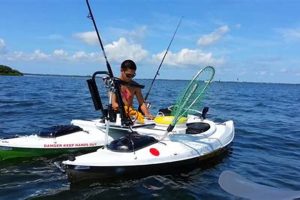
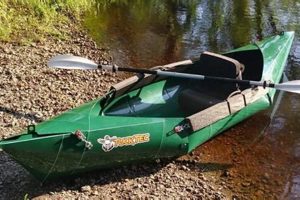
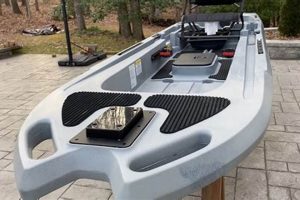
The pursuit of angling from a small, human-powered watercraft offers a unique blend of outdoor recreation and sporting challenge. This activity typically involves specialized kayaks equipped with rod holders, storage compartments, and other features designed for stability and angler convenience. Imagine navigating serene waterways, propelled by one’s own strength, casting lines into promising fishing spots accessible only by smaller vessels.
This form of fishing provides a low-impact way to experience nature, promoting physical activity and offering a sense of accomplishment beyond simply catching fish. It allows access to shallow waters and secluded areas often unreachable by larger boats, increasing the chances of encountering diverse aquatic life. Historically, kayaks have been used for fishing and transportation for millennia by various cultures, demonstrating the enduring appeal of this intimate connection with water and wildlife.
The following sections will explore various aspects of this rewarding pursuit, covering topics such as essential equipment, safety considerations, popular fishing locations, and techniques for maximizing success on the water.
Tips for Successful Outings
Careful planning and preparation contribute significantly to enjoyable and productive fishing excursions from a kayak. The following tips offer valuable guidance for both novice and experienced anglers.
Tip 1: Prioritize Safety Equipment. A properly fitted personal flotation device (PFD) is paramount. Carrying a whistle, visual distress signals, and a communication device enhances safety in unexpected situations. A first-aid kit and basic repair tools should also be on board.
Tip 2: Choose Appropriate Kayaks and Gear. Kayak selection depends on the intended fishing environment (calm lakes, rivers, or open ocean). Stability, storage capacity, and specialized features like rod holders should be considered. Rods, reels, and tackle should be suited to the target fish species.
Tip 3: Research Fishing Locations and Regulations. Understanding local fishing regulations, licensing requirements, and catch limits is essential. Researching potential fishing spots beforehand, including water depths, currents, and prevalent species, improves the likelihood of success.
Tip 4: Practice Essential Kayak Maneuvers. Confidence in controlling the kayak, especially in wind or current, is crucial. Practicing basic paddling strokes, turning techniques, and self-rescue procedures enhances safety and maneuverability on the water.
Tip 5: Plan for Weather Conditions. Checking weather forecasts before embarking on any fishing trip is essential. Wind, rain, and changing temperatures can significantly impact safety and comfort. Dressing in layers and packing appropriate rain gear is advisable.
Tip 6: Employ Effective Fishing Techniques. Adapting fishing techniques to the specific environment and target species increases catch rates. Techniques like trolling, casting, and jigging may be employed, depending on the situation.
Tip 7: Respect Wildlife and the Environment. Practicing catch-and-release whenever possible helps preserve fish populations. Properly disposing of fishing line and other waste minimizes environmental impact. Maintaining a safe distance from wildlife ensures their well-being and avoids disturbances.
By adhering to these guidelines, anglers can maximize their chances of a safe, rewarding, and environmentally responsible experience on the water.
These tips provide a foundation for planning a successful outing. The subsequent conclusion offers final thoughts and recommendations.
1. Planning

Thorough planning forms the cornerstone of successful and enjoyable kayak fishing adventures. A well-structured plan mitigates potential risks, optimizes time on the water, and increases the likelihood of a productive and fulfilling experience. Overlooking this crucial preparatory phase can lead to unforeseen challenges, safety concerns, and diminished overall satisfaction.
- Location Selection
Choosing an appropriate fishing location involves considering factors such as target species, water conditions, accessibility, and local regulations. Researching potential spots beforehand, including water depth, currents, and prevalent species, improves the likelihood of success. For instance, targeting trout might lead an angler to a cool, flowing river, while seeking bass might involve exploring a shallow, weedy lake. Consulting maps, online resources, and local fishing reports provides valuable insights for informed decision-making.
- Equipment Preparation
Assembling and checking essential equipment beforehand ensures a smooth and efficient outing. This includes verifying the kayak’s condition, ensuring proper functioning of rods and reels, organizing tackle, and packing safety gear such as a PFD, whistle, and communication device. A pre-trip checklist can prevent frustrating discoveries of missing or malfunctioning equipment upon arrival at the fishing destination.
- Weather Assessment
Monitoring weather forecasts is crucial for safety and comfort. Wind speed, direction, and precipitation can significantly impact kayak stability and fishing conditions. Postponing a trip due to adverse weather demonstrates responsible decision-making and prioritizes safety. Checking forecasts from reliable sources and understanding local weather patterns contribute to a well-informed assessment.
- Time Management
Establishing a realistic timeframe for the fishing adventure allows for a more relaxed and enjoyable experience. Factoring in travel time to and from the location, launching and retrieving the kayak, and anticipated fishing duration helps avoid rushing and maximizes time on the water. A well-defined schedule contributes to a more organized and fulfilling outing.
These interconnected planning elements contribute significantly to the overall success of a kayak fishing adventure. By carefully considering location, equipment, weather, and time management, anglers can enhance their safety, optimize their fishing efforts, and cultivate a more rewarding experience on the water. Neglecting these crucial preparatory steps can jeopardize safety, compromise fishing success, and detract from the overall enjoyment of the adventure.
2. Safety

Safety stands as a paramount concern in kayak fishing adventures, directly influencing the success and enjoyment of the experience. The inherent risks associated with navigating waterways in a small vessel necessitate a proactive and comprehensive approach to safety protocols. Neglecting these precautions can lead to serious consequences, ranging from equipment damage and minor injuries to life-threatening situations. A clear understanding of potential hazards and the implementation of appropriate safety measures are crucial for mitigating these risks.
Several factors contribute to potential safety issues during kayak fishing excursions. Environmental conditions, such as changing weather patterns, strong currents, and unexpected waves, can create instability and pose navigation challenges. Equipment malfunctions, including paddle breakage or kayak leaks, can compromise maneuverability and safety. Human error, such as improper paddling technique or inadequate preparation, can also contribute to accidents. For example, venturing out without checking weather forecasts can expose anglers to sudden storms or high winds, creating hazardous conditions on the water. Similarly, neglecting to wear a personal flotation device (PFD) significantly increases the risk of drowning in the event of a capsize. Understanding these potential hazards and taking appropriate preventative measures are essential for ensuring a safe and enjoyable outing.
Implementing a multi-layered safety approach is crucial for mitigating risks associated with kayak fishing. This involves pre-trip planning, including checking weather forecasts, informing someone of the planned route and estimated return time, and packing essential safety gear. Wearing a PFD at all times is non-negotiable. Carrying a whistle, visual distress signals, and a communication device, such as a waterproof cell phone or VHF radio, enhances preparedness for emergencies. Regularly inspecting and maintaining kayaking equipment, including the kayak itself, paddles, and fishing gear, helps prevent malfunctions on the water. Finally, continuous awareness of surroundings, including other vessels, changing weather conditions, and potential obstacles, contributes to proactive risk management. By embracing a comprehensive safety strategy, anglers can significantly reduce potential hazards and enhance their overall enjoyment of kayak fishing adventures.
3. Equipment

Specialized equipment plays a crucial role in successful and enjoyable kayak fishing adventures. The right gear enhances safety, improves fishing effectiveness, and contributes to overall comfort on the water. Selecting appropriate equipment involves considering factors such as the fishing environment, target species, and personal preferences. An informed approach to equipment selection significantly impacts the quality of the angling experience.
- Kayak Selection
Kayak choice depends on the intended fishing environment (calm lakes, rivers, or open ocean). Sit-on-top kayaks offer stability and ease of re-entry after a capsize, making them suitable for beginners and warmer climates. Sit-inside kayaks provide better protection from the elements and enhanced paddling efficiency, but require more experience for self-rescue. Specialized fishing kayaks often feature built-in rod holders, storage compartments, and other angler-specific features.
- Paddle Choice
Paddle selection influences paddling efficiency and comfort. Lightweight paddles reduce fatigue during long outings. Paddle length depends on factors such as kayak width, paddler height, and paddling style. Durable materials, such as fiberglass or carbon fiber, offer a balance of performance and longevity.
- Fishing Gear
Rods, reels, and tackle should be suited to the target fish species and the fishing environment. Shorter rods are often preferred for kayak fishing due to space constraints. Spinning reels and baitcasting reels are common choices, each offering specific advantages. Tackle selection includes lures, hooks, lines, and weights appropriate for the target species.
- Safety Equipment
Essential safety gear includes a properly fitted personal flotation device (PFD), a whistle, visual distress signals, and a communication device. A first-aid kit, basic repair tools, and a bilge pump (for sit-inside kayaks) are also recommended. These items enhance preparedness for unexpected situations and contribute to overall safety on the water.
The careful selection and proper utilization of these equipment components contribute significantly to a positive kayak fishing experience. Investing in high-quality, appropriate gear enhances safety, improves fishing success, and promotes long-term enjoyment of this rewarding outdoor activity. Matching equipment to specific needs and conditions ensures optimal performance and fosters a deeper connection with the sport.
4. Location

Location profoundly influences kayak fishing adventures, impacting accessibility, target species, and overall experience. The chosen locale dictates the character of the outing, from tranquil lakes to rushing rivers or vast ocean expanses. Each environment presents unique opportunities and challenges, shaping the angler’s approach and potential rewards. Choosing a suitable location involves careful consideration of several factors, including the angler’s skill level, desired species, and prevailing conditions.
Accessibility plays a crucial role in location selection. Some fishing spots require lengthy paddles, portages, or specialized launch sites, while others offer convenient access from shore or established boat ramps. For example, remote mountain lakes might offer exceptional trout fishing but demand significant physical effort to reach, while urban canals might provide easy access to panfish populations but lack the solitude of wilderness settings. The physical demands and logistical considerations of each location must be carefully evaluated against the angler’s capabilities and preferences. Furthermore, understanding local regulations, such as permitted fishing zones, licensing requirements, and catch limits, is essential for responsible angling.
Target species vary significantly across different locations, influencing tackle choices, fishing techniques, and overall expectations. Calm freshwater lakes might harbor bass, panfish, and pike, while fast-flowing rivers might hold trout and salmon. Coastal saltwater environments offer diverse opportunities for pursuing species like redfish, snook, and flounder. Researching the prevalent species in a chosen location allows anglers to tailor their equipment and techniques accordingly. Additionally, understanding fish behavior and habitat preferences within a specific location enhances the chances of a successful outing. Factors like water temperature, depth, and structure influence fish distribution and feeding patterns, providing valuable insights for anglers. By carefully considering these elements, anglers can maximize their chances of encountering their desired species and enhance their overall fishing experience.
5. Technique
Effective angling techniques are essential for successful kayak fishing adventures. The confined space and unique challenges of fishing from a kayak necessitate adapting traditional techniques and adopting specialized approaches. Technique selection depends on factors such as target species, water conditions, and the specific fishing environment. Mastery of fundamental techniques and the ability to adapt to changing circumstances significantly influence fishing outcomes.
Casting accuracy and efficiency become paramount when fishing from a kayak. Limited space restricts casting motions, requiring anglers to develop precise and controlled casts. Sidearm casts and underhand casts are often employed to avoid obstructions and maximize casting distance within the confines of the kayak. Additionally, maintaining kayak stability during the casting process is crucial for both safety and accuracy. Proper weight distribution and controlled body movements prevent tipping and ensure a stable platform for casting. For example, when targeting bass near overhanging branches, a precise sidearm cast is often necessary to place the lure accurately in the strike zone without snagging the surrounding vegetation. Similarly, when fishing in strong currents, employing a controlled underhand cast helps keep the line tight and maintain contact with the lure, improving sensitivity and hookset potential.
Controlling a kayak effectively while simultaneously managing fishing gear presents a unique challenge. Techniques like anchoring, drifting, and paddling into position optimize fishing presentations and allow anglers to cover water efficiently. Anchoring provides stability in specific locations, allowing for targeted fishing of structure or cover. Drifting with the current allows for natural bait presentations and covers a wider area. Paddling into position offers precise control for targeting specific areas or following schools of fish. For instance, anchoring near a submerged reef allows anglers to repeatedly present lures to fish holding in the structure. Drifting along a weed line provides opportunities to target fish ambushing prey from the cover. Paddling quietly along a shoreline allows anglers to sight-fish for cruising species. Adapting these techniques to the prevailing conditions and target species significantly enhances fishing success.
6. Environment

The environment plays a critical role in kayak fishing adventures, shaping the experience and influencing angling success. Understanding the interplay between natural elements, fish behavior, and human interaction is crucial for responsible and rewarding fishing practices. Respecting and preserving the aquatic environment ensures the sustainability of this recreational activity for future generations. This section explores several key environmental facets and their connection to kayak fishing.
- Water Quality
Water quality directly impacts fish health and abundance. Factors such as temperature, dissolved oxygen, and turbidity influence fish behavior and distribution. Kayak anglers can contribute to water quality preservation by avoiding the use of harmful chemicals, properly disposing of fishing line and other waste, and reporting pollution incidents to relevant authorities. For example, excessive nutrient runoff can lead to algal blooms, depleting oxygen levels and harming fish populations. Kayak anglers, by practicing responsible waste disposal and advocating for clean water initiatives, can contribute to a healthier aquatic environment.
- Habitat Preservation
Protecting aquatic habitats is essential for maintaining healthy fish populations. Structures like submerged vegetation, fallen logs, and rocky reefs provide shelter, spawning grounds, and foraging areas for various fish species. Kayak anglers can minimize habitat disturbance by avoiding shallow-water areas with sensitive vegetation, refraining from anchoring on delicate coral reefs, and practicing catch-and-release whenever possible. For instance, anchoring directly on seagrass beds can damage these important habitats, which serve as nurseries for many fish species. By choosing anchoring locations carefully, kayak anglers can minimize their impact on these fragile ecosystems.
- Weather Patterns
Weather conditions significantly influence kayak fishing adventures, affecting safety, fish behavior, and overall angling success. Wind, rain, and temperature fluctuations impact water conditions, fish activity, and angler comfort. Monitoring weather forecasts, understanding local weather patterns, and adapting fishing strategies accordingly are essential for a safe and productive outing. For example, strong winds can create challenging paddling conditions and limit access to certain fishing areas. By checking wind forecasts and choosing sheltered locations, kayak anglers can enhance safety and improve their fishing experience.
- Conservation Efforts
Participating in conservation efforts contributes to the long-term health and sustainability of aquatic ecosystems. Supporting local conservation organizations, participating in habitat restoration projects, and advocating for responsible fishing regulations are essential for preserving fish populations and their environments. For instance, volunteering for shoreline cleanup events helps remove debris that can harm fish and pollute waterways. By actively engaging in conservation initiatives, kayak anglers can contribute to the long-term health and sustainability of the fisheries they enjoy.
These interconnected environmental factors underscore the importance of responsible kayak fishing practices. By understanding the delicate balance of aquatic ecosystems and adopting sustainable angling techniques, kayak anglers can minimize their impact and contribute to the preservation of these valuable natural resources. The enjoyment derived from kayak fishing adventures carries a responsibility to protect the environment that sustains this rewarding recreational pursuit.
7. Experience
Experience forms an integral component of kayak fishing adventures, shaping not only the success of angling endeavors but also the overall enjoyment and appreciation of the pursuit. Accumulated experience influences decision-making processes, enhances adaptability to changing conditions, and fosters a deeper connection with the natural environment. This iterative process, built upon repeated outings and lessons learned, transforms novice anglers into seasoned practitioners, capable of navigating diverse challenges and maximizing the rewards of kayak fishing.
The impact of experience manifests in various aspects of kayak fishing. Novices often grapple with basic kayak control, efficient paddling techniques, and accurate casting within the confined space of the vessel. These initial challenges gradually diminish as experience accumulates, replaced by a fluid integration of paddling, casting, and fish-fighting techniques. Similarly, experienced anglers develop a refined understanding of fish behavior, habitat preferences, and effective lure presentations, leading to increased angling success. For example, a seasoned angler might recognize subtle changes in water clarity or current flow as indicators of fish presence, while a novice might overlook these cues. Furthermore, experience fosters a heightened awareness of safety considerations, allowing anglers to anticipate potential hazards, react effectively to unexpected situations, and prioritize risk mitigation on the water. An experienced angler, for instance, might recognize the signs of an approaching storm and seek shelter proactively, while a novice might be caught unprepared.
Cultivating experience involves a continuous cycle of learning and adaptation. Each outing presents opportunities to refine techniques, experiment with different approaches, and learn from both successes and failures. Keeping a fishing journal, documenting locations, weather conditions, successful techniques, and lessons learned, provides a valuable resource for future outings. Seeking guidance from experienced kayak anglers, joining local fishing clubs, and participating in guided fishing trips can accelerate the learning process. The practical significance of this understanding lies in the recognition that experience is not merely a byproduct of time spent on the water but a conscious pursuit of knowledge, skill development, and a deeper appreciation for the complexities of kayak fishing. By embracing challenges, seeking continuous improvement, and respecting the dynamic interplay between angler, environment, and target species, kayak fishing adventures evolve from rudimentary outings into enriching and rewarding experiences.
Frequently Asked Questions
This section addresses common inquiries regarding kayak fishing adventures, providing concise and informative responses to facilitate informed decision-making and enhance understanding of this popular recreational activity.
Question 1: What are the essential safety precautions for kayak fishing?
Prioritizing safety is paramount. Essential precautions include wearing a properly fitted personal flotation device (PFD), carrying a whistle, visual distress signals, and a communication device. Checking weather forecasts before embarking and informing someone of the planned route and estimated return time are crucial safety measures. Regularly inspecting kayak and fishing equipment ensures proper functioning and mitigates potential risks.
Question 2: What type of kayak is best suited for fishing?
Kayak selection depends on the intended fishing environment and personal preferences. Sit-on-top kayaks offer stability and ease of re-entry after a capsize, making them suitable for beginners. Sit-inside kayaks provide better protection from the elements and enhanced paddling efficiency, but may require more experience. Specialized fishing kayaks often feature built-in rod holders, storage compartments, and other angler-specific features.
Question 3: What essential fishing gear is required for kayak fishing?
Essential gear includes rods, reels, and tackle appropriate for the target species. Shorter rods are often preferred for kayak fishing due to space constraints. Spinning reels and baitcasting reels are common choices. Tackle selection includes lures, hooks, lines, and weights suited to the target fish and fishing environment. A tackle box or bag helps organize and protect fishing gear.
Question 4: How does one choose a suitable location for kayak fishing?
Location selection involves considering factors such as target species, accessibility, water conditions, and local regulations. Researching potential spots beforehand, including water depths, currents, and prevalent species, improves the likelihood of success. Consulting maps, online resources, and local fishing reports provides valuable insights for informed decision-making. Respecting private property and adhering to access restrictions is essential.
Question 5: What are some effective fishing techniques for kayak anglers?
Effective techniques include trolling, casting, and jigging, adapted to the specific environment and target species. Trolling involves dragging lures behind the moving kayak. Casting allows for targeted presentations to specific areas. Jigging involves vertically presenting lures to attract fish near the bottom. Adapting techniques to the prevailing conditions and fish behavior increases catch rates.
Question 6: How can kayak anglers minimize their environmental impact?
Minimizing environmental impact involves practicing catch-and-release whenever possible, properly disposing of fishing line and other waste, and respecting aquatic habitats. Avoiding shallow-water areas with sensitive vegetation, refraining from anchoring on delicate coral reefs, and adhering to local regulations contribute to environmental preservation. Participating in conservation efforts and supporting local organizations further promotes responsible angling practices.
These responses provide a foundational understanding of key aspects related to kayak fishing adventures. Further research and practical experience will enhance proficiency and contribute to safe and rewarding angling excursions.
The next section offers concluding thoughts and recommendations for those embarking on kayak fishing adventures.
Conclusion
This exploration of kayak fishing adventures has highlighted the multifaceted nature of this rewarding pursuit. From essential equipment and safety considerations to location selection, effective techniques, and environmental responsibility, various factors contribute to successful and fulfilling experiences. The importance of careful planning, informed decision-making, and continuous learning has been emphasized throughout this discourse.
Kayak fishing offers a unique opportunity to connect with nature, challenge oneself physically and mentally, and experience the thrill of angling in a deeply immersive manner. The pursuit encourages an intimate understanding of aquatic ecosystems, fostering respect for the environment and a commitment to sustainable practices. As individuals seek enriching outdoor experiences and sustainable recreational activities, the allure of kayak fishing adventures promises continued growth and exploration, enriching lives and fostering a deeper appreciation for the natural world.