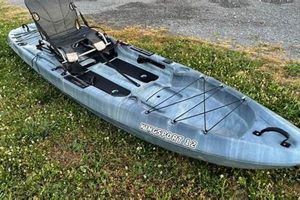
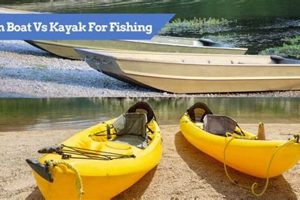
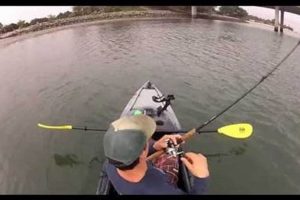
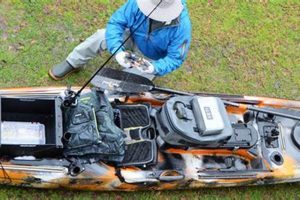
This type of kayak is designed for anglers venturing into more remote or challenging waters. Typically longer and wider than recreational kayaks, these vessels offer enhanced stability, ample storage for fishing gear, and features like rod holders, anchor trolleys, and livewells. Imagine paddling across a large lake, navigating a slow-moving river, or exploring coastal estuaries with all the necessary equipment readily accessible.
The increased stability and storage capacity make these specialized watercraft ideal for longer fishing trips and expeditions. They provide anglers with a platform to confidently navigate varied water conditions while carrying essential gear, including tackle boxes, rods, and even camping supplies for overnight adventures. This ability to travel further and stay out longer opened up new possibilities for recreational fishing, allowing access to previously unreachable fishing grounds.
This exploration of specialized kayaks will further delve into specific design features, materials, propulsion systems, and popular models available to anglers. Subsequent sections will also cover essential safety equipment, paddling techniques, and responsible fishing practices for those seeking adventure on the water.
Tips for Extended Kayak Fishing Trips
Preparation and careful planning are crucial for successful and safe extended fishing trips using this type of kayak. These tips offer guidance for maximizing enjoyment and minimizing potential risks.
Tip 1: Plan the Route and Check Weather Conditions: Thorough route planning is essential. Research potential hazards, identify accessible launch and landing points, and familiarize oneself with local regulations. Checking weather forecasts before and during the trip is critical for safety.
Tip 2: Pack Essential Safety Gear: A personal flotation device (PFD), a signaling whistle, a first-aid kit, and a communication device are non-negotiable. Navigation lights are essential for low-light conditions. A bilge pump and paddle float can assist in recovery from a capsize.
Tip 3: Distribute Weight Evenly: Proper weight distribution enhances stability and maneuverability. Heavy items should be positioned low and centrally within the kayak. Avoid overloading the vessel, as this compromises performance and safety.
Tip 4: Practice Paddling and Self-Rescue Techniques: Familiarity with basic paddling strokes and self-rescue techniques is vital for handling unexpected situations. Practice these skills in calm water before venturing into more challenging conditions.
Tip 5: Inform Someone of Trip Plans: Always inform someone about the intended route, estimated return time, and emergency contacts. This ensures that assistance can be sought if needed.
Tip 6: Respect Wildlife and the Environment: Practice Leave No Trace principles. Pack out all trash, minimize disturbance to wildlife, and adhere to fishing regulations. Responsible enjoyment of natural resources ensures their preservation for future generations.
Tip 7: Stay Hydrated and Nourished: Bring plenty of water and snacks to maintain energy levels throughout the trip. Proper hydration and nutrition are crucial for physical performance and mental alertness.
By adhering to these guidelines, anglers can enhance their safety and enjoyment while experiencing the rewards of extended kayak fishing trips. Careful preparation allows for greater focus on the fishing experience itself.
These tips offer a foundation for successful kayak fishing excursions. The following section will delve into specific techniques for various fishing styles and species.
1. Stability

Stability is a paramount consideration in explorer fishing kayaks, directly influencing safety and fishing effectiveness. A stable platform provides a secure foundation for casting, reeling, and landing fish, particularly in challenging conditions such as open water or currents. This discussion explores key facets contributing to kayak stability.
- Hull Design:
Hull design significantly impacts stability. Wider hulls generally offer greater initial stability, resisting tipping during stationary activities like casting. Longer hulls tend to track straighter, beneficial in windy conditions. Specialized hull designs, such as pontoon hulls or multi-hull configurations, maximize stability, particularly advantageous for stand-up fishing. A wider, flatter hull provides a more stable platform compared to a narrow, V-shaped hull, which prioritizes speed over stability. This is particularly important in an explorer fishing kayak where anglers might be carrying gear and making movements that could shift their center of gravity.
- Weight Distribution:
Proper weight distribution is crucial for maintaining balance and stability. Distributing gear evenly and low within the kayak lowers the center of gravity, enhancing stability. Uneven weight distribution can lead to instability and difficulty maneuvering. For instance, storing heavy items towards the stern can cause the bow to rise, increasing susceptibility to wind and waves. Careful packing and balancing of gear are essential for safe and efficient paddling.
- Water Conditions:
Water conditions significantly influence kayak stability. Calm, flat water presents fewer challenges compared to choppy water or strong currents. Wind and waves can destabilize a kayak, requiring increased focus and paddle control. Understanding how different water conditions impact stability is crucial for safe navigation. Anglers should adapt their paddling technique and body positioning to maintain balance in varying conditions.
- Angler’s Center of Gravity:
The angler’s center of gravity plays a vital role in overall stability. Maintaining a low center of gravity improves balance. Sudden movements or leaning beyond the kayak’s stability limits can lead to capsizing. Maintaining a balanced posture and avoiding abrupt shifts in weight are crucial for maintaining stability, especially when casting, reeling, or landing fish.
These facets collectively determine an explorer fishing kayak’s stability characteristics. Selecting a kayak with appropriate stability features for the intended fishing environment and angler’s experience level is crucial for a safe and enjoyable experience. Prioritizing stability ensures a secure platform for fishing, allowing anglers to focus on their technique and the pursuit of their target species.
2. Storage Capacity

Storage capacity is a defining feature of explorer fishing kayaks, directly impacting their suitability for extended trips and diverse fishing styles. Adequate storage facilitates carrying essential gear, enhancing both safety and fishing effectiveness. This exploration delves into the critical facets of storage capacity in these specialized kayaks.
- Types of Storage Compartments:
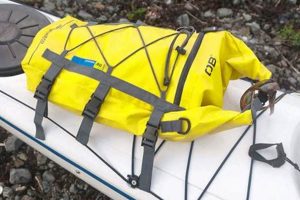
Explorer fishing kayaks offer various storage options, including front and rear hatches, tank wells, side pockets, and integrated storage compartments. Hatches provide secure storage for larger items like camping gear or extra clothing, while tank wells accommodate coolers or tackle crates. Smaller items like tools, lures, and safety gear can be stored in side pockets or dedicated compartments. The diversity of storage options allows anglers to organize and readily access their equipment based on individual needs and preferences.
- Capacity and Weight Limits:
Understanding the kayak’s weight capacity and the volume of its storage compartments is crucial. Exceeding the weight limit compromises stability and performance. The storage volume determines the amount of gear that can be carried comfortably. Matching the kayak’s capacity to the anticipated gear requirements is essential for planning successful expeditions. For example, multi-day trips necessitate greater storage volume compared to shorter excursions. Matching capacity to needs ensures safe and efficient operation.
- Accessibility and Organization:
Easy access to stored gear enhances efficiency and minimizes disruption during fishing. Well-designed storage compartments with strategically placed access points allow for retrieving items without compromising stability. Organizing gear within the compartments optimizes space utilization and facilitates quick retrieval of specific items when needed. Features like waterproof hatches or bags protect sensitive equipment from water damage, while dedicated compartments for specific gear, such as rods or tackle boxes, enhance organization and accessibility.
- Impact on Performance:
The amount and distribution of stored gear influence the kayak’s performance. Excessive weight reduces speed and maneuverability. Proper weight distribution maintains balance and optimizes tracking. Understanding the impact of storage on performance is crucial for efficient paddling and maneuvering, particularly in challenging conditions. Overloading a kayak can negatively impact its stability and make it more difficult to control, especially in wind or currents.
These facets of storage capacity are integral to the functionality of an explorer fishing kayak. The ability to carry ample gear securely and efficiently expands fishing opportunities, allowing anglers to venture further and stay out longer while remaining prepared for diverse situations. Careful consideration of storage capacity is paramount when selecting a kayak for specific fishing needs and expedition goals.
3. Durability
Durability is a critical attribute for explorer fishing kayaks, given their use in demanding environments. These kayaks frequently encounter harsh conditions, including rocky shorelines, submerged obstacles, and extended exposure to sunlight and saltwater. A durable construction ensures the kayak withstands these rigors, maintaining its structural integrity and extending its lifespan. Construction materials, hull design, and manufacturing processes directly influence a kayak’s ability to resist damage and maintain performance over time. For instance, a kayak constructed from high-density polyethylene (HDPE) will generally exhibit greater impact resistance compared to one made from a less robust material. Similarly, reinforced hulls and decks further enhance durability, protecting against punctures and abrasion. Investing in a durable kayak minimizes the risk of costly repairs and ensures reliable performance throughout extended fishing expeditions.
The practical significance of durability extends beyond simply withstanding impacts. UV resistance prevents material degradation from prolonged sun exposure, preserving the kayak’s structural integrity and aesthetics. Resistance to abrasion from dragging the kayak across sand or gravel protects the hull from damage. Durable hardware, such as handles, latches, and rudder systems, ensures continued functionality in harsh conditions. Consider a scenario where an angler needs to land on a rocky shore; a durable hull minimizes the risk of damage, while robust hardware ensures the kayak can be securely transported. These considerations highlight the practical importance of durability in ensuring a kayak’s longevity and reliable performance over time.
In summary, durability is a non-negotiable characteristic for explorer fishing kayaks. The selection of appropriate construction materials, reinforced hull designs, and robust hardware directly contributes to a kayak’s ability to withstand challenging environments and maintain performance over extended periods. Prioritizing durability ensures a reliable and long-lasting vessel capable of supporting diverse fishing adventures, ultimately enhancing the overall fishing experience.
4. Comfort

Comfort is a crucial factor influencing performance and enjoyment in explorer fishing kayaks, especially during extended trips. Discomfort can detract from the fishing experience, leading to fatigue, reduced focus, and potentially even premature termination of the trip. Consider a scenario where an angler experiences back pain or leg cramps due to an uncomfortable seating position; this can hinder their ability to cast effectively, react quickly to a fish strike, or simply enjoy the surrounding environment. Therefore, prioritizing comfort enhances not only the overall experience but also the angler’s ability to fish effectively.
Several elements contribute to comfort in an explorer fishing kayak. The seat design plays a pivotal role; adjustable seating systems allow anglers to customize the position for optimal back support and legroom. Padding and breathable materials enhance comfort during long hours on the water. Footrests or adjustable foot braces provide essential support and stability, contributing to a more comfortable and efficient paddling posture. Ample cockpit space allows for freedom of movement and reduces feelings of confinement. Features like adjustable backrests, lumbar support, and padded armrests further contribute to overall comfort. In addition to these structural elements, accessories like padded seat cushions and backrests can further personalize the comfort level. For anglers planning overnight trips, integrating comfortable sleeping arrangements within the kayak or on a nearby shore becomes paramount.
The practical significance of comfort extends beyond mere enjoyment. A comfortable angler is a more focused and effective angler. Reduced fatigue allows for longer fishing sessions, increased alertness to fish activity, and quicker reaction times when a fish strikes. Moreover, proper posture and support minimize the risk of developing musculoskeletal issues, promoting long-term health and well-being. Therefore, investing in a comfortable explorer fishing kayak is an investment in both immediate and long-term fishing success. Prioritizing comfort is not a luxury but a crucial factor that directly influences performance, endurance, and overall enjoyment of the fishing experience.
5. Maneuverability

Maneuverability is a critical performance attribute in explorer fishing kayaks, directly influencing their effectiveness in diverse environments. These kayaks are designed for navigating a variety of water conditions, from open lakes and rivers to coastal estuaries and protected bays. Effective maneuvering enables anglers to access shallow coves, navigate around obstacles like submerged logs or rocks, and position the kayak optimally for casting and retrieving lines. Consider a scenario where an angler needs to navigate a narrow, winding creek lined with overhanging branches; a highly maneuverable kayak allows for precise adjustments and efficient progress through confined spaces. Conversely, a less maneuverable kayak might struggle in such environments, limiting access to prime fishing spots and potentially hindering the overall fishing experience.
Several factors contribute to a kayak’s maneuverability. Hull design plays a significant role; shorter kayaks with a moderate rocker (the curvature of the hull from bow to stern) generally offer greater maneuverability than longer, flatter-hulled kayaks. The presence of a rudder or skeg system can significantly enhance tracking and turning performance, especially in windy or current-prone conditions. Paddle length and blade shape also influence maneuverability; shorter paddles with wider blades provide greater leverage for quick turns, while longer, narrower blades prioritize straight-line speed. Furthermore, the kayak’s weight and the distribution of weight within the hull affect its responsiveness to paddle strokes and turning forces. A lighter kayak with evenly distributed weight generally maneuvers more easily than a heavier, unevenly loaded kayak. Understanding these factors enables informed decision-making when selecting a kayak suited to specific fishing environments and individual paddling styles.
The practical implications of maneuverability extend beyond simply navigating complex waterways. Enhanced maneuverability translates to greater efficiency in positioning the kayak for optimal casting angles, retrieving lures effectively through varied structures, and reacting quickly to fish strikes. In dynamic fishing situations, the ability to reposition the kayak swiftly and precisely can be the difference between landing a trophy fish and losing it to obstacles or changing currents. Therefore, prioritizing maneuverability in an explorer fishing kayak is essential for maximizing fishing effectiveness and overall success on the water. A highly maneuverable kayak empowers anglers to explore diverse environments, access prime fishing locations, and respond effectively to the dynamic nature of fishing, ultimately enhancing their chances of a successful and rewarding experience.
6. Specialized Features

Specialized features distinguish explorer fishing kayaks from recreational models, optimizing them for angling pursuits. These features enhance functionality, efficiency, and overall fishing success. Cause and effect relationships exist between these specialized features and the kayak’s performance. For example, integrated rod holders directly impact an angler’s ability to manage multiple rods effectively, increasing fishing opportunities. Similarly, the presence of an anchor trolley system allows for precise boat positioning in current, directly influencing fishing effectiveness. These features are not mere add-ons; they are integral components that transform a standard kayak into a dedicated fishing platform. Consider a scenario where an angler encounters a strong crosswind; an effectively deployed anchor trolley maintains boat position, allowing for consistent lure presentation and improved hook-up rates. This illustrates the practical significance of specialized features in real-world fishing scenarios.
Further analysis reveals the nuanced impact of specialized features. Features like integrated fish finders and GPS systems extend the angler’s reach and enhance their ability to locate fish. Livewells maintain the health and vitality of caught fish, promoting ethical catch-and-release practices. Specialized storage compartments designed for tackle boxes, rods, and other fishing gear optimize organization and access, streamlining the fishing process. Even seemingly minor features like paddle parks or integrated cup holders contribute to overall efficiency and enjoyment. The thoughtful integration of these features reflects a deep understanding of angler needs and the practical realities of fishing from a kayak. For instance, a well-designed paddle park keeps the paddle secure and within easy reach, preventing accidental loss and minimizing disruptions during critical fishing moments.
In summary, specialized features are essential components of explorer fishing kayaks, directly contributing to their effectiveness as dedicated fishing platforms. These features are not superfluous additions but rather integral elements that enhance functionality, efficiency, and overall fishing success. Understanding the purpose and practical application of these features empowers anglers to make informed choices when selecting a kayak and to utilize its capabilities fully on the water. While the specific features deemed essential may vary depending on individual fishing styles and target species, recognizing their importance in enhancing the fishing experience remains paramount.
Frequently Asked Questions
This section addresses common inquiries regarding explorer fishing kayaks, providing concise and informative responses to facilitate informed decision-making and enhance understanding of these specialized vessels.
Question 1: What differentiates an explorer fishing kayak from a recreational kayak?
Explorer fishing kayaks are purpose-built for angling, featuring specialized design elements like rod holders, increased storage capacity for tackle and gear, and enhanced stability for casting and reeling. Recreational kayaks prioritize leisurely paddling and general-purpose use, often lacking these specialized features.
Question 2: How stable are explorer fishing kayaks, particularly in challenging conditions?
Stability varies depending on hull design, water conditions, and weight distribution. Wider, flatter hulls generally offer greater initial stability. Proper weight distribution and adherence to manufacturer guidelines enhance stability in various conditions. However, caution and appropriate safety measures remain essential in adverse weather or strong currents.
Question 3: What is the typical storage capacity of an explorer fishing kayak?
Storage capacity varies considerably depending on the kayak’s length and design. Explorer kayaks typically offer ample storage for fishing gear, including dedicated compartments for tackle boxes, rods, and other equipment. Weight capacity limits must be observed to maintain stability and performance.
Question 4: What materials are commonly used in the construction of explorer fishing kayaks, and how do they impact durability?
Common construction materials include high-density polyethylene (HDPE), fiberglass, and composites. HDPE offers excellent impact resistance and durability. Fiberglass and composites provide greater rigidity and lighter weight, often at a higher price point. Material selection influences the kayak’s overall durability, weight, and performance characteristics.
Question 5: How important is comfort in an explorer fishing kayak, and what features contribute to it?
Comfort is crucial for extended fishing trips. Adjustable seating systems, padded backrests, and ergonomic footrests contribute significantly to angler comfort. Proper seating posture and adequate support minimize fatigue and enhance overall fishing enjoyment.
Question 6: What factors influence the maneuverability of an explorer fishing kayak?
Hull design, length, and the presence of a rudder or skeg system influence maneuverability. Shorter kayaks with a moderate rocker tend to be more maneuverable. Rudder systems enhance directional control, particularly in wind or current. Weight and weight distribution also impact turning performance.
Careful consideration of these frequently asked questions facilitates informed selection and optimal utilization of an explorer fishing kayak, maximizing enjoyment and success on the water.
This FAQ section provides a foundational understanding of explorer fishing kayaks. The following sections will delve deeper into specific models, paddling techniques, and advanced fishing strategies.
Conclusion
Explorer fishing kayaks represent a specialized class of watercraft designed to facilitate adventurous angling pursuits. Key attributes including stability, storage capacity, durability, comfort, maneuverability, and specialized features contribute significantly to their effectiveness in diverse fishing environments. Analysis of these core elements underscores the importance of informed selection based on individual needs and intended usage. Proper consideration of these factors empowers anglers to maximize their fishing potential while ensuring safety and enjoyment on the water.
The evolution of kayak design and the increasing popularity of kayak fishing underscore the enduring appeal of human-powered exploration and the pursuit of angling adventures. As technology continues to advance and angler expertise grows, the future of explorer fishing kayaks promises further innovation and enhanced opportunities for connecting with aquatic environments. Careful consideration of the factors discussed herein empowers anglers to make informed decisions, contributing to a more rewarding and sustainable approach to kayak fishing exploration.