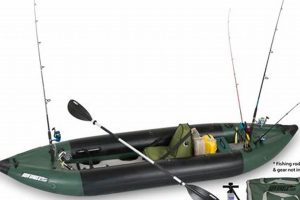
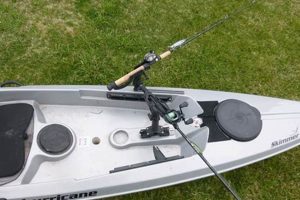
Protective barriers designed specifically for fishing kayaks shield these vessels from the elements, including sun, rain, snow, and dust. These specialized covers often incorporate features like adjustable straps, vents for breathability, and durable, waterproof materials. A typical example might be a form-fitting cover made from UV-resistant polyester with an elastic hem for a snug fit.
Shielding a kayak from harsh weather conditions preserves its hull and fishing-specific accessories, extending the lifespan of the vessel and reducing maintenance needs. Protection from sun damage, in particular, prevents fading and material degradation. Historically, kayaks were protected with simple tarpaulins or animal hides. The development of specialized covers reflects advancements in materials science and the increasing popularity of kayak fishing, offering superior protection tailored to the unique shapes and features of modern fishing kayaks.
Understanding the function and advantages of such protective gear lays the foundation for informed decisions regarding material selection, design considerations, and proper usage. Further exploration will delve into topics such as different cover types, material properties, sizing, and proper care and maintenance.
Tips for Selecting and Using Kayak Covers
Appropriate selection and usage of kayak covers ensures optimal protection and prolongs the lifespan of the vessel. The following tips offer guidance for maximizing the benefits of these protective barriers.
Tip 1: Consider the kayak’s dimensions. Accurate measurement ensures a proper fit, preventing excessive flapping or overly tight stretching. Measure the length and width of the kayak to select a cover size that corresponds appropriately.
Tip 2: Evaluate material durability and UV resistance. Durable, UV-resistant fabrics offer superior protection against sun damage, extending the life of the kayak’s hull and accessories. Materials such as marine-grade polyester or solution-dyed acrylic provide excellent longevity.
Tip 3: Assess environmental conditions. Local climate and storage conditions should inform material choices. Regions with intense sun exposure necessitate covers with high UV protection, while areas prone to heavy rain or snow require robust waterproofing.
Tip 4: Inspect for proper ventilation. Adequate ventilation prevents moisture buildup and mildew formation beneath the cover. Look for covers with built-in vents or breathable fabrics to promote air circulation.
Tip 5: Secure the cover properly. Properly fastened covers withstand wind and prevent displacement. Utilize straps, buckles, and drawstrings to secure the cover snugly to the kayak.
Tip 6: Clean and dry the cover regularly. Regular cleaning removes dirt, debris, and salt buildup, maintaining the cover’s integrity and appearance. Allow the cover to dry completely before storage to prevent mildew growth.
Tip 7: Store the cover properly when not in use. Proper storage prevents damage and prolongs the cover’s lifespan. Store the cover in a clean, dry location, away from direct sunlight and extreme temperatures.
Adherence to these guidelines ensures optimal protection against environmental factors, preserving the kayak’s condition and enhancing its longevity.
By understanding the various factors influencing cover selection and implementing proper usage practices, one can maximize the benefits of these protective investments and enjoy countless hours on the water.
1. Material Durability

Material durability represents a critical factor in the effectiveness of fishing kayak covers. Covers constructed from robust materials withstand the rigors of outdoor exposure, including UV radiation, abrasion, and moisture. This resilience translates directly into prolonged lifespan and sustained protection for the kayak. For instance, solution-dyed acrylic fabrics offer inherent resistance to fading and degradation from sunlight, while ripstop polyester weaves provide exceptional tear strength against snags and abrasions. Selecting a cover crafted from durable materials safeguards the kayak’s hull and components from environmental damage, preserving its value and functionality over time.
The practical significance of material durability extends beyond mere longevity. A durable cover requires less frequent replacement, reducing long-term costs and minimizing environmental impact. Furthermore, robust materials maintain their protective qualities over extended periods, ensuring consistent shielding against the elements. Consider a kayak frequently transported on a roof rack; a cover made from a durable, abrasion-resistant material will better withstand the friction and wind forces encountered during travel. Conversely, a cover constructed from a less durable material might tear or degrade quickly under such conditions, compromising its protective capabilities.
In conclusion, prioritizing material durability in the selection of a fishing kayak cover constitutes a crucial investment in the vessel’s long-term preservation. The ability of the cover to withstand environmental stressors directly impacts the kayak’s condition and lifespan. Understanding the connection between material durability and effective protection empowers informed decisions and contributes to a positive ownership experience.
2. UV Resistance

Ultraviolet (UV) radiation from sunlight poses a significant threat to the longevity and structural integrity of kayaks. UV resistance in fishing kayak covers plays a crucial role in mitigating this damage, preserving the kayak’s appearance and performance over time. Understanding the various facets of UV resistance enables informed decisions regarding cover selection and contributes to the long-term preservation of the vessel.
- Material Degradation:
Prolonged exposure to UV radiation can cause fading, cracking, and weakening of kayak hull materials, particularly plastics and composites. UV-resistant covers act as a barrier, absorbing or reflecting harmful UV rays and preventing them from reaching the kayak’s surface. For example, a kayak stored outdoors without a UV-resistant cover might exhibit significant fading and become brittle after a single season, while a covered kayak retains its color and flexibility. This protection translates directly into a longer lifespan for the kayak.
- Protection of Accessories:
Fishing kayaks often feature specialized accessories, such as rod holders, seat cushions, and electronic equipment. These components are also susceptible to UV damage. A UV-resistant cover shields these accessories, extending their lifespan and maintaining their functionality. Consider fishing line left exposed to sunlight; it can become weakened and prone to breakage. Similarly, kayak seats can fade and crack under intense UV exposure. A UV-resistant cover mitigates these effects, preserving the integrity and appearance of essential fishing gear.
- Long-Term Cost Savings:
Investing in a UV-resistant cover represents a proactive measure that reduces long-term costs associated with kayak maintenance and repair. By preventing UV damage, the cover minimizes the need for repairs or replacements of the hull, accessories, and other components. For example, replacing a faded or cracked kayak hull can be a significant expense. A UV-resistant cover helps avoid this cost by preventing the damage in the first place. This cost-effectiveness makes UV resistance a crucial consideration in cover selection.
- Cover Longevity:
The UV resistance of the cover itself is also a key factor. Covers made from UV-resistant materials maintain their integrity and effectiveness over extended periods. This durability ensures continued protection for the kayak and reduces the frequency of cover replacement. Some covers utilize specialized coatings or additives that enhance UV resistance. These features contribute to the cover’s longevity, ensuring consistent performance and maximizing the return on investment.
In conclusion, UV resistance is a critical factor influencing the effectiveness and longevity of fishing kayak covers. By understanding the multifaceted impact of UV radiation on kayaks and their accessories, and by recognizing the protective role of UV-resistant covers, kayak anglers can make informed decisions that contribute to the preservation of their vessels and enhance their overall fishing experience. The long-term benefits of UV protection, including cost savings and extended lifespan, underscore the importance of this feature in selecting a high-quality fishing kayak cover.
3. Fit and Sizing

Proper fit and sizing are paramount for fishing kayak covers to provide optimal protection and functionality. An ill-fitting cover compromises its ability to shield the kayak from environmental elements and can lead to damage during transport and storage. Understanding the nuances of fit and sizing ensures effective protection and contributes to the overall longevity of the vessel.
- Length and Width Dimensions:
Accurate measurement of the kayak’s length and width is essential for selecting a correctly sized cover. Covers are typically categorized by size ranges corresponding to kayak dimensions. A cover that is too short leaves portions of the kayak exposed to the elements, while an excessively long cover can create billowing and flapping, increasing the risk of wind damage. Similarly, an improperly sized width can result in a loose fit, allowing water to pool and debris to accumulate beneath the cover, or an overly tight fit, potentially stressing the cover’s seams and material. Precise measurement ensures a snug, protective fit.
- Cockpit and Hatch Configurations:
Fishing kayaks often feature cockpits and hatches of varying sizes and shapes. Covers must accommodate these features to provide complete protection. Some covers incorporate dedicated cockpit and hatch openings with adjustable closures to ensure a secure fit around these areas. Others offer a more universal design that relies on adjustable straps and drawstrings to conform to different kayak configurations. Considering cockpit and hatch dimensions during cover selection ensures proper coverage and prevents water intrusion.
- Style and Design Variations:
Cover styles range from form-fitting designs that closely follow the contours of the kayak to looser, more universal styles. Form-fitting covers offer superior protection against wind and water intrusion, while looser covers provide easier installation and removal. Some covers feature elastic hems or drawstrings that allow for adjustments to achieve a snugger fit. Understanding the different styles and their corresponding fit characteristics helps determine the most appropriate cover for a specific kayak and usage scenario. For example, a kayak stored outdoors in a windy environment benefits from a form-fitting cover, while a kayak stored indoors might suffice with a looser, more easily managed cover.
- Impact on Transportation and Storage:
Properly fitted covers streamline transportation and storage. A snug fit minimizes wind resistance during transport on a roof rack, reducing noise and potential damage. Moreover, a well-fitting cover prevents the accumulation of dust, debris, and moisture during storage, preserving the kayak’s condition and reducing cleaning requirements. Conversely, an ill-fitting cover can create difficulties during transport, such as flapping and shifting, and may not adequately protect the kayak during storage, leading to potential damage from environmental factors.
In conclusion, the interplay between fit and sizing significantly influences the effectiveness of fishing kayak covers. Accurate measurement, consideration of cockpit and hatch configurations, understanding style variations, and acknowledging the impact on transportation and storage are crucial aspects of selecting and utilizing a cover effectively. A properly fitted cover safeguards the kayak from environmental elements, streamlines transport and storage, and ultimately contributes to the longevity and enjoyment of the vessel.
4. Breathability/Ventilation

Breathability and ventilation are critical factors in preserving a fishing kayak’s condition, particularly during storage. A cover that allows for adequate air circulation minimizes the risk of moisture buildup, mildew formation, and unpleasant odors. Understanding the role of breathability and ventilation in kayak cover design contributes significantly to the long-term care and maintenance of the vessel.
- Moisture Prevention:
Trapped moisture beneath a non-breathable cover creates a breeding ground for mildew and mold. These fungi can damage the kayak’s hull and accessories, leading to discoloration, weakening of materials, and unpleasant odors. Adequate ventilation allows moisture to evaporate, preventing its accumulation and mitigating the risk of fungal growth. For example, a kayak stored in a humid environment without a breathable cover is highly susceptible to mildew, while a kayak covered with a breathable material remains dry and protected.
- Temperature Regulation:
Breathable covers aid in regulating the temperature beneath the cover. Excessive heat buildup can damage sensitive kayak components, such as electronic equipment and fishing line. Ventilation allows for heat dissipation, preventing extreme temperature fluctuations that could compromise the integrity of these materials. For instance, a kayak stored in direct sunlight can reach high temperatures under a non-breathable cover. A breathable cover allows for some air circulation, moderating the temperature and reducing the risk of heat damage.
- Odor Control:
Stagnant air trapped beneath a non-breathable cover can lead to the development of musty odors, particularly if the kayak is stored wet or in a humid environment. Breathable covers facilitate air circulation, preventing odor buildup and maintaining a fresh scent. This aspect contributes to a more pleasant user experience when uncovering the kayak for the next fishing trip.
- Material Integrity:
While breathability is essential, the cover material must still provide adequate protection against the elements. Breathable fabrics are often designed with microscopic pores that allow air to pass through while preventing water penetration. This balance of breathability and weather resistance is crucial for maintaining the kayak’s condition and preventing damage from rain, dust, or UV radiation. Some covers utilize waterproof yet breathable membranes to achieve this balance, offering superior protection while allowing for adequate ventilation.
In conclusion, the incorporation of breathability and ventilation in fishing kayak covers plays a crucial role in preserving the vessel’s condition and prolonging its lifespan. By preventing moisture buildup, regulating temperature, controlling odors, and maintaining material integrity, breathable covers contribute significantly to the long-term care and enjoyment of a fishing kayak. Selecting a cover that balances breathability with weather resistance ensures comprehensive protection and minimizes the risks associated with prolonged storage.
5. Secure Fastening
Secure fastening mechanisms are integral to the effectiveness of fishing kayak covers. These mechanisms ensure the cover remains firmly in place, safeguarding the kayak from environmental elements and preventing damage during transport and storage. A securely fastened cover resists wind displacement, prevents water intrusion, and deters the accumulation of debris. Conversely, inadequate fastening compromises the cover’s protective capabilities and can lead to damage. For example, a loosely fastened cover might detach during highway travel, exposing the kayak to wind, rain, and road debris. Similarly, a cover that shifts during storage can allow dust, moisture, and pests to reach the kayak’s surface.
Several fastening methods contribute to a secure fit. Adjustable straps with buckles provide a customizable and robust attachment system, conforming to the kayak’s contours and withstanding wind forces. Elastic hems and drawstrings create a snug fit around the kayak’s perimeter, further enhancing wind resistance and preventing the ingress of water and debris. Shock cord systems offer flexibility and adaptability, accommodating variations in kayak shape and size. The selection of appropriate fastening mechanisms depends on factors such as the cover’s design, the kayak’s dimensions, and the anticipated storage and transport conditions. A kayak frequently transported on a roof rack requires robust straps and buckles, while a kayak stored indoors might suffice with a simpler drawstring closure.
The practical significance of secure fastening extends beyond mere protection. A securely fastened cover simplifies transport and storage, reducing the risk of damage and preserving the kayak’s condition. It also contributes to peace of mind, assuring the kayak remains protected during transit and storage. Furthermore, robust fastening mechanisms enhance the cover’s longevity, reducing the need for replacements and minimizing long-term costs. Addressing the challenges of secure fastening ensures the cover functions as intended, providing reliable protection and contributing to the overall enjoyment and lifespan of the fishing kayak.
Frequently Asked Questions about Fishing Kayak Covers
This section addresses common inquiries regarding fishing kayak covers, providing concise and informative responses to facilitate informed decision-making and proper usage.
Question 1: What are the primary benefits of using a fishing kayak cover?
Protection from UV radiation, weather elements (rain, snow, dust), and physical damage (scratches, dents) during storage and transport constitute the primary advantages. Covers also contribute to maintaining the kayak’s appearance and extending its lifespan.
Question 2: How does one determine the correct cover size for a fishing kayak?
Accurate measurement of the kayak’s length and width, considering cockpit and hatch dimensions, is crucial. Consulting manufacturer specifications or retailer guidance ensures appropriate sizing and optimal fit.
Question 3: What materials are commonly used in the construction of fishing kayak covers?
Durable, weather-resistant materials such as marine-grade polyester, solution-dyed acrylic, and ripstop nylon are frequently employed. Material selection often reflects specific needs regarding UV protection, water resistance, and abrasion resistance.
Question 4: How important is breathability in a fishing kayak cover?
Breathability is vital for preventing moisture buildup, mildew formation, and unpleasant odors, particularly during storage. Vents or breathable fabrics facilitate air circulation, preserving the kayak’s condition.
Question 5: What are the key features to look for in secure fastening mechanisms for a kayak cover?
Adjustable straps with buckles, elastic hems, drawstrings, and shock cord systems contribute to a secure fit. The choice of mechanism depends on individual needs and anticipated storage/transport conditions.
Question 6: How should one care for and maintain a fishing kayak cover?
Regular cleaning with mild soap and water removes dirt and debris. Thorough drying before storage prevents mildew growth. Proper storage in a cool, dry place extends the cover’s lifespan.
Careful consideration of these frequently asked questions equips individuals with the knowledge necessary to select and utilize fishing kayak covers effectively, maximizing protection and preserving the kayak’s condition over time.
For further information, consult specialized resources or contact reputable kayak retailers for expert guidance.
Fishing Kayak Covers
Appropriate selection and utilization of fishing kayak covers represent essential practices for responsible kayak ownership. This exploration has highlighted the multifaceted benefits of these protective barriers, emphasizing the importance of material durability, UV resistance, proper fit and sizing, breathability, and secure fastening mechanisms. Each element contributes significantly to the preservation of a fishing kayak’s condition, ensuring its longevity and maximizing its performance on the water. Investing in a high-quality cover constitutes a proactive measure that safeguards the kayak from environmental degradation, reduces maintenance requirements, and enhances the overall fishing experience.
Ultimately, the proper use of fishing kayak covers reflects a commitment to preserving valuable equipment and promoting sustainable practices within the kayaking community. Informed decisions regarding cover selection and diligent adherence to proper usage guidelines contribute not only to the longevity of individual kayaks but also to the collective responsibility of minimizing environmental impact. Continued exploration of advancements in materials and design will further refine protective strategies, ensuring optimal preservation of these essential vessels for future generations of kayak anglers.