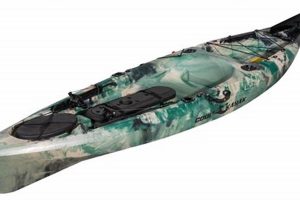
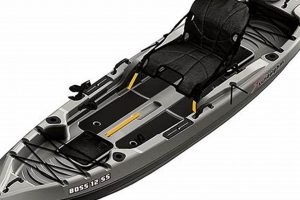
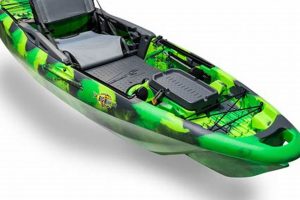
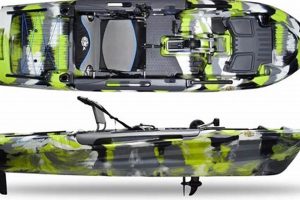
These small, motorized watercraft combine the maneuverability of a kayak with the speed and range of a jet-propelled vessel. A compact, internal propulsion system eliminates the need for an external propeller, allowing navigation in shallow waters and areas with submerged obstacles, such as weeds or rocks. This type of propulsion offers a distinct advantage for anglers seeking access to hard-to-reach fishing spots.
The integration of jet propulsion significantly enhances the fishing experience by expanding navigable waters and reducing travel time between locations. This efficiency allows anglers to dedicate more time to fishing rather than paddling. The relatively recent development of compact, powerful, and reliable jet systems has made this innovative approach to kayak fishing increasingly popular. This rising popularity stems from the desire for efficient and versatile fishing platforms capable of accessing previously inaccessible areas.
This discussion will further explore the advantages and disadvantages of this technology, considering factors such as cost, maintenance, environmental impact, and the various types of watercraft available to anglers. A detailed analysis of key features will provide prospective buyers with the information necessary to make informed purchasing decisions.
Tips for Utilizing Jet-Powered Fishing Kayaks
Effective use of these specialized watercraft requires careful consideration of several factors, from pre-trip planning to on-the-water operation. Adherence to these guidelines can maximize fishing success and ensure safe operation.
Tip 1: Pre-Trip Planning: Thorough research of potential fishing locations is essential. Water depth, currents, and potential obstacles should be assessed before embarking. Consulting nautical charts and local fishing reports is recommended.
Tip 2: Battery Management: Understanding battery capacity and range is crucial. Always carry a fully charged battery and consider bringing a spare for extended trips. Monitor battery levels throughout the excursion to avoid unexpected power loss.
Tip 3: Safety Gear: Standard safety equipment, including a personal flotation device (PFD), a whistle, and a signaling device, is mandatory. Navigation lights are essential for low-light conditions. A first-aid kit and communication device should also be included.
Tip 4: Maintenance: Regular maintenance of the jet propulsion system is vital for optimal performance. Follow manufacturer guidelines for flushing the system after each use, especially in saltwater environments, to prevent corrosion and buildup.
Tip 5: Shallow Water Operation: Exercise caution when operating in shallow water. While the jet drive allows access to these areas, submerged obstacles can still pose a risk. Reduce speed and proceed cautiously in unfamiliar waters.
Tip 6: Respecting the Environment: Minimize environmental impact by adhering to no-wake zones and avoiding sensitive habitats such as spawning areas. Proper disposal of fishing line and other waste is crucial.
Tip 7: Weather Awareness: Check weather forecasts before heading out and remain vigilant for changing conditions. Wind, waves, and fog can impact navigation and safety. Be prepared to adjust plans or return to shore if necessary.
Adhering to these guidelines will enhance safety and enjoyment while maximizing the potential of this specialized fishing platform. Careful planning and responsible operation contribute significantly to a successful and rewarding fishing experience.
This information provides a solid foundation for leveraging the advantages of jet-powered fishing kayaks. The following sections will delve into specific product recommendations and advanced techniques for anglers seeking to optimize their fishing experience.
1. Shallow Water Access

Shallow water access represents a significant advantage of jet-powered fishing kayaks. Traditional propeller-driven boats often struggle in shallows due to the risk of propeller damage from submerged obstacles like rocks, logs, or vegetation. Jet propulsion systems, however, draw water in and expel it through a nozzle, eliminating exposed propeller blades and the associated risks. This fundamental difference allows jet-powered kayaks to navigate shallow areas inaccessible to conventional motorized boats, opening up a wealth of fishing opportunities in previously unreachable waters. For instance, shallow flats, backwater creeks, and protected marshes, often teeming with fish, become viable fishing grounds with this technology.
This capability significantly expands the fishing range within a given body of water. Anglers can exploit shallow-water habitats favored by specific species, such as redfish tailing in the shallows or bass lurking amidst submerged vegetation. Furthermore, the ability to navigate shallows provides an advantage in reaching secluded areas less pressured by other anglers. This strategic advantage can translate directly to increased fishing success. The absence of a protruding propeller also minimizes disturbance of the aquatic environment, potentially reducing the impact on fish behavior and improving the chances of a successful catch.
The capacity to access shallow water with jet-powered fishing kayaks provides a distinct advantage in diverse fishing scenarios. This feature broadens fishing opportunities, improves stealth, and enhances the overall fishing experience. While other factors, such as battery life and maintenance requirements, are important considerations, the ability to navigate shallows remains a defining characteristic of this evolving technology and a key driver of its increasing popularity among anglers.
2. Increased fishing range
Increased fishing range represents a significant advantage offered by jet-powered fishing kayaks. Unlike traditional paddle kayaks, which limit anglers to areas within paddling distance, the motorized propulsion system expands the accessible fishing grounds considerably. This expanded range unlocks new fishing opportunities and contributes to a more versatile and efficient angling experience. The following facets explore the implications of this increased range in greater detail.
- Exploration of Distant Locations
Jet propulsion enables anglers to reach distant fishing spots previously inaccessible within a reasonable timeframe. This capability allows exploration of remote coves, distant shorelines, and offshore structures, significantly expanding the potential fishing area. For example, anglers can travel further upriver, explore larger lakes more comprehensively, or venture further offshore to access reefs and other deep-water structures.
- Reduced Travel Time
Motorized propulsion significantly reduces travel time between fishing spots. This efficiency allows anglers to spend more time fishing and less time paddling, maximizing their time on the water. Instead of expending energy paddling long distances, anglers can conserve their strength for fishing and cover more ground in search of active fish. This is particularly beneficial in larger bodies of water or when navigating against currents or wind.
- Access to Multiple Fishing Spots
The increased range allows anglers to visit multiple fishing spots within a single outing. This flexibility enables them to adapt to changing conditions, explore different habitats, and target a wider variety of species. For instance, an angler might start the day fishing shallow flats, then move to deeper channels, and finally explore a rocky point, all within the same trip.
- Enhanced Fishing Efficiency
The ability to quickly and effortlessly move between locations enhances overall fishing efficiency. Anglers can cover more water, explore a wider variety of habitats, and respond rapidly to changing conditions such as bird activity or shifting tides. This dynamic approach maximizes the chances of locating active fish and increases the potential for a successful fishing trip.
The increased fishing range offered by jet-powered kayaks significantly enhances the angling experience. By reducing travel time, expanding access to distant locations, and facilitating exploration of multiple fishing spots, these kayaks empower anglers to fish more efficiently and effectively, ultimately increasing their chances of success. This advantage, coupled with features like shallow water access and hands-free propulsion, solidifies the position of jet-powered kayaks as a valuable tool for the serious angler.
3. Hands-Free Propulsion
Hands-free propulsion distinguishes jet-powered fishing kayaks from traditional paddle kayaks, offering significant advantages in terms of fishing efficiency and overall experience. Eliminating the need for continuous paddling frees the angler’s hands for essential fishing tasks, leading to a more focused and productive outing. This feature is particularly valuable in various fishing scenarios, enhancing both the ease and effectiveness of angling techniques.
- Enhanced Focus on Fishing Techniques
Without the constant demand of paddling, anglers can dedicate their full attention to fishing techniques. This allows for precise lure presentation, immediate hooksets, and efficient handling of fish. For example, anglers can focus on manipulating a fly rod, controlling a trolling spread, or managing fishing lines without the interruption of paddling.
- Improved Line Management and Lure Control
Hands-free operation facilitates precise line management and lure control. Anglers can maintain optimal line tension, detect subtle bites, and react quickly to strikes without the distraction of paddling. This is particularly important in techniques like jigging or drift fishing, where maintaining direct contact with the lure is crucial.
- Increased Situational Awareness
With both hands available, anglers can better observe their surroundings, scan for signs of fish activity, and respond to changing conditions. This enhanced situational awareness allows for quicker adjustments to fishing strategies and increases the likelihood of successful catches. For example, spotting bird activity or subtle surface disturbances becomes easier, allowing anglers to react quickly and target feeding fish.
- Reduced Physical Strain
Eliminating the physical exertion of paddling reduces fatigue, allowing anglers to fish longer and more comfortably. This is particularly beneficial for anglers with physical limitations or during extended fishing trips. Conserved energy can be redirected toward other critical aspects of fishing, such as fighting fish or navigating challenging waters.
Hands-free propulsion fundamentally changes the fishing kayak experience. By freeing the angler’s hands, it enhances focus on fishing techniques, improves line management, increases situational awareness, and reduces physical strain. These combined advantages contribute to a more efficient, comfortable, and ultimately more successful fishing experience, solidifying the value proposition of jet-powered fishing kayaks for serious anglers.
4. Weedless Operation

Weedless operation constitutes a significant advantage of jet-powered fishing kayaks, particularly in heavily vegetated waters. Unlike propeller-driven boats prone to entanglement in weeds, the enclosed impeller design of a jet drive significantly reduces weed fouling. This allows for seamless navigation through dense vegetation, opening access to prime fishing habitats often inaccessible to traditional motorized watercraft. The impact of this capability on fishing success warrants closer examination.
The ability to navigate weed-choked areas provides a strategic advantage by allowing anglers to target fish holding in these productive environments. Bass, for example, often ambush prey from within thick weed beds, making these locations prime fishing spots. Similarly, panfish and other species utilize vegetation for cover and foraging. Jet-powered kayaks enable anglers to penetrate these habitats without constantly clearing fouled propellers, maximizing fishing time and increasing the likelihood of encountering fish. In contrast, propeller-driven boats frequently become entangled, requiring repeated stops to remove weeds, disrupting fishing and potentially spooking fish.
The practical significance of weedless operation extends beyond simply reaching fish-holding areas. It also allows for more effective presentation of lures and baits. Anglers can retrieve lures through and around vegetation without snagging, mimicking the natural movement of prey and enticing strikes. Furthermore, the reduced noise and vibration associated with jet drives compared to traditional outboards minimize disturbance to the aquatic environment, increasing stealth and improving the chances of a successful catch. While jet drives are not entirely immune to occasional weed intake, the significantly reduced frequency and ease of clearing obstructions compared to propellers represent a substantial improvement for anglers seeking access to vegetated waters. This capability ultimately enhances fishing efficiency and expands opportunities for targeting species that thrive in these environments.
5. Maneuverability

Maneuverability represents a critical advantage of jet-powered fishing kayaks, significantly enhancing their effectiveness in various fishing scenarios. The jet propulsion system, unlike traditional outboard motors or paddle propulsion, offers precise and responsive control, allowing for intricate navigation in complex environments. This heightened maneuverability stems from the directional thrust of the jet stream, enabling quick turns, rapid stops, and precise adjustments in position. This characteristic proves particularly valuable in tight quarters, such as navigating through narrow creeks, around submerged obstacles, or along densely vegetated shorelines. For example, pursuing fish in a labyrinthine mangrove forest or maneuvering around a fallen tree in a narrow river channel becomes significantly easier with the responsive control offered by a jet-powered kayak.
The practical significance of this enhanced maneuverability extends beyond simply navigating challenging terrain. It also directly impacts fishing success. Precise boat control enables anglers to position themselves optimally for casting, presenting lures accurately to target areas, and maintaining ideal position relative to fish-holding structures. For instance, an angler can hold a kayak steady in a current while precisely drifting a bait along a drop-off, or quickly reposition the kayak to follow a school of moving fish. Furthermore, the ability to make tight turns and rapid adjustments proves invaluable when fighting fish, allowing anglers to maintain control and avoid line tangles or break-offs, particularly in challenging environments. This responsive control is crucial in landing larger fish that might otherwise pull a less maneuverable craft off course.
In summary, the exceptional maneuverability afforded by jet-powered fishing kayaks is a defining feature that significantly enhances their fishing utility. This precise control translates directly to improved fishing efficiency and success, enabling anglers to navigate complex waters, position themselves strategically for casting, and maintain control while fighting fish. While other factors, such as speed and range, contribute to the overall performance of these kayaks, maneuverability remains a key differentiator and a crucial element to consider for anglers seeking to maximize their on-the-water effectiveness.
6. Rapid Acceleration

Rapid acceleration constitutes a significant advantage of jet-powered fishing kayaks, contributing to their effectiveness in dynamic fishing situations. Unlike paddle-powered kayaks or those with slower acceleration profiles, these kayaks provide near-instantaneous bursts of speed, enabling anglers to react quickly to changing conditions and opportunities. This responsiveness proves crucial in various fishing scenarios, from pursuing fleeting targets to navigating rapidly changing currents.
- Capitalizing on fleeting opportunities
Rapid acceleration allows anglers to capitalize on fleeting opportunities, such as pursuing a school of surface-feeding fish or quickly reaching a spot where birds are diving. This responsiveness can be the difference between reaching the action in time and missing the opportunity entirely. The immediate thrust provided by the jet drive ensures that anglers can exploit these time-sensitive situations effectively.
- Navigating changing currents and tides
Swift currents and shifting tides often present challenges for anglers. Jet-powered kayaks, with their rapid acceleration, provide the necessary power to navigate these dynamic waters effectively. Anglers can quickly adjust their position, maintain control in strong currents, and efficiently traverse changing tidal flows. This responsiveness ensures stability and maneuverability in challenging conditions.
- Precise boat control for fighting fish
When fighting strong fish, rapid acceleration can be crucial for maintaining control and preventing line breaks. A quick burst of speed can help turn a fish away from obstacles or adjust the kayak’s position to gain leverage. This precise control minimizes the risk of losing a fish due to inadequate boat handling.
- Efficient repositioning for optimal casting
Rapid acceleration allows anglers to quickly reposition their kayak for optimal casting angles. This is particularly important in sight fishing or when targeting specific structures. The ability to swiftly adjust position ensures accurate lure presentation and maximizes the chances of a successful hookup.
The rapid acceleration offered by jet-powered fishing kayaks enhances their versatility and effectiveness in diverse fishing environments. This responsiveness empowers anglers to react decisively to changing circumstances, pursue fleeting targets, navigate challenging waters, and ultimately maximize their fishing success. While other factors, such as maneuverability and stability, contribute to the overall performance of these kayaks, rapid acceleration distinguishes them as a highly effective tool for the serious angler.
Frequently Asked Questions
This section addresses common inquiries regarding jet-powered fishing kayaks, providing concise and informative responses to clarify potential concerns and misconceptions.
Question 1: How does a jet-powered fishing kayak’s propulsion system differ from a traditional propeller-driven outboard motor?
A jet drive draws water into an impeller housing and expels it through a nozzle, creating thrust. Unlike propellers, there are no exposed blades, minimizing the risk of entanglement in vegetation or impact with submerged objects. This design also allows operation in shallower water.
Question 2: What are the typical maintenance requirements for a jet drive system?
Regular flushing of the jet drive system, especially after use in saltwater, is crucial to prevent salt buildup and corrosion. Periodic inspection of the impeller and intake grate for debris is also recommended. Manufacturers typically provide detailed maintenance schedules.
Question 3: What is the typical range of a jet-powered fishing kayak on a single battery charge?
Range varies depending on battery capacity, kayak design, speed, and water conditions. However, many models offer a range of several hours of operation at moderate speeds, allowing for extended fishing trips.
Question 4: Are jet-powered fishing kayaks significantly louder than traditional paddle kayaks?
While jet drives produce some noise, they are generally quieter than traditional outboard motors. Modern jet systems are designed to minimize noise and vibration, reducing disturbance to the aquatic environment and enhancing stealth.
Question 5: What are the key safety considerations when operating a jet-powered fishing kayak?
Standard boating safety precautions apply, including wearing a personal flotation device (PFD), carrying a whistle and signaling device, and adhering to navigational rules. Awareness of water depth, currents, and weather conditions is essential. Knowledge of basic boat handling skills is also recommended.
Question 6: What are the typical costs associated with owning and operating a jet-powered fishing kayak?
Initial purchase costs are typically higher than traditional kayaks due to the integrated motor and battery system. Operating costs include battery charging and periodic maintenance of the jet drive system. Long-term expenses may include battery replacement.
Addressing these common questions provides a clearer understanding of the technology and its practical application. Prospective buyers should carefully consider these factors in conjunction with individual fishing needs and preferences.
The following sections will delve into specific models and brands, offering a comparative analysis to assist in informed purchasing decisions.
Conclusion
Analysis of jet-powered fishing kayaks reveals significant advantages for anglers seeking enhanced access and efficiency. Shallow water navigation, increased range, hands-free propulsion, weedless operation, superior maneuverability, and rapid acceleration combine to create a versatile fishing platform. While cost and maintenance considerations warrant attention, the benefits offered significantly expand fishing opportunities, particularly in challenging environments. Understanding these core functionalities empowers informed decision-making for anglers evaluating this evolving technology.
The evolution of fishing kayak technology continues to refine the angling experience. As advancements in battery technology, propulsion systems, and kayak design progress, the capabilities and accessibility of these specialized craft will likely expand further. Careful consideration of individual fishing needs and priorities remains crucial for leveraging these advancements effectively. The future of kayak fishing promises enhanced efficiency and access, driven by ongoing innovation in this specialized field.