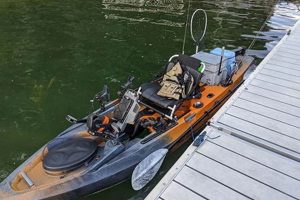
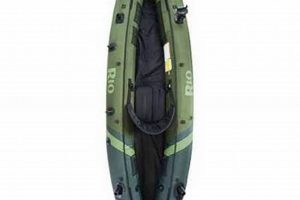
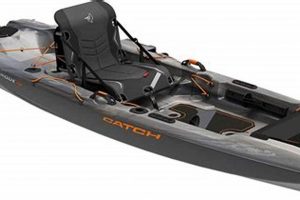
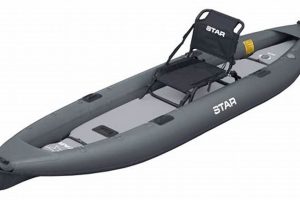
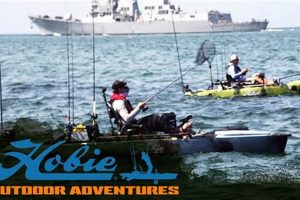
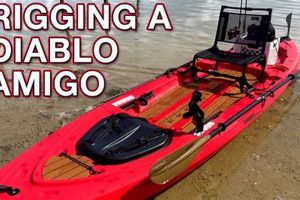
A sit-on-top vessel designed for angling, the specific model in question is manufactured by Perception Kayaks. These watercraft are typically characterized by stability, specialized storage for rods and tackle, and often feature mounting points for fish finders and other accessories. An example would be an angler using a brightly colored, self-propelled model in a calm lake, employing specialized rod holders to target bass.
This type of specialized small watercraft provides anglers with access to shallow waters and secluded fishing spots often inaccessible to larger boats. The relatively low cost of entry compared to motorized boats, combined with the health benefits of paddling, contributes to the increasing popularity of this style of fishing. This approach to angling has evolved from basic recreational kayaks adapted for fishing into purpose-built vessels with features tailored to the needs of serious anglers.
Further exploration of this topic might include discussions of specific features, comparisons with other fishing kayaks, selection guidance, and responsible angling practices. Detailed information on propulsion systems, seating options, and integrated technology can also enhance understanding of the utility and versatility of these vessels.
Tips for Kayak Fishing
Successful angling from a kayak requires preparation and adherence to specific techniques. These tips offer guidance for enhancing safety and improving fishing outcomes.
Tip 1: Prioritize Safety Equipment: Always wear a personal flotation device (PFD). Carry a whistle, signaling mirror, and a waterproof communication device for emergencies. A first-aid kit and basic repair tools are also essential.
Tip 2: Plan and Research: Check weather forecasts, tides, and water conditions before embarking. Research potential fishing spots and target species to select appropriate tackle and bait.
Tip 3: Practice Paddle Strokes: Mastering efficient paddling techniques conserves energy and improves maneuverability. Practice different strokes for navigating currents and wind.
Tip 4: Organize Tackle and Gear: Utilize storage compartments effectively and employ a tackle box designed for kayak fishing. Keep frequently used items readily accessible.
Tip 5: Understand Kayak Stability: Practice entering and exiting the kayak in shallow water. Learn how to recover from a capsize and familiarize oneself with the kayak’s stability limits.
Tip 6: Respect Wildlife and the Environment: Observe local fishing regulations and practice catch-and-release whenever possible. Minimize disturbance to wildlife and pack out all trash.
Tip 7: Employ Appropriate Anchoring Techniques: Use a suitable anchor system and understand how to anchor effectively in different water depths and currents. Consider a drift chute for controlled drifting.
By adhering to these guidelines, anglers can maximize their enjoyment and success while ensuring a safe and responsible fishing experience.
These tips provide a starting point for anglers new to kayak fishing. Further research and practice will contribute to developing proficiency and a deeper understanding of this specialized form of angling.
1. Stability

Stability is a paramount consideration in the design and selection of a fishing kayak, particularly models like the Pescador intended for angling. A stable platform is essential for casting, retrieving, and landing fish, especially in challenging conditions such as wind or current. Stability directly influences angler safety, preventing capsizing and facilitating re-entry should an accidental submersion occur. A stable hull allows for comfortable and confident movement within the kayak, enabling anglers to focus on fishing rather than maintaining balance. For example, an angler standing to cast in a stable Pescador can focus on presentation and hookset without undue concern about tipping. Conversely, instability can compromise accuracy, reduce casting distance, and create a hazardous environment.
Several factors contribute to kayak stability. Hull design, including width and shape, plays a crucial role. Wider kayaks generally offer greater initial stability, resisting tipping when at rest. However, hull shape influences secondary stability the resistance to tipping when the kayak is leaned. The Pescador’s design balances these factors to provide both initial and secondary stability suitable for a range of fishing conditions. Additional features, such as outriggers or stabilizers, can further enhance stability but may compromise maneuverability in tight spaces. The distribution of weight within the kayak also affects stability. Properly balancing gear and maintaining a low center of gravity improves overall stability. Understanding these principles enables anglers to select and outfit their kayaks for optimal performance and safety.
In summary, stability is a critical factor influencing the safety, effectiveness, and enjoyment of kayak fishing. The Pescador, designed with stability in mind, provides a secure platform for various angling activities. Understanding the factors influencing stability and their practical implications allows anglers to make informed decisions, optimize their kayak’s performance, and prioritize safety on the water.
2. Maneuverability

Maneuverability is a critical attribute of fishing kayaks, especially models like the Pescador designed for navigating diverse aquatic environments. Efficient maneuvering enables anglers to access secluded fishing spots, navigate complex waterways, and respond effectively to changing conditions. The ability to precisely position the kayak for optimal casting angles, follow fish movements, and avoid obstacles directly impacts fishing success. A highly maneuverable kayak allows anglers to exploit shallow-water habitats, navigate tight channels lined with vegetation, and hold position in currents, maximizing fishing opportunities. For example, in a river setting, a maneuverable kayak enables an angler to navigate around fallen trees and rocks, accessing prime fishing locations upstream. Conversely, a less maneuverable kayak might restrict access to these productive areas.
Several factors influence kayak maneuverability. Hull design, including length, width, and keel configuration, plays a significant role. Shorter kayaks generally turn more quickly, while longer kayaks track more effectively in open water. A defined keel enhances tracking but can impede turning performance. The Pescador balances these factors to provide a combination of maneuverability and tracking suitable for various fishing environments. Paddle type and technique also influence maneuverability. A longer paddle with a wider blade provides more power and control, facilitating efficient turns and adjustments in position. Furthermore, mastering various paddle strokes, such as sweep strokes and draws, enhances precision maneuvering. Water conditions, including wind and current, also impact maneuverability. Anglers must adapt their paddling techniques and consider the effects of these external forces when navigating.
In summary, maneuverability is a key factor influencing the effectiveness and versatility of fishing kayaks like the Pescador. Understanding the factors contributing to maneuverability and their practical implications allows anglers to select and utilize their kayaks effectively. This understanding, coupled with proficient paddling technique, enables anglers to access productive fishing areas, respond effectively to changing conditions, and enhance overall fishing success. Matching kayak maneuverability to the intended fishing environment is crucial for maximizing efficiency and enjoyment on the water.
3. Storage Capacity

Ample and well-designed storage is a defining characteristic of a purpose-built fishing kayak like the Pescador. Effective storage solutions directly impact organization, efficiency, and overall fishing success. Sufficient storage capacity allows anglers to carry essential gear, including tackle boxes, rods, safety equipment, and personal items, contributing to a safe, organized, and productive fishing experience.
- Tackle Storage:
Dedicated compartments for tackle boxes, trays, and individual lures are essential for maintaining order and readily accessing necessary equipment. Easy access to lures and terminal tackle minimizes disruption and maximizes fishing time. A well-organized tackle system enables anglers to quickly adapt to changing conditions and target specific species effectively. For instance, readily accessible compartments might hold various soft plastics, jigs, and topwater lures, allowing for quick changes based on fish activity.
- Rod Storage:
Secure rod holders, both flush-mounted and adjustable, are crucial for safe transport and convenient access to fishing rods. Rod holders prevent damage and entanglement while keeping rods readily available for use. The number and positioning of rod holders should accommodate diverse fishing techniques and target species. For example, dedicated holders for trolling rods, spinning rods, and fly rods enhance versatility and efficiency on the water.
- Dry Storage:
Watertight compartments protect sensitive electronics, personal items, and essential gear from moisture and the elements. Dry storage is crucial for preserving the functionality of electronic devices, such as phones, GPS units, and cameras, and safeguarding important documents and personal belongings. Secure dry storage ensures peace of mind and contributes to a safe and enjoyable fishing experience.
- Gear Storage:
Additional storage space for items like anchors, drift chutes, safety equipment, and extra clothing enhances versatility and preparedness. Designated areas for these items maintain organization and ensure quick access when needed. For instance, a dedicated compartment for an anchor and rope prevents tangling and facilitates efficient deployment and retrieval.
In conclusion, the strategic incorporation of these storage features within the Pescador fishing kayak enhances functionality and contributes to a more productive and enjoyable angling experience. The availability of ample, well-designed storage allows anglers to focus on fishing, confident that their gear is organized, accessible, and protected. This emphasis on practical storage solutions distinguishes the Pescador as a purpose-built platform tailored to the specific needs of serious anglers.
4. Comfort

Comfort is a crucial factor influencing the overall enjoyment and effectiveness of extended kayak fishing trips. Discomfort can lead to fatigue, reduced focus, and a shortened time on the water, potentially impacting fishing success. The Pescador kayak addresses comfort through several key design features, enabling anglers to remain focused and energized throughout their fishing excursions.
- Seating System:
A well-designed seating system provides crucial support and cushioning, reducing pressure points and promoting proper posture. Adjustable seating allows anglers to customize the fit and accommodate individual preferences. Features such as breathable mesh fabric enhance ventilation and prevent overheating, particularly during warmer weather. A comfortable seat allows anglers to maintain focus on fishing rather than physical discomfort, enabling longer, more productive outings. For example, an adjustable seat with lumbar support enables the angler to maintain a comfortable, upright position, minimizing fatigue during long hours on the water.
- Legroom and Footrests:
Adequate legroom and adjustable footrests are essential for maintaining a comfortable and stable paddling position. Proper leg extension prevents cramping and facilitates efficient power transfer during paddling. Adjustable footrests accommodate anglers of varying heights, optimizing comfort and performance. Ample legroom allows for shifts in position and reduces fatigue during extended periods on the water. This is particularly important for taller anglers or those who prefer a more extended paddling posture.
- Backrest Support:
Proper back support is crucial for maintaining comfort and preventing back strain during long fishing trips. A well-designed backrest provides lumbar support and promotes good posture, reducing fatigue and enhancing overall comfort. Adjustable backrests allow anglers to customize the level of support based on individual needs and preferences. Adequate back support contributes to sustained comfort and prevents discomfort from becoming a distraction during fishing.
- Deck Padding:
Adequate padding on the deck provides a comfortable surface for standing, kneeling, or sitting, especially during casting or landing fish. Non-slip padding enhances stability and prevents accidental slips, contributing to both comfort and safety. The cushioning effect of deck padding reduces fatigue and provides a more comfortable platform for various fishing activities. For example, anglers sight fishing in shallow water might stand for extended periods, and comfortable deck padding reduces fatigue and improves stability.
These comfort features contribute significantly to the overall fishing experience in a Pescador kayak. By prioritizing comfort, anglers can extend their time on the water, maintain focus and energy, and maximize enjoyment and fishing success. The integration of these elements distinguishes the Pescador as a kayak designed for serious anglers who prioritize both performance and comfort.
5. Durability

Durability is a critical factor in evaluating fishing kayaks, particularly models like the Pescador intended for diverse environments and rigorous use. A durable kayak withstands impacts, abrasions, and exposure to the elements, ensuring a long lifespan and reliable performance. This characteristic directly influences the kayak’s overall value and contributes to a safe and productive fishing experience. Investing in a durable kayak minimizes the need for repairs and replacements, allowing anglers to focus on fishing rather than equipment maintenance.
- Hull Material:
The hull material significantly influences a kayak’s durability. High-density polyethylene (HDPE) is a common choice due to its impact resistance, UV stability, and affordability. Other materials, such as rotomolded polyethylene and composites, offer varying degrees of durability and performance characteristics. HDPE, for example, can withstand impacts from rocks and submerged obstacles, essential for navigating shallow or rocky environments. Understanding the properties of different hull materials allows for informed selection based on anticipated usage and environmental conditions.
- Construction Quality:
Construction quality, including welding techniques, hardware selection, and overall assembly, directly impacts long-term durability. Robust construction methods and high-quality components contribute to a kayak’s ability to withstand stress and resist wear and tear. Reinforced seams and well-secured fittings, for example, minimize the risk of leaks and structural failures. Careful inspection of these details during the selection process helps ensure long-term reliability and performance.
- UV Resistance:
Exposure to sunlight can degrade kayak materials, causing fading, cracking, and reduced structural integrity. UV-resistant materials and coatings protect against the damaging effects of ultraviolet radiation, extending the lifespan of the kayak. This is particularly important for kayaks stored outdoors or used extensively in sunny climates. A kayak with robust UV protection retains its structural integrity and aesthetic appeal over time, maximizing its value and longevity.
- Hardware and Fittings:
The durability of hardware components, such as handles, latches, and deck fittings, is essential for overall kayak functionality. Corrosion-resistant materials, like stainless steel or marine-grade plastics, ensure long-term performance and reliability. Durable hardware withstands exposure to saltwater, freshwater, and varying weather conditions, maintaining functionality and preventing premature failure. Selecting a kayak with robust hardware minimizes the need for replacements and ensures consistent performance.
The durability of a fishing kayak, like the Pescador, directly contributes to its overall value and long-term performance. By carefully considering factors like hull material, construction quality, UV resistance, and hardware selection, anglers can make informed decisions that prioritize durability. Investing in a durable kayak minimizes maintenance requirements, extends the kayak’s lifespan, and enhances the overall fishing experience by ensuring reliable performance in diverse environments.
6. Accessories

Accessories play a crucial role in optimizing the functionality and effectiveness of a fishing kayak, particularly a model like the Pescador designed for serious anglers. These additions enhance various aspects of the fishing experience, from organization and efficiency to safety and comfort. Understanding the range of available accessories and their practical applications allows anglers to customize their kayaks to suit specific needs and fishing styles. The strategic selection and integration of accessories can significantly enhance the overall performance and enjoyment of kayak fishing.
Several key categories of accessories contribute to a more productive and enjoyable kayak fishing experience. Rod holders, for example, secure rods, freeing hands for paddling and other tasks. Fish finders provide crucial underwater insights, aiding in locating fish and identifying suitable habitats. Anchors and drift chutes maintain position in currents or wind, maximizing fishing effectiveness in specific locations. Storage solutions, such as tackle boxes and crates, organize gear and ensure readily accessible equipment. Safety accessories, including personal flotation devices (PFDs), whistles, and lights, prioritize angler safety. Comfort enhancements, like padded seats and backrests, reduce fatigue during extended trips. For example, mounting a GPS unit and fish finder on a Pescador allows for efficient navigation and precise identification of fishing hotspots. Integrating these accessories contributes to a more organized, efficient, and ultimately successful fishing experience.
Careful consideration of individual fishing styles and target species influences accessory selection. Anglers targeting specific species might prioritize specialized rod holders or electronic fish finders tailored to their fishing techniques. Similarly, fishing in specific environments, such as rivers or open water, necessitates appropriate accessories, such as anchors or drift chutes. The integration of accessories transforms the Pescador into a personalized fishing platform optimized for individual needs and preferences. Understanding the range of available options and their practical applications empowers anglers to create a highly functional and efficient kayak fishing system. This strategic approach to accessory selection maximizes the Pescador’s versatility and enhances overall fishing success.
Frequently Asked Questions
Addressing common inquiries regarding the Pescador fishing kayak provides clarity and facilitates informed decision-making. The following questions and answers offer insights into key aspects of this specialized vessel.
Question 1: What differentiates the Pescador from other fishing kayaks?
The Pescador distinguishes itself through a combination of stability, maneuverability, and purpose-built features designed specifically for angling. These features often include specialized storage for tackle and rods, integrated mounting points for accessories, and a hull design optimized for fishing activities.
Question 2: How stable is the Pescador, and can one stand to fish?
The Pescador’s stability is generally considered excellent, particularly within its size class. While standing and fishing is possible, adherence to safety precautions and awareness of individual balance limitations are crucial. Practicing in calm, shallow water is recommended before attempting to stand in open water.
Question 3: What is the weight capacity of a typical Pescador?
Weight capacity varies depending on the specific model and year of manufacture. Consulting the manufacturer’s specifications for the particular Pescador in question is essential for accurate information. Exceeding the recommended weight capacity can compromise stability and safety.
Question 4: What type of water is the Pescador best suited for?
The Pescador’s versatility allows for use in various aquatic environments, including lakes, ponds, rivers, and calm coastal waters. However, specific hull designs and features might make certain models more suitable for particular conditions. Researching individual model specifications helps determine suitability for intended fishing locations.
Question 5: What maintenance is required for a Pescador kayak?
Regular rinsing with freshwater after each use, particularly after exposure to saltwater, is recommended. Periodic inspection of hardware, hull integrity, and storage compartments ensures optimal performance and longevity. Following manufacturer recommendations for maintenance and storage is crucial.
Question 6: Are there any specific safety considerations for using a Pescador?
Adhering to general kayak safety guidelines, including wearing a personal flotation device (PFD), carrying communication devices, and checking weather conditions before embarking, is essential. Familiarizing oneself with self-rescue techniques and practicing in calm water enhances safety awareness and preparedness.
Addressing these frequently asked questions aims to provide a comprehensive understanding of the Pescador fishing kayak. Further research and consultation with experienced anglers or retailers can provide additional insights and guidance.
Beyond these FAQs, exploring user reviews, expert comparisons, and detailed product specifications provides valuable insights into the nuances of the Pescador and aids in informed purchasing decisions.
Conclusion
Exploration of the Perception Pescador fishing kayak reveals a specialized vessel designed for diverse angling pursuits. Key attributes, including stability, maneuverability, ample storage, comfort features, and durable construction, contribute to its suitability for various fishing environments. Understanding these characteristics empowers informed decision-making regarding kayak selection, outfitting, and utilization. Consideration of accessories, maintenance requirements, and safety precautions further enhances the overall fishing experience.
The increasing popularity of kayak fishing underscores the demand for specialized watercraft like the Pescador. Continued advancements in design and technology promise further enhancements in performance, comfort, and versatility. Responsible angling practices, coupled with informed equipment choices, contribute to a sustainable and rewarding pursuit of this evolving sport.