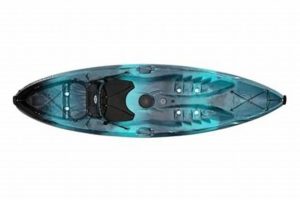
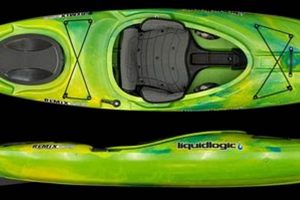
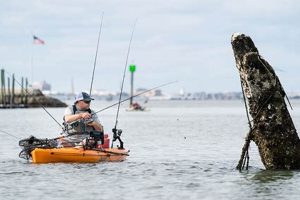
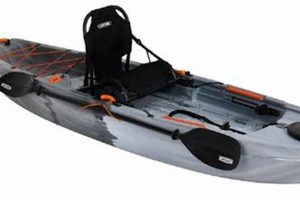
This specific type of small watercraft, designed for angling, combines speed and stability in a compact platform. It typically features specialized components like rod holders, tackle storage, and often a comfortable, elevated seat for enhanced visibility and casting. Such vessels are designed for use in calmer waters like lakes, ponds, and slow-moving rivers.
The advantages of this type of small, agile watercraft include improved maneuverability, allowing anglers to access shallow areas and navigate tight spots effectively. The streamlined design promotes efficient paddling, covering more water with less effort. Dedicated features contribute to a more organized and efficient fishing experience. Historically, small fishing boats have evolved from simple canoes and rowboats, incorporating advancements in materials and design to create highly specialized vessels optimized for the sport.
Further exploration will cover topics related to selecting the right paddle craft for individual needs, essential safety equipment, and effective fishing techniques from these smaller platforms.
Tips for Small Watercraft Fishing
Effective angling from compact, human-powered vessels requires specialized knowledge and techniques. The following tips offer guidance for improved performance and safety.
Tip 1: Stability is Paramount: Maintaining balance is crucial. Distribute weight evenly and avoid sudden movements. Practice entering and exiting the vessel in shallow water before venturing further.
Tip 2: Paddle Selection Matters: Choose a paddle appropriate for body size and the vessel’s width. A properly sized paddle improves efficiency and reduces fatigue.
Tip 3: Essential Safety Gear is Non-Negotiable: A personal flotation device (PFD) should always be worn. Carry a whistle, signaling mirror, and a waterproof communication device for emergencies. A first-aid kit should be readily accessible.
Tip 4: Plan and Prepare: Check weather forecasts before embarking. Inform someone of the intended fishing location and estimated return time. Pack adequate water and sun protection.
Tip 5: Respect Wildlife and the Environment: Adhere to local fishing regulations. Practice catch-and-release whenever possible. Pack out all trash and minimize disturbance to natural habitats.
Tip 6: Master Efficient Paddling Techniques: Learn proper paddling strokes to conserve energy and navigate effectively. Practice turning and maneuvering in controlled environments.
Tip 7: Tackle Organization is Key: Utilize specialized storage solutions to keep tackle organized and readily accessible. Minimize clutter to maintain a safe and efficient fishing platform.
By adhering to these guidelines, anglers can enhance their experience, improve safety, and contribute to responsible enjoyment of the sport.
These practices contribute to safer and more successful fishing excursions. Following these tips will allow anglers to focus on the enjoyment of the sport.
1. Compact Design

The compact design of this specialized kayak directly influences its suitability for specific fishing environments and transport logistics. Shorter hulls typically offer enhanced maneuverability in confined spaces such as narrow creeks, shallow coves, and areas with dense vegetation. This attribute enables anglers to navigate complex waterways and access secluded fishing spots often inaccessible to larger vessels. Furthermore, the compact form simplifies transport, allowing for easier loading onto vehicle roof racks or storage within limited spaces. This portability expands fishing opportunities, enabling access to remote or less accessible bodies of water.
Consider, for example, navigating a small, winding creek choked with fallen branches. A shorter, more maneuverable kayak offers distinct advantages over a longer, less agile craft. The compact design allows for quicker turns and easier navigation through tight spaces, ultimately maximizing fishing potential in these environments. Similarly, the reduced length and weight simplify transport, enabling anglers to carry the kayak over short distances or load it onto a small vehicle without requiring specialized trailers or lifting equipment.
The compact nature of this kayak type presents a significant advantage for anglers seeking portability and maneuverability. This design element expands access to a broader range of fishing locations, simplifying transport and storage logistics. While potentially sacrificing some tracking performance in open water compared to longer kayaks, the benefits of agility and portability often outweigh this compromise for anglers targeting shallow, confined waters.
2. Fishing-Specific Features
Integrated fishing-specific features distinguish this type of kayak from recreational models, enhancing its utility and angler performance. Common features include flush-mounted rod holders, strategically positioned to provide easy access and secure rod storage while paddling or fighting fish. Recessed tackle storage compartments offer organized storage for lures, lines, and other essential gear, minimizing clutter and maximizing efficiency. Some models also incorporate specialized features such as anchor trolleys, live wells, and transducer mounts for fish finders. These integrated elements contribute to a streamlined and productive fishing experience, allowing anglers to focus on the sport rather than managing equipment.
Consider the practical advantage of flush-mounted rod holders. They secure rods within easy reach, minimizing the risk of losing valuable equipment in the event of a sudden strike or unexpected movement. Recessed tackle storage compartments offer similar benefits, protecting gear from the elements and maintaining organization, crucial for efficient lure changes and tackle adjustments in dynamic fishing situations. An integrated anchor trolley system allows precise anchor control, enabling anglers to position the kayak effectively in current or wind, optimizing fishing presentations. These specialized features demonstrate a clear focus on enhancing the angler’s experience, contributing to increased efficiency and overall success on the water.
The incorporation of fishing-specific features represents a significant design consideration, transforming the kayak from a basic watercraft into a dedicated fishing platform. While these features add to the overall cost, the enhanced functionality and increased fishing efficiency often justify the investment for serious anglers. Understanding the purpose and effective utilization of these features contributes significantly to a more productive and enjoyable fishing experience. This specialized equipment allows anglers to focus on the core activity fishing rather than grappling with logistical challenges or equipment management issues.
3. Stability and Maneuverability

The relationship between stability and maneuverability is crucial in evaluating the performance of a fishing kayak, particularly in the context of specialized designs like those intended for smaller bodies of water. A well-balanced design optimizes both attributes, enabling anglers to confidently navigate varied water conditions and access challenging fishing locations while maintaining a stable platform for casting and landing fish. This balance is essential for maximizing both safety and fishing effectiveness.
- Primary Stability:
Primary stability refers to the initial resistance to tipping when the kayak is at rest. A wider hull generally provides greater primary stability, making it feel more secure for less experienced paddlers or when fishing in calm conditions. This characteristic is vital for maintaining balance while casting, reeling, or landing fish. For example, a broader beam contributes to a more stable casting platform, allowing for more accurate and controlled casts, even in slightly choppy water. This stability becomes increasingly important when handling larger fish, where unexpected movements can compromise balance.
- Secondary Stability:
Secondary stability describes the kayak’s resistance to tipping when leaned or tilted. Kayaks designed for maneuverability often have a rounded or slightly V-shaped hull, offering less initial stability but increasing resistance to capsizing as the lean angle increases. This characteristic allows for sharper turns and more agile maneuvering in currents or around obstacles. Imagine navigating a tight bend in a winding stream; secondary stability allows the angler to lean into the turn, maintaining balance and control even with the increased instability caused by the turning motion.
- Hull Design Impact:
Hull design plays a significant role in determining the balance between stability and maneuverability. A flatter hull generally prioritizes primary stability, while a more rounded or V-shaped hull emphasizes secondary stability and maneuverability. Shorter kayaks tend to be more maneuverable, while longer kayaks offer better tracking and speed in open water. Consider a shorter, wider kayak designed for ponds and small lakes. This design sacrifices some speed and tracking for enhanced stability and maneuverability, making it ideal for navigating shallow, confined waters where quick turns and precise positioning are paramount. Conversely, a longer, narrower kayak would be better suited for open water where speed and tracking are more important.
- Center of Gravity:
The angler’s center of gravity also influences stability and maneuverability. Sitting higher in the kayak raises the center of gravity, potentially decreasing stability but offering improved visibility. Keeping weight low and centered within the kayak enhances stability, especially in challenging conditions. For instance, placing tackle boxes and other gear low and near the center of the kayak improves overall stability, reducing the likelihood of tipping due to uneven weight distribution. Experienced anglers often adjust their seating position to optimize balance and control, particularly in windy or choppy conditions.
The careful consideration of stability and maneuverability is essential when selecting a kayak. A successful design balances these attributes to suit the intended fishing environment and angler’s skill level. Specialized kayaks designed for smaller waters often prioritize maneuverability and stability in tight spaces over outright speed, creating a platform optimized for navigating shallows, accessing hard-to-reach spots, and maintaining balance while fishing.
4. Shallow Water Access
Shallow water access represents a defining advantage of specialized kayaks designed for fishing. These kayaks, often characterized by shorter hulls and shallower drafts, excel in environments inaccessible to larger, deeper-draft vessels. This capability allows anglers to exploit shallow-water habitats frequently favored by target fish species, such as bass, panfish, and inshore saltwater species. The ability to navigate shallow creeks, flats, and backwater areas significantly expands fishing opportunities and increases the likelihood of encountering productive fishing grounds. Consider, for instance, a shallow, weed-choked cove inaccessible to a traditional bass boat. A kayak’s shallow draft and maneuverability allow access to these prime feeding areas, offering a distinct advantage to the angler.
Several design elements contribute to effective shallow-water performance. A shorter hull length facilitates navigation through tight spaces and around obstacles commonly found in shallow environments, such as submerged logs, rocks, and emergent vegetation. A shallower draft minimizes contact with the bottom, reducing drag and allowing passage over areas where deeper-hulled boats would run aground. Furthermore, the relatively quiet operation of a kayak compared to motorized vessels minimizes disturbance to fish in shallow water, increasing the likelihood of successful presentations and strikes. The combination of these design elements creates a platform uniquely suited to exploiting shallow-water fisheries.
The practical significance of shallow-water access extends beyond simply reaching otherwise inaccessible locations. It allows anglers to target specific fish species that prefer shallow-water habitats, often presenting unique angling challenges and rewards. The ability to quietly and effectively fish these areas increases the likelihood of success, contributing to a more rewarding and productive fishing experience. However, it is crucial to recognize the potential environmental impact of accessing shallow-water areas. Anglers should exercise caution to avoid disturbing sensitive habitats, such as spawning beds or nesting areas, and adhere to responsible angling practices, including catch-and-release whenever appropriate. By respecting these environments, anglers can ensure the long-term health and productivity of these valuable ecosystems.
5. Lightweight Construction

Lightweight construction is a critical aspect of specialized fishing kayaks, directly influencing portability, maneuverability, and overall performance. Reduced weight simplifies transport, enabling easier loading and unloading from vehicles, carrying over short distances, and navigating challenging terrain to access remote fishing locations. This portability expands fishing opportunities, allowing anglers to explore areas inaccessible to heavier, more cumbersome craft. Furthermore, a lighter kayak requires less effort to paddle and maneuver, reducing fatigue and allowing for longer, more productive fishing trips, especially in challenging conditions like wind or current. Consider, for example, an angler transporting a kayak across a sandy beach or portaging between two lakes. A lightweight design significantly reduces the physical strain involved, conserving energy for the actual fishing activity.
Several factors contribute to achieving lightweight construction in these specialized kayaks. Material selection plays a crucial role; common materials include rotomolded polyethylene, thermoformed ABS, and composites like fiberglass or carbon fiber. Each material offers a unique balance of weight, durability, and cost. Rotomolded polyethylene is a popular choice for its durability and affordability, while thermoformed ABS offers a lighter option with good impact resistance. Composite materials provide the lightest option, but often at a higher cost. Design considerations also influence weight; efficient hull designs minimize material usage without compromising performance. Features like strategically placed cutouts or integrated handles contribute to weight reduction while maintaining structural integrity and functionality.
The practical significance of lightweight construction extends beyond simple convenience. It enables anglers to access remote or difficult-to-reach fishing spots, maximizing fishing opportunities and potentially leading to more successful outcomes. Reduced fatigue from paddling and maneuvering translates to longer fishing times and greater enjoyment on the water. However, the pursuit of lightweight design must be balanced against durability and performance considerations. Excessively lightweight construction can compromise structural integrity, reducing the kayak’s ability to withstand impacts or navigate challenging conditions. A well-designed fishing kayak balances lightweight construction with sufficient durability to ensure reliable performance and angler safety in diverse fishing environments. This balance represents a critical design consideration, optimizing the kayak for its intended purpose and ensuring a positive experience for the angler.
6. Sit-on-top Configuration

The sit-on-top configuration represents a defining characteristic of this specialized fishing kayak, offering distinct advantages for anglers in specific environments and fishing styles. Unlike traditional sit-inside kayaks, the open deck design of a sit-on-top provides enhanced stability, easier entry and exit, and superior self-rescue capabilities, particularly beneficial in warmer climates or calmer waters. This design element significantly contributes to angler comfort and safety, especially for less experienced paddlers or those fishing in potentially challenging conditions. Consider, for instance, an angler fishing in shallow, warm water. The sit-on-top configuration allows for quick and easy entry and exit, facilitating wading or repositioning without the confines of a traditional cockpit. In the event of an unexpected capsize, recovery is significantly simpler; the angler can simply climb back onto the deck, a crucial safety advantage in calmer waters.
The practical implications of the sit-on-top design extend beyond ease of access and self-rescue. The open deck allows for greater freedom of movement, facilitating casting, fighting fish, and gear management. Anglers can easily change positions, stretch their legs, and access gear stored on the deck without the restrictions of a closed cockpit. This enhanced mobility contributes to a more comfortable and efficient fishing experience, particularly during long hours on the water. Furthermore, the self-bailing scupper holes characteristic of sit-on-top kayaks provide a crucial drainage system, preventing water accumulation on the deck and maintaining stability even in choppy conditions or after a wave washes over the deck. This feature enhances safety and comfort, allowing anglers to focus on fishing without constantly managing water accumulation. However, the open design also means anglers are more exposed to the elements, requiring appropriate clothing and sun protection, especially in hot or sunny conditions.
The sit-on-top configuration represents a deliberate design choice optimized for specific fishing applications. The enhanced stability, ease of access, self-rescue capability, and freedom of movement contribute to a more comfortable, efficient, and safer fishing experience, particularly in calmer waters and warmer climates. While the open design presents some challenges regarding exposure to the elements, the advantages often outweigh these considerations for anglers prioritizing stability, accessibility, and freedom of movement. This design characteristic exemplifies the specialization of fishing kayaks, tailoring form and function to the specific needs and demands of the sport.
Frequently Asked Questions
This section addresses common inquiries regarding this specialized type of fishing kayak, providing concise and informative responses to clarify potential uncertainties and enhance understanding.
Question 1: What differentiates this specific kayak from other fishing kayaks?
Key distinctions include its compact design, optimized for maneuverability in smaller bodies of water, and its comprehensive suite of fishing-specific features, enhancing angler efficiency and overall experience. These features are often integrated seamlessly into the hull design, maximizing functionality without compromising performance.
Question 2: Is this kayak suitable for ocean use?
While generally designed for calmer waters such as lakes, ponds, and slow-moving rivers, its suitability for ocean use depends on specific sea conditions and the individual model’s specifications. Consult manufacturer guidelines and exercise caution when considering open-water applications.
Question 3: What weight capacity can one typically expect?
Weight capacity varies depending on the specific model, typically ranging from 300 to 400 pounds. Consulting manufacturer specifications is essential for determining the appropriate capacity for individual anglers and their gear.
Question 4: What materials are commonly used in its construction?
Rotomolded polyethylene is a prevalent material due to its durability and affordability. Higher-end models may incorporate thermoformed ABS or composite materials like fiberglass for enhanced performance characteristics.
Question 5: What essential accessories should be considered?
Essential accessories include a personal flotation device (PFD), a paddle appropriate for the kayak’s dimensions and the user’s physique, and appropriate safety equipment such as a whistle and signaling mirror. Fishing-specific accessories like rod holders, tackle boxes, and anchor systems further enhance functionality.
Question 6: How does its performance compare to larger, traditional fishing kayaks?
While potentially sacrificing some tracking performance in open water, it excels in maneuverability within confined spaces and shallow-water environments. Its compact size contributes to enhanced agility and accessibility, offering advantages in specific fishing scenarios.
Careful consideration of individual needs and intended fishing environments is crucial when selecting any fishing kayak. Understanding the specific design elements and performance characteristics of this specialized kayak type facilitates informed decision-making and ensures appropriate equipment selection for a successful and enjoyable fishing experience.
The following section will delve into detailed reviews and comparisons of specific models within this category, providing further guidance for prospective buyers.
Conclusion
This exploration has highlighted the specialized nature of this particular kayak design, emphasizing its suitability for specific fishing environments and angling styles. Key attributes, including compact dimensions, enhanced maneuverability, shallow-water access, and integrated fishing-specific features, contribute to its effectiveness in targeted applications. The examination of stability considerations, lightweight construction benefits, and the practical implications of the sit-on-top configuration underscore the deliberate design choices optimizing this kayak type for a distinct segment of the fishing community. Understanding these core elements allows for informed evaluation and selection, aligning equipment choice with individual needs and intended usage.
The continued evolution of kayak design and technology promises further advancements in specialized fishing platforms. Careful consideration of individual fishing styles, target species, and preferred environments remains paramount for effective equipment selection. Informed decision-making ensures optimal performance, safety, and ultimately, a more rewarding and productive fishing experience. The choice of a fishing kayak represents a significant investment, and a thorough understanding of design principles and performance characteristics empowers anglers to make choices aligned with their specific needs and aspirations.