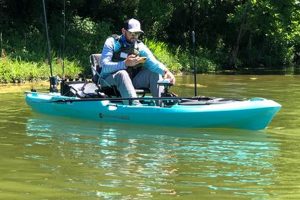
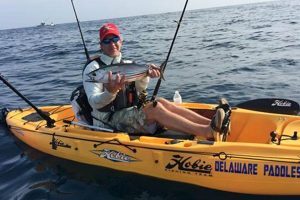
Angling from a kayak offers a unique blend of sport and recreation, combining the tranquility of paddling with the thrill of the catch. This approach allows access to shallow waters and secluded fishing spots often inaccessible to larger motorized boats, resulting in a more intimate connection with nature and the pursuit of fish. For example, a kayak’s maneuverability enables anglers to navigate tight creeks and rivers, or silently approach lily pads and other structures where fish might hide.
The advantages of this fishing method extend beyond accessibility. It is typically less expensive than owning and operating a motorboat, requiring less storage space and less financial investment in fuel and maintenance. Further, its low profile and quiet operation create less disturbance in the aquatic environment, potentially leading to improved fishing success. Historically, kayaks have been used for fishing for centuries by various cultures, particularly in coastal regions. Modern advancements in kayak design and fishing gear have greatly enhanced the experience, creating a rapidly growing community of enthusiasts.
This article will further explore the various aspects of angling from small human-powered boats, including equipment selection, appropriate paddling techniques, strategic fishing location identification, and responsible angling practices.
Tips for Kayak Angling
Effective kayak fishing requires careful planning and execution. These tips offer guidance for a safe and productive experience.
Tip 1: Stability is Paramount: Choose a kayak designed for stability, especially in moving water or when battling larger fish. Wider hulls generally offer greater stability.
Tip 2: Essential Gear Selection: Pack light but include essential safety gear like a personal flotation device, a whistle, and a first-aid kit. Fishing-specific gear should be streamlined and readily accessible.
Tip 3: Paddle Proficiency: Mastering basic paddling strokes allows efficient navigation and precise boat control for optimal casting and fish fighting.
Tip 4: Strategic Location Scouting: Research potential fishing areas beforehand, considering water depth, structure, and species presence. Utilize maps and local resources.
Tip 5: Weather Awareness is Crucial: Check weather forecasts before embarking and avoid fishing during storms or strong winds. Be prepared for changing conditions.
Tip 6: Respectful Angling Practices: Observe all fishing regulations and practice catch-and-release whenever possible to conserve fish populations.
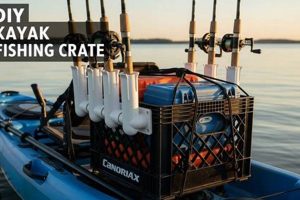
Tip 7: Organized Tackle Management: Utilize tackle boxes and storage systems designed for kayaks to maintain order and prevent gear loss.
Tip 8: Practice Makes Perfect: Spend time practicing casting and retrieving from a seated position to develop proficiency and accuracy.
By adhering to these guidelines, anglers can maximize their enjoyment and success on the water, ensuring a safe and rewarding experience.
These tips offer a foundation for successful kayak angling. The following section will discuss advanced techniques for specific fishing scenarios.
1. Accessibility

A primary advantage of kayak fishing lies in its unparalleled accessibility to a wide range of aquatic environments. This advantage significantly contributes to the growing popularity of the sport, enabling anglers to reach previously inaccessible fishing grounds and experience a more intimate connection with nature. The following facets detail the various components of accessibility in kayak fishing.
- Shallow Water Access
Kayaks, with their shallow drafts, effortlessly navigate shallow creeks, ponds, and backwaters often inaccessible to larger, motorized boats. This opens up a wealth of fishing opportunities in areas teeming with fish species that thrive in these environments, such as bass, panfish, and various inshore species. Imagine gliding through a secluded marsh, casting into areas teeming with life unseen from the shore or a larger vessel.
- Launch Site Versatility
Kayaks require minimal infrastructure for launching. A simple shoreline, boat ramp, or even a gently sloping bank suffices, eliminating the need for developed marinas or boat launches. This versatility dramatically expands the range of potential fishing locations and reduces reliance on established access points, enabling anglers to explore new and less pressured waters. One can launch from a roadside park, a secluded beach, or even a friend’s waterfront property.
- Navigation through Obstacles
Kayaks excel at navigating through tight spaces and obstacles. Maneuvering through narrow channels, around fallen trees, and over submerged vegetation becomes significantly easier compared to larger boats. This capability allows anglers to reach prime fishing spots often shielded from conventional access, increasing the chances of encountering fish in their natural habitats. Picture navigating through dense lily pads or beneath overhanging branches to reach a hidden pool teeming with fish.
- Transportation and Storage
Kayaks offer significant logistical advantages in terms of transportation and storage. They can be easily transported on roof racks, trailers, or even inside larger vehicles, eliminating the need for dedicated trailers or large storage spaces required for larger boats. This portability expands the geographic range of fishing trips and simplifies storage when not in use. Consider the ease of transporting a kayak compared to a motorboat, opening up fishing opportunities hundreds of miles away without significant logistical challenges.
These combined facets of accessibility contribute significantly to the allure of kayak fishing, creating a unique angling experience characterized by freedom, exploration, and a deeper connection with the natural world. By overcoming the limitations of traditional boat fishing, kayak angling opens a new realm of possibilities for anglers seeking adventure and solitude on the water.
2. Affordability
Affordability represents a significant factor contributing to the appeal of kayak fishing. The relatively low cost of entry compared to traditional boat fishing removes a substantial financial barrier, making the sport accessible to a broader audience. This cost-effectiveness stems from several key elements. Initial kayak purchases, even for well-equipped fishing-specific models, typically represent a fraction of the cost of a motorized boat. Furthermore, ongoing expenses associated with fuel, maintenance, insurance, and storage are significantly reduced or eliminated. For example, a basic fishing kayak setup might cost between $500 and $2000, while a comparable motorized boat package could easily exceed $20,000, excluding ongoing expenses. This difference in initial investment alone can be a deciding factor for many individuals.
Beyond the initial investment, the operational costs of kayak fishing remain significantly lower. Human-powered propulsion eliminates fuel costs entirely. Maintenance requirements are minimal, often consisting of basic cleaning and occasional repairs. Storage options are also more flexible and less expensive, as kayaks can be stored at home, reducing or eliminating marina or storage facility fees. These combined cost savings translate to a more budget-friendly angling experience, allowing individuals to allocate resources towards other aspects of the sport, such as fishing gear, tackle, and travel to desirable locations. The reduced financial burden also allows greater flexibility in trip frequency and duration, further enhancing the accessibility and enjoyment of kayak fishing.
The affordability of kayak fishing has significant implications for the accessibility and growth of the sport. By reducing the financial barrier to entry, it allows individuals from diverse economic backgrounds to participate. This inclusivity contributes to the expanding community of kayak anglers and reinforces the sport’s appeal as a sustainable and accessible recreational activity. While other factors, such as accessibility to waterways and personal physical capabilities, play a role, the inherent affordability of kayak fishing remains a key driver of its popularity and continued growth.
3. Stealth

Stealth plays a crucial role in kayak fishing, offering a significant advantage over motorized approaches. The quiet and non-intrusive nature of kayaks allows anglers to approach fish with minimal disturbance, increasing the likelihood of successful catches. This advantage stems from the inherent characteristics of kayaks and their operation, enabling a more natural and less disruptive presence in the aquatic environment.
- Reduced Noise Pollution
Unlike motorized boats, kayaks produce minimal noise. The absence of engine noise, propeller cavitation, and hull slap allows anglers to approach fish without alarming them. This quiet approach is particularly crucial in shallow waters or when targeting wary species. Consider the difference between a rumbling motor and the gentle ripple of a paddle; the latter is far less likely to spook fish.
- Low Profile and Reduced Visibility
Kayaks sit low in the water, presenting a smaller profile and reducing visibility to fish. This lower vantage point makes it less likely for fish to detect the angler’s presence, especially in clear water conditions. The smaller silhouette of a kayak blends more seamlessly with the natural environment compared to the larger, more imposing outline of a motorized boat.
- Precise Maneuverability
Kayaks offer exceptional maneuverability, allowing anglers to navigate quietly and precisely through complex environments such as weed beds, shallows, and tight corners. This precision enables targeted approaches to specific fishing locations without creating excessive disturbance or alerting fish to the angler’s presence. Imagine silently gliding through a narrow channel, positioning the kayak perfectly for a cast into a promising pocket of water.
- Natural Integration with the Environment
The human-powered nature of kayaks fosters a sense of integration with the surrounding environment. The quiet paddling strokes and the gentle movement of the kayak through the water create minimal disruption to the natural rhythm of the aquatic ecosystem. This harmonious presence allows anglers to observe wildlife and approach fish without causing undue alarm or altering their natural behavior.
The stealth offered by kayaks significantly enhances the fishing experience. By minimizing disturbance and maximizing the element of surprise, anglers increase their chances of success and gain a deeper appreciation for the delicate balance of the aquatic environment. This advantage, combined with the accessibility and affordability of kayak fishing, contributes to its growing popularity and reinforces its appeal as a rewarding and sustainable angling method.
4. Connection with Nature
Kayak fishing fosters a profound connection with nature, distinguishing it from other forms of angling. This connection stems from the immersive, human-powered experience, minimizing the barrier between angler and environment. The following facets explore the various dimensions of this connection.
- Immersive Sensory Experience
Kayak fishing immerses anglers in the natural world through direct sensory engagement. The quiet movement through the water allows for heightened awareness of sounds like birdsong, rustling reeds, and splashing fish. The proximity to the water’s surface provides close-up views of aquatic life and the surrounding landscape. The feel of the paddle, the gentle rocking of the kayak, and the changing weather conditions further enhance this sensory immersion, fostering a deeper appreciation for the nuances of the natural environment.
- Quiet Observation of Wildlife
The quiet, non-intrusive nature of kayaks enables unobtrusive observation of wildlife. Birds, turtles, otters, and other aquatic creatures are more likely to approach or remain undisturbed by the presence of a kayak compared to a motorized vessel. This provides opportunities for unique wildlife encounters and a greater understanding of the interconnectedness of the ecosystem. Consider the possibility of observing a heron fishing from a nearby branch or a family of ducks paddling peacefully alongside.
- Respectful Interaction with the Ecosystem
Kayak fishing promotes a respectful interaction with the aquatic environment. The minimal impact of human-powered propulsion and the ability to access remote areas without disturbing sensitive habitats foster a sense of stewardship. Practicing catch-and-release fishing further reinforces this respect for the ecosystem, ensuring the sustainability of fish populations and the preservation of natural resources.
- Solitude and Introspection
Kayak fishing offers opportunities for solitude and introspection. The quiet, rhythmic paddling and the immersive experience in nature can create a meditative state, allowing for reflection and a deeper connection with oneself and the surrounding environment. This escape from the distractions of modern life can be a powerful source of rejuvenation and renewal.
These interconnected facets contribute to the profound connection with nature experienced in kayak fishing. This connection transcends the simple act of catching fish and becomes a central element of the sport’s appeal, fostering a deeper appreciation for the natural world and a sense of responsibility for its preservation. This unique aspect of kayak fishing differentiates it from other angling methods and reinforces its value as a sustainable and enriching recreational pursuit.
5. Exercise and Challenge
Kayak fishing presents a unique blend of physical exertion and strategic challenge, adding another layer to its appeal. Paddling, maneuvering, and casting from a kayak engage multiple muscle groups, providing a low-impact workout that enhances cardiovascular health and builds strength. Furthermore, navigating varying water conditions, currents, and wind adds a dynamic element of physical engagement. Consider paddling against a headwind or maneuvering through swift currents; these situations demand physical exertion and strategic paddle technique. The act of landing a fish from a kayak also presents a distinct physical challenge, requiring balance, coordination, and strength to manage the fish and the kayak simultaneously. These physical demands contribute to a sense of accomplishment and contribute to the overall rewarding nature of the experience.
Beyond the physical exertion, kayak fishing offers significant mental and strategic challenges. Locating fish in diverse environments requires observation, knowledge of fish behavior, and adaptation to changing conditions. Successfully presenting lures or bait and effectively fighting fish from a relatively unstable platform demands precision, patience, and strategic thinking. Consider the challenge of accurately casting to a specific target from a rocking kayak or adjusting fishing techniques based on changing water clarity or temperature. Successfully navigating these challenges enhances the sense of accomplishment and adds a stimulating mental component to the fishing experience. These strategic challenges provide continuous opportunities for learning and skill development, enriching the experience beyond the simple act of catching fish.
The combination of physical exertion and strategic challenge inherent in kayak fishing differentiates it from more passive forms of angling. It transforms the fishing experience into a multifaceted activity that engages both mind and body. This active engagement fosters a deeper connection with the environment, enhances personal satisfaction, and contributes significantly to the overall appeal of kayak fishing. Recognizing the physical and mental demands involved allows individuals to prepare adequately, enhancing safety and maximizing enjoyment. Furthermore, understanding these challenges allows anglers to appreciate the full scope of skills involved, fostering a sense of accomplishment and promoting continued growth in the sport.
6. Versatility

Versatility stands as a cornerstone of kayak fishing’s appeal, enabling adaptation to diverse fishing environments and angling styles. This adaptability contributes significantly to the sport’s broad appeal, accommodating a wide range of fishing preferences and locations. Understanding the various facets of this versatility provides insight into its significance within the broader context of kayak fishing.
- Adaptability to Diverse Environments
Kayaks readily adapt to various aquatic environments, from tranquil lakes and slow-moving rivers to coastal estuaries and sheltered ocean bays. This adaptability stems from their maneuverability, portability, and relatively shallow draft, allowing anglers to access a wide spectrum of fishing locations. A single kayak can be used to explore a small pond one day and a larger river system the next, offering significant flexibility.
- Customization for Specific Fishing Styles
Kayaks can be outfitted and customized to accommodate diverse fishing styles, including spin fishing, baitcasting, fly fishing, and trolling. Specialized accessories, such as rod holders, fish finders, and anchor trolleys, further enhance this adaptability, allowing anglers to tailor their setup to specific target species and fishing techniques. This customization potential allows a single platform to effectively serve the needs of diverse angling approaches.
- Integration with Varied Fishing Techniques
The stability and maneuverability of fishing kayaks allow for seamless integration with a variety of fishing techniques. Anglers can effectively cast and retrieve lures, present live bait, or employ specialized techniques like jigging or bottom fishing from a kayak. This adaptability expands the range of fishing possibilities and allows anglers to experiment with different approaches to maximize their success. Consider the ability to drift fish with live bait in a river one day and switch to casting topwater lures in a lake the next.
- Scalability for Solo or Group Fishing
Kayak fishing caters to both solo and group experiences. Individual anglers can enjoy the solitude and self-reliance of exploring remote locations, while groups can coordinate fishing trips, sharing knowledge and camaraderie on the water. This scalability expands the social dimensions of the sport and accommodates diverse preferences for social interaction. Imagine a solo angler quietly exploring a secluded cove or a group of friends paddling together and sharing fishing tips on a larger lake.
The versatility inherent in kayak fishing significantly contributes to its appeal and broad adoption. This adaptability allows anglers to explore diverse environments, customize their equipment, employ varied techniques, and enjoy both solo and group experiences. By catering to a wide range of fishing styles and preferences, kayak fishing establishes itself as a dynamic and adaptable angling method, well-suited to the diverse needs of the modern angler. This versatility ensures the sport’s continued relevance and expands its reach to an ever-growing community of enthusiasts.
Frequently Asked Questions about Kayak Fishing
Addressing common inquiries regarding kayak fishing provides clarity for prospective enthusiasts and enhances understanding of this increasingly popular sport. The following questions and answers offer insights into key aspects of kayak fishing.
Question 1: Is kayak fishing safe?
Safety in kayak fishing depends on responsible preparation and adherence to safety guidelines. Wearing a personal flotation device, checking weather forecasts, carrying essential safety equipment, and understanding paddling techniques significantly mitigate risks.
Question 2: What type of kayak is best for fishing?
Selecting a kayak depends on individual needs and fishing environments. Sit-on-top kayaks offer stability and ease of re-entry, while sit-inside kayaks provide better protection from the elements. Consider factors like stability, storage capacity, and maneuverability when choosing.
Question 3: What essential gear is required for kayak fishing?
Essential gear includes a personal flotation device, paddle, fishing rod and reel, appropriate tackle, and safety equipment like a whistle, first-aid kit, and signaling device. Additional accessories like rod holders, fish finders, and anchors enhance the experience.
Question 4: Where can one kayak fish?
Kayak fishing locations range from lakes, ponds, and rivers to coastal estuaries and sheltered ocean bays. Always research local regulations and obtain necessary permits before fishing in any location. Consider factors like water conditions, accessibility, and target species when selecting a location.
Question 5: What are the physical demands of kayak fishing?
Kayak fishing requires a moderate level of physical fitness. Paddling, casting, and retrieving involve physical exertion. Individuals with pre-existing health conditions should consult a physician before engaging in this activity.
Question 6: How does one transport and store a fishing kayak?
Kayaks can be transported on roof racks, trailers, or inside larger vehicles. Storage options include garages, sheds, or specialized kayak storage racks. Consider factors like available space and ease of access when choosing transportation and storage solutions.
Careful consideration of these frequently asked questions empowers individuals to make informed decisions regarding kayak fishing, promoting safe and enjoyable experiences on the water.
This concludes the frequently asked questions section. The following section will provide a comprehensive gear guide for kayak anglers.
Conclusion
Exploration of kayak fishing reveals a multifaceted pursuit offering unique advantages. Accessibility to diverse environments, affordability compared to motorized boating, stealthy approach for improved fishing success, enhanced connection with nature, integration of physical challenge and strategic thinking, and inherent versatility combine to create a compelling angling experience. These factors contribute to the sport’s burgeoning popularity and its appeal to a broad spectrum of individuals seeking rewarding outdoor recreation.
The future of kayak fishing appears promising, driven by increasing awareness of its benefits and ongoing innovation in kayak design and fishing technology. As more individuals discover the unique rewards of this human-powered approach to angling, responsible stewardship of aquatic resources and adherence to ethical fishing practices become paramount. Continued growth and development of kayak fishing hinge on a collective commitment to conservation and sustainable enjoyment of the natural world.