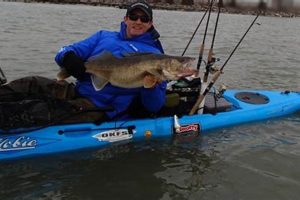
These specialized buoyancy aids attach to fishing rods, preventing them from sinking should they be dropped overboard. They come in various shapes, sizes, and colors, often brightly hued for increased visibility. A typical example might be a cylindrical foam device with a slit down the side to accommodate the rod.
Protecting valuable fishing equipment from loss is a primary advantage of using these flotation devices. In the challenging environment of kayak fishing, where anglers often navigate tight spaces and encounter unpredictable conditions, accidental drops are common. Retrieving a submerged rod can be difficult, if not impossible, especially in deeper water or strong currents. Beyond the financial implications of losing a rod, these floats contribute to safety by reducing the risk of entanglement or snags on submerged equipment. This simple yet effective piece of equipment has become increasingly popular as kayak fishing has grown in popularity.
Understanding the functionality and benefits of these important accessories provides a foundation for exploring the broader topics of kayak fishing safety, equipment selection, and techniques. Considerations such as float material, attachment methods, visibility, and compatibility with different rod types are all key to making informed purchasing decisions and ensuring safe and enjoyable fishing experiences.
Tips for Utilizing Rod Floats in Kayak Fishing
Proper use of rod floats maximizes their effectiveness in preventing equipment loss and enhancing angler safety. Attention to selection, attachment, and maintenance ensures optimal performance in various fishing scenarios.
Tip 1: Select appropriately sized floats. Float buoyancy should match rod weight and anticipated fishing conditions. Larger, more buoyant floats suit heavier rods and rougher water.
Tip 2: Attach floats securely. Ensure a snug fit to prevent slippage or detachment during casting and retrieval. Consider using additional attachment points for added security in turbulent conditions.
Tip 3: Choose bright, highly visible colors. Enhanced visibility aids in locating a dropped rod quickly, particularly in low-light conditions or murky water.
Tip 4: Inspect floats regularly for wear and tear. Replace damaged floats promptly to maintain optimal buoyancy and effectiveness. Exposure to sunlight and saltwater can degrade float materials over time.
Tip 5: Consider float placement for optimal balance. Placement closer to the handle offers greater stability, while placement towards the tip allows for easier casting and retrieval.
Tip 6: Test float performance before each trip. Briefly submerge the rod and float assembly to ensure adequate buoyancy and proper attachment.
Tip 7: Account for float presence when casting. The added weight and air resistance of the float may slightly alter casting dynamics. Practice casting with the float attached to adjust technique as needed.
Adhering to these guidelines ensures that rod floats perform their intended function effectively, providing valuable protection against equipment loss and promoting safer fishing practices. Proper utilization contributes to a more enjoyable and productive kayak fishing experience.
By understanding the importance of rod float selection, attachment, and maintenance, anglers can confidently focus on the enjoyment of their fishing experience, knowing their equipment is well-protected.
1. Buoyancy

Buoyancy is the fundamental principle underlying the effectiveness of rod floats in kayak fishing. A float’s ability to support a fishing rod’s weight depends entirely on its buoyant force, which must exceed the downward force of gravity acting on the rod. This buoyant force is generated by the water displaced by the float. Selecting a float with adequate buoyancy is crucial; an insufficiently buoyant float will fail to keep the rod afloat, negating its purpose. For example, a lightweight float designed for a small freshwater rod will likely be inadequate for a heavier saltwater rod used in offshore kayak fishing. The increased weight of the saltwater rod requires a correspondingly greater buoyant force, necessitating a larger or more buoyant float.
The practical significance of understanding buoyancy in this context cannot be overstated. Anglers must consider factors such as rod weight, lure weight, and anticipated water conditions when selecting a float. A heavier setup, including a larger rod and heavier lures, demands a float with greater buoyancy. Similarly, rougher water conditions may require a more buoyant float to counteract the increased risk of submersion. Choosing the correct buoyancy prevents equipment loss, reduces potential safety hazards, and contributes to a more successful and enjoyable fishing experience. For instance, an angler fishing for larger species in strong currents would benefit from a high-buoyancy float capable of supporting a heavier rod and reel setup, even when subjected to significant downward forces.
Matching float buoyancy to specific fishing conditions represents a critical aspect of responsible kayak angling. Failure to account for the interplay of rod weight, lure weight, and water conditions can lead to equipment loss and potential safety risks. A comprehensive understanding of buoyancy principles empowers anglers to make informed decisions regarding float selection, ultimately enhancing both the safety and effectiveness of their kayak fishing excursions. This understanding translates into practical choices that minimize equipment loss and maximize fishing success in diverse aquatic environments.
2. Visibility

Visibility plays a crucial role in retrieving accidentally dropped fishing rods, a common occurrence in kayak fishing. A highly visible rod float significantly reduces search time and effort, potentially preventing equipment loss. Float visibility is influenced by color, size, and surrounding environmental conditions.
- Color Selection
Bright, fluorescent colors, such as orange, yellow, or chartreuse, offer optimal visibility, especially in low-light situations or murky water. These colors contrast sharply with typical water backgrounds, making them easier to spot. For example, a neon orange float is significantly easier to locate against dark water or dense vegetation compared to a dark-colored float.
- Size and Shape
Larger floats are inherently more visible than smaller ones. Additionally, floats with distinctive shapes, such as elongated or teardrop designs, can be easier to spot from a distance. A larger, uniquely shaped float provides a more prominent visual target than a small, round float, increasing the likelihood of rapid retrieval.
- Environmental Factors
Water clarity, lighting conditions, and surrounding vegetation can affect float visibility. In clear water, a bright float remains highly visible even at depth. However, in murky or turbid water, visibility is reduced, emphasizing the importance of bright coloration. Similarly, floats are less visible in low-light conditions, reinforcing the need for reflective materials or bright, easily discernible colors.
- Reflective Properties
Some rod floats incorporate reflective tape or materials, enhancing visibility in low-light conditions or at night. These materials reflect ambient light, making the float more conspicuous. For instance, a float with reflective tape becomes significantly more visible when illuminated by a headlamp or boat light, increasing its retrievability in nighttime fishing scenarios.
Careful consideration of these visibility factors when selecting a rod float ensures efficient retrieval of dropped equipment, maximizing fishing time and minimizing potential losses. Selecting a highly visible float represents a simple yet effective strategy for mitigating the risk of equipment loss inherent in kayak fishing. The enhanced visibility contributes to a more efficient and productive fishing experience.
3. Attachment
Secure attachment of rod floats is paramount in kayak fishing. A properly secured float prevents loss of the fishing rod if dropped overboard, a frequent occurrence in the dynamic environment of a kayak. Various attachment methods exist, each with advantages and disadvantages depending on rod type, float design, and fishing conditions.
- Direct Attachment Methods
Some floats feature built-in mechanisms for direct attachment to the rod. These may include straps, clips, or sleeves designed to grip the rod blank securely. For example, a sleeve-style float slides onto the rod butt and is secured with a cinch strap. Direct attachment methods offer convenience and simplicity but may not be compatible with all rod types.
- Line-Based Attachment Methods
These methods involve attaching the float to the fishing line using clips, loops, or specialized connectors. This approach provides flexibility and can be adapted to various rod and float combinations. However, line-based attachments may interfere with casting or line retrieval in certain situations. An example includes using a small clip to secure the float directly to the fishing line a short distance above the leader.
- Hybrid Attachment Methods
Hybrid methods combine aspects of both direct and line-based attachments. For example, a float might feature a strap that secures to the rod handle and a secondary line attachment for added security. This approach maximizes stability and prevents loss even in rough conditions or during vigorous casting.
- Considerations for Attachment Durability
Attachment durability is critical for ensuring long-term float effectiveness. Materials should be resistant to UV degradation, saltwater corrosion, and abrasion. Inspecting attachment points regularly for wear and tear helps prevent unexpected float detachment. Durable materials such as high-strength nylon webbing and corrosion-resistant metal hardware contribute to the long-term reliability of the float attachment.
Choosing an appropriate attachment method significantly impacts the efficacy of a rod float in kayak fishing. Factors such as rod type, float design, and fishing conditions influence the optimal attachment strategy. A secure and durable attachment safeguards valuable equipment and ensures uninterrupted fishing, even in challenging kayaking environments. Understanding the nuances of various attachment options allows anglers to select the most reliable method for their specific needs, contributing to a more productive and enjoyable fishing experience.
4. Durability
Durability is a critical factor influencing the long-term effectiveness of rod floats in the demanding environment of kayak fishing. Exposure to saltwater, UV radiation, and physical impacts necessitates robust construction to ensure consistent performance and prevent premature failure. A durable float represents a worthwhile investment, providing reliable protection for valuable fishing equipment over extended periods.
- Material Selection
Float material directly impacts durability. Closed-cell foam, such as EVA (Ethylene Vinyl Acetate), offers excellent buoyancy and resistance to water absorption, crucial for maintaining performance over time. Durable plastics, like ABS (Acrylonitrile Butadiene Styrene), provide impact resistance and structural integrity, safeguarding against damage from accidental drops or collisions. Choosing materials resistant to UV degradation and saltwater corrosion is essential for prolonged lifespan in harsh marine environments.
- Construction Quality
Robust construction techniques contribute significantly to float longevity. Seamless designs minimize weak points susceptible to tearing or splitting. Reinforced seams and high-quality adhesives enhance structural integrity, particularly in areas subject to stress during use. Well-constructed floats withstand the rigors of kayak fishing, including repeated casting, retrieval, and potential impacts against the kayak or other objects.
- Hardware and Attachments
Durable hardware, such as stainless steel or corrosion-resistant alloys, is essential for maintaining secure attachment and preventing failure. High-quality straps, clips, and other attachment components resist wear and tear, ensuring consistent performance over extended periods. For example, stainless steel D-rings provide secure attachment points for lanyards or straps, further enhancing float retention.
- Maintenance and Care
Proper maintenance practices extend float lifespan. Rinsing the float with freshwater after each use removes salt and debris, minimizing corrosion and material degradation. Storing the float in a cool, dry place away from direct sunlight protects it from UV damage. Regular inspection of the float for signs of wear and tear, such as cracks, tears, or damaged hardware, allows for timely repairs or replacement, preventing unexpected failures during critical moments.
Investing in a durable rod float provides long-term protection for valuable fishing equipment in the challenging kayak fishing environment. Careful consideration of material selection, construction quality, hardware, and maintenance practices ensures consistent performance and maximizes the lifespan of the float. A durable float contributes to a more secure and enjoyable fishing experience, minimizing the risk of equipment loss and maximizing time on the water.
5. Compatibility
Compatibility between rod floats and fishing rod setups is essential for optimal performance and preventing equipment loss in kayak fishing. A properly matched float ensures secure attachment, unobstructed casting, and effective buoyancy, contributing to a safer and more productive fishing experience. Mismatched components can lead to instability, reduced casting distance, and potential equipment damage or loss.
- Rod Handle Design
Float compatibility is influenced by rod handle design. Some floats are designed for specific handle types, such as cork, foam, or composite materials. For example, a float designed for a cylindrical cork handle may not fit securely on a split-grip handle. Ensuring compatibility between the float and handle design is crucial for secure attachment and preventing accidental slippage or detachment during casting and retrieval.
- Rod Length and Weight
Rod length and weight influence the appropriate float size and buoyancy. Longer, heavier rods require larger, more buoyant floats to ensure adequate support and prevent sinking. Using an undersized float on a heavy rod can result in inadequate buoyancy, rendering the float ineffective. Conversely, an oversized float on a lightweight rod may create imbalance and hinder casting performance. Matching float size and buoyancy to rod length and weight is essential for optimal performance and preventing equipment loss.
- Reel Type and Placement
Reel type and placement can influence float compatibility. Spinning reels and baitcasting reels have different profiles and mounting configurations that may affect float attachment options. Some floats are designed for specific reel types or placements, while others offer adjustable configurations for greater versatility. Ensuring compatibility between the float, reel type, and placement is essential for secure attachment, unobstructed casting, and balanced performance.
- Fishing Line and Leader
Fishing line and leader type can also influence float compatibility, particularly when using line-based attachment methods. The diameter and material of the fishing line can affect how securely the float attaches and how it interacts with the line during casting and retrieval. Some floats are designed for specific line types, such as braided or monofilament lines. Compatibility between the float, fishing line, and leader ensures smooth operation and prevents interference with casting or line management.
Considering these compatibility factors when selecting a rod float is essential for optimizing performance and preventing equipment loss in kayak fishing. A properly matched float enhances safety, improves casting efficiency, and ensures that the float functions as intended, providing reliable protection for valuable fishing equipment. Prioritizing compatibility contributes to a more productive and enjoyable kayak fishing experience by minimizing potential issues and maximizing time on the water.
Frequently Asked Questions
This section addresses common inquiries regarding rod floats, providing concise and informative responses to assist anglers in making informed decisions.
Question 1: Are rod floats necessary for all kayak fishing scenarios?
While not universally required, rod floats are highly recommended for most kayak fishing situations. They provide valuable protection against equipment loss, especially in challenging conditions such as rough water, strong currents, or when fishing in areas with submerged obstacles.
Question 2: How does one choose the correct size rod float?
Float size should correspond to rod weight and anticipated fishing conditions. Heavier rods and rougher water necessitate larger, more buoyant floats. Consulting manufacturer recommendations or experienced kayak anglers can assist in selecting the appropriate size.
Question 3: Can rod floats interfere with casting performance?
While some minimal impact on casting dynamics is possible due to added weight and air resistance, proper float placement and adjusted casting techniques minimize any noticeable difference. Practicing casting with the float attached allows anglers to adapt their technique accordingly.
Question 4: What materials are commonly used in rod float construction?
Durable, closed-cell foams like EVA (Ethylene Vinyl Acetate) are commonly used due to their excellent buoyancy and water resistance. High-visibility colors and reflective materials further enhance float functionality.
Question 5: How are rod floats typically attached to fishing rods?
Attachment methods vary, including straps, clips, and sleeves designed for direct attachment to the rod blank. Some floats utilize line-based attachments, while others employ hybrid methods combining both approaches. Secure attachment is crucial for preventing accidental detachment.
Question 6: How should rod floats be maintained to ensure long-term effectiveness?
Regular rinsing with freshwater after each use removes salt and debris, minimizing corrosion. Storing floats in a cool, dry place away from direct sunlight prevents UV damage. Periodic inspection for wear and tear allows for timely repairs or replacement.
Understanding these fundamental aspects of rod float selection, usage, and maintenance contributes significantly to equipment preservation and angler safety. Addressing these common concerns empowers anglers to make informed decisions regarding rod float utilization, enhancing their overall kayak fishing experience.
Beyond these frequently asked questions, further exploration of specific float types and features provides a deeper understanding of their diverse applications in kayak fishing. This expanded knowledge enables anglers to tailor their equipment choices to their specific fishing needs and environmental conditions.
Rod Floats for Kayak Fishing
Exploration of rod floats for kayak fishing reveals their significance in equipment preservation and angler safety. Buoyancy, visibility, secure attachment, durability, and compatibility with specific fishing setups represent critical considerations. Understanding these factors empowers informed decisions, maximizing float effectiveness in preventing equipment loss and contributing to a safer, more productive fishing experience. Careful selection and proper utilization of these essential accessories are key to responsible kayak angling.
Ultimately, rod floats represent a small yet vital investment that safeguards valuable equipment and enhances angler peace of mind. Their importance within the broader context of kayak fishing safety and responsible angling practices warrants careful consideration by all kayak anglers. Continued exploration of advancements in float design and materials promises further improvements in performance and durability, benefiting anglers and promoting responsible equipment management in the future.