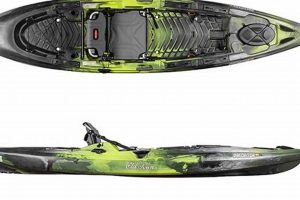
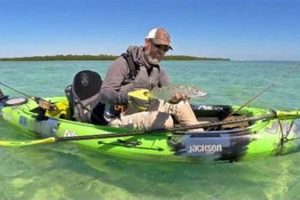
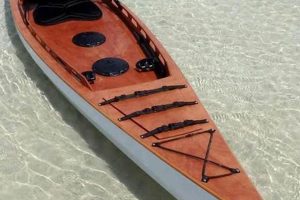
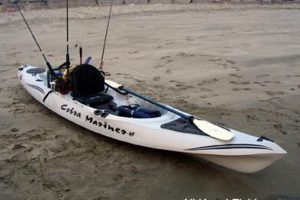
Kayaks designed with a stable, level deck surface provide ample space for anglers to stand, move, and cast with confidence. This design often integrates features like rod holders, gear tracks, and livewells, maximizing utility for fishing activities. A standard sit-on-top configuration is common, offering easy access and egress.
The stability and open deck layout enhance angling effectiveness by facilitating sight fishing, fly fishing, and spin casting. These vessels offer a versatile platform for navigating various water bodies, from calm lakes and rivers to shallow coastal areas. This style of kayak has evolved alongside advancements in materials and construction techniques, resulting in durable, lightweight options that cater specifically to the demands of fishing.
Further exploration will detail the variations within this category, considering factors like hull design, material construction, features, and ideal fishing applications. Understanding these nuances enables informed decisions for anglers seeking the optimal vessel for their specific needs and preferences.
Tips for Selecting and Using a Stable, Flat-Decked Fishing Kayak
Choosing and utilizing a fishing kayak with a stable, flat deck requires careful consideration of several factors to ensure optimal performance and safety.
Tip 1: Consider Stability Needs: Wider hulls generally offer greater stability, particularly beneficial for stand-up fishing. Narrower designs prioritize speed and maneuverability, potentially sacrificing stability.
Tip 2: Evaluate Weight Capacity: Ensure the kayak’s weight capacity accommodates the combined weight of the angler, gear, and potential catch. Exceeding capacity compromises stability and performance.
Tip 3: Assess Deck Space: Ample deck space is crucial for comfortable movement and gear storage. Consider the layout and placement of features like rod holders and storage compartments.
Tip 4: Choose Appropriate Propulsion: Paddle propulsion offers excellent exercise and control. Pedal-powered options provide hands-free fishing, while motorized kayaks cover greater distances quickly.
Tip 5: Prioritize Safety Gear: Always wear a personal flotation device (PFD). Carry essential safety equipment, including a whistle, signaling device, and first-aid kit.
Tip 6: Practice Before Fishing: Familiarize oneself with the kayak’s handling characteristics in calm water before venturing into more challenging conditions. Practice entering and exiting the kayak, especially in deeper water.
Tip 7: Plan Fishing Excursions Carefully: Check weather forecasts and water conditions before heading out. Inform someone of the intended fishing location and estimated return time.
By adhering to these guidelines, anglers can enhance their fishing experience while ensuring safety and maximizing their success on the water.
This foundational knowledge provides a basis for informed decisions when selecting and using a stable, flat-decked fishing kayak. Subsequent sections will explore specific models and features in greater detail.
1. Stability

Stability is a critical factor in flat top fishing kayak design, directly influencing angler safety and fishing effectiveness. A stable platform enables anglers to stand, move, and cast with confidence, maximizing their range and accuracy. This section explores key facets contributing to stability in these specialized kayaks.
- Hull Design:
Wider hulls and flatter bottoms generally provide greater initial stability, resisting tipping. A wider beam creates a larger surface area displacing water, enhancing balance. Conversely, narrower hulls designed for speed may compromise stability. Common hull designs for enhanced stability include pontoon-style hulls and those with pronounced chines (sharp edges where the hull sides meet the bottom). These features contribute to a secure platform, even in choppy water.
- Center of Gravity:
A lower center of gravity improves stability. Kayak design and weight distribution play significant roles in determining the center of gravity. Flat top kayaks often feature a lower seating position, contributing to a lower center of gravity. Careful distribution of gear within the kayak also influences stability. Concentrating weight low and centrally enhances balance, while uneven weight distribution can create instability.
- Weight Capacity:
Exceeding a kayak’s specified weight capacity significantly compromises stability. The manufacturer’s stated capacity considers the combined weight of the angler, gear, and potential catch. Overloading reduces freeboard (the distance between the waterline and the deck edge), increasing the risk of capsizing. Adhering to weight limits ensures optimal stability and performance.
- Water Conditions:
Calm water conditions generally present fewer stability challenges. Wind, waves, and currents can significantly impact stability, requiring greater vigilance and control. Kayaks designed for stability in rougher conditions often feature longer hulls and heavier construction. Understanding the intended water conditions and choosing a kayak designed for those conditions are critical for safety and stability.
These interconnected factors contribute to overall stability in flat top fishing kayaks. By considering hull design, center of gravity, weight capacity, and anticipated water conditions, anglers can select a vessel offering a secure and stable platform for optimal fishing performance and safety. Further investigation into specific models and their stability features can refine selection further.
2. Spacious Deck

A spacious deck is a defining characteristic of the flat top fishing kayak, directly impacting functionality and angler experience. The unobstructed, level surface provides a versatile platform for various fishing activities, from stand-up casting to gear management. Examining the facets of this design element reveals its significance in optimizing angling performance.
- Movement and Positioning:
Ample deck space allows anglers to shift position easily, facilitating casting from different angles and retrieving fish effectively. This freedom of movement is particularly advantageous in sight fishing scenarios or when maneuvering in tight spaces. Unlike traditional sit-in kayaks, the open deck permits standing and repositioning without the constraints of a cockpit.
- Gear Storage and Organization:
A spacious deck accommodates essential fishing gear, including tackle boxes, rods, and coolers. Dedicated storage compartments and gear tracks provide secure mounting points for accessories, ensuring readily accessible equipment. This organized layout optimizes efficiency and minimizes clutter, crucial for maintaining focus during fishing.
- Enhanced Fishing Techniques:
The flat, stable surface supports specialized fishing techniques. Fly fishing, for instance, benefits from the ample space for casting backcasts. Similarly, stand-up fishing for species like bass or redfish becomes more feasible and comfortable, improving visibility and casting control. The deck space enables anglers to adapt their techniques to diverse fishing situations.
- Safety and Stability:
While primarily contributing to functionality, a spacious deck indirectly enhances safety. The open design allows for quick entry and exit in case of emergency. Furthermore, the stable platform afforded by a flat top design, combined with ample space, reduces the likelihood of tripping or losing balance while handling gear or fighting fish.
The spacious deck of a flat top fishing kayak represents a significant departure from traditional kayak designs, prioritizing functionality and angler experience. By facilitating movement, optimizing gear storage, supporting diverse fishing techniques, and indirectly enhancing safety, the spacious deck contributes significantly to the versatility and effectiveness of these specialized fishing vessels. This design element distinguishes flat top kayaks as a preferred choice for anglers seeking enhanced performance and adaptability on the water.
3. Stand-up Fishing

Stand-up fishing represents a significant advantage offered by flat top fishing kayaks, enhancing angling effectiveness and overall experience. The stable, flat deck provides a secure platform for anglers to stand and cast, improving visibility, casting range, and leverage when fighting fish. This section explores the multifaceted relationship between stand-up fishing and the design of flat top kayaks.
- Improved Visibility and Sight Fishing:
Elevated vantage point afforded by standing significantly improves visibility, crucial for sight fishing. Spotting fish in shallow water, along weed lines, or near structure becomes easier, enhancing targeting accuracy. This elevated perspective provides a tactical advantage, particularly in clear water conditions.
- Enhanced Casting Range and Accuracy:
Standing allows for longer casts and improved accuracy. The broader range of motion facilitates overhead casts and greater leverage, propelling lures or flies farther. Improved accuracy stems from the clear sight lines and enhanced body control, increasing the chances of precise presentations.
- Increased Leverage and Fish Fighting:
Standing provides greater leverage when fighting fish, particularly larger, more powerful species. Anglers can utilize their body weight and leg strength more effectively, gaining an advantage during the retrieval process. This enhanced control reduces the risk of line breakage and facilitates quicker, more efficient landings.
- Enhanced Overall Fishing Experience:
Beyond the tactical advantages, standing contributes to a more engaging and dynamic fishing experience. The freedom of movement and elevated perspective foster a greater connection with the environment, enhancing enjoyment. Furthermore, the ability to shift between sitting and standing reduces fatigue during long fishing trips.
The integration of stand-up fishing capabilities within the design of flat top fishing kayaks significantly expands angling possibilities. The combination of stability, spacious deck layout, and elevated perspective enhances visibility, casting performance, and fish-fighting capabilities. This synergy positions flat top kayaks as a preferred choice for anglers seeking a more versatile and engaging fishing platform.
4. Gear Mounting Options
Gear mounting options are integral to the functionality and versatility of flat top fishing kayaks. These kayaks, designed for specialized angling, require secure and accessible mounting points for a range of fishing accessories. The availability and strategic placement of mounting options directly influence angling efficiency and overall success. Consider, for example, a kayak angler targeting offshore species; readily accessible rod holders and strategically mounted fish finders become essential for successful trolling and locating fish. Similarly, a fly fisherman navigating a river system requires readily available fly boxes and tools secured within easy reach. The effective integration of gear mounting options addresses these diverse needs.
Several mounting systems commonly feature on flat top fishing kayaks. Tracks, rails, and inserts provide versatile mounting points for rod holders, fish finders, GPS units, cameras, and other accessories. Flush-mounted rod holders offer streamlined storage and quick access. Gear tracks provide adjustable positioning for various accessories. Inserts accommodate specialized mounts and hardware. The selection and placement of these systems should consider the angler’s specific needs and fishing style. A bass angler, for example, might prioritize multiple rod holders and a readily accessible tackle storage system, while a kayak fly fisherman might prioritize strategically placed fly boxes and tool mounts. Understanding these nuances allows for personalized customization, optimizing the kayak for specific fishing applications.
Effective gear mounting contributes significantly to a streamlined and efficient fishing experience. Securely mounted equipment minimizes clutter and maximizes usable deck space. Easy access to essential gear allows anglers to focus on fishing rather than fumbling with equipment. This organized approach enhances safety and improves overall performance. Challenges may arise with inadequate mounting options or poorly designed systems. Insufficient mounting points limit customization, while poorly secured gear poses a risk of loss or damage. Careful consideration of mounting options during kayak selection is crucial. Evaluating the type, quantity, and placement of mounting systems ensures compatibility with the angler’s gear and fishing style. This proactive approach maximizes the utility and effectiveness of the flat top fishing kayak as a specialized angling platform.
5. Versatile Fishing Platform

The “versatile fishing platform” concept is intrinsically linked to the design and functionality of flat top fishing kayaks. The stable, open deck configuration creates a customizable space adaptable to various fishing styles and environments. This adaptability stems from several key features, including ample deck space, multiple mounting points for accessories, and the ability to accommodate different fishing positions. Cause and effect are clearly evident: the flat top design facilitates diverse activities like stand-up fishing, fly casting, and trolling, directly impacting angling effectiveness. For example, a shallow-water angler targeting redfish benefits from the stable standing platform for sight casting, while a bass angler appreciates the ample storage and mounting options for multiple rods and tackle. Ocean kayak anglers can similarly utilize the platform for trolling or bottom fishing, showcasing the platform’s adaptability across diverse fishing disciplines.
The importance of “versatile fishing platform” as a core component of flat top kayak design is underscored by its practical implications. Anglers can customize their setup based on target species, fishing techniques, and environmental conditions. Consider a fly fisherman needing quick access to fly boxes and tools; the flat deck allows for customized organization and readily available gear within arm’s reach. Alternatively, a tournament angler benefits from the ability to mount electronics, rod holders, and livewells, maximizing efficiency and competitiveness. This inherent adaptability extends the kayak’s utility beyond specialized applications, allowing anglers to explore diverse fishing opportunities without compromising performance or comfort.
In summary, the flat top design directly enables the “versatile fishing platform” concept, empowering anglers to adapt to various fishing scenarios. This adaptability translates to increased fishing effectiveness, improved angler experience, and expanded fishing opportunities. While challenges like weight capacity and storage limitations exist, the inherent versatility of the flat top design positions these kayaks as a valuable tool for anglers across various disciplines. Understanding this connection between design and functionality is crucial for informed decision-making when selecting fishing kayaks tailored to specific angling needs.
6. Enhanced Sight Casting

Enhanced sight casting represents a significant advantage offered by flat top fishing kayaks. The elevated perspective afforded by the stable, flat deck allows anglers to spot fish more easily, improving targeting accuracy and overall fishing success. This enhanced visibility is particularly crucial in shallow water environments, where fish are often visible near the surface or along weed lines. The following facets explore the components, examples, and implications of enhanced sight casting within the context of flat top fishing kayaks.
- Elevated Perspective and Spotting Fish:
Standing on a flat top kayak provides a significant height advantage compared to sitting in a traditional kayak. This higher vantage point expands the angler’s field of vision, making it easier to spot fish in the water. For example, redfish tailing in shallow flats or bonefish cruising over sandbars become more readily visible, allowing anglers to anticipate their movements and present their lures or flies with greater precision.
- Improved Accuracy and Presentation:
Enhanced visibility directly translates to improved casting accuracy. Once a fish is spotted, the angler can accurately judge distance and trajectory, placing the lure or fly precisely within the fish’s strike zone. This precise presentation is often crucial for enticing wary fish, particularly in clear, shallow water where they have ample opportunity to scrutinize the offering. Accuracy in placement can be the difference between a successful hookup and a missed opportunity.
- Adaptability to Different Environments:
The benefits of enhanced sight casting extend across various fishing environments. From shallow flats and rivers to coastal estuaries and mangrove shorelines, the elevated perspective offered by a flat top kayak proves advantageous. In each of these environments, spotting fish becomes a critical component of successful angling, and the flat top design facilitates this crucial element of the fishing process.
- Integration with Other Kayak Features:
Enhanced sight casting seamlessly integrates with other features common in flat top fishing kayaks. The stable platform, ample deck space, and readily accessible gear storage enhance the overall sight-fishing experience. Anglers can maintain balance while standing, easily retrieve necessary gear, and focus on presenting their lures or flies accurately to spotted fish. This synergy between design and functionality optimizes the sight-fishing process.
In conclusion, enhanced sight casting is a defining advantage of flat top fishing kayaks. The elevated perspective, combined with the stability and functionality of these specialized vessels, transforms the sight-fishing experience. By improving visibility, accuracy, and overall angling effectiveness, flat top kayaks empower anglers to capitalize on sight-fishing opportunities across diverse fishing environments.
7. Shallow Water Access
Shallow water access represents a significant advantage of flat top fishing kayaks, expanding fishing opportunities in environments often inaccessible to other watercraft. The combination of a shallow draft, stable platform, and maneuverability allows these kayaks to navigate shallow creeks, flats, and backcountry areas where larger boats cannot venture. This capability opens up a realm of fishing possibilities, particularly for species that inhabit these shallow-water ecosystems. Cause and effect are clearly evident: the flat top design, with its inherent stability and shallow draft, facilitates access to these productive fishing grounds, directly impacting angling success. For instance, pursuing bonefish on shallow flats or redfish in flooded marshes requires a vessel capable of navigating extremely shallow water without disturbing the fish or grounding. The flat top kayak excels in these scenarios.
The importance of shallow water access as a core feature of flat top fishing kayaks stems from the abundance of fish species inhabiting these environments. Shallow areas often serve as nurseries for juvenile fish and provide foraging grounds for larger predators. Access to these areas provides anglers with a distinct advantage, increasing opportunities for encounters with target species. Consider a fly fisherman targeting snook in mangrove-lined creeks; the shallow draft and maneuverability of the flat top kayak become essential for navigating these complex environments and presenting flies accurately. Similarly, a bass angler seeking largemouth in shallow vegetation benefits from the kayak’s stability and quiet propulsion, allowing stealthy approaches without spooking fish. These practical applications underscore the value of shallow water access in maximizing fishing success.
In summary, the flat top fishing kayak’s design inherently facilitates shallow water access, opening doors to productive fishing grounds often inaccessible to other vessels. This capability significantly expands fishing opportunities, especially for species inhabiting shallow-water ecosystems. While challenges like navigating extremely shallow or obstructed areas may arise, the advantages of accessing these prime fishing locations often outweigh the limitations. Understanding this inherent connection between design and shallow water access provides anglers with a crucial advantage in pursuing their target species.
Frequently Asked Questions
This section addresses common inquiries regarding flat top fishing kayaks, providing concise and informative responses to assist in informed decision-making.
Question 1: What are the primary advantages of a flat top kayak design for fishing?
The primary advantages include enhanced stability for stand-up fishing, increased deck space for gear and movement, improved visibility for sight casting, and better access to shallow water environments. These features collectively enhance angler effectiveness and overall fishing experience.
Question 2: Are flat top kayaks suitable for all types of fishing?
While highly versatile, flat top kayaks are particularly well-suited for fishing styles that benefit from stability and open deck space, such as fly fishing, sight casting, and spin casting. They may be less suitable for activities requiring speed or maneuverability in tight spaces, such as whitewater kayaking or ocean touring.
Question 3: How does the stability of a flat top kayak compare to other kayak designs?
Flat top kayaks generally offer superior stability compared to traditional sit-in or sit-on-top kayaks with rounded hulls. The wider beam and flat deck create a more stable platform, especially for standing and casting. However, stability can vary between models depending on specific design elements, such as hull shape and width.
Question 4: What factors should be considered when choosing a flat top fishing kayak?
Key considerations include weight capacity, deck space, hull design, material construction, features (e.g., rod holders, storage compartments), intended fishing environment, and budget. Carefully evaluating these factors ensures selection of a kayak that aligns with individual needs and preferences.
Question 5: Are flat top kayaks more difficult to paddle than other kayak types?
Due to their wider beam and often heavier construction, flat top kayaks may require slightly more effort to paddle, especially against wind or current. However, the trade-off in stability and deck space often outweighs this minor difference in paddling performance for anglers prioritizing those features.
Question 6: How does one maintain and care for a flat top fishing kayak?
Proper maintenance includes rinsing the kayak with fresh water after each use, especially in saltwater environments. Regularly inspecting and cleaning hull scuffs, and storing the kayak out of direct sunlight prolongs its lifespan. Following manufacturer recommendations for specific care instructions ensures optimal performance and longevity.
Careful consideration of these frequently asked questions provides a solid foundation for informed decisions regarding flat top fishing kayaks. The subsequent section delves deeper into specific features and model comparisons to further refine the selection process.
Continue reading for in-depth analyses of specific flat top kayak models and comparisons to assist in selecting the optimal vessel for individual fishing needs.
Conclusion
Flat top fishing kayaks represent a significant advancement in kayak design, catering specifically to the needs of anglers. Their defining characteristic, the stable and spacious flat deck, provides a versatile platform for diverse fishing styles and environments. Key advantages include enhanced stability for stand-up fishing, improved visibility for sight casting, increased deck space for gear and movement, and superior access to shallow water ecosystems. While factors like weight capacity, maneuverability, and paddling efficiency require consideration, the benefits of the flat top design often outweigh these considerations for anglers prioritizing stability, space, and specialized fishing functionality.
The evolution of flat top fishing kayaks reflects a growing recognition of the specialized needs of anglers. As technology and design continue to advance, these vessels will likely play an increasingly prominent role in the future of fishing. Careful consideration of individual fishing styles, target species, and preferred environments remains crucial for selecting the optimal flat top kayak. A thorough understanding of these specialized vessels empowers anglers to make informed decisions, maximizing their on-the-water success and overall fishing experience.