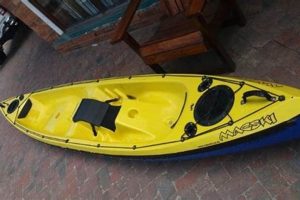
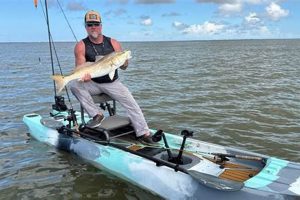
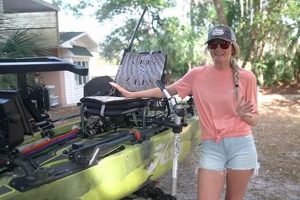
This sit-on-top vessel, manufactured by Wilderness Systems, is a specialized watercraft designed for angling. The “120” designates its approximate length in inches, indicating a relatively compact and maneuverable design. Its features typically include specialized storage for fishing gear, rod holders, and other amenities catered to anglers.
Such specialized kayaks offer significant advantages over traditional boats or general-purpose kayaks for fishing. Their stability, portability, and quiet operation allow anglers to access shallow or heavily vegetated waters often inaccessible to larger craft, increasing opportunities for diverse fishing experiences. This specific models relatively compact size can contribute to enhanced maneuverability, making it well-suited for navigating tight waterways. The design and features contribute to a hands-free fishing experience, maximizing efficiency and enjoyment on the water.
Further exploration will cover key features, performance characteristics, user experiences, and comparisons with similar kayaks in the market, offering a detailed perspective for prospective buyers and fishing enthusiasts.
Tips for Utilizing a Fishing Kayak Effectively
Maximizing the benefits of a fishing kayak requires understanding key operational and safety practices. These tips offer valuable insights for both novice and experienced anglers.
Tip 1: Prioritize Safety Gear: Always wear a personal flotation device (PFD). Carry a whistle, signaling mirror, and a waterproof communication device for emergencies.
Tip 2: Plan and Research: Check weather forecasts, water conditions, and local regulations before embarking on any fishing trip. Understanding the area’s fish species and their habitats will enhance fishing success.
Tip 3: Master Basic Paddling Techniques: Efficient paddling conserves energy and allows for greater range. Practice different strokes for maneuvering in various water conditions.
Tip 4: Organize and Secure Gear: Utilize onboard storage compartments effectively and ensure all gear is securely fastened to prevent loss or interference during paddling.
Tip 5: Practice Self-Rescue Techniques: Knowing how to re-enter the kayak after a capsize is crucial for safety. Practice these techniques in calm water before venturing into more challenging conditions.
Tip 6: Respect the Environment: Adhere to Leave No Trace principles. Pack out all trash, avoid disturbing wildlife, and respect sensitive ecosystems.
Tip 7: Maintain and Care for the Kayak: Regularly rinse the kayak with fresh water after each use, especially after exposure to saltwater. Inspect for damage and address any necessary repairs promptly.
Adhering to these guidelines promotes safe and enjoyable kayak fishing experiences while minimizing environmental impact and ensuring the longevity of the equipment.
This foundation of knowledge prepares anglers for a deeper exploration of specific techniques and strategies for successful kayak fishing.
1. Sit-on-top Design

The sit-on-top design of the Wilderness Systems Atak 120 fishing kayak offers distinct advantages for anglers. This configuration eliminates the enclosed cockpit found in traditional sit-inside kayaks, providing enhanced freedom of movement and facilitating easier entry and exit. Anglers can quickly change positions, cast from various angles, and even stand for sight fishing, increasing versatility and fishing success. The open design also simplifies re-entry after an accidental capsize, a crucial safety consideration. This configuration contributes to a more comfortable experience in warmer climates due to increased ventilation and reduced heat retention. The self-bailing scupper holes, characteristic of sit-on-top kayaks, further contribute to dryness and stability by draining any water that splashes aboard.
Compared to sit-inside kayaks, the sit-on-top design offers greater accessibility for anglers of varying sizes and physical abilities. The open deck accommodates larger individuals or those with limited mobility. For instance, an angler with knee or hip issues can more easily enter and exit a sit-on-top kayak. The unrestricted movement also allows for personalized gear organization and placement within easy reach, crucial for efficient fishing. The inherent stability of the sit-on-top design, coupled with the Atak 120’s specific hull design, contributes to a secure platform for casting and reeling, minimizing the risk of tipping, even in choppy water.
The sit-on-top design contributes significantly to the Atak 120’s suitability for fishing. Its inherent advantages of accessibility, stability, and ease of movement complement the kayak’s fishing-specific features, enhancing functionality and user experience. While sit-on-tops may offer slightly less protection from the elements and potentially some reduced speed compared to sit-inside kayaks, the benefits for fishing applications often outweigh these considerations. The design underscores the kayak’s focus on angler needs, facilitating a comfortable and efficient fishing platform in diverse environments.
2. Fishing-Specific Features
The Wilderness Systems Atak 120 differentiates itself through an array of features specifically designed for angling. These integrated elements enhance functionality and efficiency on the water, contributing directly to the kayak’s suitability for fishing. Rod holders, often multiple and strategically positioned, provide secure storage and quick access to fishing rods, freeing hands for other tasks. Gear tracks offer modularity, allowing anglers to customize the kayak with accessories like fish finders, cameras, or additional rod holders. Storage compartments, designed for tackle boxes and other fishing essentials, ensure organization and prevent gear from cluttering the deck. These purpose-built features minimize distractions and maximize fishing time, a critical aspect for angling success.
Consider the scenario of an angler targeting bass in a heavily vegetated area. The Atak 120’s flush-mounted rod holders allow for easy navigation through tight spaces without rod entanglement. Simultaneously, a readily accessible tackle box within a dedicated storage compartment allows for swift lure changes, adapting to fish behavior and maximizing opportunities. The stable platform provided by the kayak’s hull design, coupled with the hands-free operation facilitated by the rod holders, allows for precise casting and effective retrieval, even in challenging conditions. These integrated features combine to create a cohesive and efficient fishing platform.
Understanding the fishing-specific features of the Atak 120 is crucial for evaluating its practicality and suitability for individual angling needs. The strategic placement and design of these features reflect a focus on optimizing the fishing experience. While inherent stability and maneuverability are essential, the dedicated fishing features distinguish the Atak 120 from general-purpose kayaks, transforming it into a specialized tool for anglers. This focus on specialized functionality allows anglers to concentrate on the art of fishing, unburdened by logistical challenges or equipment limitations.
3. Maneuverability and Stability
Maneuverability and stability are critical performance characteristics for fishing kayaks, directly impacting their effectiveness in diverse aquatic environments. The Wilderness Systems Atak 120 addresses these attributes through a combination of design elements. Its relatively compact length contributes to enhanced maneuverability, allowing anglers to navigate tight waterways, shallow coves, and areas dense with vegetation. This agility is crucial for accessing prime fishing spots often inaccessible to larger vessels. The hull design, often featuring a flatter bottom and defined chines, contributes to primary stability, resisting initial tipping tendencies. Secondary stability, the kayak’s ability to remain stable at increasing angles of lean, is also essential, particularly when casting, fighting fish, or navigating turbulent water. The balanced interplay of maneuverability and stability allows anglers to confidently explore various fishing grounds while maintaining a secure and predictable platform.
Consider the scenario of fishing in a mangrove-lined creek. The Atak 120’s maneuverability allows for precise navigation through narrow channels and around submerged obstacles. Simultaneously, its stability ensures a secure platform for casting and retrieving lures, even when reaching or leaning to access specific pockets of water. In contrast, a longer, less maneuverable kayak might struggle to navigate the tight confines, while a less stable kayak could compromise safety and fishing effectiveness. The Atak 120’s design thus optimizes the angler’s ability to exploit diverse fishing environments.
The synergistic relationship between maneuverability and stability in the Atak 120 directly contributes to its utility as a fishing platform. This balance empowers anglers to access a wider range of fishing locations, maintain a secure casting position, and confidently navigate challenging conditions. Understanding these performance characteristics is crucial for selecting appropriate fishing grounds and maximizing angling success. The design choices inherent in the Atak 120 prioritize this balance, making it a versatile option for anglers seeking both agility and stability on the water.
4. Wilderness Systems Quality

Wilderness Systems has cultivated a reputation for quality within the kayak industry. This reputation directly influences the perceived value and expected performance of the Wilderness Systems Atak 120 fishing kayak. Examining the components of this perceived quality provides a deeper understanding of the kayak’s potential advantages and its position within the market.
- Durability and Construction:
Wilderness Systems often utilizes high-quality materials and construction techniques in their kayaks. This focus on durability translates to a longer lifespan, greater resistance to impact and abrasion, and enhanced performance in demanding conditions. For the Atak 120, this durability is essential given the potential exposure to rocks, submerged obstacles, and the general wear and tear associated with fishing activities. A robust construction contributes to the kayak’s long-term value and reliability.
- Design and Innovation:
Wilderness Systems frequently incorporates innovative design elements into their kayaks, enhancing functionality and user experience. In the Atak 120, this translates to features like the Phase 3 AirPro seating system, designed for comfort and adjustability, or the thoughtfully positioned storage compartments and gear tracks. These design elements reflect a focus on angler needs and contribute to a more efficient and enjoyable fishing experience.
- Performance Characteristics:
Quality construction and design often translate to enhanced performance on the water. The Atak 120’s stability, maneuverability, and tracking ability benefit from the manufacturer’s attention to detail and commitment to performance. This translates to a kayak that responds predictably and efficiently to paddling inputs, enhancing the angler’s control and overall fishing experience.
- Customer Support and Warranty:
A manufacturer’s commitment to customer support and warranty coverage further reflects their emphasis on quality. Wilderness Systems’ reputation for responsive customer service and comprehensive warranties provides buyers with confidence in their purchase and assurance of support in case of manufacturing defects or other issues. This contributes to the overall perceived value and long-term ownership experience of the Atak 120.
These facets of Wilderness Systems’ quality contribute to the overall perception and expected performance of the Atak 120. While individual experiences may vary, the manufacturer’s established reputation for quality serves as a significant factor influencing purchasing decisions and long-term owner satisfaction. The Atak 120, as a product of this commitment to quality, benefits from the accumulated experience and design philosophy of Wilderness Systems, potentially offering anglers a reliable and high-performing fishing platform.
5. Compact size (120 inches)

The 120-inch length of the Wilderness Systems Atak 120 fishing kayak is a defining characteristic, significantly influencing its performance and suitability for specific angling scenarios. This compact size presents a balance between maneuverability, storage capacity, and portability, factors crucial for navigating diverse waterways and transporting the kayak efficiently.
- Maneuverability in Confined Waters:
The shorter length of the Atak 120 enhances its maneuverability in tight spaces, such as narrow creeks, shallow coves, and areas with dense vegetation. This agility allows anglers to navigate complex waterways and access secluded fishing spots often unreachable by larger kayaks or boats. For example, navigating a winding creek choked with fallen branches becomes significantly easier with a shorter, more responsive kayak. This maneuverability directly translates to increased fishing opportunities in environments requiring precise navigation.
- Storage Capacity and Gear Organization:
While the compact size might imply limited storage, the Atak 120 incorporates design features to maximize available space. Recessed storage compartments and strategically positioned gear tracks allow anglers to carry essential fishing gear, including tackle boxes, rods, and other accessories, without compromising deck space or stability. The kayak’s compact footprint necessitates efficient gear organization, encouraging anglers to prioritize essential equipment and optimize storage solutions. This focus on essential gear can contribute to a more streamlined and efficient fishing experience.
- Portability and Transportation:
The 120-inch length facilitates easier transport compared to longer kayaks. The reduced weight and size simplify loading and unloading from vehicles, requiring less effort and potentially eliminating the need for specialized trailers or roof racks. This ease of transport expands accessibility for anglers without access to larger vehicles or those who prefer simpler logistics. For example, an angler with a compact car can more easily transport the Atak 120, expanding their range of fishing locations.
- Trade-offs and Considerations:
While the compact size offers advantages in maneuverability and portability, it also presents certain trade-offs. Tracking performance, the kayak’s ability to maintain a straight course, might be slightly reduced compared to longer kayaks. Additionally, the smaller deck space might limit onboard capacity for larger anglers or those carrying extensive gear. Understanding these trade-offs is crucial for selecting the appropriate kayak based on individual needs and intended fishing environments. For example, anglers prioritizing long-distance paddling on open water might find a longer kayak more suitable, while those focusing on tight, technical waterways will appreciate the maneuverability of the Atak 120.
The compact size of the Atak 120 is integral to its identity as a fishing kayak. It reflects a design philosophy that prioritizes maneuverability and portability, catering to anglers who value access to diverse and challenging fishing environments. Understanding the implications of this compact size, including its advantages and trade-offs, allows anglers to make informed decisions based on their specific needs and preferences, maximizing their fishing experience on the water.
6. Target user

The Wilderness Systems Atak 120 fishing kayak demonstrates a deliberate design philosophy centered around the needs of anglers. This focus distinguishes it from recreational kayaks and underscores its purpose as a specialized tool for fishing. Cause and effect relationships exist between the target user (anglers) and the kayak’s design features. For example, the need for hands-free fishing directly influences the inclusion of multiple rod holders. Similarly, the requirement for readily accessible tackle and gear drives the incorporation of strategically placed storage compartments and gear tracks. The kayak’s very existence is predicated on the needs and desires of the angling community.
The “angler” as the target user is not merely a demographic category; it is the foundational principle driving the Atak 120’s development and features. Consider a fly fisherman wading in a fast-moving river. The Atak 120’s stability becomes essential for maintaining balance while casting and playing fish. Its maneuverability allows for navigating shallow riffles and accessing prime fishing locations. The integrated rod holders offer convenient storage and quick access to different fly rods. Each feature directly addresses challenges faced by anglers in specific fishing scenarios, demonstrating the practical significance of understanding the target user. Another example involves bass fishing in a heavily vegetated lake. The Atak 120’s compact size and maneuverability allow penetration into dense cover where bass often lurk. The stability and open deck facilitate standing for improved visibility and casting accuracy. The integrated features become tools that empower anglers to overcome environmental challenges and pursue their fishing objectives effectively.
Understanding the angler as the target user unlocks the full potential of the Atak 120. Recognizing the design choices driven by angling needsstability for casting, storage for tackle, maneuverability for accessing diverse locationsallows for a more informed appreciation of the kayak’s purpose and value. While challenges such as limited storage capacity or tracking performance in open water might exist, these are often balanced against the kayak’s strengths in specific fishing environments. The Atak 120 stands as a testament to the importance of user-centric design in specialized equipment, demonstrating how a clear understanding of the target user leads to the development of tools optimized for specific activities and environments.
Frequently Asked Questions
This section addresses common inquiries regarding the Wilderness Systems Atak 120 fishing kayak, providing concise and informative responses.
Question 1: What is the weight capacity of the Atak 120?
The Atak 120 typically boasts a weight capacity exceeding 400 pounds, accommodating anglers, gear, and potential catches comfortably.
Question 2: What materials are used in its construction?
The kayak is commonly constructed from rotomolded polyethylene, known for its durability, impact resistance, and UV stability, ensuring longevity in diverse environments.
Question 3: Does the Atak 120 come with a paddle?
Paddles are typically sold separately, allowing anglers to select a paddle tailored to their individual preferences and paddling style.
Question 4: Can a fish finder be installed on the Atak 120?
Yes, integrated gear tracks and mounting points facilitate the installation of fish finders and other electronic accessories, enhancing angling capabilities.
Question 5: Is the Atak 120 suitable for ocean use?
While designed primarily for inland waters and calmer coastal environments, the Atak 120’s stability and performance characteristics make it suitable for nearshore ocean use in appropriate conditions.
Question 6: How does the Atak 120 compare to other fishing kayaks in its class?
The Atak 120 distinguishes itself through a combination of stability, maneuverability, and fishing-specific features, often exceeding competitors in its class. Direct comparisons depend on individual angler priorities and intended usage.
Understanding these key aspects assists potential buyers in evaluating the Atak 120’s suitability for individual needs and fishing preferences. Research and comparison with similar models are encouraged for informed decision-making.
The next section explores user reviews and experiences, providing valuable insights into real-world performance and owner satisfaction.
Conclusion
This exploration of the Wilderness Systems Atak 120 fishing kayak encompassed key features, design elements, performance characteristics, and user considerations. Its compact size, stability, and maneuverability cater specifically to anglers navigating diverse waterways. Fishing-specific features, such as rod holders, gear tracks, and storage compartments, enhance functionality and on-the-water efficiency. The sit-on-top design contributes to accessibility and ease of use, while Wilderness Systems’ reputation for quality suggests durability and reliable performance. Understanding these attributes provides a comprehensive perspective for evaluating the kayak’s suitability for individual angling needs.
The Atak 120 represents a notable option within the fishing kayak market. Informed decision-making, however, necessitates further research, including user reviews and comparisons with similar models. Careful consideration of individual fishing styles, target species, and preferred environments will ultimately guide the selection of appropriate equipment. The Atak 120’s strengths lie in its specialized design, offering a dedicated platform for anglers seeking enhanced functionality and performance on the water. Continued exploration and informed choices empower anglers to maximize their experiences and pursue their passion effectively.