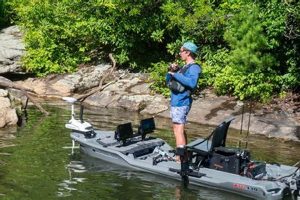
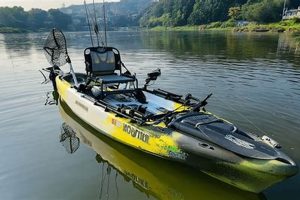
Specialized design elements incorporated into kayaks enhance angling experiences. These adaptations might include rod holders, tackle storage compartments, anchor trolleys, and specialized seating designed for comfort and stability during casting and reeling. For example, a recessed tackle tray keeps lures and tools organized and within easy reach, while a stable hull platform allows for stand-up fishing.
These design considerations contribute significantly to angler success and enjoyment. They offer convenience, improved organization, and enhanced safety, allowing anglers to focus on fishing rather than managing equipment or maintaining balance. Historically, fishing kayaks evolved from basic, all-purpose designs to highly specialized vessels reflecting the diverse needs of anglers in various fishing environments, from calm lakes to open ocean.
The following sections will explore specific design elements in detail, examining their functionality and benefits in various fishing scenarios. Topics covered will include hull design, propulsion systems, seating configurations, storage solutions, and accessory integration.
Tips for Selecting a Kayak Based on its Features
Choosing a fishing kayak requires careful consideration of various features to ensure optimal performance and angler satisfaction. Matching specific design elements to individual fishing styles and target environments leads to a more productive and enjoyable experience.
Tip 1: Consider Hull Design: Kayak hull designs significantly influence stability and maneuverability. A wider, flatter hull offers greater stability, ideal for calm waters and stand-up fishing, while a longer, narrower hull provides better tracking and speed for covering greater distances.
Tip 2: Evaluate Propulsion Systems: Paddle kayaks offer excellent exercise and control, while pedal-driven systems allow hands-free fishing and faster speeds. Motorized kayaks provide the greatest range and power, particularly useful in larger bodies of water or strong currents.
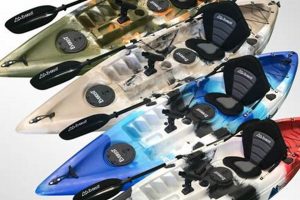
Tip 3: Assess Seating Comfort and Adjustability: Long fishing trips necessitate a comfortable and supportive seat. Look for adjustable seating systems that allow for varied positions and accommodate different body types.
Tip 4: Prioritize Storage Capacity and Accessibility: Ample storage space for tackle, gear, and catches is crucial. Consider the size, location, and accessibility of storage compartments to ensure efficient organization and retrieval of items.
Tip 5: Examine Rod Holders and Mounting Options: Dedicated rod holders and mounting options free up hands and facilitate efficient fishing. Evaluate the number, placement, and adjustability of rod holders to suit preferred fishing techniques.
Tip 6: Inspect Accessory Integration: Consider the compatibility of the kayak with essential accessories such as fish finders, GPS units, and anchor trolleys. Integrated mounting points and wiring systems simplify installation and enhance functionality.
Tip 7: Factor in Weight and Portability: The kayak’s weight and portability influence transportation and launching ease. Consider the available transport options and physical capabilities when selecting a kayak.
By carefully evaluating these features, anglers can select a kayak that perfectly aligns with their individual needs and fishing preferences, ultimately maximizing their enjoyment and success on the water.
These tips provide a starting point for selecting a fishing kayak. Further research and consultation with experienced anglers can offer additional insights tailored to specific fishing environments and target species.
1. Stability

Stability is a critical fishing kayak feature directly influencing angler safety and fishing effectiveness. A stable platform allows for comfortable casting, reeling, and landing fish, even in challenging conditions such as wind, waves, or current. Kayak stability is primarily determined by hull design, width, and length. Wider kayaks generally offer greater initial stability, resisting tipping, while longer, narrower kayaks tend to have superior secondary stability, recovering more easily from leans or rocking. For example, a wide, flat-bottomed hull provides a stable platform ideal for stillwater fishing and stand-up casting, whereas a V-shaped hull offers better performance in rougher waters but sacrifices some initial stability. The choice depends on the intended fishing environment and angler preferences.
Understanding the relationship between stability and other features is crucial. Adding weight, such as gear or a heavier angler, alters the kayak’s center of gravity and affects stability. Features like outriggers or stabilizers can enhance stability, particularly for anglers who prefer to stand while fishing. Furthermore, the kayak’s intended use influences the required level of stability. A kayak designed for calm lakes prioritizes initial stability for comfort and ease of casting, while an ocean fishing kayak emphasizes secondary stability to handle waves and swells. Analyzing the interplay of these factors helps anglers choose a kayak that offers the appropriate stability characteristics for their specific needs.
Ultimately, selecting a kayak with appropriate stability characteristics enhances fishing safety and effectiveness. Anglers must consider their skill level, fishing environment, and intended activities when evaluating stability. Prioritizing stability alongside other essential features ensures a comfortable and productive fishing experience, allowing anglers to focus on fishing rather than constantly battling to maintain balance. This understanding facilitates informed decision-making and contributes to safer and more enjoyable on-the-water experiences.
2. Storage Capacity

Sufficient storage capacity is a crucial element in fishing kayak design, directly impacting organization, efficiency, and overall fishing success. Effective storage solutions allow anglers to carry essential gear, tackle, and personal items while maintaining a clutter-free and balanced vessel. Understanding the nuances of storage capacity contributes significantly to a more productive and enjoyable fishing experience.
- Types of Storage Compartments:
Fishing kayaks offer various storage options, including front hatch compartments, rear tank wells, side pockets, and integrated tackle trays. Front hatches provide secure storage for larger items like extra clothing or lunch, while rear tank wells accommodate crates or buckets for storing catches. Side pockets offer quick access to frequently used items like pliers or sunscreen. Integrated tackle trays keep lures and tools organized and within easy reach. Choosing a kayak with a variety of storage compartments tailored to specific needs enhances organization and efficiency on the water.
- Capacity and Accessibility:
The overall storage capacity and accessibility of compartments influence how much gear can be carried and how easily it can be retrieved. Larger hatches and tank wells offer greater capacity, while well-placed and easily accessible compartments minimize disruption to fishing activities. For instance, a large rear tank well can hold a substantial amount of gear, but if access requires awkward reaching or maneuvering, it can negatively impact fishing flow. Evaluating both capacity and accessibility ensures that gear is readily available when needed without compromising stability or efficiency.
- Storage Security and Waterproofing:
Protecting gear from water damage and loss is paramount. Dry hatches with secure seals prevent water intrusion, safeguarding valuable electronics, phones, and cameras. Bungee cords or tie-down straps within storage areas secure loose items and prevent shifting during transport or rough conditions. For example, a waterproof hatch with a reliable sealing system ensures that essential electronics remain dry, even in the event of capsizing or unexpected splashes. Prioritizing secure and waterproof storage safeguards equipment and contributes to peace of mind on the water.
- Weight Distribution and Kayak Balance:
Proper weight distribution within storage compartments influences kayak stability and performance. Distributing weight evenly across the kayak helps maintain balance and prevents tipping. Loading heavier items closer to the center of gravity enhances stability, while keeping frequently accessed items within easy reach minimizes unnecessary movement and maintains fishing efficiency. For instance, placing heavier gear in the center hatch and lighter items in the bow and stern improves overall balance and tracking. Considering weight distribution when organizing storage contributes to a more stable and efficient fishing platform.
By strategically evaluating storage capacity, anglers can optimize their kayak setup for maximum efficiency and enjoyment. Balancing capacity, accessibility, security, and weight distribution leads to a well-organized and balanced vessel, allowing anglers to focus on fishing rather than managing gear. This meticulous approach to storage enhances the overall fishing experience, contributing to greater success and satisfaction on the water.
3. Propulsion Method
Propulsion method represents a defining characteristic of fishing kayaks, directly influencing speed, range, maneuverability, and overall fishing effectiveness. Selecting an appropriate propulsion system depends on individual fishing styles, target environments, and physical capabilities. Understanding the advantages and disadvantages of various propulsion methods is crucial for informed decision-making.
- Paddle Propulsion:
Traditional paddle kayaks offer excellent maneuverability and precise control, allowing anglers to navigate tight spaces and shallow waters effectively. They provide a quiet and stealthy approach, minimizing disturbance to fish. Paddle propulsion also offers physical exercise and a direct connection to the water. However, paddling can be tiring, especially during long fishing trips or against strong currents, limiting range and potentially impacting fishing focus.
- Pedal Propulsion:
Pedal-driven kayaks utilize leg power for propulsion, freeing hands for fishing and offering a more efficient and less tiring alternative to paddling. They provide greater speed and range, enabling anglers to cover more water and reach distant fishing spots. However, pedal kayaks tend to be heavier and more expensive than paddle kayaks, and their maneuverability in tight spaces can be somewhat limited. Examples include propeller-based and fin-driven systems, each with specific advantages and disadvantages related to speed, maneuverability, and maintenance.
- Motorized Propulsion:
Motorized kayaks offer the greatest speed and range, enabling anglers to access distant fishing grounds and navigate strong currents effortlessly. Electric motors provide quiet and environmentally friendly operation, while gasoline-powered motors offer greater power and range. However, motorized kayaks require battery management or fuel, adding complexity and weight. Regulations regarding motorized watercraft also vary by location and should be considered. Transom-mounted and integrated in-hull motors represent distinct options, impacting performance and maneuverability differently.
- Considerations for Selection:
Choosing the appropriate propulsion system requires careful evaluation of fishing style, target environment, and personal preferences. Anglers fishing in calm, shallow waters might prioritize the maneuverability and stealth of a paddle kayak. Those seeking greater speed and range for larger bodies of water might opt for a pedal or motorized kayak. Physical limitations and budget constraints also play a role in the decision-making process. Understanding the interplay of these factors leads to a more informed choice and a kayak better suited to individual needs.
The propulsion method fundamentally shapes the fishing kayak experience, impacting efficiency, range, and accessibility. By carefully considering the advantages and disadvantages of each propulsion system, anglers can select a kayak that optimally aligns with their specific fishing styles and target environments. This informed decision contributes significantly to enhanced fishing success and overall enjoyment on the water.
4. Rod Holders

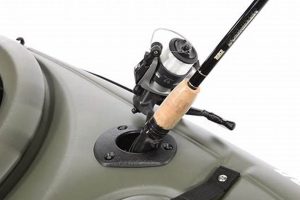
Rod holders constitute an integral component of fishing kayak features, significantly influencing angling efficiency and safety. They provide secure storage and readily accessible positioning of fishing rods, enabling anglers to manage multiple lines, switch techniques quickly, and respond effectively to fish strikes. Without dedicated rod holders, anglers face the cumbersome task of juggling rods, increasing the risk of tangling lines, losing rods overboard, or hindering quick reactions to bites. For example, an angler trolling two lines benefits from rod holders positioned to keep lines separated and prevent entanglement. Similarly, an angler targeting different species might utilize multiple rods rigged with specific lures; rod holders allow for quick transitions between techniques without the need to stow and re-rig each time. This organized approach enhances fishing efficiency and maximizes opportunities for success.
Several types of rod holders cater to diverse fishing styles and kayak configurations. Flush-mounted rod holders integrate seamlessly with the kayak’s deck, minimizing obstructions and offering a streamlined profile. Adjustable rod holders provide flexibility in positioning rods at various angles, accommodating different fishing techniques and preferences. Rotating rod holders facilitate trolling and allow for quick adjustments to changing currents or fish movement. Specialized rod holders accommodate specific rod types, such as fly rods or heavy-duty saltwater rods. Furthermore, the number and placement of rod holders influence fishing versatility. Multiple rod holders enable anglers to employ various techniques simultaneously, while strategically placed holders minimize interference and maximize casting angles. Understanding the nuances of rod holder types and placement allows anglers to optimize their kayak setup for specific fishing scenarios.
Effective rod holder utilization enhances fishing safety by minimizing clutter and maximizing control. Securely stored rods prevent accidental entanglement, reducing the risk of injury or equipment damage. readily accessible rods allow for swift reactions to fish strikes, minimizing lost opportunities. In challenging conditions, such as rough water or strong currents, secure rod storage prevents loss of valuable equipment. The strategic placement of rod holders contributes to a balanced and organized kayak, enhancing stability and maneuverability. Therefore, careful consideration of rod holder features is essential for optimizing fishing efficiency, safety, and overall success. This understanding contributes to a more enjoyable and productive angling experience, allowing anglers to focus on the pursuit of fish rather than managing equipment challenges.
5. Comfort

Comfort plays a crucial role in fishing kayak features, directly influencing angler endurance, focus, and overall enjoyment. Extended periods on the water necessitate a comfortable seating system and ergonomic design elements that minimize fatigue and maximize fishing effectiveness. Discomfort can distract from the fishing experience, leading to reduced concentration and potentially impacting success. For example, an uncomfortable seat can cause back pain and stiffness, hindering an angler’s ability to cast effectively or react quickly to a fish strike. Conversely, a well-designed, adjustable seat with lumbar support and breathable fabric allows for prolonged fishing sessions without physical strain, enabling anglers to maintain focus and maximize their time on the water. Similarly, ample legroom and strategically placed footrests contribute to overall comfort and prevent cramping, particularly during long paddles or challenging conditions. The interplay between these comfort-focused features directly impacts angler performance and the overall quality of the fishing experience.
Several design elements contribute to kayak fishing comfort. Adjustable seating systems allow anglers to customize their position, accommodating individual body types and fishing styles. Features like padded seats, adjustable backrests, and breathable fabrics enhance comfort during extended trips. Ample legroom and adjustable footrests accommodate different leg lengths and prevent cramping, promoting circulation and reducing fatigue. Ergonomically designed cockpits and decks minimize strain on joints and muscles, allowing for natural body positioning during casting and reeling. Furthermore, features like integrated cup holders, accessory mounts, and strategically placed storage compartments contribute to convenience and minimize the need for awkward reaching or bending, enhancing overall comfort and efficiency. Understanding the impact of these design considerations empowers anglers to prioritize comfort when selecting a kayak, ultimately contributing to a more enjoyable and productive fishing experience.
Prioritizing comfort in fishing kayak selection significantly enhances the overall angling experience. A comfortable kayak allows anglers to focus on fishing rather than physical discomfort, maximizing enjoyment and potentially increasing success. This understanding underscores the practical significance of comfort as a key feature, highlighting its direct impact on angler performance and long-term satisfaction. Investing in a comfortable kayak translates to more time spent enjoying the sport and less time battling fatigue or discomfort, ultimately contributing to a richer and more rewarding fishing experience. Neglecting comfort, conversely, can lead to premature fatigue, diminished enthusiasm, and a potentially negative overall impression of the sport. Recognizing the importance of comfort as a crucial element of fishing kayak features empowers anglers to make informed decisions that prioritize both performance and enjoyment.
Frequently Asked Questions about Fishing Kayak Features
This section addresses common inquiries regarding fishing kayak features, providing concise and informative responses to aid in the selection process.
Question 1: How does hull design impact kayak stability and performance?
Hull design significantly influences stability and maneuverability. Wider, flatter hulls offer greater initial stability, ideal for calm water and stand-up fishing. Longer, narrower hulls provide better tracking and speed, suited for covering distance and paddling in currents. V-shaped hulls enhance performance in rougher water but may sacrifice some initial stability.
Question 2: What are the primary advantages and disadvantages of different propulsion systems?
Paddle propulsion offers maneuverability, affordability, and exercise but can be tiring over long distances. Pedal drives provide hands-free fishing and increased speed but add cost and complexity. Motorized kayaks offer the greatest speed and range but require battery management or fuel and may face usage restrictions.
Question 3: How important is seat comfort for long fishing trips?
Seat comfort is paramount for extended fishing trips. An uncomfortable seat leads to fatigue and reduced focus. Look for adjustable seating systems with lumbar support, breathable fabric, and ample padding to maximize comfort and endurance.
Question 4: What storage features should one consider when choosing a fishing kayak?
Evaluate storage capacity, accessibility, and security. Consider the types of compartments (hatches, tank wells, side pockets), their size and placement, and the presence of waterproof seals or tie-down systems to protect gear from water and shifting during transport.
Question 5: What types of rod holders are commonly found on fishing kayaks, and how do they differ?
Common rod holder types include flush-mounted, adjustable, rotating, and specialized holders for specific rod types. They differ in terms of adjustability, positioning flexibility, and compatibility with different fishing techniques. Consider the number and placement of rod holders to suit individual fishing styles.
Question 6: Beyond the core features, what other factors contribute to a positive fishing kayak experience?
Other factors include weight and portability, accessory compatibility (fish finders, GPS units, anchor trolleys), and overall build quality. Consider transportation and launching logistics, the availability of integrated mounting points for accessories, and the kayak’s durability and resistance to wear and tear.
Careful consideration of these frequently asked questions empowers informed decision-making, facilitating the selection of a fishing kayak optimized for individual needs and preferences.
The next section will provide a detailed comparison of popular fishing kayak models, highlighting their key features and performance characteristics.
Fishing Kayak Features
Careful selection based on fishing kayak features significantly impacts angling success and enjoyment. Hull design, propulsion systems, storage capacity, rod holders, and comfort elements contribute uniquely to the overall fishing experience. Matching these features to individual fishing styles and target environments optimizes performance, efficiency, and on-the-water satisfaction. Understanding the nuances of these features empowers informed decision-making, leading to the selection of a vessel that enhances, rather than hinders, angling pursuits.
Ultimately, the considered evaluation of fishing kayak features represents an investment in long-term angling fulfillment. Prioritizing these elements during the selection process ensures a more productive, comfortable, and ultimately rewarding time on the water. This informed approach elevates the kayak fishing experience from mere recreation to a truly optimized pursuit of angling passion.