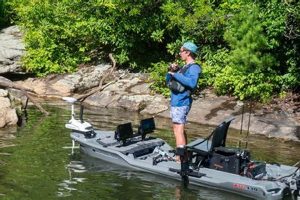
This traditional boat building method involves constructing a lightweight frame, typically from wood or other natural materials, and then stretching a durable, waterproof skin over it. Historically, animal skins were used, but modern versions often employ synthetic fabrics like nylon or polyester coated with specialized waterproof resins. The result is a craft renowned for its lightweight nature, responsiveness, and close connection to the water.
These kayaks offer several advantages for anglers. Their light weight makes them easy to transport and maneuver, especially in shallow water or across portages. The flexible frame provides a unique feel and responsiveness on the water, allowing for efficient paddling and quick turns. Furthermore, the construction technique often allows for customization to suit individual needs and preferences. This method of boat building has a rich history, tracing back to indigenous cultures in various parts of the world, highlighting its enduring practicality and efficiency.
Further exploration will cover the materials, tools, and techniques involved in constructing such a vessel, as well as its performance characteristics and suitability for various fishing environments. The nuances of maintenance and repair will also be addressed, providing a complete understanding of this venerable watercraft.
Tips for Building and Using a Skin-on-Frame Kayak
Careful consideration of design, materials, and technique is crucial for a successful build and enjoyable experience. The following tips offer guidance for constructing and utilizing this type of watercraft.
Tip 1: Frame Material Selection: Choosing appropriate wood species is paramount. Species offering a balance of strength, flexibility, and rot resistance, such as cedar, spruce, or ash, are recommended.
Tip 2: Precise Joinery: Accurate joinery is essential for structural integrity. Techniques like lashing, mortise and tenon, or scarf joints ensure a strong and reliable frame.
Tip 3: Skin Selection and Application: Modern synthetic fabrics like ballistic nylon or polyester offer durability and waterproofing. Careful application, with proper tensioning and sealing, is vital for a watertight hull.
Tip 4: Protective Coatings: Applying multiple coats of a UV-resistant, waterproof sealant to the skin protects against the elements and extends its lifespan.
Tip 5: Proper Storage and Maintenance: Storing the kayak in a cool, dry place prevents deterioration. Regular inspection and repair of any damage to the skin or frame ensures continued performance and safety.
Tip 6: Paddling Technique: Efficient paddling techniques maximize speed and minimize fatigue. Understanding proper body positioning and blade entry and exit angles enhances performance and reduces strain.
Tip 7: Safety Considerations: Wearing a personal flotation device and carrying essential safety gear, like a whistle and signaling device, is crucial for safe navigation.
Adherence to these guidelines ensures a successful build process, resulting in a lightweight, responsive, and enjoyable kayaking experience. Proper maintenance and safe paddling practices contribute to the longevity of the craft and the safety of its user.
The following section will provide additional resources and information for further exploration of this rewarding endeavor.
1. Lightweight Construction

Lightweight construction is a defining characteristic of skin-on-frame kayaks, significantly influencing their performance, portability, and overall appeal. This design principle stems from the inherent nature of the building method and material choices, offering distinct advantages for paddlers.
- Reduced Material Density:
The use of lightweight wood species like cedar, spruce, or western red cedar for the frame minimizes overall weight. These woods offer a high strength-to-weight ratio, providing structural integrity without unnecessary bulk. The skin, often a lightweight synthetic fabric such as nylon or polyester, further contributes to the kayak’s low mass. This allows for effortless carrying and maneuvering, crucial for navigating shallow waters, portages, and challenging terrain.
- Simplified Frame Design:
The frame’s minimalist structure, employing only essential components for support and shape, eliminates excess weight. Longitudinal stringers and ribs, strategically placed for optimal strength and flexibility, contribute to the kayak’s lightweight nature without compromising its structural integrity. This efficient design philosophy maximizes performance while minimizing material usage.
- Enhanced Maneuverability and Speed:
The reduced mass translates directly into improved maneuverability and speed. Less effort is required to propel and control the kayak, enabling quick turns and efficient paddling strokes. This responsiveness is particularly advantageous in dynamic environments, such as rivers or coastal waters, where agility and speed are paramount.
- Ease of Transportation and Storage:
The lightweight nature simplifies transportation and storage. These kayaks can be easily car-topped, carried by hand, or stored in compact spaces. This portability opens up access to remote waterways and simplifies logistical challenges associated with heavier craft.
The emphasis on lightweight construction in skin-on-frame kayak design contributes significantly to their unique appeal. The combination of reduced material density, simplified frame design, enhanced maneuverability, and ease of transport positions these kayaks as an attractive option for paddlers seeking a close connection with the water and an efficient, enjoyable paddling experience.
2. Traditional Building Methods

Traditional building methods are integral to the identity and performance of skin-on-frame fishing kayaks. These time-honored techniques, often passed down through generations, represent a connection to the historical roots of kayak construction and offer unique advantages in terms of functionality, customization, and sustainability. Exploring these methods provides insights into the craftsmanship and ingenuity inherent in these vessels.
- Frame Construction:
Traditional frames utilize natural materials, primarily wood, chosen for their specific properties like strength, flexibility, and rot resistance. Species such as cedar, spruce, and ash are common choices. The frame components are carefully shaped and joined using techniques like lashing, mortise and tenon, or scarf joints. Lashing, a technique involving wrapping joints with cordage, exemplifies the resourcefulness of traditional methods. These techniques, often requiring minimal tooling, contribute to the lightweight and repairable nature of the kayak.
- Skin Application:
Historically, animal skins provided the waterproof covering for these kayaks. While modern materials like nylon or polyester are now prevalent, the application process retains elements of traditional practice. The skin is stretched tautly over the frame and secured, creating a watertight seal. Traditional methods might involve sewing the skin together or using specialized glues derived from natural sources. This meticulous process ensures a snug fit and optimal performance on the water.
- Sealants and Coatings:
Protecting the frame and skin from the elements is crucial for longevity. Traditionally, natural oils and resins were employed to waterproof and preserve the materials. These practices, often utilizing locally sourced resources, demonstrate a sustainable approach to boat building. While modern synthetic sealants offer enhanced performance, understanding the historical use of natural materials provides valuable context and insights into sustainable alternatives.
- Tooling and Techniques:
Traditional building methods often rely on a limited set of hand tools, emphasizing the skill and craftsmanship of the builder. Hand-carved components and meticulous joinery demonstrate a deep understanding of material properties and construction techniques. This reliance on hand tools allows for adaptability and precision, essential for crafting a functional and aesthetically pleasing vessel.
The traditional building methods employed in crafting skin-on-frame fishing kayaks offer a tangible link to the rich history of boatbuilding. These methods, emphasizing natural materials, handcrafted components, and time-tested techniques, contribute to the unique character, performance, and sustainability of these remarkable watercraft. Understanding these traditional approaches provides a deeper appreciation for the craftsmanship and ingenuity embodied in skin-on-frame kayak construction.
3. Customization Options

Customization options represent a significant advantage of skin-on-frame kayak construction. The flexible nature of the building process allows for adaptations tailored to individual needs and preferences, enhancing both functionality and the personal connection between paddler and craft. This inherent adaptability distinguishes these kayaks from mass-produced models, offering a bespoke experience rarely found in modern boatbuilding.
The ability to modify the frame design during construction allows for adjustments to length, width, and cockpit dimensions. This ensures a proper fit and comfortable paddling posture, crucial for long journeys or specialized fishing techniques. Deck rigging, storage compartments, and specialized mounts for fishing gear can be integrated seamlessly into the frame design, further enhancing functionality. The choice of skin material also presents opportunities for customization. Different fabrics offer varying degrees of durability, weight, and color, allowing individuals to prioritize specific performance characteristics or aesthetic preferences. Examples include incorporating a reinforced keel strip for enhanced abrasion resistance in shallow waters or selecting a brightly colored skin for increased visibility in open water.
This level of customization fosters a deeper sense of ownership and connection with the kayak. The process of designing and building a craft tailored to one’s specific requirements transforms the kayak from a mere vessel into a personalized extension of the paddler. This close relationship enhances the overall paddling experience, promoting a stronger bond with the water and the surrounding environment. Furthermore, the ability to repair and modify the kayak over time contributes to its longevity and adaptability to evolving needs. While requiring a greater investment of time and effort compared to purchasing a pre-built kayak, the benefits of customization extend far beyond mere functionality, enriching the entire kayaking experience through personalization, adaptability, and a deeper appreciation for the craft.
4. Responsive Handling

Responsive handling is a defining characteristic of skin-on-frame fishing kayaks, directly influencing their performance and suitability for various fishing environments. This responsiveness stems from the unique interaction between the lightweight frame, flexible skin, and the paddler’s input, creating a dynamic and engaging paddling experience. Understanding the factors contributing to this responsiveness is crucial for appreciating the performance advantages these kayaks offer.
- Lightweight Construction and Low Inertia:
The minimal weight of these kayaks, due to the lightweight frame and skin materials, results in low inertia. This allows for rapid acceleration and deceleration, enabling quick turns and efficient maneuvering in tight spaces. This agility is particularly advantageous when navigating complex waterways, pursuing fish, or reacting to changing currents and wind conditions. The reduced effort required for maneuvering enhances efficiency and reduces fatigue during long paddling sessions.
- Flexible Skin and Energy Transfer:
The flexible skin conforms to the water’s surface, creating a close connection that enhances energy transfer from the paddler’s strokes to the kayak’s movement. This direct connection translates to efficient propulsion and responsive handling. Unlike rigid hulls, the flexible skin allows the kayak to flex slightly with the water, absorbing some energy from waves and chop, resulting in a smoother and more forgiving ride, particularly beneficial in rougher conditions.
- Frame Design and Hull Shape:
The frame design and resulting hull shape play a crucial role in determining the kayak’s handling characteristics. A shallow-arched hull, typical of many skin-on-frame designs, enhances maneuverability and responsiveness, while a deeper-arched hull offers greater tracking and stability. The length and width of the kayak also influence its turning radius and overall agility. These design elements can be customized to suit specific paddling styles and fishing environments.
- Paddler Connection and Feedback:
The close connection between the paddler and the kayak, facilitated by the lightweight construction and flexible skin, provides enhanced feedback from the water. This heightened sensitivity allows the paddler to feel subtle changes in current, water pressure, and kayak movement, enabling precise adjustments to paddling technique and maximizing efficiency. This intimate connection with the water contributes to a more engaging and dynamic paddling experience.
The responsive handling of skin-on-frame fishing kayaks is a result of the synergistic relationship between lightweight construction, flexible skin, frame design, and the paddler’s input. This responsiveness translates to enhanced maneuverability, efficiency, and a dynamic connection with the water, making these kayaks well-suited for anglers seeking a nimble and engaging paddling experience. This characteristic, combined with the customization options and traditional building techniques, further solidifies the unique appeal of skin-on-frame kayaks for discerning paddlers.
5. Close-to-water experience
The intimate connection with the water afforded by a skin-on-frame fishing kayak distinguishes it from other kayaking experiences. This proximity to the water’s surface enhances not only the angler’s awareness of the surrounding environment but also provides a unique sensory experience, enriching the overall interaction with nature.
- Enhanced Sensory Perception:
The lightweight and responsive nature of these kayaks amplifies the paddler’s sensory perception of the water. Subtle changes in current, temperature variations, and the texture of the water’s surface become more pronounced. This heightened awareness fosters a deeper understanding of the aquatic environment and enhances the overall paddling experience. Feeling the subtle push and pull of the current against the hull provides immediate feedback, allowing for precise adjustments in paddling technique. The sounds of water lapping against the thin skin and the sensation of cool water splashing over one’s hands create a visceral connection with the surrounding environment. This heightened sensitivity transforms a simple paddle into a multi-sensory immersion in nature.
- Improved Fishing Engagement:
The low profile and minimal draft of skin-on-frame kayaks allow anglers to access shallow waters and navigate tight spaces often inaccessible to larger, heavier boats. This proximity to the water’s surface provides a distinct advantage for sight fishing and casting in shallow areas. Feeling the subtle vibrations of a fish striking the lure through the responsive hull adds another dimension to the fishing experience. The kayak’s maneuverability allows for quick adjustments in position, maximizing fishing opportunities and enhancing the overall success of the outing.
- Increased Connection with Nature:
The minimalist design and close-to-water feel of skin-on-frame kayaks foster a stronger connection with the natural environment. The quiet operation, powered by human effort rather than a motor, minimizes disruption to the surrounding ecosystem. This allows paddlers to observe wildlife more closely, appreciate the subtle sounds of nature, and experience the tranquility of the water in a more intimate way. The absence of a bulky hull separating the paddler from the water creates a sense of immersion, fostering a deeper appreciation for the delicate balance of the aquatic ecosystem.
- Heightened Sense of Vulnerability and Self-Reliance:
The intimate connection with the water inherent in skin-on-frame kayaking can also instill a heightened sense of vulnerability and self-reliance. The thin skin and lightweight frame create a visceral awareness of the power and dynamism of the water. This experience encourages paddlers to develop a deeper respect for the environment and to cultivate essential skills in navigation, water safety, and self-sufficiency. This heightened awareness promotes responsible paddling practices and fosters a greater appreciation for the challenges and rewards of navigating the water in a more direct and intimate manner.
The close-to-water experience offered by a skin-on-frame fishing kayak enhances the overall paddling and fishing experience, fostering a deeper connection with nature and promoting a sense of self-reliance. This unique interaction with the water distinguishes these kayaks from other craft, providing a truly immersive and rewarding experience for those seeking a closer connection with the aquatic environment.
6. Sustainable Materials
Sustainable materials are integral to the ethos of skin-on-frame kayak construction, reflecting a commitment to environmentally responsible boat building. This approach minimizes environmental impact through material selection, construction techniques, and end-of-life considerations. The use of renewable resources, reduced reliance on synthetic materials, and the potential for biodegradability contribute to a lower carbon footprint and reduced pressure on natural resources. The inherent repairability of these kayaks further extends their lifespan, reducing the need for frequent replacements and minimizing waste.
Wooden frames typically utilize locally sourced timber from sustainably managed forests. Species such as cedar, spruce, or ash are favored for their strength, flexibility, and natural resistance to rot and decay. These woods offer a renewable alternative to synthetic materials derived from fossil fuels. Modern skin coverings often employ synthetic fabrics like nylon or polyester. However, advancements in bio-based polymers offer potential alternatives with reduced reliance on petroleum-based products. Natural sealants and coatings derived from plant-based oils and resins provide water resistance and protection while minimizing the use of harsh chemicals. These materials demonstrate a commitment to minimizing environmental impact throughout the kayak’s lifecycle.
The emphasis on sustainable materials in skin-on-frame kayak construction aligns with a broader movement towards environmentally conscious practices in outdoor recreation. This approach recognizes the interconnectedness between human activities and the natural environment, promoting responsible stewardship of resources. Choosing sustainable materials not only reduces environmental impact but also enhances the connection between the paddler and the natural world. While challenges remain in sourcing and utilizing truly sustainable materials for all components, the continued exploration and adoption of eco-friendly alternatives represent a significant step towards minimizing the environmental footprint of skin-on-frame kayak construction. This commitment to sustainability ensures the preservation of natural resources and the enjoyment of these unique watercraft for generations to come.
Frequently Asked Questions
This section addresses common inquiries regarding these specialized watercraft, providing concise and informative responses to clarify potential uncertainties.
Question 1: How durable are these kayaks, considering their lightweight construction?
While lightweight, these kayaks exhibit surprising durability due to the combination of a robust frame and resilient skin. Modern skin materials, such as ballistic nylon or polyester coated with specialized resins, withstand considerable abrasion and impact. Proper maintenance and timely repairs ensure long-term performance.
Question 2: Are these kayaks suitable for all fishing environments?
Their suitability depends on specific design and angler experience. While excellent for calm waters and protected bays, open ocean or extremely challenging conditions might require specialized designs and advanced paddling skills.
Question 3: How do these kayaks compare to traditional rigid kayaks in terms of performance?
They often outperform rigid kayaks in maneuverability and responsiveness due to their lighter weight and flexible skin. However, rigid kayaks might offer advantages in tracking and speed in certain conditions.
Question 4: What maintenance is required for a skin-on-frame kayak?
Regular inspection of the skin and frame for damage is essential. Minor repairs to the skin can often be performed with readily available patching materials. The frame might require occasional tightening or replacement of lashings.
Question 5: How difficult is it to build one?
Building one requires patience, attention to detail, and basic woodworking skills. Numerous resources, including online tutorials and workshops, provide guidance throughout the building process. The level of complexity depends on the chosen design and materials.
Question 6: What are the typical costs associated with building vs. buying a pre-built kayak?
Building often presents a more cost-effective option, especially for those comfortable with DIY projects. The cost of materials is typically lower than the price of a comparable pre-built kayak. However, building requires a significant time investment.
Understanding these key aspects helps potential builders and users make informed decisions aligned with their individual needs and preferences. Further research and consultation with experienced builders are recommended before embarking on a building project or purchasing a pre-built skin-on-frame fishing kayak.
The following section delves further into specific aspects of material selection and construction techniques.
Conclusion
Skin-on-frame fishing kayaks represent a compelling blend of traditional craftsmanship and modern functionality. Exploration of their construction reveals the advantages of lightweight design, responsive handling, and the intimate connection with the water they provide. The adaptability inherent in the building process allows for extensive customization, catering to individual angler preferences and fishing styles. Furthermore, the emphasis on sustainable materials aligns with environmentally conscious practices, promoting responsible stewardship of resources. From the selection of wood species for the frame to the application of the skin and the choice of sealants, each element contributes to the unique character and performance of these specialized watercraft.
The resurgence of interest in skin-on-frame kayaks reflects a growing appreciation for traditional boatbuilding techniques and the desire for a more engaging and personalized paddling experience. This approach fosters a deeper connection with both the craft and the natural environment. As modern materials and techniques continue to evolve, the future of skin-on-frame kayak building holds exciting possibilities for innovation while retaining the core values of craftsmanship, sustainability, and a close-to-water experience.