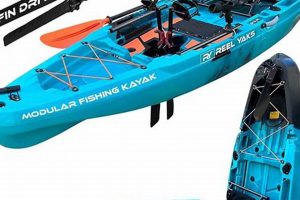
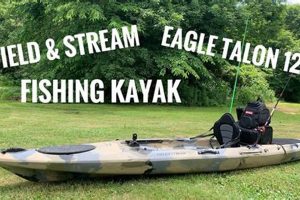
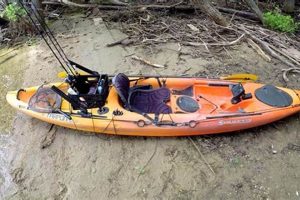
A mounting device designed for securing angling equipment aboard inflatable watercraft provides hands-free convenience and gear organization. These typically consist of adjustable clamps or straps for compatibility with various rod diameters and hull materials, ensuring stability and accessibility while fishing. Examples include flush-mount, adjustable, and rotating designs.
Secure rod storage and hands-free operation enhance safety and fishing efficiency. Anglers can manage lines, change lures, or handle fish without the risk of dropping or damaging valuable equipment. This equipment frees up hands for paddling, navigation, and other essential tasks. Historically, anglers on inflatable vessels might have relied on improvised methods for rod storage. Dedicated mounting solutions have evolved alongside advancements in inflatable kayak design and materials, providing a safer and more convenient approach.
This discussion will further explore the various types available, including mounting options, materials, and features to consider when selecting the appropriate equipment for specific angling needs and inflatable kayak models. Proper installation techniques, maintenance, and safety precautions will also be examined.
Tips for Utilizing Rod Holders on Inflatable Kayaks
Proper utilization of rod holders contributes significantly to a safe and productive fishing experience. The following tips offer guidance on maximizing their benefits.
Tip 1: Compatibility Check: Verify holder compatibility with the specific kayak model and rod diameter. Ensure secure attachment points are available on the vessel.
Tip 2: Secure Mounting: Employ recommended installation procedures and ensure firm attachment to prevent slippage or detachment during use. Regularly inspect mounts for wear or loosening.
Tip 3: Strategic Placement: Position holders within easy reach, considering paddling strokes and casting movements. Avoid obstructing navigation or creating entanglement hazards.
Tip 4: Rod and Reel Security: Utilize straps or leashes to secure rods and reels within the holders, particularly in rough water conditions. This prevents loss due to unexpected impacts or capsizing.
Tip 5: Balance and Weight Distribution: Distribute rods and other gear evenly within the kayak to maintain stability and prevent tipping. Avoid overloading one side of the vessel.
Tip 6: Rod Angle Adjustment: Experiment with different rod angles to optimize trolling or casting effectiveness based on target species and fishing techniques.
Tip 7: Regular Maintenance: Inspect holders for signs of wear, corrosion, or damage. Tighten loose screws and replace any compromised components promptly.
Adhering to these guidelines ensures proper function and contributes to a safer, more enjoyable fishing experience from an inflatable kayak.
By understanding these considerations, anglers can select and utilize appropriate equipment to maximize their fishing success.
1. Mounting Location

Mounting location significantly impacts an inflatable kayak fishing rod holder’s effectiveness. Optimal placement balances accessibility with unobtrusiveness. Positioning holders too far forward can interfere with paddling strokes, while placement too far aft hinders casting and retrieval. Lateral positioning also requires consideration; mounting too close to the kayak’s centerline restricts casting angles, whereas excessive outboard placement compromises stability. For example, a fly fisherman might prefer holders positioned slightly forward for unobstructed backcasts, while a troller might prioritize rear placement for easier line management. Careful consideration of fishing style and kayak layout informs ideal holder placement.
Practical application demonstrates the importance of mounting location. A poorly placed holder might snag fishing line during casting or create an imbalance, increasing the risk of capsizing. Conversely, a well-positioned holder allows efficient rod retrieval and contributes to a stable, comfortable fishing experience. Factors such as kayak width, seat position, and intended fishing techniques influence ideal placement. Anglers often experiment with different locations to optimize their setup. Dedicated track systems offer flexibility in adjusting holder positions, facilitating customization based on individual preferences and fishing conditions.
In summary, strategic mounting location optimizes an inflatable kayak fishing rod holder’s functionality. Careful planning based on individual fishing style, kayak design, and target species contributes significantly to a successful and enjoyable angling experience. Failure to consider mounting location can lead to frustration and compromised safety. Effective placement enhances both fishing performance and overall kayak stability. This careful consideration ultimately transforms a simple accessory into a valuable tool for enhanced angling efficiency.
2. Material Durability

Material durability directly influences the lifespan and reliability of inflatable kayak fishing rod holders. Exposure to harsh environmental factors, including UV radiation, saltwater, and physical stress, necessitates robust construction. Holders crafted from inferior materials are prone to cracking, corrosion, and premature failure, compromising both safety and functionality. For example, a plastic holder lacking UV resistance may become brittle and break under stress, potentially leading to equipment loss or even capsizing. Conversely, holders constructed from marine-grade stainless steel or high-impact UV-resistant plastics offer superior longevity and resistance to degradation, ensuring reliable performance in demanding conditions. The selection of durable materials reflects a prioritization of safety and long-term investment value.
The practical implications of material durability extend beyond mere longevity. Corrosion-resistant materials minimize maintenance requirements and prevent staining of the kayak fabric. High-impact plastics absorb shocks and vibrations, protecting both the rod and the kayak from damage. Robust construction ensures consistent performance even under heavy load, allowing anglers to confidently target larger fish species. For instance, a stainless steel holder can withstand the strain of a powerful fighting fish without bending or breaking, while a flimsy plastic holder might buckle under pressure. This resilience safeguards valuable fishing equipment and contributes to a safer, more successful angling experience.
In conclusion, prioritizing material durability in inflatable kayak fishing rod holders is crucial for long-term performance and angler safety. Selecting holders constructed from robust, weather-resistant materials represents an investment in reliability and minimizes the risk of equipment failure in challenging environments. Understanding the impact of material durability allows informed purchasing decisions and contributes to a more enjoyable and productive fishing experience.
3. Adjustability

Adjustability in an inflatable kayak fishing rod holder is paramount for accommodating diverse fishing styles, rod types, and individual preferences. A static, non-adjustable holder restricts angling versatility and limits adaptation to changing conditions or target species. Adaptable holders, conversely, enhance fishing efficiency and overall comfort.
- Angle Adjustment
The ability to alter the rod’s angle relative to the waterline is crucial for various fishing techniques. Trolling requires a lower angle to minimize line drag, while casting often benefits from a steeper angle for increased casting distance. Adjustable holders allow anglers to fine-tune rod positioning to optimize presentation and retrieve effectiveness based on target species and fishing conditions. For example, a shallow angle might be preferred when trolling for slow-moving bottom feeders, while a steeper angle is suitable for topwater lures targeting aggressive surface predators.
- Rotation
Rotational adjustability allows anglers to quickly change the rod’s orientation, facilitating swift reactions to fish strikes or changes in current direction. This feature is particularly beneficial when fighting strong fish or navigating complex waterways. For instance, rapid rotation can prevent line entanglement in structures or quickly reposition the rod for optimal leverage during a fight. Fixed holders lack this dynamic adaptability, potentially hindering response time and compromising angling success.
- Height Adjustment
Vertical adjustability allows customization based on angler height, kayak seat configuration, and preferred fishing posture. This feature contributes significantly to ergonomic comfort, reducing strain during long fishing trips. A taller angler in a high-seat kayak might prefer an elevated rod position, while a shorter angler in a low-seat kayak might benefit from a lower placement. Fixed-height holders lack this adaptability, potentially leading to discomfort and fatigue.
- Horizontal Adjustment
Adjusting the holder’s horizontal position relative to the angler allows customization based on casting style and kayak layout. Outboard positioning provides greater casting clearance, while inward positioning keeps the rod closer for enhanced control. This adaptability is particularly valuable in inflatable kayaks with limited deck space, allowing for optimized rod placement without sacrificing stability. Fixed holders limit this flexibility, potentially compromising casting efficiency or kayak balance.
These adjustable features, when combined, provide a comprehensive range of motion and positioning options, significantly enhancing the versatility and effectiveness of inflatable kayak fishing rod holders. A well-designed adjustable holder adapts seamlessly to diverse fishing scenarios and angler preferences, maximizing both comfort and angling success. This adaptability distinguishes a truly functional holder from a mere static rod support, contributing significantly to an optimized and enjoyable kayak fishing experience.
4. Securement Mechanisms

Securement mechanisms are integral to inflatable kayak fishing rod holder design, ensuring rods remain firmly in place during navigation, casting, and fish retrieval. These mechanisms prevent accidental rod loss due to impacts, sudden movements, or aggressive fish strikes. Effective securement enhances angler safety and protects valuable fishing equipment. Various mechanisms offer differing levels of security and convenience, each suited to specific fishing styles and conditions.
- Straps and Leashes
Straps and leashes provide a simple, versatile method for securing rods. Adjustable straps accommodate various rod diameters, while coiled leashes offer flexibility and prevent interference during casting. These mechanisms are particularly useful in calmer waters or when trolling. However, they might prove insufficient in rough conditions or when battling large, powerful fish. For example, a simple bungee strap might suffice for securing a lightweight spinning rod while trolling for panfish, but a heavier-duty strap and leash combination would be more appropriate for offshore angling targeting larger species.
- Locking Mechanisms
Locking mechanisms offer enhanced security, firmly gripping the rod butt to prevent dislodgement. These mechanisms typically employ levers, cams, or ratcheting systems to secure the rod in place. They are ideal for challenging conditions, such as navigating rapids or fighting powerful fish. For instance, a cam-lock system provides a secure hold even under significant stress, ensuring the rod remains firmly attached during intense fish battles. However, locking mechanisms can be more complex and potentially slower to operate than simpler strap systems.
- Combination Systems
Combination systems integrate straps or leashes with locking mechanisms for enhanced security and versatility. This approach provides the adjustability of straps with the added security of a locking system. For example, a holder might feature an adjustable strap for initial rod placement and a cam-lock to firmly secure the rod during active fishing. This combination caters to diverse fishing styles and conditions, offering both convenience and robust rod retention.
- Integrated Track Systems
Integrated track systems offer a more permanent mounting solution, allowing anglers to securely attach rod holders along designated tracks on the inflatable kayak. These systems provide greater flexibility in positioning and often incorporate locking mechanisms for enhanced security. For example, a track-mounted holder with a locking base provides a stable, secure platform for rod placement, while also allowing for easy adjustment along the track. This adaptability enhances customization and optimizes rod positioning based on individual preferences and fishing techniques.
The choice of securement mechanism directly impacts the overall functionality and effectiveness of an inflatable kayak fishing rod holder. Careful consideration of fishing style, target species, and anticipated water conditions informs the selection of an appropriate mechanism. A securement mechanism not only safeguards valuable equipment but also contributes to angler safety and a more enjoyable fishing experience. By understanding the nuances of each mechanism, anglers can tailor their setup to optimize rod security and enhance their on-the-water performance.
5. Compatibility
Compatibility between inflatable kayak fishing rod holders and various kayak models, rod types, and accessories is crucial for optimized performance, safety, and angler satisfaction. Ignoring compatibility considerations can lead to instability, equipment damage, and a compromised fishing experience. A thorough understanding of compatibility factors ensures seamless integration and maximized functionality.
- Kayak Compatibility
Inflatable kayaks vary significantly in design, material, and mounting point availability. Holders designed for rigid kayaks might not be suitable for inflatable models due to differences in hull flexibility and mounting options. Some inflatable kayaks feature dedicated track systems or mounting points, while others require aftermarket adapters or straps. For instance, a track-mounted holder designed for a specific kayak brand might not be compatible with a kayak lacking a compatible track system. Careful consideration of kayak design and available mounting options is essential for selecting appropriate holders.
- Rod and Reel Compatibility
Rod holders must securely accommodate the intended rod and reel combinations. Holders designed for slender spinning rods might not adequately secure heavier trolling or fly rods. Furthermore, reel size and design influence holder compatibility. A large saltwater spinning reel requires a wider and more robust holder compared to a smaller freshwater baitcasting reel. Ignoring rod and reel dimensions can lead to instability, slippage, and potential equipment damage. Selecting holders with adjustable cradles or inserts enhances compatibility with various rod and reel sizes.
- Accessory Compatibility
Many anglers utilize additional accessories, such as fish finders, GPS units, and camera mounts, alongside their rod holders. Ensuring compatibility between these accessories and the chosen rod holder setup is essential for maintaining a clutter-free and functional cockpit. For example, mounting a fish finder directly in front of a rod holder can obstruct casting and fish retrieval. Careful planning and consideration of accessory placement optimize overall kayak organization and prevent interference between different pieces of equipment.
- Material Compatibility
Material compatibility pertains to the interaction between the holder material and the inflatable kayak’s fabric. Some holder materials, particularly certain plastics or metals, can react with PVC or other kayak materials, causing discoloration, degradation, or even leaks. Using holders with compatible materials, such as UV-resistant plastics or non-corrosive metals, safeguards the kayak’s integrity and prolongs its lifespan. For example, a metal holder with sharp edges might chafe or puncture the kayak fabric, while a smooth, rounded plastic holder minimizes the risk of damage.
Understanding these compatibility factors is paramount for selecting and installing inflatable kayak fishing rod holders that integrate seamlessly with the angler’s existing equipment and kayak model. A well-planned, compatible setup enhances fishing efficiency, safeguards valuable equipment, and contributes to a safer, more enjoyable experience on the water. Failing to consider compatibility can compromise stability, functionality, and the overall enjoyment of kayak fishing. A compatible setup transforms individual components into a cohesive and efficient angling system.
Frequently Asked Questions
Addressing common inquiries regarding inflatable kayak fishing rod holders provides clarity for anglers seeking to optimize their equipment setup.
Question 1: How many rod holders can be safely installed on an inflatable kayak?
The number of rod holders suitable for an inflatable kayak depends on the kayak’s size, stability, and intended fishing style. Overloading a kayak with holders can compromise stability and maneuverability. Careful consideration of weight distribution and angler comfort is crucial. Consulting the kayak manufacturer’s recommendations is advisable.
Question 2: Are specialized rod holders required for inflatable kayaks?
While some rod holders are designed specifically for inflatable kayaks, many universal models can be adapted using appropriate mounting hardware. Specialized holders often feature flexible mounting options and materials compatible with inflatable kayak fabrics.
Question 3: Can rod holders be mounted on any part of an inflatable kayak?
Mounting locations depend on kayak design and intended fishing style. Areas near the angler, providing easy access without obstructing paddling, are generally preferred. Avoid mounting holders in areas that could compromise stability or interfere with essential kayak features.
Question 4: What materials are best suited for inflatable kayak fishing rod holders?
Durable, corrosion-resistant materials, such as marine-grade stainless steel, anodized aluminum, or high-impact UV-resistant plastics, are ideal. These materials withstand harsh aquatic environments and ensure long-term performance.
Question 5: How can rod holder stability be maximized on an inflatable kayak?
Proper mounting techniques, using appropriate hardware and reinforcing plates where necessary, enhance stability. Ensuring even weight distribution within the kayak also contributes to overall stability and prevents tipping.
Question 6: What safety precautions should be observed when using rod holders on inflatable kayaks?
Regularly inspecting holders for wear and tear, ensuring secure rod and reel attachment, and maintaining proper kayak balance are essential safety precautions. Avoiding overloading the kayak and practicing self-rescue techniques are also crucial for safe angling practices.
Careful consideration of these frequently asked questions empowers anglers to make informed decisions regarding rod holder selection, installation, and utilization, contributing to a safer, more enjoyable, and productive kayak fishing experience.
Beyond these frequently asked questions, exploring specific holder types and mounting techniques further enhances understanding and facilitates optimal equipment integration. The subsequent sections will delve into these topics in greater detail.
Conclusion
Selection and utilization of appropriate inflatable kayak fishing rod holders significantly influence angling success and overall safety. Careful consideration of mounting location, material durability, adjustability, securement mechanisms, and compatibility ensures seamless integration with specific kayak models and fishing styles. Prioritizing these factors optimizes equipment performance, enhances angler comfort, and contributes to a more productive and enjoyable on-the-water experience. Understanding the nuances of various holder designs and mounting techniques empowers informed decision-making, transforming a simple accessory into a valuable tool for enhanced angling efficiency and safety.
Continued exploration of innovative designs and materials promises further advancements in inflatable kayak fishing rod holder technology. As inflatable kayak fishing gains popularity, the demand for specialized and adaptable equipment will likely drive innovation. Anglers stand to benefit from these advancements, enhancing both the safety and effectiveness of their pursuit of aquatic quarry. Ultimately, strategic equipment selection and proper utilization contribute significantly to a more rewarding and sustainable approach to inflatable kayak angling.