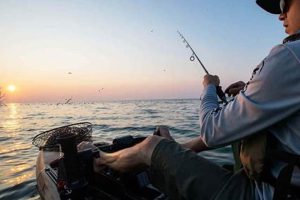
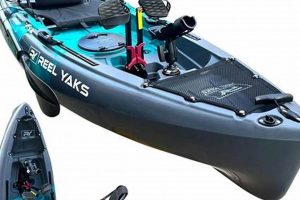
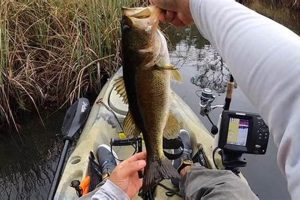
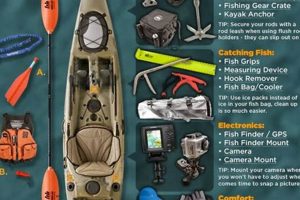
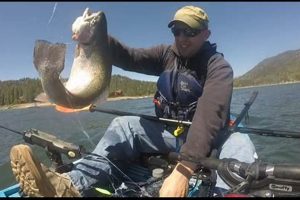
This sit-on-top style vessel, manufactured by Lifetime Products, is a popular choice for anglers seeking a stable and affordable platform for freshwater fishing. Its design incorporates features such as multiple rod holders, a comfortable seat, and ample storage for tackle and gear. The 11-foot, 6-inch length offers a balance of maneuverability and tracking performance suitable for ponds, lakes, and slow-moving rivers. Its robust polyethylene construction ensures durability and resistance to impacts.
Anglers value this particular watercraft for its blend of functionality and affordability. It provides a dedicated fishing platform without the higher price tag associated with premium kayaks. The stability and user-friendly design make it accessible to both novice and experienced paddlers. Furthermore, the relatively lightweight hull facilitates transport and storage. This model has become a common sight on waterways due to its practicality and widespread availability.
The following sections will delve deeper into specific features, performance characteristics, user experiences, and comparisons with similar options available in the market. This comprehensive analysis will provide prospective buyers with the information necessary to make an informed purchasing decision.
Tips for Utilizing the Vessel Effectively
Optimizing the on-water experience requires attention to preparation and technique. The following recommendations enhance safety and fishing success.
Tip 1: Pre-Trip Inspection: Prior to each outing, a thorough inspection of the hull, seat, and hardware is crucial. Particular attention should be paid to any signs of wear or damage.
Tip 2: Proper Weight Distribution: Evenly distributing gear and maintaining a low center of gravity enhances stability and maneuverability. Avoid overloading the vessel beyond its specified weight capacity.
Tip 3: Paddle Selection: Selecting a paddle of appropriate length and blade shape improves paddling efficiency and reduces fatigue. Consult retailer recommendations based on individual height and paddling style.
Tip 4: Safety Gear: Carrying essential safety equipment, including a personal flotation device (PFD), whistle, and signaling device, is paramount. Adhering to local boating regulations and informing someone of planned paddling routes are prudent safety measures.
Tip 5: Anchoring Techniques: Employing appropriate anchoring techniques prevents drifting and maintains position in desired fishing locations. Understanding anchor types and deployment strategies specific to various water conditions is advisable.
Tip 6: Fishing Accessories: Utilizing fishing-specific accessories, such as rod holders, fish finders, and anchor trolleys, streamlines the angling process. Careful consideration of accessory placement optimizes deck space and angler efficiency.
Tip 7: Regular Maintenance: Implementing a routine maintenance schedule, including cleaning and proper storage, prolongs the lifespan of the watercraft. Periodic inspections and prompt repairs address any potential issues before they escalate.
Adherence to these practical guidelines enhances both safety and fishing effectiveness. Preparation and thoughtful consideration of equipment and techniques contribute significantly to enjoyable and productive outings.
The following section concludes this examination with a summary of key findings and overall assessment.
1. Sit-on-top Design
The sit-on-top design is a defining feature of the Lifetime Teton Pro 116 fishing kayak, significantly influencing its functionality and suitability for angling. This design choice prioritizes stability, ease of access, and self-bailing capabilities, crucial factors for anglers operating in diverse water conditions. Unlike sit-inside kayaks, the open deck allows for greater freedom of movement, facilitating casting, retrieving, and landing fish. The elevated seating position provides improved visibility, enhancing awareness of surroundings and potential fishing spots. This design also contributes to the kayak’s user-friendliness, making it suitable for anglers of varying experience levels.
The self-bailing scupper holes, integral to the sit-on-top design, passively drain water from the deck, maintaining buoyancy and preventing the kayak from becoming swamped. This feature proves particularly advantageous in choppy conditions or when navigating through shallow, weedy areas. The open deck design also simplifies re-entry in the event of an accidental capsize, a significant safety consideration for anglers fishing in deeper water. For example, an angler battling a strong fish can shift weight and adjust position more easily on a sit-on-top design, reducing the risk of capsizing compared to a sit-inside kayak.
In summary, the sit-on-top design of the Lifetime Teton Pro 116 fishing kayak directly contributes to its stability, ease of use, and safety. These characteristics are essential for a successful and enjoyable fishing experience. The inherent advantages of this design make it a practical and versatile choice for anglers seeking a stable and accessible platform for pursuing their sport. This understanding of the sit-on-top designs significance underscores its contribution to the overall performance and appeal of this particular kayak model.
2. Durable Polyethylene Hull
The Lifetime Teton Pro 116 fishing kayak’s construction relies on a high-density polyethylene (HDPE) hull. This material choice significantly influences the vessel’s durability, performance, and overall value proposition. HDPE offers a balance of impact resistance, UV stability, and affordability, making it a practical choice for recreational kayaks. Understanding the characteristics and implications of this hull material is essential for assessing the kayak’s suitability for various fishing environments.
- Impact Resistance:
HDPE exhibits excellent impact resistance, safeguarding the hull against collisions with rocks, submerged debris, and other potential hazards encountered in typical fishing environments. This resilience minimizes the risk of punctures or cracks, contributing to the kayak’s longevity and ensuring uninterrupted outings. For example, navigating shallow, rocky rivers or encountering unexpected obstacles poses less of a threat to the hull’s integrity due to HDPE’s inherent toughness.
- UV Stability:
The UV resistance of HDPE protects the hull from degradation caused by prolonged sun exposure. This characteristic is particularly important for kayaks frequently used in open waters under intense sunlight. UV stability prevents fading, cracking, and loss of structural integrity, preserving the kayak’s appearance and extending its usable lifespan. This resistance translates to less frequent maintenance and replacement compared to kayaks constructed with less UV-stable materials.
- Weight and Affordability:
HDPE offers a favorable balance of weight and cost-effectiveness. Its relatively low density contributes to the kayak’s manageable weight, simplifying transport and handling. The material’s affordability allows manufacturers to offer the kayak at a competitive price point, making it accessible to a wider range of anglers. This balance makes it a practical choice for those seeking a durable and budget-friendly option.
- Maintenance and Repair:
HDPE’s resilience simplifies maintenance and repair. Minor scratches and abrasions can often be addressed with readily available repair kits. The material’s inherent durability reduces the frequency of major repairs, minimizing downtime and preserving the kayak’s long-term value. This ease of maintenance further enhances the overall practicality and cost-effectiveness of the kayak.
The durable polyethylene hull contributes significantly to the Lifetime Teton Pro 116 fishing kayak’s overall practicality and value. Its impact resistance, UV stability, manageable weight, and ease of maintenance align with the demands of recreational fishing. These factors, combined with the material’s affordability, position the kayak as a durable and accessible option for anglers seeking a reliable platform for their on-water pursuits. The choice of HDPE directly influences the kayak’s long-term performance and user experience, solidifying its appeal within the recreational fishing market.
3. Multiple Fishing Rod Holders

The inclusion of multiple fishing rod holders is a defining feature of the Lifetime Teton Pro 116 fishing kayak, directly addressing the specific needs of anglers. This design element enhances fishing efficiency and versatility by allowing anglers to employ diverse fishing techniques and manage multiple lines simultaneously. Understanding the strategic placement and functionality of these rod holders is crucial for maximizing their utility and appreciating their contribution to the kayak’s overall fishing performance.
- Flush-Mount Rod Holders:
The Teton Pro 116 typically incorporates flush-mount rod holders positioned behind the seating area. These holders secure rods horizontally, minimizing interference with paddling and allowing for trolling or drifting techniques. They provide a convenient and out-of-the-way storage solution while keeping lines in the water. For example, an angler can troll two lines simultaneously while paddling to a new location, maximizing fishing time and coverage.
- Adjustable Rod Holders:
Often included are adjustable rod holders, enabling anglers to customize rod angles and orientations. This flexibility caters to different fishing styles and target species. Anglers can position rods vertically for active casting or adjust angles for specific presentations. This adaptability enhances versatility and allows for quick adjustments to changing fishing conditions or techniques. An angler targeting bottom-dwelling species might choose a near-vertical position, while someone fishing topwater lures would prefer a more angled setup.
- Strategic Placement:
The strategic placement of rod holders on the Teton Pro 116 optimizes accessibility and minimizes interference. Positioning holders within easy reach of the seated angler allows for efficient rod management and hooksets without compromising stability. This thoughtful design element contributes to a seamless and productive fishing experience. For instance, the rear placement of flush-mount holders keeps lines clear of paddling strokes while maintaining easy access for retrieval or adjustments.
- Material and Durability:
Rod holders are typically constructed from durable, UV-resistant materials, ensuring long-term performance and resistance to weathering. This durability aligns with the overall robust construction of the kayak and ensures that these essential components withstand the rigors of regular fishing use. This robust design prevents breakage or degradation from sun exposure, maintaining the functionality of the rod holders over time.
The multiple fishing rod holders on the Lifetime Teton Pro 116 fishing kayak are not merely add-ons but integral components designed to enhance the angler’s experience. Their strategic placement, adjustability, and durable construction reflect a focus on practicality and fishing-specific functionality. These features contribute significantly to the kayak’s appeal as a dedicated fishing platform, enabling anglers to employ diverse techniques and maximize their chances of success on the water. The incorporation of multiple rod holders underscores the kayak’s design focus on providing a comprehensive and efficient fishing experience.
4. Adjustable Padded Seating

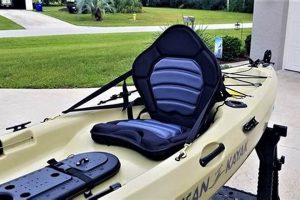
Adjustable padded seating constitutes a critical component of the Lifetime Teton Pro 116 fishing kayak, directly impacting user comfort and fishing effectiveness. Extended periods on the water necessitate a comfortable and supportive seating system. Adjustability allows individual customization based on physical stature and paddling style, optimizing comfort and reducing fatigue. Padded construction enhances cushioning and support, mitigating discomfort associated with prolonged sitting and enabling anglers to focus on fishing rather than physical strain. This feature directly influences user experience and contributes significantly to overall satisfaction.
Consider an angler spending several hours on the water. A properly adjusted seat ensures correct posture and weight distribution, reducing back strain and improving paddling efficiency. The ability to fine-tune the seat position accommodates varying fishing techniques, whether casting from a seated position or transitioning to a standing position for sight fishing. Adequate padding minimizes pressure points and enhances comfort, particularly during long paddling sessions or when navigating rough water. For example, an angler with a longer torso might adjust the seat back for greater lumbar support, while someone seeking increased stability might opt for a lower seat position. This adaptability is crucial for maximizing comfort and minimizing fatigue during extended fishing trips.
The adjustable padded seating system contributes significantly to the overall practicality and user-friendliness of the Lifetime Teton Pro 116. Its adaptability accommodates a range of body types and paddling preferences, ensuring optimal comfort and reducing physical strain associated with prolonged on-water activity. This feature’s thoughtful design directly influences user experience, contributing to enhanced enjoyment and increased fishing effectiveness. Understanding the practical significance of adjustable padded seating underscores its essential role in the kayak’s overall value proposition and its appeal to anglers seeking a comfortable and versatile fishing platform.
5. Rear Tank Well Storage
The rear tank well storage on the Lifetime Teton Pro 116 fishing kayak is a crucial design element that directly influences its practicality and suitability for angling. This designated storage area, located at the stern, provides a secure and accessible space for carrying gear essential for a successful fishing excursion. Understanding the functionality and implications of this storage feature is essential for evaluating the kayak’s overall utility and its effectiveness as a dedicated fishing platform.
- Capacity and Dimensions:
The rear tank well offers a substantial storage area, capable of accommodating a variety of items, including tackle boxes, dry bags, coolers, and even small crates. Its dimensions are designed to accommodate commonly used fishing gear, ensuring ample space for essential equipment. The well’s open design allows for flexible storage arrangements and facilitates easy loading and unloading. For instance, a medium-sized cooler can fit comfortably within the tank well, providing secure storage for food and drinks during a full-day fishing trip.
- Bungee Cord System:
The tank well typically incorporates a bungee cord system designed to secure stored items. This system prevents gear from shifting or falling overboard, particularly in rough water conditions. The adjustable nature of the bungee cords allows for customized configurations, accommodating items of varying shapes and sizes. This feature ensures gear remains secure, even during challenging paddling conditions, offering peace of mind and protecting valuable equipment.
- Accessibility and Convenience:
The rear placement of the tank well allows for easy access to stored items without disrupting paddling or fishing activities. Anglers can reach back and retrieve necessary gear without compromising balance or stability. This convenient access streamlines the fishing process and minimizes disruptions. For example, an angler can quickly access a spare tackle box or retrieve a landing net without having to disembark or awkwardly shift position.
- Weight Distribution:
Proper utilization of the rear tank well contributes to balanced weight distribution within the kayak. Distributing weight evenly enhances stability and tracking performance. Strategic placement of heavier items in the tank well can optimize the kayak’s handling characteristics, improving maneuverability and paddling efficiency. Understanding weight distribution principles is essential for maximizing the kayak’s performance and ensuring a safe and comfortable paddling experience.
The rear tank well storage of the Lifetime Teton Pro 116 is more than simply a storage compartment; it’s an integral component that enhances the kayak’s overall functionality as a dedicated fishing platform. Its capacity, secure bungee system, convenient accessibility, and influence on weight distribution contribute significantly to the kayak’s practicality and suitability for angling. This understanding of the tank well’s role underscores its importance in optimizing the fishing experience and reinforces the kayak’s value proposition within the recreational fishing market.
6. Stability and Maneuverability

The Lifetime Teton Pro 116 fishing kayak’s balance of stability and maneuverability significantly influences its suitability for various fishing environments. Stability, crucial for casting, reeling, and landing fish, especially in challenging conditions, is achieved through hull design features like a flat bottom and a relatively wide beam. Maneuverability, essential for navigating tight spaces and changing directions efficiently, is influenced by the kayak’s length and hull shape. The interplay of these two characteristics determines the kayak’s effectiveness in diverse on-water scenarios. For example, the stable platform allows anglers to stand and cast in calm water, while the moderate length facilitates navigation through narrow creeks or around obstacles.
The design choices influencing stability and maneuverability represent a compromise. Increased stability often comes at the expense of maneuverability, and vice-versa. The Teton Pro 116’s design aims to strike a balance suitable for a range of fishing applications. Its relatively stable platform caters to anglers prioritizing stability for activities like stand-up fishing, while its manageable length and hull design retain sufficient maneuverability for navigating varied waterways. Consider an angler fishing a small pond: the stability allows comfortable casting and retrieving, while the maneuverability facilitates exploration of different areas within the pond. Conversely, in a slow-moving river, the stability provides a secure platform for casting in current, and the maneuverability allows for adjustments to position and navigation around bends or obstacles.
Understanding the interplay of stability and maneuverability is crucial for assessing the Lifetime Teton Pro 116’s suitability for specific fishing needs and locations. Anglers prioritizing stability for activities like stand-up fishing or fishing in rougher conditions will find the kayak’s design advantageous. Those requiring enhanced maneuverability for navigating complex waterways might prioritize a different hull design. Recognizing the inherent trade-offs involved in balancing these characteristics enables informed decision-making and ensures alignment between kayak selection and intended fishing applications. The practical significance of this understanding lies in selecting the appropriate vessel for specific on-water environments and angling styles, ultimately contributing to a safer and more productive fishing experience.
7. Affordable Price Point

The Lifetime Teton Pro 116 fishing kayak occupies a specific niche within the recreational kayaking market, distinguished by its affordability. This pricing strategy makes kayak fishing accessible to a broader audience, including beginners and budget-conscious individuals. The kayak’s price point is achieved through a combination of factors, including material selection (high-density polyethylene), manufacturing processes, and distribution strategies. While premium kayaks often incorporate advanced materials and features, the Teton Pro 116 prioritizes essential functionality and durability at a lower cost. This allows more individuals to experience kayak fishing without a significant financial investment. For example, a family looking for a recreational activity might find the Teton Pro 116’s price more manageable than higher-end fishing kayaks, enabling them to equip multiple family members for outings.
The affordability of the Teton Pro 116, however, entails certain trade-offs. While durable and functional, it might not offer the same level of performance or feature refinement as more expensive models. This can include aspects like tracking performance, seat comfort, and integrated accessory options. Potential buyers must weigh their budgetary constraints against desired features and performance expectations. An experienced angler seeking optimal speed and tracking might find the Teton Pro 116’s performance limitations unsuitable for their needs, while a recreational angler prioritizing stability and basic functionality might find the kayak perfectly adequate. Understanding these trade-offs allows for informed purchasing decisions aligned with individual priorities and budgetary realities. One might compare this to purchasing a vehicle; a budget-friendly car provides basic transportation, while a luxury model offers enhanced performance, comfort, and features at a significantly higher price.
The affordable price point of the Lifetime Teton Pro 116 fishing kayak democratizes access to kayak fishing. Its value proposition lies in providing a functional and durable platform at a cost-effective price, enabling more individuals to engage in the sport. Recognizing the inherent trade-offs associated with affordability allows consumers to make informed decisions based on individual needs and budgetary considerations. This understanding promotes realistic expectations regarding performance and features, ultimately contributing to a satisfying and sustainable ownership experience. The kayak’s affordability facilitates entry into the sport, fostering growth within the kayak fishing community and expanding opportunities for outdoor recreation.
Frequently Asked Questions
This section addresses common inquiries regarding the Lifetime Teton Pro 116 fishing kayak, providing concise and informative responses to facilitate informed purchasing decisions and enhance user understanding.
Question 1: What is the maximum weight capacity of this kayak?
The maximum weight capacity is typically rated around 300 pounds. Exceeding this limit can compromise stability and performance.
Question 2: Is this kayak suitable for ocean use?
While designed primarily for calm, inland waters, it can handle slow-moving rivers and protected bays. Use in open ocean or rough conditions is discouraged due to its design limitations.
Question 3: What is the purpose of the scupper holes?
Scupper holes are designed to drain water from the deck, preventing water accumulation and maintaining buoyancy. These are a standard feature of sit-on-top kayaks.
Question 4: Can this kayak be transported on a standard car roof rack?
Yes, its relatively lightweight and compact size allow for transport on most standard car roof racks using appropriate tie-down straps and padding.
Question 5: What maintenance is required for this kayak?
Regular rinsing with fresh water after each use and proper storage out of direct sunlight will prolong the lifespan of the kayak. Periodic inspection for damage and prompt repairs, if necessary, are also recommended.
Question 6: What accessories are compatible with this kayak?
A wide range of accessories, including anchors, paddles, rod holders, fish finders, and storage crates, are compatible. Ensuring compatibility with specific models before purchase is advisable.
Addressing these frequently asked questions aims to provide clarity and address potential concerns regarding the Lifetime Teton Pro 116 fishing kayak. Understanding these aspects contributes to informed decision-making and enhances user satisfaction.
The subsequent section delves into user reviews and provides firsthand insights into real-world experiences with this kayak model.
Conclusion
The Lifetime Teton Pro 116 fishing kayak presents a compelling option for anglers seeking a stable, affordable, and functional platform for freshwater fishing. Its sit-on-top design, durable polyethylene hull, multiple rod holders, adjustable seating, and ample storage contribute to a user-friendly and efficient on-water experience. While trade-offs exist regarding performance characteristics compared to higher-priced models, the kayak’s value proposition lies in its accessibility and practicality for recreational anglers.
Careful consideration of individual fishing needs, paddling environments, and budgetary constraints remains essential in determining the suitability of the Lifetime Teton Pro 116 fishing kayak for specific applications. Thorough research and informed decision-making empower anglers to select the appropriate equipment that aligns with their individual requirements and contributes to a safe and rewarding fishing experience.