Kayak stability, particularly for fishing, refers to its resistance to tipping or capsizing. A stable fishing kayak allows anglers to cast, reel, and land fish without compromising their balance, even in challenging conditions such as choppy water or when battling a strong current. This characteristic is influenced by factors like hull design (e.g., pontoon, tunnel, flat bottom), kayak width, and the angler’s center of gravity.
Enhanced stability translates to increased safety and confidence on the water, enabling anglers to focus on fishing rather than maintaining balance. Historically, fishing kayaks were often adapted from recreational models, but the growing popularity of the sport has driven innovation in design, leading to purpose-built kayaks that prioritize stability. This development has significantly broadened the accessibility of kayak fishing to a wider range of individuals, including those new to paddling or seeking enhanced safety.
The following sections will delve deeper into the key factors affecting kayak stability, including a detailed examination of various hull designs, the impact of kayak width and length, and practical tips for enhancing on-the-water stability. Understanding these elements empowers anglers to choose the right kayak and maximize their fishing experience.
Tips for Kayak Stability
Maintaining balance is crucial for a safe and enjoyable fishing experience. The following tips offer guidance on maximizing stability on the water.
Tip 1: Consider Hull Design: Wider, flatter hulls generally offer greater initial stability, making them suitable for calmer waters and stand-up fishing. Pontoon hulls provide exceptional stability. However, they can be less maneuverable. Tunnel hulls offer a balance between stability and maneuverability.
Tip 2: Factor in Kayak Width: Wider kayaks tend to be more stable than narrower ones, though maneuverability may be slightly reduced. Consider the intended fishing environment and personal preferences.
Tip 3: Understand the Role of Kayak Length: Longer kayaks generally track better in a straight line, while shorter kayaks turn more easily. Stability is less directly affected by length than by width and hull design.
Tip 4: Distribute Weight Evenly: Proper weight distribution significantly impacts stability. Center heavier items low and distribute gear evenly throughout the kayak.
Tip 5: Practice Entering and Exiting: Practice entering and exiting the kayak in shallow, calm water to develop confidence and avoid unexpected tipping.
Tip 6: Consider a Low Seat Position: A lower center of gravity improves stability. Choose a kayak with a low seat or adjust the seat height if possible.
Tip 7: Use a Paddle Leash: A paddle leash prevents losing the paddle, which can be crucial for regaining balance or maneuvering in unexpected situations.
Tip 8: Be Mindful of Water Conditions: Adjust fishing techniques and positioning based on water conditions. Exercise extra caution in windy or choppy water.
By understanding these factors and implementing these strategies, anglers can significantly enhance their stability and overall fishing experience.
Through careful consideration of kayak design, proper weight distribution, and mindful on-water practices, anglers can confidently enjoy their time on the water. Further sections will explore specific kayak models known for stability and provide additional resources for safe kayaking practices.
1. Hull Design

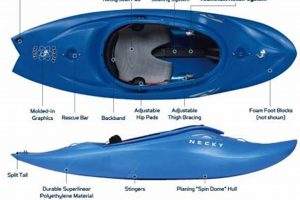
Hull design significantly influences fishing kayak stability. Different hull shapes offer varying degrees of primary and secondary stability. Primary stability refers to the initial resistance to tipping, crucial for stationary activities like casting. Secondary stability describes how stable a kayak remains when tilted, important for handling waves or leaning into a turn. Flat-bottom hulls maximize primary stability, ideal for calm waters and stand-up fishing, but offer less secondary stability. Pontoon hulls, featuring two sponsons running the length of the kayak, provide exceptional primary stability, allowing for near effortless balance, but sacrifice maneuverability. Tunnel hulls, with a recessed center channel and defined chines (edges), offer a compromise, delivering good primary stability and improved maneuverability compared to pontoons, but less initial stability than flat-bottom hulls.
Consider a kayak angler fishing in a sheltered cove. A flat-bottom hull provides a stable platform for casting, but may feel tippy when reaching for a dropped lure. In contrast, a pontoon hull offers unwavering stability even when standing, but proves challenging to maneuver through tight spaces. A tunnel hull allows the angler to navigate easily while maintaining reasonable stability. This illustrates how hull design dictates kayak behavior and suitability for different fishing environments and angler preferences.
Understanding the relationship between hull design and stability is essential for selecting the appropriate kayak. Evaluating individual needs and intended fishing conditions allows anglers to choose a hull design that maximizes both stability and performance. While a flat-bottom hull excels in calm, shallow water, a tunnel hull offers versatility across various conditions, and a pontoon hull provides maximum stability for specialized activities like stand-up fishing. This knowledge equips anglers to make informed decisions, contributing to a safer and more successful fishing experience.
2. Width

Width is a critical determinant of fishing kayak stability. A wider kayak generally offers greater initial stability, meaning it resists tipping more effectively when stationary or performing actions like casting. This relationship between width and stability is crucial for anglers, particularly beginners or those fishing in challenging conditions. Understanding the nuances of width selection allows anglers to choose a kayak suited to their needs and skill levels.
- Initial Stability vs. Maneuverability
Wider kayaks provide enhanced initial stability, beneficial for casting, reeling, and landing fish. However, increased width can compromise maneuverability, making turning and navigating tight spaces more challenging. This trade-off requires careful consideration based on intended fishing locations and angler preferences. A wider kayak might be ideal for calm lakes or slow-moving rivers, while a narrower kayak might be preferred for navigating narrow creeks or fast-flowing water.
- Impact on Standing and Sight Fishing
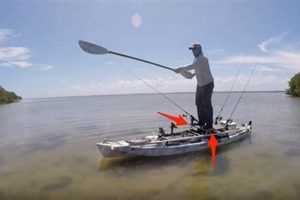
Kayak width directly affects the feasibility of standing while fishing. Wider kayaks provide a more stable platform for standing and sight fishing, offering improved visibility and casting angles. Anglers intending to stand frequently should prioritize wider kayaks. However, even on wider kayaks, practicing balance and maintaining a low center of gravity remains essential for safe stand-up fishing.
- Considerations for Different Body Types and Gear
Anglers should consider their body type and gear when selecting kayak width. Larger individuals or those carrying substantial gear require wider kayaks to maintain adequate stability. The added weight and displacement necessitate a broader hull to offset the increased risk of tipping. Ignoring this factor can compromise both safety and fishing effectiveness.
- Measuring Kayak Width: How to Choose
Kayak width is typically measured at the widest point of the hull. Manufacturers provide this measurement in their specifications. When choosing a kayak, consider the intended fishing environment and personal preferences. For maximum stability, prioritize wider kayaks. For enhanced maneuverability, consider narrower options. Researching different models and, if possible, testing kayaks before purchase allows anglers to determine the ideal width for their needs.
Ultimately, selecting the appropriate kayak width requires balancing stability and maneuverability. Wider kayaks prioritize stability, while narrower kayaks emphasize maneuverability. Carefully considering individual needs, fishing style, and intended environments empowers anglers to choose a kayak width that optimizes both performance and safety on the water.
3. Length

Kayak length, while not as directly impactful on stability as width or hull design, plays a crucial role in overall performance and indirectly influences stability. Longer kayaks generally track better in a straight line and glide more efficiently, while shorter kayaks offer enhanced maneuverability in tight spaces. Understanding the relationship between length, stability, and intended use allows anglers to choose a kayak optimized for their specific needs.
- Tracking and Speed
Longer kayaks excel in tracking, meaning they maintain a straight course more effectively. This characteristic is advantageous for paddling longer distances and in open water. Their increased waterline length also contributes to greater hull speed, making them efficient for covering larger areas. However, this can be a disadvantage in narrow waterways or rivers requiring frequent turns. A longer kayak’s tendency to track straight can make maneuvering in tight spaces more challenging, indirectly affecting stability when navigating complex environments.
- Maneuverability
Shorter kayaks offer superior maneuverability, allowing for quicker turns and easier navigation in confined areas like creeks and rivers with obstacles. This agility benefits anglers fishing in complex environments requiring frequent adjustments in direction. While shorter kayaks sacrifice some tracking ability and top-end speed compared to longer models, their maneuverability can contribute to stability by allowing for quicker corrections in challenging conditions such as fast-flowing water.
- Impact on Stability in Various Conditions
Length indirectly influences stability in different water conditions. Longer kayaks tend to be more stable in rough water due to their increased length and ability to bridge waves. Shorter kayaks, while more maneuverable, can be more susceptible to being pushed off course by waves or currents. Understanding these characteristics is crucial for choosing a kayak suitable for the intended fishing environment. For open water or choppy conditions, a longer kayak may offer greater stability, while a shorter kayak might be preferable for sheltered coves or calm rivers.
- Storage Capacity and Weight Considerations
Longer kayaks often offer greater storage capacity, accommodating more gear and equipment. However, increased length also typically means increased weight, making transportation and handling more challenging. While storage capacity doesn’t directly affect stability on the water, the added weight of gear can impact the kayak’s center of gravity and, consequently, its stability. Proper weight distribution becomes crucial in longer kayaks carrying heavier loads to maintain optimal balance and prevent tipping.
In summary, kayak length indirectly influences stability by affecting tracking, maneuverability, and performance in various water conditions. While longer kayaks excel in tracking and speed, shorter kayaks prioritize maneuverability. The choice between a longer or shorter kayak depends on the angler’s specific needs, fishing style, and the intended fishing environment. Carefully considering these factors ensures optimal performance, maneuverability, and ultimately contributes to a stable and safe kayaking experience.
4. Weight Distribution

Weight distribution significantly influences fishing kayak stability. A balanced load lowers the center of gravity, enhancing stability and minimizing the risk of capsizing. Uneven weight distribution, conversely, raises the center of gravity, making the kayak more susceptible to tipping. Understanding the principles of weight distribution is essential for safe and effective kayak fishing.
Consider a kayak with gear loaded primarily in the stern. This uneven distribution elevates the center of gravity and makes the kayak prone to tipping backward. Conversely, distributing weight evenly across the kayak, with heavier items placed low and centrally, lowers the center of gravity, promoting stability. This balanced approach allows for easier maneuvering and reduces the likelihood of capsizing, particularly in challenging conditions such as windy weather or choppy water. Practical applications include positioning tackle boxes and coolers near the center of the kayak and securing heavier items, like batteries, low in the hull.
Effective weight distribution is crucial for maximizing stability in a fishing kayak. A low center of gravity, achieved through balanced loading, promotes stability and enhances safety on the water. Neglecting proper weight distribution compromises stability and increases the risk of capsizing, especially in adverse conditions. Understanding and implementing these principles allows anglers to maintain balance, maneuver effectively, and focus on fishing without compromising safety.
5. Center of Gravity

Center of gravity (COG) significantly influences fishing kayak stability. A lower COG enhances stability by reducing the kayak’s tendency to tip. Positioning weight low and centrally within the hull lowers the COG, minimizing the likelihood of capsizing. Conversely, a higher COG, often caused by uneven weight distribution or elevated gear, increases instability. For example, an angler standing in a kayak elevates the COG, increasing the risk of tipping compared to a seated position. Similarly, storing heavy gear high in the kayak raises the COG and compromises stability. Understanding COG principles enables anglers to optimize kayak stability through proper weight management and positioning.
Consider two anglers in identical kayaks. One angler distributes gear evenly and keeps heavy items low in the hull, maintaining a low COG. The other angler places all gear, including a heavy tackle box, on the rear deck, raising the COG. In rough conditions, the kayak with the higher COG becomes unstable, potentially leading to capsizing. The kayak with the lower COG, however, remains stable and manageable, demonstrating the practical significance of COG management. This understanding allows anglers to make informed decisions about gear placement and body positioning to maximize stability on the water.
Managing the center of gravity is essential for maintaining stability in a fishing kayak. A low COG, achieved through proper weight distribution and body positioning, reduces the risk of tipping and enhances overall safety. Failure to manage the COG compromises stability and increases vulnerability to capsizing, especially in challenging conditions. Applying COG principles enables anglers to optimize stability, improving safety and enhancing the overall fishing experience.
6. Water Conditions
Water conditions significantly influence fishing kayak stability. Calm, flat water presents minimal challenges, allowing for greater stability even in less stable kayak designs. However, as conditions deteriorate, with increasing wind, waves, and currents, maintaining stability becomes increasingly challenging and requires careful consideration of kayak design, paddling technique, and overall experience. Understanding the impact of various water conditions on stability is crucial for safe and successful kayak fishing.
- Current
Current affects kayak stability, particularly in rivers and tidal zones. Strong currents can destabilize a kayak, requiring active paddling and maneuvering to maintain balance and position. Eddy lines and confluences, where currents converge or diverge, create unpredictable water movement that can further challenge stability. Kayaks with higher initial stability and maneuverability are generally preferred in current-prone environments.
- Wind
Wind impacts kayak stability, especially for lighter kayaks and those with higher profiles. Strong winds can push a kayak off course and create instability, particularly when combined with waves. Anglers should be mindful of wind direction and intensity, adjusting paddling techniques and positioning to minimize wind impact. Lowering the center of gravity by sitting lower in the kayak can also enhance stability in windy conditions.
- Waves
Waves present a significant challenge to kayak stability. Larger waves can capsize a kayak if not handled correctly. Kayak length and hull design influence wave handling capabilities. Longer kayaks generally handle larger waves better than shorter kayaks. Kayaks with rounded or flared hulls tend to ride over waves more smoothly than those with flatter hulls. Proper paddling technique, such as bracing and edging, is essential for maintaining stability in waves.
- Obstacles
Obstacles such as rocks, logs, and debris present stability challenges in rivers and coastal areas. Contact with obstacles can destabilize a kayak, potentially leading to capsizing. Maneuverability becomes crucial for navigating around obstacles and maintaining stability. Kayaks with shorter lengths and responsive handling characteristics are generally preferred in obstacle-rich environments.
Considering water conditions is paramount for safe and successful kayak fishing. Calm conditions offer greater stability margins, while challenging conditions necessitate careful consideration of kayak design, paddling technique, and personal experience. Matching kayak selection and paddling strategies to anticipated water conditions ensures optimal stability and minimizes the risk of capsizing, allowing anglers to focus on fishing rather than constantly battling to maintain balance.
7. Angler Experience

Angler experience significantly influences perceived kayak stability. While kayak design, width, and water conditions contribute fundamentally to stability, an experienced angler’s ability to anticipate and react to destabilizing forces enhances overall stability. Experience translates into improved balance, more effective paddle strokes for bracing and recovery, and better judgment in challenging conditions. A novice angler might find a particular kayak unstable in moderate chop, while an experienced angler can maintain balance and control in the same kayak and conditions through skillful paddle work and body positioning. This difference highlights the crucial role of experience in maximizing a kayak’s inherent stability.
Consider two anglers encountering an unexpected wake. A novice angler might react late or with jerky movements, exacerbating the instability and potentially capsizing. An experienced angler, however, anticipates the wake’s impact, adjusts body position, and executes a bracing stroke to maintain balance. This illustrative example underscores the importance of experience in mitigating instability and maximizing a kayak’s inherent stability characteristics. Experienced anglers also demonstrate better judgment in choosing appropriate kayaks and fishing locations based on their skill level and prevailing conditions. They understand their limitations and select kayaks and environments that align with their capabilities, further enhancing safety and stability.
Understanding the interplay between angler experience and kayak stability is crucial for safe and successful kayak fishing. While inherent stability characteristics derived from kayak design remain constant, an experienced angler effectively expands the operational stability envelope through refined technique and informed decision-making. This understanding encourages continuous skill development and emphasizes the importance of choosing kayaks and fishing locations appropriate for one’s experience level. Building experience progressively, starting in calm conditions and gradually venturing into more challenging environments, allows anglers to develop the skills necessary to maintain stability and control in a wide range of situations.
Frequently Asked Questions
This section addresses common inquiries regarding fishing kayak stability, providing concise and informative responses to assist anglers in making informed decisions.
Question 1: How does kayak width affect stability?
Wider kayaks generally offer greater initial stability, making them less prone to tipping when stationary. However, increased width can compromise maneuverability.
Question 2: Are longer kayaks more stable than shorter kayaks?
Length has a less direct impact on stability than width. Longer kayaks track better in a straight line, while shorter kayaks offer enhanced maneuverability, indirectly influencing stability in different conditions.
Question 3: What role does hull design play in kayak stability?
Hull design significantly influences stability. Flat-bottom hulls maximize initial stability, pontoon hulls offer exceptional stability but reduced maneuverability, and tunnel hulls provide a balance between stability and maneuverability.
Question 4: How does weight distribution affect stability?
Proper weight distribution is crucial for stability. Distributing weight evenly and keeping heavier items low in the kayak lowers the center of gravity, enhancing stability.
Question 5: Can I stand up in a fishing kayak?
The ability to stand depends on the kayak’s width, hull design, and the angler’s experience. Wider, more stable kayaks, particularly those with pontoon hulls, are better suited for standing.
Question 6: What are some tips for improving stability in a fishing kayak?
Maintaining a low center of gravity, distributing weight evenly, using a paddle leash, and practicing entering and exiting in calm water can enhance stability.
Understanding these factors allows for informed decisions regarding kayak selection and on-water practices to maximize stability and safety.
The next section will delve into specific kayak models renowned for their stability, offering further guidance in selecting the optimal kayak for individual needs and preferences.
Fishing Kayak Stability
Kayak stability, a critical factor for angling success and safety, hinges on a complex interplay of design elements, environmental conditions, and angler expertise. Hull design, width, and length each contribute uniquely to a kayak’s performance characteristics and influence its stability profile. Proper weight distribution and a low center of gravity further enhance stability, enabling anglers to confidently navigate various water conditions. Angler experience, encompassing skillful paddling technique and informed decision-making, significantly amplifies a kayak’s inherent stability, expanding the boundaries of safe and effective operation.
Ultimately, informed selection based on individual needs and intended usage, coupled with continuous skill development, empowers anglers to harness a kayak’s stability characteristics fully. This understanding fosters confidence on the water and unlocks the full potential of kayak fishing, allowing anglers to explore diverse environments and pursue their passion with enhanced safety and enjoyment. Continued exploration of kayak design advancements and paddling techniques promises further refinement of stability principles, expanding opportunities for anglers of all skill levels.