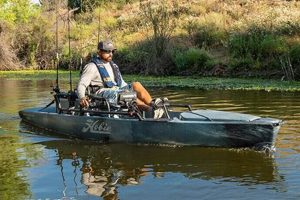
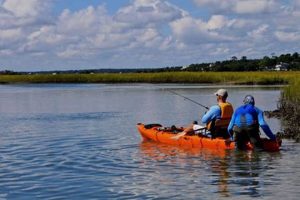
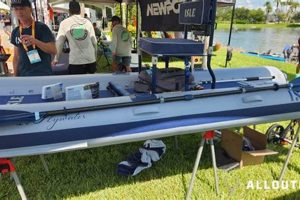
This specialized vessel combines the stealth and maneuverability of a kayak with the unique challenges and rewards of archery-based fishing. It’s a small, human-powered watercraft designed for navigating shallow waters and approaching fish undetected, enabling anglers to target them with specialized bows and arrows.
The low profile and quiet operation offer a distinct advantage over larger, motorized boats, allowing closer proximity to fish in their natural habitat. This method promotes selective harvesting and minimal environmental disturbance. Historically, variations of fishing with bows and arrows have been practiced across cultures for centuries. The modern iteration, employing specialized equipment and purpose-built watercraft, represents a refined approach to this ancient practice.
Further exploration of this topic will cover essential equipment, suitable locations, effective techniques, and responsible practices for this growing sporting activity.
Tips for Bowfishing from a Kayak
Successful bowfishing from a kayak requires careful planning and execution. These tips offer guidance for a safe and rewarding experience.
Tip 1: Stability is Paramount: Select a kayak designed for stability, especially in shallow water. Wider, flatter hulls offer a more stable platform for standing and shooting.
Tip 2: Essential Equipment Choices: Utilize a bowfishing-specific reel and sturdy arrows designed for fish retrieval. A well-organized tackle system keeps gear readily accessible.
Tip 3: Location, Location, Location: Research areas known for abundant fish populations in shallow, clear water. Early morning and late evening often offer the best visibility and fish activity.
Tip 4: Mastering the Shot: Refraction requires aiming below the perceived location of the fish. Practice and experience are crucial for accurate shots.
Tip 5: Prioritize Safety: Always wear a personal flotation device and inform someone of your fishing plans. Carry a first-aid kit and be aware of weather conditions.
Tip 6: Ethical Considerations: Adhere to local fishing regulations and practice selective harvesting. Respect wildlife and minimize environmental impact.
Tip 7: Kayak Customization: Consider modifications such as anchor trolleys and elevated platforms to enhance stability and improve shooting angles.
By implementing these strategies, anglers can maximize their chances of success and enjoy a safe and productive bowfishing experience from a kayak.
With these essential tips covered, the next section will detail specific techniques for effective bowfishing from a kayak.
1. Stable Platform

A stable platform is paramount for successful bowfishing from a kayak. Accuracy and safety are directly related to the stability of the angler’s shooting position. This stability is influenced by several factors, making careful consideration crucial for maximizing effectiveness and enjoyment.
- Kayak Hull Design:
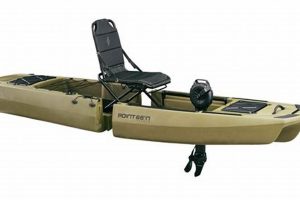
Wider, flatter hulls provide greater primary stability, resisting initial tipping. Pontoon-style kayaks offer exceptional stability but sacrifice maneuverability. Catamaran hulls deliver a balance of stability and maneuverability, suitable for various water conditions. Choosing the right hull design depends on individual preferences and the specific fishing environment.
- Standing vs. Sitting:
Standing offers a wider field of view and greater casting range but requires a highly stable platform. Sitting provides more stability for less experienced anglers or in rougher water conditions, though it limits visibility and reach. The choice depends on the angler’s skill level and comfort.
- Stabilizers and Outriggers:
Adding stabilizers or outriggers enhances stability, especially for standing shots. These additions improve balance and reduce the risk of capsizing, increasing angler confidence and safety. Stabilizers are beneficial in calmer waters, whereas outriggers are useful in a wider range of conditions.
- Weight Distribution:
Proper weight distribution within the kayak plays a crucial role in maintaining balance and stability. Centering gear and distributing weight evenly prevents tipping and enhances maneuverability. Evenly distributed weight maximizes stability and minimizes the risk of capsizing.
Ultimately, achieving a stable platform optimizes accuracy, improves safety, and enhances overall bowfishing success from a kayak. By carefully considering these factors, anglers can choose a setup that best suits their needs and the demands of their fishing environment, resulting in a more productive and enjoyable experience.
2. Maneuverability
Maneuverability is a critical aspect of bow fishing kayaks, directly influencing the angler’s ability to navigate shallow waters and approach fish effectively. Kayaks designed for maneuverability enable precise movements in tight spaces, crucial for pursuing fish in their natural habitats, such as shallow weed beds, narrow creeks, and around submerged structures. This precise control allows anglers to position themselves optimally for accurate shots, maximizing their chances of success. A highly maneuverable kayak allows for quick adjustments to changing currents, wind conditions, and fish movements, ensuring the angler maintains an advantageous position. For example, a shorter, lighter kayak with a shallower draft will navigate dense vegetation more effectively than a longer, heavier model. This agility translates to greater success in diverse environments.
The relationship between maneuverability and kayak design features is significant. Shorter kayaks generally offer greater maneuverability, allowing for tighter turns and quicker adjustments. However, they can be less stable than longer kayaks. Wider kayaks provide more stability, potentially at the expense of maneuverability. Features such as a rudder or skeg can enhance tracking and directional control, especially in windy or current-prone waters, improving overall maneuverability regardless of hull design. Specific hull designs, like those with a shallow V or flat bottom, are tailored for shallow water navigation, minimizing drag and maximizing control in these specialized environments. Choosing the appropriate design hinges on balancing the need for maneuverability with stability requirements and the specific fishing conditions.
Understanding the importance of maneuverability in a bow fishing kayak allows anglers to select a vessel optimized for their specific needs and fishing environment. Prioritizing maneuverability enables efficient pursuit of fish in shallow, complex waters, enhancing the chances of a successful and rewarding bow fishing experience. The balance between maneuverability and stability is a crucial consideration, influenced by factors such as water conditions, target species, and individual angler preferences. A well-informed choice ultimately contributes to a more effective and enjoyable experience on the water.
3. Shallow Water Access

Shallow water access represents a defining characteristic of bow fishing kayaks, directly influencing their design and functionality. These specialized vessels excel in environments inaccessible to larger, deeper-draft boats. This capability stems from design elements like flat bottoms, shallow drafts, and specialized propulsion systems. Such features allow navigation through shallow creeks, marshes, and flooded timber, prime habitats for many fish species targeted in bow fishing. For instance, navigating shallow flats teeming with gar or exploring backwater channels in pursuit of carp exemplifies the practicality of this specialized access. The ability to maneuver silently in these shallow environments offers a distinct advantage, allowing anglers to approach fish undetected and maximize their chances of a successful shot. Furthermore, the shallow draft reduces disturbance to the aquatic environment, promoting responsible and sustainable fishing practices.
The connection between shallow water access and bow fishing kayak design manifests in various ways. Hull design prioritizes minimal draft without sacrificing stability, crucial for accurate shot placement. Propulsion systems, including paddle propulsion and specialized pedal drives, minimize disturbance and allow navigation through dense vegetation or shallow, rocky areas. These designs prioritize both maneuverability and stealth, crucial for successful bow fishing in shallow environments. For instance, a kayak’s shallow draft enables navigation through mere inches of water, accessing areas unreachable by conventional fishing boats. This access expands fishing opportunities, particularly in regions with extensive shallow water habitats.
In essence, shallow water access forms a cornerstone of the bow fishing kayak’s effectiveness and purpose. It expands fishing opportunities by allowing access to prime fish habitats often inaccessible to other watercraft. This capability, a direct consequence of specialized design and functionality, directly contributes to the growing popularity of this specialized fishing method. The unique advantage offered by these kayaks underscores their value in the pursuit of specific fish species and the exploration of unique aquatic environments, reinforcing their significance within the broader context of recreational fishing. Understanding this connection underscores the importance of specialized kayak design in facilitating a successful and rewarding bow fishing experience.
4. Stealth Approach

A stealth approach is fundamental to successful bow fishing from a kayak. The quiet operation of a kayak, combined with its low profile, enables anglers to approach fish undetected. This minimizes disturbance, increasing the likelihood of close-range shots and reducing the chance of spooking fish. Unlike motorized boats, kayaks produce minimal noise and vibration, allowing closer proximity to fish, particularly in shallow, clear waters. This advantage is particularly significant when targeting wary species. Consider a scenario where an angler pursues carp in a shallow, weedy area. A stealthy approach allows the kayak to glide within range without alarming the fish, maximizing the opportunity for a successful shot. The absence of a noisy motor or large wake significantly contributes to this advantage.
Several factors contribute to the stealthy nature of bow fishing kayaks. Human-powered propulsion, whether by paddle or pedal drive, produces minimal noise compared to combustion engines. The kayak’s streamlined design minimizes water displacement and reduces the likelihood of creating noticeable disturbances. Furthermore, the low profile of a kayak reduces visibility, making it less obtrusive in the environment. These combined factors create an ideal platform for a stealth approach, significantly increasing the angler’s chances of success. In clear water conditions, the lack of engine noise and reduced surface disturbance are particularly critical. The quiet approach allows anglers to reach optimal shooting positions without alerting fish, especially those sensitive to vibrations or changes in water pressure.
The practical significance of a stealth approach in bow fishing cannot be overstated. It directly influences an angler’s ability to get within effective shooting range of target species. This is particularly crucial in shallow water environments where fish have limited escape routes. The stealthy nature of kayaks grants anglers a substantial advantage, increasing their effectiveness and contributing to a more rewarding and ethical fishing experience. Challenges remain, however, such as wind and current, which can compromise stealth. Anglers must adapt their techniques and utilize the kayak’s maneuverability to compensate for these environmental factors. Ultimately, mastering a stealth approach is a key skill for any bow fisher utilizing a kayak, directly influencing their success and contributing to a more responsible and fulfilling interaction with the aquatic environment.
5. Specialized Equipment

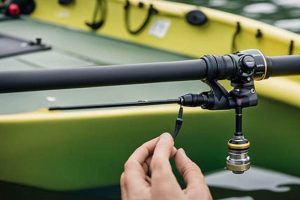
Specialized equipment plays a crucial role in the effectiveness and enjoyment of bow fishing from a kayak. This equipment enhances functionality, improves accuracy, and promotes safety. The unique demands of bow fishing from a kayak necessitate adaptations and specialized gear distinct from traditional fishing or archery equipment. This specialized equipment integrates seamlessly with the kayak platform, creating a cohesive and efficient system optimized for this specific fishing method. For example, a bow-mounted reel allows for rapid retrieval of arrows, while specialized rests and stabilizers compensate for the kayak’s movement, enhancing shot accuracy. The integration of these specialized components significantly increases the likelihood of successful shots and enhances the overall fishing experience.
Several key pieces of specialized equipment contribute significantly to successful bow fishing from a kayak. A sturdy and reliable bowfishing reel facilitates quick retrieval of arrows and fish. Heavy-duty fishing arrows designed for penetration and retrieval are essential. A well-designed anchor trolley system allows for precise boat positioning and control in changing currents or wind conditions. Elevated platforms and specialized seating provide stability and improve sightlines. These integrated components work together to create a customized fishing platform optimized for accuracy, efficiency, and safety. Consider the example of an angler targeting gar in shallow, weedy waters. An elevated platform provides a clear view over the vegetation, while the anchor trolley system keeps the kayak positioned for optimal shots, highlighting the practical application of specialized equipment.
Understanding the role and importance of specialized equipment in bow fishing from a kayak is crucial for maximizing efficiency and success. The correct gear not only enhances performance but also contributes to a safer and more enjoyable experience. While some equipment, like specialized reels and arrows, is essential, other modifications, such as lighting systems or fish finders, can further enhance performance depending on individual needs and fishing conditions. The selection and integration of specialized equipment should align with the angler’s skill level, target species, and specific fishing environment, contributing to a more effective, safe, and ultimately rewarding bow fishing experience. Overlooking the importance of specialized equipment can limit success and compromise safety, underscoring the importance of careful consideration and appropriate investment in these specialized tools.
Frequently Asked Questions about Bow Fishing Kayaks
This section addresses common inquiries regarding bow fishing kayaks, providing clear and concise information for those interested in this specialized fishing method.
Question 1: What type of kayak is best suited for bow fishing?
Stable platforms are essential. Wider, flatter-bottomed kayaks, including pontoon and catamaran hulls, provide excellent stability for standing and shooting. Shorter kayaks offer superior maneuverability in shallow water and tight spaces.
Question 2: What essential equipment is required for bow fishing from a kayak?
Essential equipment includes a bow fishing reel, specialized arrows designed for fish retrieval, and a sturdy bow. Additional equipment such as an anchor trolley, elevated platform, and polarized sunglasses enhance the experience.
Question 3: Are there specific regulations regarding bow fishing from a kayak?
Regulations vary by location. Always consult local fishing regulations regarding licensing, permitted species, and allowed equipment before embarking on a bow fishing trip.
Question 4: How does one aim effectively when bow fishing from a kayak?
Water refracts light, creating an optical illusion. Aim below the perceived location of the fish to compensate for this refraction. Practice and experience are crucial for accurate shot placement.
Question 5: What safety precautions should one take when bow fishing from a kayak?
Always wear a personal flotation device (PFD). Inform someone of fishing plans and intended return time. Carry a first-aid kit and be aware of weather conditions and potential hazards. Never shoot towards other people or vessels.
Question 6: What are the ethical considerations associated with bow fishing?
Adhere to all local regulations and practice selective harvesting. Target only legal species and avoid disturbing non-target fish and wildlife. Dispose of fish carcasses responsibly and minimize environmental impact.
Careful consideration of these frequently asked questions enhances understanding of bow fishing from a kayak and promotes responsible and successful angling practices.
The next section will delve into specific techniques for effective bow fishing from a kayak.
Bow Fishing Kayak
This exploration has highlighted the specialized nature of the bow fishing kayak, emphasizing its unique design and functionality. Key aspects discussed include the importance of stability, maneuverability, shallow water access, and the stealth approach afforded by these vessels. The role of specialized equipment, tailored to this specific fishing style, has also been underscored. Furthermore, the discussion addressed responsible practices, ethical considerations, and essential safety precautions, providing a comprehensive overview of this dynamic and engaging pursuit.
The increasing popularity of this specialized fishing method reflects a growing appreciation for its unique challenges and rewards. As technology continues to advance and designs evolve, the future of bow fishing from a kayak promises further refinement and enhanced opportunities for anglers seeking a close connection with the aquatic environment. Continued emphasis on responsible practices and ethical considerations will ensure the sustainability and enjoyment of this exciting sport for generations to come.