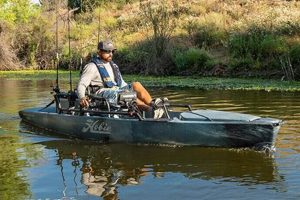
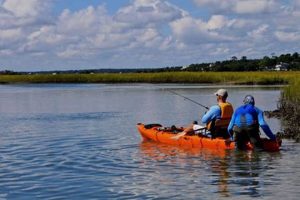
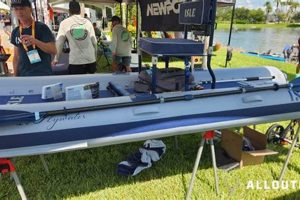
This pursuit involves angling for striped bass from a kayak. It combines the thrill of catching a powerful game fish with the quiet, intimate experience of paddling close to the water. An angler might target striped bass in a tidal river from a kayak, for instance, using lures or live bait.
The accessibility and affordability of kayaks make them ideal platforms for reaching shallow-water habitats often favored by striped bass, offering an advantage over larger, motorized boats. This method also provides a stealthy approach, minimizing disturbance and potentially increasing fishing success. Historically, smaller, human-powered vessels have been utilized for fishing, and the modern kayak continues this tradition with specialized features catered to anglers. This growing popularity reflects a desire for closer connections with nature and a more active, engaging fishing experience.
The following sections will explore specific techniques, equipment choices, and best practices for successfully targeting striped bass from a kayak, covering topics such as tackle selection, kayak stability, and effective fishing strategies.
Tips for Striped Bass Fishing from a Kayak
Successfully targeting striped bass from a kayak requires careful planning and execution. The following tips offer guidance for a productive and enjoyable experience.
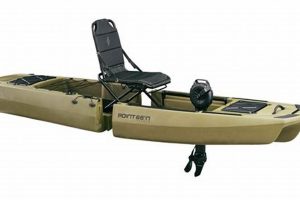
Tip 1: Choose the Right Kayak: Kayak selection depends on the fishing environment. Sit-on-top kayaks offer stability and ease of re-entry after a potential capsize, while sit-inside kayaks provide better protection from the elements in colder conditions. Pedal-driven kayaks allow hands-free fishing, which can be a significant advantage.
Tip 2: Utilize Appropriate Tackle: Medium-heavy to heavy rods and reels spooled with braided line are recommended for handling the powerful runs of striped bass. Lures such as swimbaits, jigs, and topwater plugs can be effective, as can live bait like eels or bunker.
Tip 3: Understand Tidal Currents: Striped bass often concentrate in areas with moving water. Learning to read tidal charts and identify current breaks and eddies can significantly improve fishing success.
Tip 4: Practice Kayak Control: Mastering basic paddling strokes and maneuvering techniques allows anglers to position themselves effectively and maintain stability while fighting a fish.
Tip 5: Prioritize Safety: Always wear a personal flotation device (PFD) and carry essential safety equipment, including a whistle, signaling device, and first-aid kit. Inform someone of the fishing location and expected return time.
Tip 6: Employ Stealth Tactics: Avoid sudden movements and loud noises that might spook fish. Approach fishing spots quietly and utilize a drift sock or anchor to maintain position without excessive paddling.
Tip 7: Respect the Environment: Practice catch-and-release whenever possible, handling fish carefully to minimize stress and ensure their survival. Properly dispose of all fishing line and other waste.
By following these guidelines, anglers can maximize their chances of a successful and rewarding experience on the water, while also ensuring personal safety and environmental responsibility.
These tips provide a solid foundation for pursuing striped bass from a kayak. The following section will offer concluding thoughts and further resources for enhancing fishing proficiency.
1. Kayak Selection

Appropriate kayak selection is fundamental to successful striped bass fishing. The vessel serves as the angler’s primary platform, impacting stability, maneuverability, and overall fishing effectiveness. Choosing the right kayak significantly influences an angler’s ability to access preferred fishing locations, present lures effectively, and land powerful fish.
- Hull Design
Hull design directly affects stability and maneuverability. Wider, flatter hulls offer greater initial stability, beneficial for casting and fighting fish in calmer waters. Longer, narrower hulls, while less stable initially, track better and cover distance more efficiently, advantageous in currents or open water. A shorter, wider kayak might be ideal for fishing in sheltered bays, while a longer, narrower design would be better suited for navigating open estuaries.
- Propulsion System
Kayaks utilize various propulsion methods, each impacting fishing technique. Paddle kayaks require paddling, which can occupy hands and create surface disturbance. Pedal kayaks allow hands-free fishing and precise boat control, beneficial for lure presentation. Motorized kayaks offer speed and range but may spook fish in shallow water. A pedal-driven kayak provides an advantage when sight fishing, while a paddle kayak offers a quieter approach in shallow flats.
- Storage and Features
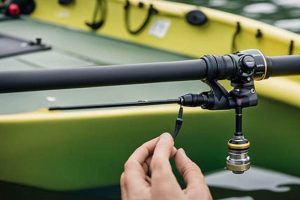
Adequate storage is crucial for carrying tackle, safety equipment, and personal belongings. Rod holders, tackle storage compartments, and anchor trolleys streamline fishing operations. Features like live wells or coolers contribute to keeping bait fresh or storing catches. Sufficient storage space allows anglers to carry a variety of lures and equipment for different fishing scenarios.
- Weight Capacity
Kayak weight capacity must accommodate the angler, gear, and potential catches. Exceeding the weight capacity compromises stability and performance. Selecting a kayak with sufficient weight capacity ensures safe and efficient operation while carrying essential gear and handling landed fish.
Careful consideration of these factors ensures the chosen kayak aligns with specific fishing needs and target environments. Selecting a kayak well-suited to the demands of striped bass fishing significantly contributes to a productive and enjoyable experience on the water.
2. Targeted Tackle
Effective tackle selection is paramount in kayak striper fishing. The right equipment balances the need for power and sensitivity, enabling anglers to effectively target and land these strong, elusive fish from a kayak platform. Choosing appropriate rods, reels, lines, and lures significantly influences fishing success and overall angling experience.
- Rods and Reels
Rods typically range from 7 to 8 feet in length, providing a balance between casting distance and leverage for fighting fish. Medium-heavy to heavy power rods are recommended for handling the strength of striped bass. Reels should be durable and saltwater resistant, with a smooth drag system capable of handling strong runs. Spinning reels are generally preferred for their ease of use and casting performance. Baitcasting reels offer greater power and control but require more practice to master. A 7-foot, medium-heavy rod paired with a 4000-size spinning reel provides a versatile setup for various striped bass fishing techniques.
- Fishing Line
Braided line is favored for its strength, sensitivity, and thin diameter, allowing for longer casts and better feel of the lure. A 30- to 50-pound test braided line is commonly used for striped bass fishing. Fluorocarbon leader material is often added to the braided line for its abrasion resistance and low visibility, improving stealth and presentation. Using a fluorocarbon leader of 20-30lb test enhances lure action and minimizes visibility to wary fish.
- Lures and Baits
Lure selection depends on the fishing location, water conditions, and targeted depth. Effective artificial lures include swimbaits, jigs, topwater plugs, and bucktails. Live bait options such as eels, bunker, and bloodworms can also be highly productive. Matching lure color and size to local forage species increases the chances of attracting striped bass. Using a swimbait that mimics the appearance and movement of menhaden, a common prey fish, can entice strikes from striped bass.
- Terminal Tackle
Terminal tackle connects the line to the lure or bait and plays a critical role in presentation and hookup ratio. Strong hooks, swivels, and weights are essential for rigging lures effectively and withstanding the power of striped bass. Circle hooks are often preferred for their ability to hook fish in the corner of the mouth, reducing the risk of deep hooking and facilitating catch and release. Using a properly sized circle hook with live bait increases hooking efficiency and minimizes injury to the fish.
The proper combination of these tackle components creates a balanced and effective system for kayak striper fishing. Understanding the nuances of rod and reel selection, line choice, lure presentation, and terminal tackle enhances an angler’s ability to target striped bass successfully from a kayak, maximizing both catch rates and enjoyment on the water. This knowledge, coupled with practiced techniques, increases the likelihood of a successful and rewarding fishing experience.
3. Location Scouting

Location scouting is a critical element of successful kayak striper fishing. Striped bass are not uniformly distributed throughout a body of water; they congregate in specific areas based on factors such as prey availability, water temperature, current flow, and structure. Understanding these influencing factors and identifying promising fishing locations beforehand significantly increases the likelihood of encountering striped bass. For example, during the fall migration, striped bass often concentrate near river mouths where baitfish are abundant, making these prime locations for kayak anglers.
Effective location scouting involves a combination of research and on-the-water observation. Anglers can utilize online resources such as nautical charts, fishing reports, and tide charts to identify potential hotspots. These resources provide information on water depth, bottom structure, current patterns, and known striped bass habitats. Once on the water, visual observation plays a key role. Look for signs of baitfish activity, such as diving birds or surface disturbances. Areas with current breaks, eddies, or structure like rocks, points, and drop-offs are likely to hold striped bass. In a tidal river, a rocky point that creates a current break can be an ideal ambush point for striped bass, making it a valuable location for kayak anglers to investigate.
Thorough location scouting minimizes wasted fishing time and maximizes opportunities for success. By understanding the factors that influence striped bass distribution and utilizing available resources, kayak anglers can strategically position themselves in areas with the highest probability of encountering these fish. This proactive approach, combined with skillful fishing techniques, contributes significantly to a more productive and rewarding kayak fishing experience. Failing to scout locations effectively can lead to unproductive fishing trips, highlighting the practical significance of this preparatory step in kayak striper fishing. Careful planning and understanding of the target species habitat preferences are essential components of a successful outing.
4. Fishing Techniques
Effective fishing techniques are essential for successful kayak striper fishing. The kayak’s unique propertiesmobility, low profile, and quiet operationinfluence technique selection and execution. These techniques capitalize on the kayak’s advantages to maximize angling success. For instance, drift fishing becomes a highly effective method when using a kayak. Anglers can quietly drift along current seams or over structure, presenting lures or bait naturally to waiting striped bass. This approach minimizes disturbance and allows for thorough coverage of productive areas.
Several techniques prove particularly advantageous in kayak striper fishing. Trolling with diving lures or live bait allows anglers to cover water efficiently and locate active fish. Casting lures such as topwater plugs, swimbaits, and jigs near structure or into schools of baitfish can entice aggressive strikes. Jigging near the bottom or around submerged structure can also be highly productive, particularly in deeper water. When fishing around bridge pilings or rock formations, vertically jigging a bucktail can effectively target striped bass holding near the bottom. Another productive method involves anchoring or positioning the kayak near a current break or drop-off and casting lures or drifting live bait into the strike zone. Understanding how these techniques interact with the kayak’s capabilities and the striped bass’s behavior is crucial for optimizing fishing success.
Mastery of these techniques significantly enhances an anglers ability to connect with striped bass from a kayak. Adapting techniques to specific conditions, such as tidal flow, water clarity, and weather patterns, further refines fishing strategies and maximizes opportunities for success. The ability to position the kayak quietly and precisely, combined with skillful lure presentation, creates a significant advantage in kayak striper fishing. Neglecting these technique considerations can lead to missed opportunities and diminished success. The targeted application of appropriate techniques is an essential element of productive kayak striper fishing.
5. Safety Precautions
Safety precautions are paramount in kayak striper fishing. The environment presents inherent risks, magnified by the angler’s focus on fishing activity. Sudden changes in weather, strong currents, boat traffic, and the physical exertion of battling a large fish can create hazardous situations. Neglecting safety protocols can lead to serious consequences, ranging from equipment loss to severe injury or even fatality. For instance, an angler encountering unexpected high winds or swift currents without wearing a personal flotation device (PFD) faces a significantly increased risk of drowning if capsized. Similarly, failing to carry a communication device can prevent summoning assistance in case of an emergency, such as a medical issue or equipment failure miles offshore.
Several key precautions contribute significantly to angler safety. Wearing a properly fitted PFD is non-negotiable. Carrying a communication device, such as a VHF radio or a waterproof cell phone in a floating pouch, ensures the ability to call for help if needed. Checking weather forecasts before embarking on a fishing trip allows anglers to avoid potentially dangerous conditions. Informing someone of the intended fishing location and estimated return time provides an additional layer of security. Carrying essential safety gear, including a whistle, signaling device, first-aid kit, and bilge pump, further enhances preparedness for unforeseen circumstances. An angler venturing into unfamiliar waters should carry navigational aids such as charts, a compass, or a GPS device to prevent disorientation and ensure a safe return. Practical knowledge of self-rescue techniques, including re-entering a capsized kayak, is invaluable in emergency situations. These precautions are not merely suggestions; they are essential practices that safeguard anglers from the inherent risks of kayak striper fishing.
Prioritizing safety precautions ensures a responsible and enjoyable fishing experience. While the pursuit of striped bass from a kayak offers an exciting and rewarding challenge, neglecting safety protocols transforms a potentially enjoyable outing into a hazardous undertaking. Consistent adherence to safety guidelines mitigates risks, prevents accidents, and allows anglers to focus on the thrill of the sport. The inherent unpredictability of the on-the-water environment necessitates a proactive approach to safety, ensuring preparedness for unexpected situations and promoting a culture of responsible angling.
Frequently Asked Questions
This section addresses common inquiries regarding kayak striper fishing, providing concise and informative responses to enhance understanding and promote safe and effective angling practices.
Question 1: What type of kayak is best suited for striper fishing?
Sit-on-top kayaks are generally preferred for their stability and self-bailing capabilities. Longer models offer better tracking in currents, while shorter kayaks provide enhanced maneuverability in tight spaces. Pedal-driven kayaks offer advantages for hands-free fishing.
Question 2: What is the recommended tackle setup for striped bass from a kayak?
Medium-heavy to heavy power rods (7-8 feet) paired with 3000-5000 size spinning reels spooled with 30-50 lb braided line are commonly used. Fluorocarbon leaders (20-30 lb test) enhance stealth and abrasion resistance.
Question 3: Where are striped bass typically found in a kayak fishing context?
Striped bass often congregate near structure such as rocks, points, drop-offs, and bridge pilings. They also frequent areas with moving water, including current breaks, eddies, and tidal rips. Knowledge of local baitfish concentrations is also beneficial.
Question 4: What are effective lure choices for kayak striper fishing?
Effective lures include swimbaits, jigs, topwater plugs, bucktails, and spoons. Live bait options such as eels, bunker, and bloodworms can also be highly productive.
Question 5: What safety precautions are essential for kayak striper fishing?
Always wear a personal flotation device (PFD). Carry a communication device (VHF radio or cell phone in a waterproof case). Check weather forecasts before departure and inform someone of the fishing plan. Carry essential safety gear, including a whistle, signaling device, first-aid kit, and bilge pump.
Question 6: What are the legal requirements for kayak fishing for striped bass?
Regulations vary by location. Consult local fishing regulations regarding licensing requirements, size limits, catch limits, and permitted fishing seasons before embarking on any fishing trip.
Understanding these key aspects contributes significantly to a safer and more productive kayak fishing experience. Consistent application of these principles enhances angling success while prioritizing safety and responsible fishing practices.
The next section will offer concluding thoughts and additional resources for enhancing kayak striper fishing proficiency.
Kayak Striper Fishing
This exploration of kayak striper fishing has highlighted key elements contributing to a successful and rewarding experience. From equipment selection and fishing techniques to safety considerations and location scouting, each aspect plays a crucial role in maximizing angling opportunities. Understanding the interplay of these factors empowers anglers to approach this pursuit strategically and responsibly. The emphasis on appropriate kayak selection, targeted tackle, and effective fishing techniques underscores the importance of preparation and knowledge in maximizing catch rates. Furthermore, the consistent prioritization of safety precautions ensures a responsible and enjoyable experience on the water.
Kayak striper fishing offers a unique blend of challenge, reward, and connection with nature. The pursuit demands skill, patience, and respect for the environment. Continued learning and refinement of techniques contribute to long-term angling success and foster a deeper appreciation for the sport. As anglers engage with this dynamic and evolving pursuit, responsible fishing practices and adherence to safety guidelines remain paramount considerations. The future of kayak striper fishing rests on the combined efforts of anglers to preserve the health of aquatic ecosystems and promote sustainable fishing practices. This commitment ensures the continued enjoyment of this rewarding pursuit for generations to come.