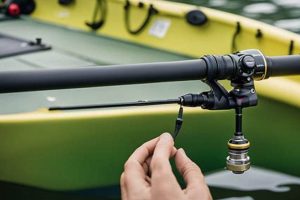
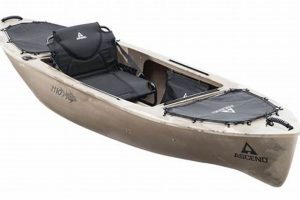
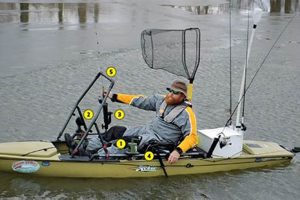
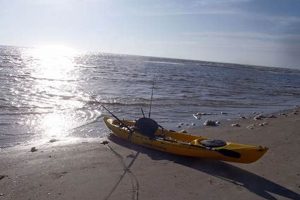
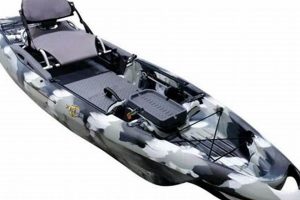
These devices provide a secure and humane way to retain caught fish while continuing to kayak. A typical version consists of a strong cord or wire with clips or other fasteners designed to hold fish securely through the mouth and gills, often incorporating a float to keep the catch submerged and fresh. This allows anglers to keep their hands free for paddling and casting.
Maintaining the quality and freshness of a catch is crucial for any angler. Submerging fish in water immediately after capture helps preserve their flavor and texture. This practice also promotes ethical fishing by ensuring humane treatment of the catch until it can be properly processed. Historically, anglers have employed various methods for keeping fish fresh while on the water. Modern versions have evolved to be durable, lightweight, and easy to use in the confined space of a kayak.
Further exploration will cover various types available, factors influencing selection, best practices for usage, and proper care and maintenance.
Tips for Using Fish Stringers with Kayaks
Proper use of these devices ensures both successful angling and responsible fish handling. The following tips offer guidance for maximizing utility and minimizing negative impacts.
Tip 1: Choose the Right Type: Consider the species targeted and the fishing environment when selecting a stringer. Durable, corrosion-resistant materials are essential for saltwater environments. Stringers with larger clips accommodate larger fish.
Tip 2: Secure the Stringer Properly: Attach the stringer securely to the kayak to prevent loss or entanglement. A dedicated attachment point or a sturdy loop on the kayak is recommended. Avoid attaching it to the angler’s person.
Tip 3: Limit the Number of Fish: Overloading a stringer can stress the fish and potentially compromise kayak stability. Keep the number of fish on the stringer to a manageable amount, prioritizing quality over quantity.
Tip 4: Dispatch Fish Humanely: Dispatch fish quickly and humanely before placing them on the stringer. This minimizes suffering and preserves the quality of the flesh.
Tip 5: Monitor the Stringer Regularly: Check the stringer frequently for damage or tangling. Ensure fish remain securely attached and submerged.
Tip 6: Avoid Overcrowding: Provide adequate space between fish on the stringer to allow for water circulation and prevent spoilage.
Tip 7: Clean the Stringer After Each Use: Rinse the stringer thoroughly with fresh water and allow it to dry completely after each use. This prevents corrosion and bacterial growth.
Following these tips will contribute to a positive and responsible fishing experience, preserving both the catch and the environment.
By understanding the nuances of using these tools effectively, anglers can ensure a successful and ethical fishing experience from their kayaks.
1. Retention

Retention, in the context of kayak fishing, refers to the safe and responsible keeping of caught fish until they can be brought ashore. Effective retention is crucial for maintaining fish freshness, ensuring humane treatment, and complying with regulations. Fish stringers designed for kayaks play a vital role in achieving this.
- Security
A secure stringer prevents fish from escaping or becoming detached from the kayak, minimizing loss and environmental impact. Strong clips, robust cord or wire, and secure attachment points on the kayak are essential for reliable security. For example, a stainless steel cable stringer with locking clips provides superior security compared to a simple rope stringer, particularly in strong currents or when handling larger fish.
- Fish Condition Preservation
Proper retention maintains the quality of the catch. Submerging fish in water, facilitated by an appropriate stringer, helps preserve their freshness and flavor. A stringer with a float keeps the fish submerged while allowing for water circulation, preventing spoilage. This is particularly important in warmer water temperatures. An example would be a buoyant stringer design that suspends the catch below the waterline, maximizing freshness compared to leaving fish exposed on the kayak deck.
- Kayak Stability
A well-designed stringer system contributes to kayak stability. Excessive weight or poorly positioned fish can compromise balance, especially in smaller kayaks. Keeping the stringer close to the kayak’s centerline and distributing the weight evenly helps maintain stability. For example, a shorter, centrally attached stringer minimizes the impact on balance compared to a long stringer dragging behind the kayak.
- Regulation Compliance
Retention methods, including stringer use, must comply with local fishing regulations. These regulations often dictate size and species limits, as well as methods for retaining catch. Understanding and adhering to these regulations is essential for responsible angling. An example would be using a stringer that allows for quick release of undersized or protected species, facilitating compliance with local regulations.
These facets of retention underscore the importance of selecting and using appropriate fish stringers for kayaks. A well-chosen and properly utilized stringer system contributes significantly to a successful and ethical kayak fishing experience, ensuring the responsible handling and preservation of the catch while maintaining angler safety and regulatory compliance.
2. Kayak Compatibility
Kayak compatibility is a critical factor when selecting a fish stringer. Kayaks, due to their compact design and focus on maneuverability, present unique challenges and considerations not encountered in larger fishing vessels. Compatibility encompasses several key aspects: stringer length, attachment points, and storage. An excessively long stringer can become entangled in the kayak’s propulsion system or surrounding vegetation, hindering navigation and potentially jeopardizing safety. Conversely, a stringer that is too short may limit fish-holding capacity and increase the risk of losing the catch. A sit-on-top kayak, with its open deck, offers more flexibility in stringer placement and attachment compared to a sit-inside kayak, where interior space is limited. Therefore, stringer selection should align with the specific kayak type. For instance, a shorter, coiled stringer might be ideal for a sit-inside kayak, while a longer, floating stringer could be suitable for a sit-on-top model. Secure attachment points are essential to prevent stringer loss and maintain kayak stability. Integrating dedicated attachment points, such as D-rings or clips, directly onto the kayak structure provides a reliable and convenient solution.
Kayak compatibility extends beyond mere physical fit. Storage considerations are equally important. A bulky or unwieldy stringer can be difficult to stow and deploy within a kayak’s limited confines. Stringers designed for kayak use often incorporate features that facilitate compact storage and easy deployment, such as coiled designs or integrated storage pouches. These features minimize clutter and streamline the fishing experience. Furthermore, the stringer material and construction should complement the kayak’s environment. Saltwater kayaks, for instance, require corrosion-resistant materials like stainless steel to prevent deterioration. Choosing a stringer constructed from durable, kayak-compatible materials ensures longevity and minimizes maintenance. For example, a coated stainless steel cable stringer is more suitable for saltwater environments than a galvanized steel stringer, which is susceptible to rust.
In summary, kayak compatibility is paramount when choosing a fish stringer. Careful consideration of length, attachment methods, storage solutions, and material durability ensures seamless integration with the kayak’s design and operating environment. Prioritizing compatibility optimizes both fishing efficiency and overall safety, contributing to a more positive and productive kayak angling experience. Neglecting these factors can lead to equipment failure, fish loss, and potentially dangerous situations on the water. Therefore, understanding and addressing kayak compatibility are essential steps in selecting the right fish stringer for any kayak fishing adventure.
3. Material Durability

Material durability is paramount for fish stringers used in kayaks. The aquatic environment, combined with the physical demands of kayak fishing, necessitates robust materials that can withstand prolonged exposure to water, resist corrosion, and endure the stresses of holding live fish. Stringer failure can lead to fish loss, gear damage, and potential safety hazards. Selecting appropriate materials directly impacts the stringer’s longevity, effectiveness, and overall user experience. For instance, stainless steel cable stringers offer exceptional corrosion resistance and strength, making them suitable for saltwater environments where rust is a major concern. Conversely, nylon rope stringers, while lightweight and affordable, may degrade over time with exposure to UV radiation and saltwater, potentially leading to breakage.
Several factors influence material selection. The target fish species plays a crucial role. Larger, more powerful fish require stronger, more durable stringer materials than smaller species. The fishing environment also dictates material choice. Saltwater environments necessitate corrosion-resistant materials, while freshwater applications offer more flexibility. Consider a braided stainless steel cable stringer with reinforced clips for larger saltwater species like kingfish or tuna. The robust cable and reinforced clips provide the necessary strength and corrosion resistance. For freshwater species like bass or trout, a nylon or coated wire stringer might suffice, offering a balance of durability and affordability.
Understanding the relationship between material durability and stringer performance is essential for responsible and successful kayak angling. Prioritizing durable materials minimizes the risk of equipment failure, ensures secure fish retention, and contributes to a positive fishing experience. Furthermore, selecting environmentally resistant materials promotes longevity, reducing the need for frequent replacements and minimizing environmental impact. Ultimately, investing in a high-quality, durable fish stringer enhances both the practicality and ethical aspects of kayak fishing.
4. Fish-Friendly Design

Fish-friendly design in kayak fishing gear prioritizes minimizing stress and harm to caught fish. This approach aligns with ethical angling practices and promotes conservation. In the context of fish stringers, fish-friendly design focuses on features that reduce injury, promote survival, and preserve fish quality. Understanding these design elements allows anglers to make informed choices that benefit both the catch and the environment.
- Minimally Invasive Fasteners
Fish-friendly stringers utilize fasteners that minimize trauma to the fish. Sharp or poorly designed clips can cause excessive injury to the gills, mouth, and jaw. Rounded or coated clips reduce tissue damage and promote quicker healing. For example, a stringer with rubber-coated clips distributes pressure more evenly, minimizing the risk of tearing the fish’s gills compared to a stringer with sharp metal clips. This reduces stress on the fish and improves its chances of survival if released.
- Adequate Spacing and Ventilation
Overcrowding on a stringer restricts water flow around the fish, hindering respiration and accelerating spoilage. Fish-friendly designs incorporate spacing features or encourage best practices that ensure adequate ventilation and prevent fish from rubbing against each other, reducing stress and physical damage. For instance, a stringer with individual clips spaced along a cable allows for better water circulation compared to a stringer with multiple fish crowded onto a single ring. This improved oxygenation helps maintain fish vitality and preserves flesh quality.
- Quick-Release Mechanisms
Fish-friendly stringers often incorporate quick-release mechanisms that facilitate the safe and efficient removal of fish. These mechanisms minimize handling time and reduce the risk of further injury, particularly when releasing undersized or unwanted catch. A stringer with individual clips that can be opened with one hand allows for rapid release of a fish compared to a stringer with complex knots or fasteners. This is crucial for minimizing stress and maximizing the chances of survival for released fish.
- Non-Toxic Materials
Materials used in fish-friendly stringers are non-toxic and do not leach harmful substances into the water or the fish. This protects the fish and the surrounding aquatic environment. For example, stainless steel or high-quality nylon are preferable to materials containing lead or other heavy metals that can contaminate the water and harm aquatic life. Using non-toxic materials contributes to responsible angling practices and minimizes environmental impact.
Incorporating these fish-friendly design elements into kayak fishing practices promotes ethical angling, enhances fish welfare, and contributes to sustainable fisheries management. By prioritizing fish-friendly stringers, kayak anglers can enjoy their sport while minimizing their impact on the aquatic environment and promoting healthy fish populations. Selecting a fish-friendly stringer is an investment in both the future of the sport and the well-being of the fish.
5. Ease of Use

Ease of use is a critical factor influencing the overall kayak fishing experience. In the context of fish stringers, it directly impacts efficiency, safety, and enjoyment on the water. A cumbersome or difficult-to-manage stringer can disrupt the flow of fishing, create frustration, and even pose safety risks. Conversely, a user-friendly stringer streamlines the process of securing and managing the catch, allowing anglers to focus on the core aspects of fishing.
- One-Handed Operation
Efficient kayak fishing often necessitates single-handed operation of equipment, leaving the other hand free for paddling, maneuvering, or maintaining balance. Stringers designed for one-handed operation, featuring easy-to-open clips or quick-release mechanisms, significantly enhance efficiency and safety. For example, a stringer with a spring-loaded clip allows for quick and secure attachment of fish with one hand, while a stringer requiring complex knots or two-handed operation can be cumbersome and time-consuming, especially in challenging conditions.
- Tangle-Free Design
Tangles disrupt fishing and can lead to lost time and frustration. Stringers constructed with tangle-resistant materials or designs, such as coiled cables or rigid floats, minimize this issue. A stringer with a rigid, buoyant float is less prone to tangling than a stringer with a flexible rope float, allowing for easier deployment and retrieval. Tangle-free operation contributes to a smoother, more efficient fishing experience.
- Secure Attachment and Detachment
Securely attaching and detaching the stringer from the kayak is crucial for both fish retention and angler safety. Stringers featuring robust attachment points and intuitive mechanisms facilitate quick and reliable connection and disconnection. For example, a stringer with a carabiner clip that can be quickly attached to a D-ring on the kayak provides secure attachment and easy removal, while a stringer requiring intricate knots or ties can be time-consuming and less reliable, particularly in rough conditions or when handling a lively catch.
- Compact Storage
Space is often limited in kayaks. Stringers that can be compactly stored when not in use maximize available space and minimize clutter. Features like coiled designs or integrated storage pouches contribute to efficient space utilization. A coiled stringer that collapses into a small size is easier to store in a kayak’s limited space compared to a long, rigid stringer that occupies valuable storage area. Efficient storage solutions enhance organization and contribute to a more streamlined fishing experience.
These elements of ease of use directly influence the overall effectiveness and enjoyment of kayak fishing. A well-designed, user-friendly stringer contributes to a more streamlined, efficient, and ultimately more successful fishing experience. By prioritizing ease of use, anglers can focus on the essential aspects of fishing, maximizing their time on the water and minimizing potential frustrations. This contributes not only to a more productive outing but also to a safer and more enjoyable experience overall.
6. Storage and Portability
Storage and portability are essential considerations for kayak anglers due to the limited space and weight capacity inherent in kayak design. These factors significantly influence gear selection, impacting both fishing efficiency and overall safety. Fish stringers, essential for retaining caught fish, must integrate seamlessly within the kayak’s compact environment. Bulky or unwieldy stringers compromise valuable storage space and can impede movement and balance, potentially creating hazardous situations, especially in challenging water conditions. Compact, easily stowable designs maximize available space and contribute to a more organized and efficient fishing experience.
Several design features enhance stringer storage and portability within the kayak context. Collapsible or coiled stringers reduce overall length for compact storage, while lightweight materials minimize added weight burden. Integrated storage pouches or clips further streamline organization and prevent loose gear from cluttering the kayak’s limited space. For example, a coiled stainless steel stringer with an integrated storage pouch attached to the kayak’s deck provides convenient access and minimizes space requirements compared to a rigid stringer stored loose within the kayak. Similarly, a lightweight, floating rope stringer can be easily coiled and stored in a small dry bag, maximizing space efficiency.
Prioritizing storage and portability in stringer selection contributes significantly to a safer and more efficient kayak fishing experience. Compact designs minimize clutter and maximize usable space, promoting organized gear management and reducing the risk of entanglement or interference with paddling. Lightweight materials minimize the overall weight load, enhancing kayak maneuverability and stability. Efficient storage and portability, therefore, are not merely conveniences but integral components of responsible kayak angling, contributing to both safety and fishing success. Selecting gear optimized for these factors allows anglers to focus on the essential aspects of fishing, enhancing enjoyment and minimizing potential challenges on the water.
Frequently Asked Questions about Fish Stringers for Kayaks
This section addresses common inquiries regarding the selection and utilization of fish stringers specifically for kayak fishing. Clear understanding of these aspects contributes to responsible and successful angling practices.
Question 1: What materials are best suited for kayak fish stringers?
Durable, corrosion-resistant materials are essential, especially in saltwater environments. Stainless steel cable and coated wire are popular choices due to their strength and resistance to rust. Nylon rope can be suitable for freshwater applications but may degrade over time with exposure to UV radiation and saltwater.
Question 2: How long should a kayak fish stringer be?
Stringer length should balance fish capacity with kayak maneuverability. Excessively long stringers can become entangled, while short stringers limit capacity. Consider the kayak’s size and the typical number of fish kept.
Question 3: How are fish stringers attached to kayaks?
Secure attachment points are crucial. Many kayaks feature integrated D-rings or clips specifically designed for attaching accessories like stringers. Carabiner clips or other secure fastening mechanisms are recommended.
Question 4: Are floating fish stringers better than non-floating ones for kayaks?
Floating stringers keep the catch submerged, preserving freshness and minimizing impact on kayak stability. Non-floating stringers may suffice for shorter trips or smaller fish in calm conditions but can affect balance and increase fish stress.
Question 5: How should a fish stringer be maintained?
Rinse the stringer thoroughly with fresh water after each use to remove salt, debris, and bacteria. Allow it to dry completely before storage to prevent corrosion and prolong its lifespan. Inspect regularly for damage or wear.
Question 6: Are there regulations regarding fish stringer use in kayaks?
Regulations vary by location and may include limitations on stringer length, fish capacity, or even stringer type. Always consult local fishing regulations before using a stringer.
Careful consideration of material, length, attachment method, buoyancy, maintenance, and local regulations ensures the selection and use of a fish stringer appropriate for kayak fishing, contributing to a responsible and enjoyable experience.
Beyond these FAQs, exploring specific stringer types tailored to different fishing styles and target species can further refine selection for optimal performance and ethical angling.
Fish Stringers for Kayaks
Effective management of caught fish is crucial for responsible kayak angling. This exploration has highlighted the multifaceted nature of fish stringers designed for kayak use, emphasizing the importance of material durability, fish-friendly design, kayak compatibility, ease of use, and storage considerations. From the choice of corrosion-resistant stainless steel for saltwater environments to the incorporation of quick-release mechanisms for minimizing fish stress, each element contributes to a more ethical and productive fishing experience.
Appropriate stringer selection and utilization enhance both angler safety and fish welfare. Informed decision-making in gear acquisition contributes significantly to the sustainability of kayak fishing. Prioritizing these considerations ensures not only a more successful outing but also the preservation of aquatic ecosystems for future generations of anglers.