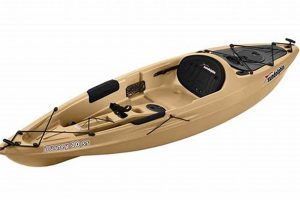
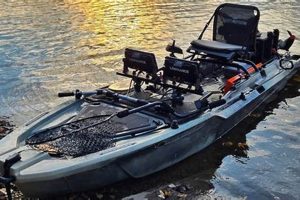
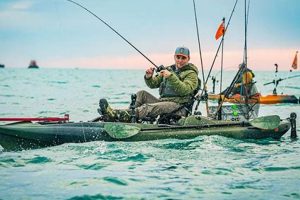
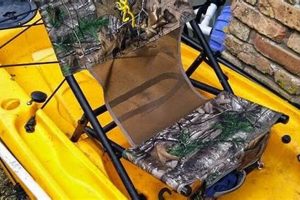
A kayak designed for fishing, particularly in the Kansas City area, typically features specialized components such as rod holders, storage compartments for tackle, and potentially a higher weight capacity for stability. Such vessels are often chosen for their maneuverability and access to shallower waters, advantageous for targeting specific fish species.
This specialized watercraft offers distinct advantages for anglers. Its compact size allows navigation through confined waterways inaccessible to larger boats, opening opportunities to explore diverse fishing locations. Enhanced stability and specialized features contribute to a more comfortable and productive fishing experience. The growing popularity reflects a rising interest in personalized and accessible angling within the region’s diverse aquatic environments.
Further exploration will delve into specific kayak models appropriate for Kansas City waters, recommended fishing gear, optimal locations for diverse species, and relevant local regulations. This information aims to equip anglers with the knowledge and resources to maximize their fishing experience in the Kansas City area.
Tips for Kayak Fishing in Kansas City
Successful kayak angling requires careful planning and consideration of various factors. These tips provide guidance for a safe and productive experience on Kansas City waterways.
Tip 1: Research suitable locations. Thorough research is essential before embarking on any fishing trip. Consider factors such as target species, water conditions, access points, and local regulations.
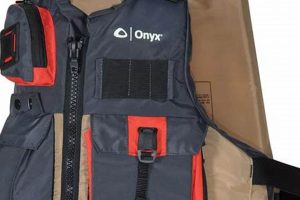
Tip 2: Prioritize safety equipment. A personal flotation device (PFD) is paramount. Additional safety gear like a whistle, first-aid kit, and communication device should always be included. Checking weather forecasts before departure is crucial.
Tip 3: Select appropriate fishing gear. Rod and reel combinations should align with target species and fishing techniques. Essential tackle includes appropriate lines, hooks, lures, and bait.
Tip 4: Organize and secure equipment. Proper storage within the kayak is vital. Dry bags protect sensitive items from water damage. Secure rods and tackle to prevent loss in case of capsizing.
Tip 5: Practice paddling and maneuvering techniques. Familiarity with basic paddling strokes and maneuvering skills allows efficient navigation and precise positioning for optimal casting.
Tip 6: Respect the environment and other anglers. Adhering to “leave no trace” principles ensures the preservation of natural habitats. Maintaining respectful distances from fellow anglers contributes to a positive experience for everyone.
Tip 7: Learn basic kayak maintenance. Regular cleaning and inspection prolong the lifespan of the kayak. Understanding fundamental repairs can address minor issues in the field.
By adhering to these guidelines, anglers can enhance their safety, improve their fishing success, and contribute to the responsible enjoyment of Kansas City’s waterways.
This information serves as a foundation for successful kayak fishing excursions in the Kansas City area, leading into a concluding discussion on local resources and community engagement.
1. Kayak Selection

Kayak selection represents a critical decision within the broader context of Kansas City fishing kayak adventures. The chosen vessel directly influences angler safety, fishing efficacy, and overall enjoyment. A kayak ill-suited to local conditions or the angler’s experience level can compromise stability, limit access to desired fishing locations, and detract from the overall experience. Conversely, a well-chosen kayak enhances maneuverability in diverse water environments, provides convenient storage for fishing gear, and contributes to a comfortable and productive outing. For instance, a shorter, wider kayak offers superior stability in calmer waters, ideal for novice anglers or still-fishing techniques. A longer, narrower kayak, however, delivers increased speed and tracking performance, benefiting experienced anglers covering greater distances or navigating currents. Material considerations also play a significant role: lighter kayaks, like those constructed from composites, enhance portability and ease of transport, while heavier, rotomolded kayaks provide enhanced durability for navigating challenging waters.
Understanding the relationship between kayak selection and specific fishing styles within the Kansas City region optimizes equipment choices. River fishing often necessitates kayaks with enhanced tracking and maneuverability for navigating currents and obstacles. Lake fishing, by contrast, may prioritize stability and ample storage for extended trips. Furthermore, the targeted fish species influences kayak selection. Anglers pursuing larger species benefit from kayaks with higher weight capacities and stability features. Consideration of these nuances elevates fishing success and overall satisfaction. For example, a sit-on-top kayak provides easier access to the water and greater freedom of movement, advantageous for sight fishing and landing fish, while a sit-inside kayak offers greater protection from the elements and enhanced storage capacity for longer expeditions. The specific fishing location within Kansas City also plays a crucial role. Shallow-water fishing necessitates a kayak with a shallow draft, allowing access to areas inaccessible to larger boats. Navigating larger bodies of water benefits from a kayak designed for speed and efficiency.
Successful kayak angling in Kansas City necessitates careful evaluation of individual needs and environmental conditions. Matching kayak characteristics to specific fishing requirements, experience level, and local waters optimizes performance, safety, and enjoyment. This deliberate approach to kayak selection establishes a crucial foundation for a positive and productive fishing experience within the diverse waterways of the Kansas City region.
2. Fishing Gear

Specialized fishing gear selection significantly impacts success and enjoyment when using a fishing kayak in Kansas City. The confined space and unique demands of kayak fishing necessitate careful consideration of equipment choices. Appropriate gear enhances efficiency, maximizes catch potential, and ensures a safe and comfortable experience on the water.
- Rods and Reels:
Shorter rods, typically between 6 and 7 feet, are ideal for kayak fishing, offering maneuverability within the limited space. Spinning reels are generally preferred for their versatility and ease of use. A medium-power, fast-action rod paired with a 2500-size spinning reel provides a balanced setup suitable for a variety of species commonly found in Kansas City waters. This combination allows for accurate casting with lighter lures and sufficient strength for battling larger fish.
- Lines and Tackle:
Braided fishing line offers superior sensitivity and strength, crucial for detecting subtle bites and navigating structure-rich environments common in Kansas City. Fluorocarbon leader material provides abrasion resistance and low visibility, increasing the likelihood of enticing wary fish. A selection of hooks, weights, and swivels appropriate for the target species and fishing techniques employed is essential. For instance, targeting catfish in the Missouri River may require heavier lines and larger hooks than pursuing crappie in a smaller lake.
- Lures and Bait:
Lure selection depends heavily on target species and prevailing conditions. Crankbaits, spinnerbaits, and jigs are effective choices for bass and other predatory fish. Live bait such as worms, minnows, and crickets can be productive for panfish and catfish. Understanding the feeding habits of target species is key to successful lure or bait selection. Seasonal variations influence baitfish populations and fish behavior, impacting lure effectiveness. Local knowledge can prove invaluable for optimizing lure choices.
- Storage and Organization:
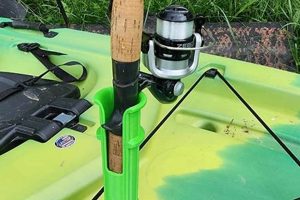
Efficient storage and organization of fishing gear are paramount in a kayak. Tackle boxes designed for kayak fishing maximize space utilization and provide quick access to essential items. Dry bags protect sensitive equipment from water damage. Rod holders integrated into the kayak keep rods secure and readily accessible. A well-organized system prevents tangles, minimizes wasted time, and maximizes fishing efficiency. For instance, organizing lures by type and size allows quick retrieval without disrupting the fishing flow.
Appropriate fishing gear selection, tailored to the specific conditions and target species encountered in Kansas City waters, significantly enhances kayak fishing success. The combination of appropriate rods, reels, lines, tackle, lures, and efficient storage solutions contributes to a more enjoyable and productive experience on the water, allowing anglers to fully appreciate the unique advantages of kayak fishing in this region.
3. Location Scouting

Location scouting represents a critical pre-fishing phase for maximizing success and enjoyment within the context of Kansas City kayak angling. Thorough research and strategic planning, considering specific target species, seasonal influences, and water access points, distinguish a productive outing from a frustrating one. Diverse waterways within the Kansas City region, including the Missouri and Kansas Rivers, along with numerous lakes and reservoirs, each possess unique characteristics impacting fish behavior and optimal fishing strategies. A clear understanding of these nuances significantly enhances angling success.
For example, targeting catfish in the Missouri River requires a different approach than pursuing crappie in a smaller lake. River fishing often necessitates consideration of current flow, depth variations, and the presence of submerged structures. Identifying areas with slower currents, deeper holes, or log jams often increases the likelihood of encountering catfish. Lake fishing, conversely, may involve locating submerged vegetation beds, drop-offs, or inlets where crappie congregate. Utilizing online resources, consulting local bait shops, or engaging with experienced anglers provides valuable insights into productive fishing spots and seasonal patterns. Understanding species-specific behaviors and preferred habitats within each waterway is paramount. Seasonal variations in water temperature, oxygen levels, and baitfish populations also impact fish distribution.
Effective location scouting maximizes fishing time and reduces unproductive effort. Identifying suitable access points compatible with kayak launching is equally crucial. Some locations offer designated kayak launches, while others require portaging or navigating shallow banks. Prior knowledge of access points simplifies logistics and ensures a smooth start to the fishing trip. By investing time in pre-fishing research and location scouting, kayak anglers operating within the Kansas City area significantly improve their prospects for a successful and rewarding experience, efficiently targeting desired species and capitalizing on the unique opportunities presented by each distinct waterway. This proactive approach minimizes wasted time and maximizes the enjoyment derived from exploring the diverse aquatic environments of the region.
4. Safety Procedures

Safety procedures are inextricably linked to successful and enjoyable Kansas City kayak fishing experiences. The inherent risks associated with on-water activities necessitate a proactive and informed approach to safety, ensuring angler well-being and fostering responsible enjoyment of the region’s waterways. Neglecting established safety protocols significantly increases the likelihood of accidents, potentially leading to injuries, equipment loss, or even fatalities. Understanding and implementing appropriate safety measures forms a crucial foundation for a positive and sustainable kayak fishing practice.
Several key safety procedures warrant specific attention within the context of Kansas City kayak fishing. Consistent personal flotation device (PFD) usage remains paramount. A PFD provides essential buoyancy in the event of capsizing, significantly increasing the chances of survival. Carrying a whistle facilitates communication in emergencies, enabling anglers to signal for assistance if needed. A waterproof first-aid kit addresses minor injuries and ailments encountered on the water. Checking weather forecasts prior to departure allows anglers to avoid hazardous conditions, such as thunderstorms or high winds. Informing someone of planned fishing locations and estimated return times provides an additional layer of security. Should an unexpected event occur, others know where to initiate search efforts if necessary. These proactive measures demonstrably mitigate risks associated with kayak fishing, contributing to a safer and more enjoyable experience.
Practical examples underscore the critical importance of adhering to safety procedures. A recent incident involved a kayak angler capsizing in the Missouri River. Lacking a PFD, the angler struggled to stay afloat in the strong current. Fortunately, a nearby boater witnessed the event and initiated a rescue. This incident highlights the potentially life-saving role of PFDs. In another instance, an angler ventured onto a lake despite adverse weather warnings. Sudden high winds capsized the kayak, leaving the angler stranded far from shore. The angler’s adherence to the practice of informing others of their plans enabled a timely rescue. These real-world scenarios demonstrate the practical significance of seemingly simple safety precautions. Adhering to established safety protocols transforms potential tragedies into manageable incidents, preserving angler well-being and fostering responsible enjoyment of Kansas City’s diverse aquatic resources. A comprehensive understanding and consistent application of these procedures are indispensable for any kayak angler operating in the region.
5. Local Regulations
Adherence to local regulations forms an integral component of responsible and sustainable kayak fishing practices within the Kansas City area. These regulations, encompassing licensing requirements, catch limits, and seasonal restrictions, serve to protect fish populations, maintain ecological balance, and ensure equitable access to aquatic resources for all anglers. Disregarding these regulations undermines conservation efforts, potentially leading to detrimental consequences for the local ecosystem and the long-term viability of fishing opportunities. Understanding and complying with these rules are therefore not merely legal obligations but essential ethical responsibilities for every kayak angler.
Specific examples illustrate the practical significance of adhering to local regulations. Fishing license requirements generate revenue that directly supports conservation programs, habitat restoration projects, and fish stocking initiatives. Catch limits prevent overfishing, safeguarding fish populations from depletion and preserving biodiversity. Seasonal closures protect vulnerable species during spawning periods, ensuring successful reproduction and the long-term health of the fishery. Ignoring these regulations can lead to fines, license revocation, and, in severe cases, legal prosecution. Moreover, disregard for these rules undermines the collective effort to maintain a healthy and sustainable aquatic environment for future generations. For instance, exceeding catch limits for crappie in a local reservoir can deplete the population, impacting not only the crappie fishery but also the broader food web within that ecosystem. Similarly, fishing during closed seasons disrupts spawning cycles, potentially jeopardizing the long-term viability of the species.
Responsible kayak fishing in Kansas City necessitates a comprehensive understanding and unwavering adherence to local regulations. This commitment contributes to the preservation of the region’s valuable aquatic resources, ensuring their continued enjoyment by current and future generations of anglers. Accessing and interpreting these regulations is readily achievable through online resources provided by the Missouri Department of Conservation and the Kansas Department of Wildlife, Parks and Tourism. Staying informed about current regulations and adapting fishing practices accordingly underscores a commitment to responsible angling and reinforces the sustainability of the sport within the Kansas City area. This proactive approach safeguards both the environment and the future of kayak fishing in the region.
6. Environmental Awareness
Environmental awareness represents a crucial aspect of responsible kayak fishing practices within the Kansas City region. Sustainable interaction with the aquatic environment ensures the long-term health of the ecosystem and preserves fishing opportunities for future generations. Kayak anglers, by virtue of their close proximity to the water and its inhabitants, possess a unique responsibility to minimize their environmental impact and actively contribute to conservation efforts. Understanding the interconnectedness of human actions and ecological consequences is essential for fostering a sustainable and ethical approach to kayak fishing.
- Leave No Trace Principles
Adhering to “Leave No Trace” principles minimizes human impact on natural environments. Kayak anglers should pack out all trash, avoid disturbing vegetation, and refrain from introducing non-native species. Discarded fishing line, for example, poses a significant entanglement hazard to wildlife. Proper disposal of used fishing line in designated receptacles or recycling programs prevents harm to aquatic organisms and preserves the aesthetic integrity of the waterway. Respecting natural habitats contributes to a healthier ecosystem and enhances the overall fishing experience.
- Water Quality Protection
Protecting water quality is paramount for maintaining healthy aquatic ecosystems. Kayak anglers can contribute by avoiding the use of harmful chemicals, such as non-biodegradable soaps and sunscreen. Properly disposing of waste and avoiding fuel spills prevents contamination of waterways. Understanding the potential impact of pollutants on aquatic life fosters responsible behavior and promotes the long-term health of the fishery. For instance, chemical runoff from agricultural fields can negatively impact fish populations and overall water quality. Kayak anglers can advocate for responsible land management practices within their communities to further protect water resources.
- Respect for Wildlife
Respectful interaction with wildlife enhances the ecological integrity of the fishing environment. Kayak anglers should observe wildlife from a safe distance, avoid disturbing nesting areas, and practice catch-and-release techniques whenever possible. Minimizing stress on fish populations contributes to their long-term health and ensures sustainable fishing opportunities. Handling fish gently and using appropriate fishing gear minimizes injury and maximizes post-release survival rates. Understanding the life cycles and vulnerabilities of different species informs responsible angling practices.
- Habitat Preservation
Protecting aquatic habitats is essential for maintaining healthy fish populations and overall ecosystem function. Kayak anglers can contribute by avoiding anchoring in sensitive areas, such as spawning beds or submerged vegetation. Participating in habitat restoration projects, such as riparian planting initiatives, enhances the ecological integrity of waterways. Supporting local conservation organizations dedicated to habitat preservation further amplifies these efforts. Understanding the role of healthy habitats in supporting diverse aquatic life fosters a deeper appreciation for the environment and reinforces responsible angling practices. For example, preserving riparian vegetation along riverbanks filters pollutants, stabilizes shorelines, and provides crucial habitat for numerous aquatic species.
Integrating environmental awareness into kayak fishing practices within the Kansas City region elevates the sport beyond mere recreation. It fosters a deeper connection with nature, promotes responsible stewardship of aquatic resources, and ensures the long-term sustainability of the fishery. By embracing these principles, kayak anglers actively contribute to the preservation of a healthy and vibrant aquatic ecosystem, enriching their own fishing experiences and safeguarding this valuable resource for generations to come. This conscious approach to kayak fishing demonstrates a respect for the environment and a commitment to the future of the sport.
Frequently Asked Questions about Kayak Fishing in Kansas City
This section addresses common inquiries regarding kayak fishing in the Kansas City area, providing concise and informative responses to enhance angler preparedness and promote responsible angling practices.
Question 1: What type of kayak is best suited for fishing in Kansas City waters?
Kayak selection depends on intended fishing locations and target species. Shorter, wider kayaks offer stability for calmer waters, while longer, narrower kayaks provide speed and efficiency for larger rivers and lakes. Sit-on-top kayaks offer easier access and maneuverability, while sit-inside kayaks provide greater protection from the elements.
Question 2: Where can suitable fishing kayaks be purchased or rented in Kansas City?
Several local retailers and outfitters offer a range of fishing kayaks for purchase or rent. Online resources and local fishing forums often provide recommendations and reviews of reputable businesses.
Question 3: What essential safety gear is recommended for kayak fishing in the area?
Essential safety gear includes a personal flotation device (PFD), a whistle, a first-aid kit, and a communication device. Checking weather forecasts before embarking on a fishing trip is crucial.
Question 4: Are there specific licensing requirements for fishing from a kayak in Kansas City?
Valid fishing licenses are required for anglers fishing from kayaks, adhering to regulations established by the Missouri Department of Conservation and the Kansas Department of Wildlife, Parks and Tourism, depending on the specific location.
Question 5: What are the common target fish species for kayak anglers in Kansas City waters?
Common target species include bass, crappie, catfish, walleye, and various sunfish species. The specific location and time of year influence species availability and fishing techniques.
Question 6: Where can one find information about local fishing regulations and access points for kayak launching?
Information regarding local fishing regulations and access points is available through the websites of the Missouri Department of Conservation and the Kansas Department of Wildlife, Parks and Tourism. Local bait shops and fishing organizations also provide valuable resources.
Careful consideration of these frequently asked questions enhances angler preparedness, promotes responsible fishing practices, and contributes to a safer and more enjoyable kayak fishing experience in the Kansas City area.
Further exploration of specific fishing techniques, recommended gear, and detailed location information will enhance angling success in the region.
Kansas City Kayak Fishing
Exploration of the multifaceted aspects of kayak fishing within the Kansas City region reveals a dynamic interplay between angler preparedness, environmental awareness, and regulatory adherence. Successful navigation of this interplay hinges on informed equipment selection, strategic location scouting, and rigorous implementation of safety procedures. Understanding local regulations, respecting aquatic ecosystems, and prioritizing ethical angling practices collectively contribute to a sustainable and rewarding fishing experience. Emphasis on these elements distinguishes responsible angling from mere recreational pursuit, fostering a harmonious relationship between angler and environment.
The future of kayak fishing in Kansas City rests upon continued dedication to these principles. Preservation of the region’s diverse aquatic resources necessitates ongoing education, community engagement, and a collective commitment to responsible stewardship. Embracing these values ensures the enduring viability of this unique angling experience for generations to come, solidifying its place within the rich tapestry of Kansas City’s outdoor heritage.