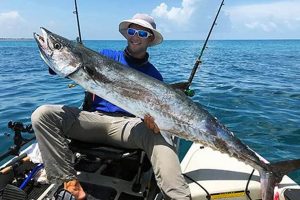
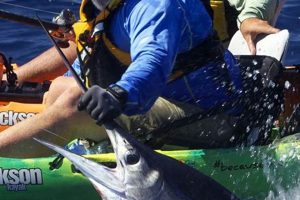
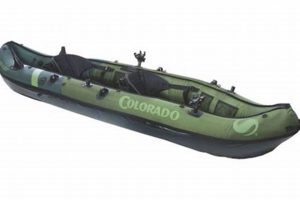
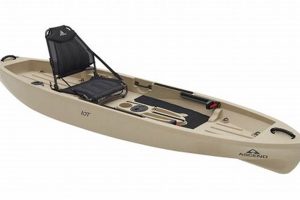
A tandem kayak designed for angling, typically accommodating three adults, offers a stable platform for shared fishing excursions. These vessels are characterized by ample storage for fishing gear, often including specialized features such as rod holders, livewells, and anchor trolleys. A common configuration might include two seats in the bow and stern with a central position amidships.
The advantage of a larger, multi-person fishing kayak lies in its enhanced stability and load capacity compared to single-person models. This stability is beneficial in rougher waters and allows for more comfortable movement while casting and reeling. The increased storage allows for longer trips and the sharing of equipment, potentially reducing individual costs. Historically, fishing from kayaks has ancient roots, but the development of specialized, multi-person fishing kayaks is a relatively recent innovation, reflecting growing interest in kayak angling as a recreational activity.
Further exploration will cover key factors to consider when choosing such a vessel, including material, design, and features, along with essential safety considerations and recommended accessories for a successful fishing trip.
Tips for Multi-Person Kayak Fishing
Careful planning and preparation contribute significantly to successful fishing trips using larger kayaks. These tips offer guidance for maximizing enjoyment and safety on the water.
Tip 1: Distribute Weight Evenly: Proper weight distribution is crucial for stability. Gear should be evenly distributed throughout the kayak, avoiding concentration at either end or in the center.
Tip 2: Coordinate Movements: Synchronized paddling and casting are essential to maintain balance and avoid accidental collisions or entanglement of lines. Clear communication among all occupants is key.
Tip 3: Assign Roles: Designating specific tasks, such as navigation, anchor management, or fish handling, can streamline the experience and improve efficiency.
Tip 4: Check Capacity Limits: Adhering to the manufacturer’s specified weight capacity ensures optimal performance and prevents dangerous instability. Combined weight of passengers and gear should never exceed this limit.
Tip 5: Practice Safety Procedures: All occupants should be familiar with basic safety procedures, including wearing personal flotation devices, understanding emergency signals, and knowing how to re-enter the kayak in case of capsize.
Tip 6: Choose Appropriate Waters: Select fishing locations suitable for the kayak’s size and the skill level of all participants. Consider water conditions, currents, and potential hazards.
Tip 7: Secure Gear Properly: All fishing equipment and personal belongings should be securely fastened to the kayak to prevent loss in case of capsize or rough water.
Adhering to these guidelines promotes a safer and more rewarding fishing experience, allowing for greater focus on enjoying time on the water and optimizing angling success.
These preparatory steps pave the way for a successful outing, enhancing both safety and the overall fishing experience.
1. Capacity (3 Anglers)

Capacity, specifically the ability to accommodate three anglers, represents a defining characteristic of a 3-man fishing kayak. Understanding the implications of this capacity is fundamental for selecting an appropriate vessel and ensuring a safe and efficient fishing experience. This section explores the multifaceted nature of 3-angler capacity.
- Individual Angler Space
Adequate space for each angler impacts comfort and fishing effectiveness. Sufficient room for casting, reeling, and general movement minimizes interference and maximizes individual fishing opportunities. A cramped kayak can lead to frustration and tangled lines, detracting from the overall experience. Consider the difference between a kayak with ample legroom and individual seating adjustments versus one with limited space and fixed positions.
- Combined Weight Limit
The combined weight of three adults, along with fishing gear and potential catches, necessitates a robust weight capacity. Exceeding this limit compromises stability and safety, increasing the risk of capsizing. Manufacturers specify weight limits, and adhering to these guidelines is paramount. For instance, a kayak with a 500-pound capacity may be suitable for three smaller adults with moderate gear, but insufficient for three larger individuals with extensive equipment.
- Balance and Stability
Even with a sufficient weight capacity, the distribution of weight within the kayak significantly influences balance and stability. Uneven distribution can lead to instability, particularly during movement or when encountering waves or currents. Proper loading and weight distribution are crucial for maintaining a stable platform. For example, concentrating weight at one end can create a dangerous imbalance.
- Logistics and Coordination
Managing three anglers within a single vessel requires coordination and communication. Launching, landing, paddling, and fishing activities require careful synchronization to maintain balance and avoid collisions or interference. Clear communication and established roles facilitate a smoother and more efficient experience. Consider the complexities of navigating tight waterways or coordinating simultaneous casting amongst three individuals.
The capacity of a 3-man fishing kayak directly impacts the overall fishing experience. Careful consideration of individual angler space, weight limits, balance, and coordination ensures a safe, efficient, and enjoyable outing. Selecting a kayak with appropriate capacity and understanding its implications are essential for maximizing the benefits of shared kayak fishing.
2. Stability

Stability represents a critical performance attribute in 3-man fishing kayaks, directly influencing safety and angling effectiveness. Multiple factors contribute to stability, including hull design, width, and weight distribution. A stable platform allows anglers to cast, reel, and land fish without compromising balance, a crucial consideration given the potential for shifting weight and movement within the kayak. Wider hulls generally provide greater initial stability, resisting tipping, while longer kayaks often exhibit superior tracking, maintaining a straight course. Consider the scenario of three anglers fishing in choppy water; a kayak with a wide, stable hull provides a secure platform, minimizing the risk of capsize, unlike a narrower, less stable design.
Weight distribution plays a crucial role in maintaining stability. Evenly distributing gear and occupants throughout the kayak minimizes imbalances that can lead to tipping. Concentrating weight at either end or in the center compromises stability, particularly during movement or when encountering waves. For instance, storing heavy equipment at the stern while anglers are positioned in the bow creates an unstable configuration, increasing the risk of capsize. Proper weight management is, therefore, essential for maintaining a balanced and stable platform, crucial for both safety and effective angling.
Understanding the factors influencing stability is paramount for informed decision-making when selecting a 3-man fishing kayak. Prioritizing stability enhances safety, allowing anglers to focus on fishing rather than maintaining balance. This focus translates to a more enjoyable and productive fishing experience, particularly in challenging conditions. The relationship between stability and kayak design, weight distribution, and overall performance underscores the importance of considering this attribute when evaluating options for multi-person kayak fishing.
3. Storage Space

Storage space is a critical factor in 3-man fishing kayaks, directly impacting trip duration and angling versatility. The capacity to carry essential gear, including tackle boxes, rods, safety equipment, and personal items, influences the feasibility of longer excursions and the ability to adapt to changing fishing conditions. Insufficient storage restricts anglers to shorter trips and limits equipment choices, potentially hindering angling success. Consider a scenario where three anglers embark on a multi-day fishing expedition. Ample storage allows them to carry sufficient food, water, and camping gear, in addition to their fishing equipment, enabling a self-sufficient and extended trip. Conversely, limited storage necessitates frequent returns to shore for resupply, curtailing fishing time and potentially disrupting the overall experience.
The type and configuration of storage compartments also contribute to practicality and efficiency. Dedicated compartments for specific items, such as tackle boxes or rods, enhance organization and accessibility, streamlining the fishing process. Dry storage compartments protect sensitive electronics and personal items from water damage, crucial for maintaining functionality and preserving valuable equipment. For example, a dedicated rod holder protects rods from damage and keeps them readily accessible, while waterproof compartments safeguard electronic devices and important documents from splashes and immersion. Strategic placement of storage compartments further contributes to efficient weight distribution, optimizing kayak balance and stability.
Effective storage solutions are integral to successful 3-man kayak fishing trips. Adequate capacity and well-designed compartments enhance organizational efficiency, allowing anglers to focus on fishing rather than managing gear. This focus translates to a more streamlined and enjoyable experience, maximizing the potential for angling success. Careful consideration of storage requirements and compartmentalization strategies are, therefore, essential when selecting a 3-man fishing kayak.
4. Fishing Features

Specialized features distinguish fishing kayaks from recreational models, enhancing angling effectiveness and overall experience. These features are particularly relevant in 3-man fishing kayaks, where the increased capacity necessitates efficient use of space and coordinated angling activities. Rod holders, for example, secure rods while paddling or when attending to other tasks, preventing loss or damage. Multiple rod holders allow anglers to switch between different setups or target various species, maximizing fishing versatility. Consider a scenario where three anglers troll for different species simultaneously; dedicated rod holders facilitate this approach, preventing tangles and streamlining the process.
Integrated livewells maintain the health and viability of caught fish, crucial for conservation and tournament fishing. Aeration systems within the livewell circulate oxygenated water, preventing premature mortality. This feature allows anglers to focus on fishing, confident that their catch remains in optimal condition for later release or weigh-in. Imagine a tournament setting where preserving the health of caught fish is paramount; an integrated livewell ensures compliance with regulations and maximizes the chances of a successful outcome. Other specialized features, such as anchor trolleys, facilitate controlled drift fishing, while integrated fish finders enhance the ability to locate productive fishing areas. These features contribute significantly to the overall efficiency and success of fishing expeditions.
The incorporation of fishing-specific features into a 3-man kayak directly impacts its practicality and suitability for angling. These features enhance efficiency, organization, and the overall fishing experience, allowing anglers to focus on their primary objective: catching fish. Careful consideration of these features during kayak selection is, therefore, essential for optimizing angling success and maximizing enjoyment on the water. The interplay between these specialized features and the capacity of a 3-man kayak highlights the importance of selecting a vessel tailored to the specific needs and goals of the anglers.
5. Maneuverability

Maneuverability in a 3-man fishing kayak presents unique challenges and considerations compared to smaller, single-person vessels. The increased length and weight inherent in a larger kayak necessitate greater effort and coordination to execute turns and navigate tight waterways. This reduced agility can impact the ability to access shallow fishing areas, maneuver through obstacles, and respond quickly to changing water conditions. Consider, for example, navigating a narrow, winding creek; a shorter, more agile kayak would offer distinct advantages over a longer, less maneuverable 3-man version. The relationship between length, weight, and maneuverability presents inherent trade-offs that anglers must consider when selecting a vessel appropriate for their intended fishing locations.
Despite inherent limitations in maneuverability, design features can mitigate these challenges to some extent. A well-designed hull with a pronounced keel can improve tracking and directional stability, reducing the tendency to drift off course. Skegs or rudders offer additional control, particularly in windy conditions or when navigating currents. Consider a scenario where anglers face strong crosswinds; a rudder-equipped kayak would provide significantly greater directional control compared to a rudderless model. Furthermore, coordinated paddling techniques among all three occupants are essential for efficient maneuvering. Synchronized strokes and clear communication enhance turning performance and minimize wasted effort. The interplay between design features and coordinated paddling underscores the importance of both passive and active elements in optimizing maneuverability.
Understanding the factors influencing maneuverability is crucial for informed decision-making when selecting a 3-man fishing kayak. While inherent limitations exist due to size and weight, design features and paddling techniques can mitigate these challenges. Careful consideration of intended fishing locations, water conditions, and the skill level of all occupants is essential for selecting a kayak that balances capacity with acceptable maneuverability. This balance ultimately impacts accessibility to fishing areas, safety in challenging conditions, and the overall efficiency of the fishing experience.
Frequently Asked Questions
This section addresses common inquiries regarding kayaks designed for three anglers pursuing fishing activities. Clear and concise responses aim to provide comprehensive information for informed decision-making.
Question 1: What are the key advantages of a three-person fishing kayak?
Enhanced stability and increased carrying capacity for gear and potential catches are primary advantages. Shared paddling effort reduces fatigue on longer trips. The social aspect of shared fishing experiences is also a significant benefit.
Question 2: How does maneuverability compare to single or two-person kayaks?
Maneuverability is typically reduced due to increased length and weight. Navigation in tight spaces or swift currents requires greater coordination and effort among occupants.
Question 3: What safety considerations are paramount in a three-person fishing kayak?
Adherence to weight capacity limits, proper weight distribution, and consistent use of personal flotation devices are crucial for safety. Understanding self-rescue procedures and communication protocols among occupants are also essential.
Question 4: What features should one look for in a quality three-person fishing kayak?
Essential features include comfortable seating, ample storage compartments, multiple rod holders, and strategically placed mounting points for fish finders or other accessories. A stable hull design and durable construction are also key considerations.
Question 5: How does paddling technique differ in a three-person kayak?
Synchronized paddling is crucial for efficient movement and maintaining a straight course. Clear communication and established roles for steering and navigation enhance coordination among occupants.
Question 6: What are the typical price ranges for three-person fishing kayaks?
Prices vary depending on materials, features, and brand reputation. Entry-level models may start around [Price Range 1], while higher-end kayaks with advanced features can reach [Price Range 2] or more.
Careful consideration of these frequently asked questions provides a foundation for informed decision-making regarding the selection and utilization of a three-person fishing kayak.
The subsequent section will explore recommended accessories for enhancing fishing experiences in these multi-person vessels.
Conclusion
Careful evaluation of capacity, stability, storage, fishing-specific features, and maneuverability is essential when selecting a kayak intended for three anglers. Understanding the interplay of these factors ensures a safe, efficient, and enjoyable fishing experience. Prioritizing appropriate features and acknowledging inherent limitations in maneuverability are crucial for informed decision-making. Balancing individual needs with the collaborative nature of multi-person kayak fishing optimizes the potential for a successful and rewarding outing.
Investing time in research and selecting the appropriate vessel contributes significantly to successful angling excursions. A well-equipped and properly handled three-person fishing kayak offers a unique platform for shared experiences on the water, fostering camaraderie and enhancing the pursuit of angling success.