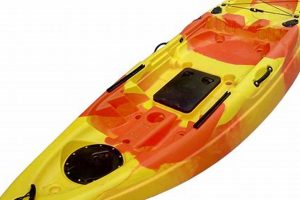
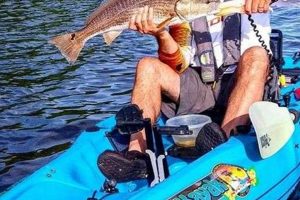
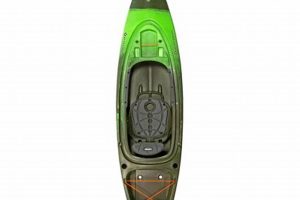
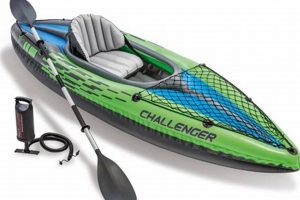
A matched set of fishing rod and reel, designed for the specific demands of angling from a kayak, typically emphasizes portability, balance, and durability. Such a setup might include a shorter rod for easier maneuverability in the confined space of a kayak, a reel with a sealed drag system to protect against water intrusion, and a robust construction to withstand the rigors of kayak fishing. For example, a 7-foot medium-power spinning rod paired with a 3000-size reel pre-spooled with braided line could be considered a suitable configuration.
Specialized fishing equipment designed for kayak angling improves casting accuracy, enhances fish-fighting control, and ultimately increases the chances of a successful catch. Historically, kayak anglers adapted existing tackle, but the growing popularity of the sport has driven manufacturers to develop purpose-built equipment offering significant advantages over general-purpose gear. This evolution has made the sport more accessible and enjoyable for anglers of all skill levels.
This article will further explore factors influencing equipment choices, including target species, fishing techniques, and kayak type, ultimately providing readers with the knowledge to select the optimal setup for their individual needs.
Tips for Choosing Kayak Fishing Equipment
Selecting appropriate equipment is crucial for a successful and enjoyable kayak fishing experience. The following tips offer guidance for choosing a suitable setup.
Tip 1: Consider Rod Length and Action. Shorter rods (6-7 feet) are generally preferred for kayak fishing due to limited space. A fast action rod tip provides greater sensitivity for detecting bites and setting hooks, while a moderate action offers more flexibility when fighting larger fish.
Tip 2: Choose a Suitable Reel Type. Spinning reels are popular for their ease of use and versatility. Baitcasting reels offer greater accuracy and control but require more practice to master. Select a reel size appropriate for the target species and fishing technique.
Tip 3: Opt for Durable and Corrosion-Resistant Materials. Kayak fishing exposes equipment to harsh conditions. Choose rods and reels constructed from materials like graphite and stainless steel that can withstand saltwater and frequent use.
Tip 4: Select the Right Line and Leader. Braided fishing line offers high strength and sensitivity, making it ideal for kayak fishing. Consider using a fluorocarbon leader for its abrasion resistance and low visibility in the water.
Tip 5: Prioritize Balance and Comfort. A balanced rod and reel setup reduces fatigue and improves casting accuracy. Consider the weight and ergonomics of the equipment, ensuring it feels comfortable to use for extended periods.
Tip 6: Match Equipment to Target Species. Lighter tackle is suitable for smaller species like panfish and trout, while heavier gear is necessary for larger game fish like salmon or striped bass. Research the target species and choose equipment accordingly.
Tip 7: Think About Kayak Compatibility. Consider how the chosen equipment will integrate with the kayak. Ensure there’s adequate storage space and that rod holders are compatible with the rod and reel setup.
Careful consideration of these factors will ensure anglers select equipment that enhances their kayak fishing experience, allowing them to focus on enjoying time on the water and landing their target catch.
By understanding the nuances of selecting appropriate kayak fishing gear, anglers can maximize their chances of success and fully appreciate the unique challenges and rewards this sport offers.
1. Portability

Portability is a critical factor when selecting a rod and reel combination for kayak fishing. The confined space and inherent mobility of a kayak demand compact and easily managed equipment. A cumbersome setup hinders casting, retrieving, and navigating, impacting both fishing success and overall enjoyment. This section explores the key facets of portability in relation to kayak fishing equipment.
- Transport and Storage
Kayak anglers often transport their vessels on car roof racks or trailers. Rods and reels must be easily stowed and secured during transit to prevent damage. Compact, collapsible rods and reels with retractable handles are advantageous for maximizing storage space and minimizing the risk of breakage. Cases or protective sleeves further safeguard equipment during transport.
- Maneuverability within the Kayak
Limited space within a kayak necessitates equipment that allows for comfortable casting and retrieval without interference from paddles, gear, or the kayak itself. Shorter rod lengths (typically under 7 feet) enhance maneuverability within the confined cockpit. A balanced and lightweight combo reduces fatigue during extended fishing sessions.
- Navigation through Waterways
Kayak anglers frequently navigate narrow waterways, overhanging branches, and other obstacles. A compact rod and reel setup allows anglers to maneuver effectively in these challenging environments. Shorter rods reduce the risk of entanglement and facilitate quick adjustments when navigating tight spaces.
- Ease of Deployment and Stowage
Rapidly changing fishing conditions or the need to address unexpected situations, such as navigating shallow water or landing a fish, require quick and efficient equipment management. A readily accessible and easily stowed rod and reel combo minimizes disruption and maximizes fishing time. Rod holders designed for quick release and secure storage are invaluable in these scenarios.
Prioritizing portability in rod and reel selection significantly enhances the kayak fishing experience. The ability to efficiently transport, deploy, and manage equipment within the confines of a kayak directly contributes to angler comfort, fishing effectiveness, and overall enjoyment on the water.
2. Balance
Balance in a kayak fishing rod and reel setup is essential for angler comfort, efficient casting, and effective fish fighting. A balanced combo minimizes fatigue during long hours on the water and allows for precise lure presentation and hooksets. This critical aspect impacts overall fishing performance and enjoyment, directly influencing an angler’s ability to successfully target and land fish from a kayak.
- Physical Comfort and Fatigue Reduction
Kayak fishing often involves extended periods in a seated position, requiring anglers to hold and manipulate equipment for extended durations. An unbalanced setup can strain wrists, forearms, and shoulders, leading to fatigue and discomfort. A well-balanced combo distributes weight evenly, reducing strain and allowing for prolonged fishing without physical compromise. This is particularly crucial when battling larger, more powerful fish.
- Casting Accuracy and Efficiency
Precise casting is paramount in kayak fishing, especially when targeting specific structures or presenting lures in tight spaces. A balanced setup allows for controlled and accurate casts, maximizing lure placement and minimizing wasted effort. This enhanced accuracy translates directly into increased opportunities to entice fish and improve catch rates. The reduced effort required for casting with a balanced combo contributes to energy conservation, crucial for long days on the water.
- Enhanced Fish-Fighting Control
When a fish strikes, a balanced rod and reel combo provides the angler with greater control and leverage, facilitating efficient hooksets and minimizing the risk of line breakage. This control is especially critical when battling strong fish in challenging environments. A well-balanced setup allows the angler to effectively manage the fight, increasing the likelihood of successfully landing the catch.
- Improved Sensitivity and Bite Detection
A balanced setup enhances sensitivity, allowing anglers to detect subtle bites and react quickly. This is particularly important in kayak fishing, where the angler is often closer to the water and can feel even the slightest vibrations transmitted through the rod. Improved sensitivity leads to more successful hooksets and ultimately contributes to a more productive fishing experience.
Achieving proper balance in a kayak fishing rod and reel combo requires careful consideration of rod length, weight, reel size, and line type. The optimal balance point varies depending on individual preferences and fishing styles, but prioritizing this aspect significantly improves overall performance, comfort, and enjoyment on the water. By focusing on balance, kayak anglers can enhance their ability to effectively target and land fish, maximizing their success and fully appreciating the unique challenges and rewards of this sport.
3. Durability
Durability is paramount when selecting a rod and reel combo for kayak fishing. The marine environment, combined with the physical demands of the sport, necessitates equipment built to withstand constant exposure to water, UV radiation, and potential impacts. A durable setup ensures consistent performance and longevity, minimizing the risk of equipment failure during critical moments. This section examines the key facets contributing to a durable and reliable kayak fishing combo.
- Material Selection
Rods constructed from high-modulus graphite or fiberglass composites offer a balance of strength, sensitivity, and resilience. Reels featuring sealed drag systems and corrosion-resistant components, such as stainless steel or anodized aluminum, are essential for prolonged saltwater exposure. Durable materials ensure the combo can withstand the harsh marine environment and resist damage from accidental impacts or drops.
- Construction Quality
Precision manufacturing and robust construction techniques significantly influence a combo’s lifespan. Reinforced joints, high-quality guides, and a tightly sealed reel body contribute to overall durability. Well-constructed equipment resists wear and tear from repeated use, maintaining performance over extended periods and reducing the need for frequent replacements.
- Maintenance Requirements
While inherent durability is crucial, proper maintenance practices further extend the life of kayak fishing equipment. Regular rinsing with fresh water after each use, especially after saltwater exposure, removes corrosive elements. Periodic lubrication of moving parts and careful storage protect against wear and tear, ensuring optimal function and prolonging the combo’s lifespan.
- Resistance to Environmental Factors
Kayak fishing exposes equipment to intense sunlight, fluctuating temperatures, and saltwater spray. UV-resistant coatings on rods and reels protect against sun damage and fading. Sealed components and corrosion-resistant materials prevent saltwater intrusion and subsequent damage. Equipment designed to withstand these environmental factors ensures consistent performance and longevity in demanding conditions.
Investing in a durable rod and reel combo specifically designed for kayak fishing ensures reliability and longevity, allowing anglers to focus on the experience rather than equipment concerns. Prioritizing durable construction and materials, coupled with proper maintenance practices, maximizes the lifespan of the equipment and contributes to a more enjoyable and productive time on the water. Choosing a durable setup ultimately minimizes long-term costs and ensures reliable performance in challenging environments, essential for successful kayak angling.
4. Action

Rod action, a critical element in selecting a kayak fishing rod and reel combo, refers to the rod’s bending pattern under load. It significantly influences casting distance, lure presentation, hook setting power, and fish-fighting control. Understanding rod action is essential for optimizing tackle selection based on target species, fishing techniques, and specific kayak fishing environments. This section explores the nuances of rod action and its implications for kayak angling.
- Fast Action
Fast action rods bend primarily in the upper third, offering enhanced sensitivity for detecting subtle bites, increased power for setting hooks, and improved accuracy for casting lighter lures. This action excels in situations requiring precise presentations and quick hooksets, such as targeting finesse species or fishing in clear water. However, the stiffer tip can make casting heavier lures or battling larger fish more challenging.
- Moderate Action
Moderate action rods bend in the upper half, providing a balance of sensitivity and power. This versatility makes them suitable for a wider range of fishing techniques and target species. Moderate action offers good casting distance and accuracy with various lure weights, and provides sufficient power for fighting larger fish while maintaining sensitivity for detecting bites. This action often proves ideal for general-purpose kayak fishing in diverse environments.
- Slow Action
Slow action rods bend throughout their length, offering exceptional fish-fighting control and shock absorption. This action excels when targeting larger, more powerful fish, as it provides a cushioning effect that minimizes the risk of line breakage. However, slow action rods sacrifice casting distance and accuracy, and may not provide the sensitivity required for detecting subtle bites or setting hooks quickly. They are typically preferred for specific techniques like trolling or fishing with live bait.
- Matching Action to Technique and Species
Selecting the appropriate rod action requires careful consideration of the target species and fishing techniques employed. For example, a fast action rod is ideal for targeting panfish with small jigs, while a moderate action rod suits bass fishing with a variety of lures. A slow action rod excels when trolling for large saltwater species or fishing with live bait for catfish. Matching rod action to the specific fishing scenario maximizes effectiveness and enjoyment on the water.
Rod action plays a pivotal role in the performance of a kayak fishing rod and reel combo. Understanding the nuances of fast, moderate, and slow action, and how they relate to specific fishing techniques and target species, allows anglers to make informed decisions about their equipment. Selecting the appropriate rod action significantly influences casting accuracy, lure presentation, hook setting power, and fish-fighting control, ultimately contributing to a more successful and enjoyable kayak fishing experience.
5. Capacity

Reel capacity, often overlooked, plays a crucial role in the effectiveness of a rod and reel combo for kayak fishing. It dictates the amount and type of fishing line the reel can hold, directly impacting an angler’s ability to target specific species, employ various fishing techniques, and manage diverse fishing conditions. Understanding reel capacity and its implications is essential for selecting a balanced and effective setup for kayak angling.
- Line Capacity and Target Species
Larger fish species often require heavier line, necessitating a reel with sufficient capacity to accommodate the appropriate line weight and length. Targeting larger game fish like salmon or striped bass demands a reel with a higher line capacity compared to targeting smaller species like panfish or trout. Insufficient line capacity limits an angler’s ability to effectively battle larger fish, increasing the risk of line breakage and lost catches. Conversely, excessively high capacity on a smaller reel can lead to line tangling and reduced casting performance.
- Fishing Techniques and Line Requirements
Different fishing techniques require varying amounts of line. Trolling or deep-sea fishing necessitates a larger line capacity to reach greater depths and manage longer retrieves. Conversely, casting in shallow water or tight spaces may benefit from a smaller, more manageable line capacity. Matching reel capacity to the intended fishing techniques ensures anglers have the appropriate amount of line to effectively execute their chosen methods.
- Line Type and Diameter Considerations
The diameter of the fishing line also affects reel capacity. Thicker lines, such as monofilament or fluorocarbon, occupy more space on the spool compared to thinner braided lines. Anglers must consider the type and diameter of their preferred line when selecting a reel with appropriate capacity. Choosing a reel with insufficient capacity for the chosen line type can limit casting distance and create difficulties in managing line tangles.
- Balancing Capacity with Reel Size and Weight
While higher capacity is often desirable, it usually comes with increased reel size and weight. This can negatively impact the balance of the rod and reel combo, leading to angler fatigue and reduced casting accuracy, particularly important in the confined space of a kayak. Balancing capacity with reel size and weight is essential for maintaining a comfortable and efficient setup that allows for prolonged fishing without physical strain.
Reel capacity is an integral aspect of selecting an effective rod and reel combo for kayak fishing. Matching capacity to target species, fishing techniques, and line type optimizes performance and enhances the overall fishing experience. Careful consideration of these factors ensures anglers possess the necessary line capacity to effectively handle various fishing scenarios, increasing their chances of success and enjoyment on the water. Balancing capacity with reel size and weight contributes to a comfortable and efficient setup, allowing kayak anglers to maximize their time and focus on the pursuit of their target catch.
Frequently Asked Questions
This section addresses common inquiries regarding the selection and use of rod and reel combos for kayak fishing.
Question 1: What rod length is optimal for kayak fishing?
Rod length selection depends on the specific kayak and fishing environment. Shorter rods (6-7 feet) are generally preferred for their maneuverability in confined spaces, while slightly longer rods (7-7.5 feet) offer increased casting distance and leverage when battling larger fish. Individual preferences and target species also influence optimal rod length.
Question 2: Are spinning reels or baitcasting reels better suited for kayak fishing?
Spinning reels are often favored for their ease of use and versatility, making them suitable for beginners. Baitcasting reels offer greater accuracy and control for experienced anglers, but require a higher level of skill to master. The choice depends on individual experience and fishing style.
Question 3: What line type is recommended for kayak fishing?
Braided line is often preferred for its high strength, sensitivity, and thin diameter, allowing for longer casts and better hooksets. Fluorocarbon leader material can be added for its abrasion resistance and low visibility in the water.
Question 4: How important is a sealed drag system in a kayak fishing reel?
A sealed drag system is highly recommended for kayak fishing as it protects the reel’s internal components from water and debris, ensuring smooth and consistent drag performance even in challenging conditions.
Question 5: What factors should be considered when choosing a rod and reel combo for specific target species?
Target species influence rod power, action, and reel size. Lighter setups are suitable for smaller species like panfish and trout, while heavier setups are necessary for larger game fish. Researching target species’ typical size and fighting characteristics informs equipment choices.
Question 6: How does kayak type influence rod and reel selection?
Sit-on-top kayaks generally offer more space and stability, allowing for slightly longer rods. Sit-inside kayaks may necessitate shorter rods for better maneuverability. Kayak width and storage capacity also influence equipment choices.
Understanding these frequently asked questions equips anglers with the knowledge to select an appropriate rod and reel combo tailored to their specific kayak fishing needs. Careful consideration of individual fishing style, target species, and kayak type contributes to a more effective and enjoyable experience on the water.
The next section will provide practical tips for maintaining and caring for kayak fishing equipment, ensuring its longevity and optimal performance.
Conclusion
Careful selection of a rod and reel combo specifically designed for kayak fishing is crucial for success and enjoyment on the water. Factors such as rod length, action, reel type, capacity, and overall durability significantly influence an angler’s ability to effectively target and land fish from a kayak. Balancing these elements, while considering target species, fishing techniques, and the specific kayak environment, ensures a comfortable, efficient, and productive fishing experience. Prioritizing portability, balance, and equipment suited to the demands of kayak angling contributes directly to increased success and enjoyment.
Appropriate equipment empowers anglers to fully embrace the unique challenges and rewards of kayak fishing. Informed decision-making regarding rod and reel selection transforms the kayak fishing experience, promoting conservation, enhancing angling skills, and fostering a deeper appreciation for the sport. Ultimately, choosing the right gear enables anglers to maximize their time on the water, pursuing their passion and contributing to the continued growth and sustainability of kayak fishing.