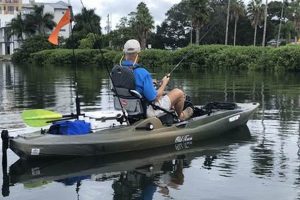
A specialized fishing rod designed for use in kayaks combines compact length for maneuverability in a confined cockpit with robust construction to handle larger fish species. These rods often feature shorter handles and sensitive tips for improved control and bite detection. An example would be a 7-foot medium-heavy power rod built with durable materials like graphite or fiberglass.
Such equipment offers significant advantages to kayak anglers. The shorter length allows for easier casting and retrieval within the limited space of a kayak. The specialized design provides the strength needed to battle strong fish while maintaining sensitivity for detecting subtle strikes. This specialized gear allows anglers to effectively target a wider variety of species from their kayaks. The development of this specialized equipment reflects the growth and popularity of kayak fishing, enabling anglers to access previously unreachable fishing grounds and pursue larger, more powerful fish.
This exploration of purpose-built fishing rods highlights the importance of selecting appropriate gear matched to the specific demands of kayak fishing. Further discussion will cover recommended rod lengths, power and action ratings, materials, and ideal pairings with reels and lines.
Tips for Kayak Fishing Rod Selection and Use
Choosing and utilizing appropriate equipment significantly impacts kayak fishing success. The following tips offer guidance for optimizing rod selection and enhancing on-the-water performance.
Tip 1: Consider Kayak Dimensions: Kayak width and cockpit layout influence rod length choices. Shorter rods (6-7 feet) offer better maneuverability in tighter spaces.
Tip 2: Match Rod Power to Target Species: Lighter power rods are suited for smaller fish like panfish and trout, while heavier power rods handle larger species such as bass or catfish.
Tip 3: Select Appropriate Rod Action: Fast action rods offer greater sensitivity for detecting subtle bites and quicker hooksets, while slower action rods provide more flexibility for fighting larger fish.
Tip 4: Choose Durable Rod Materials: Graphite and fiberglass composite rods offer a balance of strength, sensitivity, and durability, ideal for the demands of kayak fishing.
Tip 5: Prioritize Two-Piece Rods: Two-piece rods offer convenient transport and storage, essential considerations for kayak anglers.
Tip 6: Balance Rod and Reel: A properly balanced rod and reel combination reduces fatigue and improves casting accuracy. Consider the weight and size of the reel when selecting a rod.
Tip 7: Practice Casting Techniques: Mastering underhand and sidearm casting techniques is crucial for accurate and efficient casting from a kayak.
Careful consideration of these factors ensures optimal rod selection for a productive and enjoyable kayak fishing experience. Proper equipment selection, combined with refined techniques, enhances angling success and enjoyment on the water.
By understanding these guidelines, anglers can confidently choose a rod that best suits their specific needs and target species, ultimately leading to a more successful and rewarding kayak fishing experience. This knowledge will be invaluable as we move on to discuss specific rod recommendations and techniques for different fishing scenarios.
1. Length

Rod length is a critical factor in kayak fishing, directly influencing casting mechanics, fish fighting capabilities, and overall maneuverability within the confined cockpit of a kayak. Selecting the appropriate length balances casting performance with the practical limitations of the kayak fishing environment.
- Maneuverability
Shorter rods, typically between 6 and 7 feet, excel in kayak fishing due to their enhanced maneuverability. The limited space within a kayak’s cockpit necessitates compact gear. A shorter rod allows for easier casting, retrieval, and fish fighting without interference from the kayak’s sides or other onboard equipment. For example, navigating tight quarters around overhanging branches or submerged structures becomes significantly easier with a shorter rod.
- Casting Distance
While shorter rods generally sacrifice some casting distance compared to longer rods, specialized techniques like underhand and sidearm casts mitigate this disadvantage in kayak fishing. Furthermore, the close proximity to the water often afforded by kayak fishing reduces the need for long casts. Accurate, shorter casts become more effective than long casts in many kayak fishing scenarios.
- Fish Fighting Control
Shorter rods offer increased leverage and control when battling fish, a significant advantage when contending with larger, more powerful species from a kayak. The shorter length allows for greater direct force application, aiding in turning and maneuvering fish. This enhanced control reduces the risk of line breakage and facilitates quicker landings.
- Transportation and Storage
Many kayak fishing rods feature a two-piece design, further enhancing portability and storage convenience. This two-piece construction allows for easy breakdown and transport, essential considerations for kayak anglers. The compact size of a disassembled rod simplifies storage both during transport and at home. Some 13 Fishing kayak rods incorporate this design feature.
The careful consideration of rod length is paramount for successful kayak angling. A rod length optimized for maneuverability, casting efficiency, and fish-fighting control within a kayaks limited space ultimately enhances the overall fishing experience. Balancing these factors against specific fishing conditions and target species ensures optimal performance and enjoyment on the water.
2. Power
Rod power, a crucial characteristic of any fishing rod, especially a 13 Fishing kayak rod, signifies its lifting strength and ability to handle fish of varying sizes and fighting strengths. Selecting the appropriate power ensures effective hooksets, manageable fish fights, and minimizes the risk of line breakage or rod damage. Understanding power ratings is essential for optimizing tackle choices and maximizing angling success from a kayak.
- Light Power
Light power rods are designed for smaller fish species such as panfish, trout, and smaller bass. These rods offer increased sensitivity for detecting subtle bites and provide a more enjoyable fight with lighter fish. However, they may struggle with larger, more powerful species. An example would be using a light power rod for crappie fishing in a shallow lake.
- Medium Power
Medium power rods offer versatility, handling a wider range of fish species from smaller bass to walleye and redfish. This makes them a popular choice for kayak anglers targeting diverse species within a single outing. They offer a good balance between sensitivity and strength. For instance, a medium power rod would be suitable for targeting redfish in coastal marshes.
- Medium-Heavy Power
Medium-heavy power rods are designed for larger freshwater species like larger bass, pike, and catfish, as well as inshore saltwater species. They provide the backbone needed to control strong fish while still offering reasonable sensitivity. This power rating is well-suited for fishing heavier cover or stronger currents. An example would be using a medium-heavy power rod for striped bass fishing in estuaries.
- Heavy Power
Heavy power rods are reserved for the largest and most powerful freshwater and saltwater species, such as muskie, salmon, and larger saltwater gamefish. These rods offer maximum lifting power and durability for challenging fights. They are often used for trolling or fishing heavy structure. For example, a heavy power rod would be necessary for targeting large catfish in rivers.
Matching rod power to target species and fishing conditions is essential for a successful kayak fishing experience. Selecting a 13 Fishing kayak rod with the appropriate power ensures effective hooksets, controlled fish fights, and minimizes the risk of equipment failure. This informed decision enhances angling performance and overall enjoyment on the water.
3. Action

Rod action, a critical characteristic of a 13 Fishing kayak rod, describes the rod’s bending curve under pressure. It significantly influences hook-setting power, casting performance, and fish-fighting control. Understanding the nuances of rod action enables anglers to make informed decisions based on target species and fishing techniques. This knowledge translates directly to improved hookup ratios and a more controlled, enjoyable fishing experience from a kayak.
Fast action rods bend primarily in the top third, delivering rapid tip recovery crucial for powerful hooksets and precise lure control. This action excels in techniques requiring quick reactions, such as topwater fishing or jigging. The rapid recoil generates the force needed to drive hooks into bony mouths of species like bass or walleye. Conversely, slow action rods bend throughout most of their length, providing a softer presentation and increased shock absorption ideal for lighter lines and finesse techniques. The parabolic bend cushions runs from strong fish, reducing the risk of line breakage, particularly beneficial when targeting hard-fighting species like salmon or steelhead from a kayak. Moderate action rods represent a compromise, bending in the top half, offering a balance of power and sensitivity suitable for various techniques and species. This versatility makes them a popular choice for kayak anglers targeting multiple species.
Matching rod action to fishing style and target species optimizes performance on the water. Fast action facilitates strong hooksets in reaction-driven techniques, while slower action provides the necessary shock absorption for battling larger fish. Moderate action offers balanced performance across various scenarios. Understanding these distinctions empowers anglers to select a 13 Fishing kayak rod tailored to specific needs and maximize their chances of success while kayak fishing. This knowledge provides a foundation for informed decision-making regarding rod selection and contributes to a more efficient and rewarding angling experience.
4. Material
Material selection significantly influences a 13 Fishing kayak rod’s performance characteristics, including weight, durability, sensitivity, and action. The rod’s material composition directly impacts its responsiveness to fish strikes, ability to withstand stress during fish fights, and overall longevity. Understanding the properties of common rod materials allows for informed decisions aligned with specific fishing needs and preferences.
- Graphite
Graphite, a popular choice for fishing rods, offers high sensitivity and a lightweight design. Its stiffness transmits vibrations effectively, allowing anglers to detect subtle bites. The lighter weight reduces fatigue during extended fishing sessions, a significant advantage in kayak fishing. However, graphite’s relative brittleness compared to other materials requires careful handling to prevent breakage. High-modulus graphite offers increased sensitivity and lighter weight, but at a higher price point. Many 13 Fishing kayak rods utilize graphite composites to achieve a balance of sensitivity, weight, and durability.
- Fiberglass
Fiberglass rods offer superior durability and affordability compared to graphite. Their flexibility provides greater forgiveness during fish fights, reducing the risk of line breakage, especially beneficial for beginners. While generally heavier and less sensitive than graphite, fiberglass remains a viable option for anglers targeting larger, more powerful fish where sensitivity is less critical. Fiberglass rods are well-suited for heavy cover and challenging fishing environments often encountered in kayak fishing. Some 13 Fishing kayak rods incorporate fiberglass components for added strength and impact resistance.
- Composite Materials
Composite blends, often combining graphite and fiberglass, seek to leverage the strengths of both materials. These blends aim to achieve a balance of sensitivity, durability, and affordability. The specific blend ratios influence the rod’s overall performance characteristics. For instance, a rod with a higher graphite content will exhibit greater sensitivity, while a higher fiberglass content enhances durability. 13 Fishing utilizes composite blends in some of its kayak rod models to achieve specific performance targets.
- Rod Handle Materials
Handle materials like cork, EVA foam, and carbon fiber influence grip, comfort, and durability. Cork offers a traditional feel and excellent grip, even when wet. EVA foam provides a lightweight, durable, and comfortable grip, resistant to wear and tear. Carbon fiber handles reduce weight and enhance sensitivity but can be less comfortable for extended use. 13 Fishing kayak rods may feature various handle materials depending on the specific model and intended use case.
Careful consideration of rod material is essential for selecting a 13 Fishing kayak rod optimized for specific fishing styles and target species. Graphite offers sensitivity and light weight, fiberglass provides durability and affordability, and composites seek a balance between the two. Handle material choices further influence grip and comfort. Understanding these material properties empowers anglers to select a rod tailored to individual preferences and maximizes their chances of success on the water. This knowledge forms the basis for informed decisions regarding rod selection and contributes to a more efficient and rewarding kayak fishing experience.
5. Portability

Portability is a paramount consideration for kayak anglers due to the inherent limitations of space and the often challenging logistics of transporting gear to and from the water. A 13 Fishing kayak rod, designed with portability in mind, addresses these challenges through features that facilitate easy transport, storage, and on-the-water maneuverability.
- Two-Piece Construction
Many 13 Fishing kayak rods utilize a two-piece design, allowing the rod to be broken down into shorter sections for convenient transport and storage. This feature is crucial for kayak anglers who often need to navigate tight spaces, carry their gear over distances, or store their rods in compact compartments. A two-piece rod easily fits within a kayak’s storage hatch or can be strapped securely to the deck during transport.
- Compact Pack Length
The compact pack length resulting from the two-piece design minimizes storage space requirements. This is particularly advantageous for kayak anglers with limited storage capacity in their vehicles or homes. The shorter sections of a disassembled rod allow for easier storage in smaller spaces, such as closets, car trunks, or kayak storage compartments. This contributes to a more streamlined and organized approach to gear management.
- Lightweight Design
13 Fishing kayak rods often incorporate lightweight materials like graphite or composite blends in their construction. This reduces overall weight, minimizing strain during transport and enhancing on-the-water maneuverability. A lighter rod is less cumbersome to carry, especially when hiking to remote fishing locations or navigating challenging terrain often encountered in kayak fishing. This lightweight design also contributes to reduced fatigue during extended fishing sessions.
- Travel Cases and Storage Solutions
While not always included, dedicated travel cases or rod sleeves enhance portability and protect the rod during transport. These accessories provide organized storage and prevent damage during travel, ensuring the rod arrives at the fishing destination in optimal condition. Purpose-built rod sleeves or hard cases offer additional protection against impacts and scratches, preserving the rod’s integrity over time. This added layer of protection is especially valuable for kayak anglers who frequently transport their gear.
The emphasis on portability in 13 Fishing kayak rods reflects a deep understanding of the specific needs and challenges faced by kayak anglers. The combination of two-piece construction, compact pack length, and lightweight design significantly enhances the overall fishing experience by simplifying transport, optimizing storage, and improving on-the-water handling. These features enable kayak anglers to focus on the fishing itself, rather than the logistical complexities of managing cumbersome gear. The incorporation of portability features underscores the commitment to providing specialized equipment tailored to the unique demands of kayak fishing. This focus allows for greater freedom and efficiency on the water, ultimately enhancing the enjoyment and success of kayak angling pursuits.
6. Sensitivity

Sensitivity in a 13 Fishing kayak rod translates to the ability to detect subtle underwater occurrences, significantly impacting angling success. This responsiveness transmits vibrations from the line and lure to the angler’s hand, providing crucial information about bottom composition, structure contact, and, most importantly, fish bites. A highly sensitive rod allows for the detection of faint taps or line movements, indicating the presence of fish that might otherwise go unnoticed. This heightened awareness enables more timely hooksets, increasing the likelihood of a successful catch. The importance of sensitivity is amplified in kayak fishing, where anglers are often in close proximity to the fish and require precise control over their presentation.
Several factors contribute to a kayak rod’s sensitivity. High-modulus graphite, commonly used in 13 Fishing rods, transmits vibrations effectively due to its inherent stiffness. Rod action also plays a crucial role; faster action rods, bending primarily in the tip section, offer increased sensitivity compared to slower action rods. Furthermore, line and lure choices influence the transmission of vibrations; braided lines, known for their minimal stretch, enhance sensitivity by providing direct feedback to the angler. For example, detecting the light bite of a crappie nibbling on a small jig in deep water requires a sensitive rod setup. Similarly, feeling the subtle tap of a flounder taking a bait on a sandy bottom necessitates a rod capable of transmitting those delicate vibrations. Understanding these factors enables anglers to optimize their tackle choices for maximum sensitivity.
Enhanced sensitivity empowers kayak anglers to make informed decisions based on real-time feedback from the underwater environment. This heightened awareness not only improves hookset ratios but also allows for adjustments in retrieval speed, lure presentation, and overall fishing strategy. The ability to perceive subtle changes in line tension or vibration provides valuable insights into fish behavior and habitat, leading to a more efficient and productive angling experience. By prioritizing sensitivity when selecting a 13 Fishing kayak rod, anglers gain a significant advantage in detecting fish and maximizing their chances of success on the water. This focus on sensitivity aligns directly with the demands of kayak fishing, where precise control and immediate feedback are essential for a rewarding experience.
Frequently Asked Questions
This section addresses common inquiries regarding specialized fishing rods designed for kayak use, aiming to provide clear and concise information for informed equipment selection.
Question 1: What rod length is optimal for kayak fishing?
Rod length selection depends on kayak dimensions and target species. Generally, rods between 6 and 7 feet offer a balance of maneuverability and casting performance in a kayak’s confined space. Shorter rods excel in tight quarters, while slightly longer rods offer increased casting distance when needed. Kayak width and cockpit layout should inform this decision.
Question 2: How does rod power influence kayak fishing?
Rod power dictates the rod’s lifting strength and ability to handle different fish sizes. Lighter power rods suit smaller species like panfish, while heavier power rods handle larger, more powerful fish. Matching rod power to target species ensures effective hooksets and manageable fights without risking line breakage.
Question 3: What role does rod action play in kayak fishing?
Rod action describes the rod’s bend profile under pressure. Fast action rods offer quick tip recovery for powerful hooksets, ideal for techniques requiring immediate reactions. Slower action rods provide greater flexibility and shock absorption, benefiting fights with larger fish. Moderate action offers a versatile balance between the two.
Question 4: What materials are commonly used in kayak fishing rods?
Graphite and fiberglass are common materials. Graphite offers sensitivity and light weight, while fiberglass provides durability and affordability. Composite blends combine the benefits of both. Handle materials, such as cork and EVA foam, further influence grip and comfort.
Question 5: Why is portability important for kayak fishing rods?
Portability is crucial due to limited space and transport challenges. Two-piece rods break down for easy storage and transport. Compact pack length and lightweight designs further enhance portability, essential considerations for kayak anglers.
Question 6: How does rod sensitivity impact kayak fishing success?
Sensitivity enables detection of subtle bites and underwater structures. High-modulus graphite and fast action rods enhance sensitivity, allowing anglers to perceive faint taps and line movements, leading to more timely hooksets and increased catch rates.
Careful consideration of these factors ensures appropriate rod selection for a productive and enjoyable kayak fishing experience. Choosing a rod aligned with specific needs and target species significantly enhances performance on the water.
This FAQ section has provided a comprehensive overview of key considerations related to specialized fishing rods for kayak use. The next section will delve into specific rod recommendations tailored to various fishing scenarios and target species.
Conclusion
Specialized fishing rods designed for kayak use represent a significant advancement in angling technology. Careful consideration of rod length, power, action, material, portability, and sensitivity ensures optimal performance in the unique kayak fishing environment. These specialized rods empower anglers to effectively target a wider range of species from their kayaks, enhancing both accessibility and angling success. The evolution of these specialized tools reflects the growing popularity and increasing demands of kayak fishing.
Appropriate equipment selection significantly impacts kayak fishing outcomes. Investing in a purpose-built kayak fishing rod tailored to specific needs and target species elevates the angling experience. This informed approach maximizes efficiency, enhances enjoyment, and promotes responsible angling practices. The continued development of specialized kayak fishing equipment promises further advancements and opportunities for anglers seeking to explore and connect with the aquatic environment.