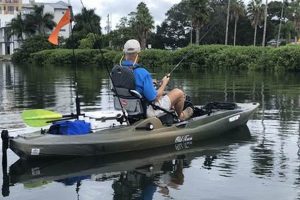
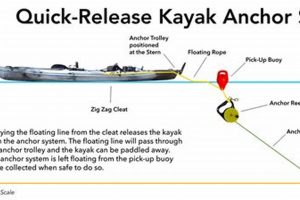
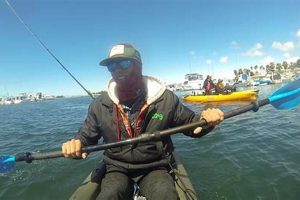
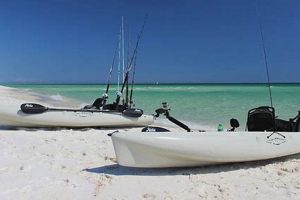
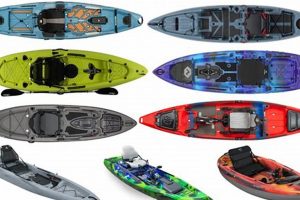
A specialized kayak designed for fishing often incorporates a buoyant container for holding captured fish. This container, typically constructed from mesh or other porous material, allows water to circulate, keeping the catch fresh while preventing it from escaping. These kayaks are commonly outfitted with rod holders, anchor systems, and other features enhancing the angling experience. An angler might use such a vessel to navigate shallow waters or reach areas inaccessible by larger boats, leveraging the basket to retain their catch throughout the fishing trip.
The integration of a livewell system into a small, maneuverable watercraft offers significant advantages for anglers. Maintaining the vitality of captured fish improves both their table quality and their suitability for catch-and-release practices. The compact design of these specialized kayaks enables access to confined waterways, expanding fishing opportunities. Historically, similar concepts existed using traditional fishing canoes or small boats with woven baskets, showcasing a long-standing need for such a system. Modern materials and designs have refined this concept, providing anglers with durable, lightweight, and efficient equipment.
This article will further examine various aspects of these fishing kayak systems, exploring topics including material selection, construction techniques, optimal deployment scenarios, and the overall impact on fishing practices.
Tips for Utilizing Fishing Kayaks with Livewells
Proper utilization of a fishing kayak equipped with a livewell maximizes catch quality and overall fishing success. The following tips offer practical guidance for anglers.
Tip 1: Regularly Monitor and Refresh Livewell Water. Stagnant water depletes oxygen, jeopardizing fish health. Periodically exchanging water, especially in warm conditions, ensures a healthy environment for the catch.
Tip 2: Choose an Appropriately Sized Livewell. Match the livewell capacity to the target species and anticipated catch size. Overcrowding stresses fish, impacting their survival.
Tip 3: Consider Adding an Aerator or Recirculation System. Enhanced oxygenation improves fish vitality, particularly during longer outings or in warmer water temperatures.
Tip 4: Secure the Livewell Lid. A properly secured lid prevents fish from escaping, particularly during navigation or rough water conditions.
Tip 5: Position the Livewell Strategically. Ensure the livewell’s weight distribution maintains kayak stability and maneuverability. An unbalanced load can compromise safety and performance.
Tip 6: Regularly Clean and Maintain the Livewell. Proper hygiene prevents bacterial growth and ensures optimal fish health. Periodic cleaning also extends the livewell’s lifespan.
Tip 7: Understand Local Regulations Regarding Livewells. Some areas have specific regulations regarding the use of livewells, including size restrictions and requirements for aeration. Compliance with these regulations is essential.
By adhering to these guidelines, anglers can ensure a successful and responsible fishing experience while preserving the quality of their catch.
These practical considerations contribute significantly to a positive angling experience. The following conclusion summarizes the core advantages and reinforces the importance of responsible kayak fishing practices.
1. Portability

Portability represents a defining characteristic of fishing kayaks equipped with livewells, significantly influencing their practicality and overall appeal. The ease of transport and deployment directly impacts accessibility to various fishing locations. Consider the difference between launching a small, lightweight kayak from a car-top carrier versus the logistical complexities of trailering and launching a larger boat. This inherent portability expands fishing opportunities, enabling access to remote ponds, shallow creeks, and other areas inaccessible to larger vessels. Furthermore, portability simplifies storage, requiring minimal space compared to larger boats.
The materials used in the construction of these kayaks contribute directly to their portability. Lightweight polymers and composites, often favored for their durability and resilience, also minimize overall weight, facilitating transport and handling. Consider a kayak weighing under 50 pounds easily carried by a single individual, compared to a larger fiberglass boat requiring a trailer and potentially a winch for launch and retrieval. This ease of handling extends beyond transportation to include maneuvering the kayak on the water, allowing for effortless navigation through tight spaces and shallows. The combination of lightweight materials and compact design enhances the overall portability advantage.
Ultimately, portability enhances the versatility of fishing kayaks with livewells. This feature expands fishing access, simplifies transport and storage, and contributes to overall ease of use. The capacity to quickly deploy and retrieve the kayak maximizes fishing time and minimizes logistical challenges, allowing anglers to focus on the pursuit of their target species. While other features like stability and livewell capacity contribute to the overall effectiveness, portability remains a crucial factor driving the popularity and practicality of these specialized fishing platforms.
2. Stability

Stability represents a critical performance characteristic in fishing kayaks equipped with livewells. A stable platform is essential for various on-the-water activities, from casting and retrieving lines to landing fish and accessing the livewell. Compromised stability not only hinders fishing effectiveness but also poses safety risks, especially in challenging conditions such as wind, currents, or rough waters. Understanding the factors influencing kayak stability is paramount for anglers seeking to maximize both performance and safety.
- Hull Design
Hull design plays a pivotal role in determining kayak stability. Wider hulls generally offer greater initial stability, resisting tipping during routine movements. However, they may sacrifice maneuverability. Conversely, narrower hulls enhance maneuverability but can be more susceptible to tipping. Specialized hull designs, such as pontoon-style or multi-hull configurations, provide enhanced stability, particularly beneficial for activities requiring significant weight shifts, like landing a large fish or reaching for gear. The choice of hull design requires careful consideration, balancing stability needs with desired maneuverability and intended fishing conditions.
- Center of Gravity
The center of gravity significantly influences a kayak’s stability. Keeping the center of gravity low enhances stability. Adding weight, such as a full livewell or fishing gear, raises the center of gravity, potentially making the kayak more prone to tipping. Proper weight distribution, ensuring even loading and securing gear close to the kayak’s center, is crucial for maintaining optimal stability. Anglers should be mindful of their own movements and weight shifts, avoiding sudden or abrupt actions that could destabilize the kayak.
- Water Conditions
Prevailing water conditions directly impact kayak stability. Calm, flat water presents minimal stability challenges, while wind, currents, and waves can significantly compromise stability. Kayaks with higher initial stability are better suited for rougher conditions. Understanding the limitations of the chosen kayak design in varying water conditions is essential for safe operation. Anglers should exercise caution and adapt their techniques to maintain stability in challenging environments. Avoiding overloaded livewells and securing loose gear further enhances stability in dynamic water conditions.
- Kayak Features
Specific kayak features can enhance stability. Outriggers or stabilizers provide additional support, increasing resistance to tipping. Some kayaks incorporate design elements like wider beams or flattened hull sections to enhance stability. Understanding the impact of these features on both stability and maneuverability allows anglers to select the most appropriate kayak for their individual needs and intended fishing environments. Specialized features, while potentially adding complexity or cost, can significantly improve stability, particularly for anglers prioritizing stability over speed or agility.
These factors collectively contribute to the overall stability of a floating fish basket kayak. A comprehensive understanding of these elements empowers anglers to make informed decisions regarding kayak selection and operation, maximizing both fishing effectiveness and on-the-water safety. Prioritizing stability, especially when fishing from a seated position and managing a livewell containing live fish, is paramount for a successful and enjoyable angling experience.
3. Livewell Integration

Livewell integration represents a defining feature of specialized fishing kayaks, directly impacting catch preservation and angling practices. Effectively incorporating a livewell into a kayak’s design requires careful consideration of various factors, impacting both vessel performance and the well-being of the catch. Understanding the nuances of livewell integration is crucial for anglers seeking to maximize the benefits of this specialized feature.
- Capacity and Dimensions
Livewell capacity and dimensions directly influence the number and size of fish that can be comfortably accommodated. A larger livewell provides greater holding capacity but can add significant weight and impact kayak stability. Conversely, a smaller livewell, while lighter and less obtrusive, limits the quantity and size of the catch. Balancing capacity needs with the kayak’s overall size and weight-carrying capacity is essential. Anglers targeting larger species require greater capacity, while those pursuing smaller fish can opt for more compact livewells. Careful consideration of target species and typical catch sizes informs the appropriate livewell dimensions.
- Aeration and Water Circulation
Adequate aeration and water circulation are crucial for maintaining water quality and ensuring the survival of the catch. Stagnant water quickly depletes oxygen, jeopardizing fish health. Livewells often incorporate aeration systems, either through built-in pumps or battery-powered aerators, to maintain oxygen levels. Effective water circulation further enhances oxygenation and removes waste products. The efficiency of these systems directly impacts the health and survival of the catch, particularly during extended fishing trips or in warmer water temperatures. Regularly refreshing the livewell water, even with aeration, further contributes to maintaining optimal water quality.
- Placement and Accessibility
Livewell placement within the kayak influences both vessel balance and angler accessibility. A centrally located livewell minimizes impact on kayak stability, while positioning it towards the stern or bow can create weight imbalances. Accessibility is equally important. Anglers should be able to easily reach the livewell to add or remove fish without compromising their balance or interrupting fishing activities. Well-designed livewells feature secure lids to prevent fish from escaping while remaining easily accessible for the angler. Careful consideration of placement and accessibility ensures efficient operation and minimizes disruption during fishing.
- Construction and Materials
The construction and materials of the livewell impact its durability, weight, and insulation properties. Durable materials, such as high-impact plastics or rotomolded polyethylene, withstand the rigors of use and resist punctures or damage. Lightweight materials minimize the added weight to the kayak, contributing to overall portability. Insulated livewells help maintain stable water temperatures, crucial for preserving fish in extreme conditions. The choice of construction and materials influences the livewell’s longevity, performance, and overall contribution to the kayak’s functionality.
These interconnected facets of livewell integration significantly influence the overall effectiveness and utility of a fishing kayak. Careful consideration of these elements ensures optimal catch preservation, enhances angling efficiency, and contributes to a successful and responsible fishing experience. By understanding the interplay between capacity, aeration, placement, and construction, anglers can select and utilize a fishing kayak equipped with a livewell that best suits their specific needs and fishing style.
4. Fishing Access

Fishing access, significantly enhanced by the utilization of floating fish basket kayaks, represents a crucial advantage for anglers. These specialized kayaks grant access to a wider range of fishing locations often inaccessible by conventional boats. This expanded access unlocks diverse fishing opportunities and contributes to a more comprehensive angling experience.
- Shallow Water Navigation
Floating fish basket kayaks excel in shallow water navigation. Their compact size and shallow draft allow anglers to explore shallow creeks, ponds, and backwater areas where larger boats cannot venture. This capability opens up a wealth of fishing opportunities, targeting species that inhabit these shallow environments. For example, navigating shallow flats teeming with bonefish or exploring secluded mangrove estuaries for snook becomes readily achievable with these specialized kayaks. This advantage expands the range of fishable waters and diversifies potential catches.
- Maneuverability in Confined Spaces
The maneuverability of floating fish basket kayaks proves invaluable in confined spaces. Their compact design and responsive handling allow for precise navigation through tight channels, around submerged obstacles, and within dense vegetation. This agility provides a distinct advantage when targeting fish in complex environments like overgrown river systems or tightly packed lily pads. Successfully navigating these challenging locations often leads to encounters with species that seek refuge or forage in such areas, enhancing fishing success. The ability to precisely position the kayak in these confined spaces optimizes casting angles and presentation, further increasing the likelihood of enticing a strike.
- Portage and Transportation
The portability of floating fish basket kayaks further enhances fishing access. Their relatively lightweight construction allows for easy transport, either on car-top carriers or by hand. This portability enables anglers to access remote fishing locations, including those requiring short portages over land or around obstacles. Accessing secluded mountain lakes or traversing shallow sections between larger bodies of water expands the range of fishing possibilities. This ease of transportation eliminates the need for boat ramps or trailers, opening up a multitude of previously inaccessible fishing destinations.
- Reduced Environmental Impact
Floating fish basket kayaks offer a low-impact approach to fishing access. Their human-powered propulsion and compact size minimize disturbance to aquatic environments compared to motorized boats. This reduced impact contributes to the preservation of delicate ecosystems and minimizes disruption to fish habitats. Quietly navigating sensitive areas without the noise and wake of a motorboat increases the likelihood of encountering wary fish species. This environmentally conscious approach aligns with sustainable fishing practices and promotes the long-term health of aquatic resources.
These facets of fishing access, facilitated by the unique capabilities of floating fish basket kayaks, collectively broaden angling opportunities and contribute to a more immersive and rewarding fishing experience. By enabling exploration of diverse aquatic environments, from shallow flats to confined waterways and remote locations, these kayaks empower anglers to connect with nature and pursue their passion with minimal environmental impact. The expanded fishing access afforded by these specialized vessels enriches the overall angling experience and promotes a deeper appreciation for aquatic ecosystems.
5. Catch Preservation

Catch preservation represents a critical aspect of responsible and ethical angling, directly influenced by the utilization of floating fish basket kayaks. Maintaining the health and vitality of captured fish, whether intended for consumption or release, is paramount. These specialized kayaks, equipped with integrated livewells, offer a distinct advantage in preserving catch quality, supporting both culinary enjoyment and conservation efforts. The following facets explore the intricate relationship between catch preservation and the utilization of these specialized fishing vessels.
- Maintaining Water Quality
Maintaining optimal water quality within the livewell is essential for catch preservation. Factors such as temperature, oxygen levels, and the presence of ammonia or other waste products directly impact fish health. Floating fish basket kayaks equipped with livewells offer a controlled environment, allowing anglers to regulate water quality more effectively than traditional stringers or coolers. Aeration systems, regular water exchanges, and the use of water additives help maintain optimal conditions, ensuring fish remain healthy and vibrant. For example, adding an aerator to the livewell increases dissolved oxygen levels, promoting fish respiration and reducing stress. This active management of water quality contributes significantly to catch preservation, whether for immediate consumption or eventual release.
- Minimizing Physical Stress
Minimizing physical stress on captured fish is crucial for their survival and well-being. Floating fish basket kayaks, with their integrated livewells, offer a less stressful environment compared to traditional methods. Fish held in a livewell experience reduced physical trauma from being jostled against hard surfaces or exposed to fluctuating air temperatures. This gentler handling minimizes injury and stress, improving the chances of survival for fish intended for release. For instance, a deep, well-aerated livewell allows fish to swim freely, reducing the likelihood of fin damage or scale loss often associated with stringers or crowded coolers. This focus on minimizing physical stress reflects a commitment to responsible angling practices.
- Temperature Regulation
Temperature regulation plays a vital role in catch preservation. Rapid temperature fluctuations can stress or even kill fish. Livewells in floating fish basket kayaks offer a degree of temperature stability, shielding fish from extreme changes in air or water temperature. Insulated livewells further enhance temperature control, particularly in extreme weather conditions. Maintaining a stable temperature within the livewell reduces stress on the catch, preserving its quality and viability. For example, an insulated livewell helps maintain cooler water temperatures during hot summer months, preventing thermal stress on captured fish. This temperature regulation capability is especially important for sensitive species or in regions experiencing significant temperature fluctuations.
- Facilitating Catch and Release
Floating fish basket kayaks facilitate responsible catch-and-release practices. Keeping fish healthy and vibrant within the livewell increases their chances of survival upon release. The controlled environment allows anglers to revive fish if necessary before returning them to the water. This practice contributes to the conservation of fish populations and promotes sustainable angling. For example, anglers can observe fish in the livewell for signs of stress and take appropriate measures, such as adding revitalizing solutions to the water, before releasing them. This proactive approach to catch and release underscores the importance of conservation in recreational fishing and highlights the role of these specialized kayaks in supporting responsible angling practices.
These interconnected facets of catch preservation highlight the significant role of floating fish basket kayaks in responsible angling. By providing a controlled environment for maintaining water quality, minimizing physical stress, regulating temperature, and facilitating catch and release, these specialized kayaks empower anglers to prioritize fish welfare while enjoying their fishing experience. This commitment to catch preservation reflects a broader ethic of conservation and underscores the importance of sustainable practices within the recreational fishing community.
Frequently Asked Questions
This section addresses common inquiries regarding kayaks equipped with integrated livewells, providing concise and informative responses.
Question 1: What are the primary advantages of using a kayak with a built-in livewell?
Integrated livewells maintain catch vitality, crucial for both table fare and catch-and-release practices. They eliminate the need for traditional stringers or coolers, simplifying fish handling and improving preservation.
Question 2: How does livewell capacity influence kayak selection?
Livewell capacity should align with target species and anticipated catch size. Larger capacities accommodate more or larger fish but may impact kayak stability and maneuverability. Smaller capacities prioritize portability and maneuverability but limit the size and quantity of the catch.
Question 3: What maintenance is required for a kayak livewell?
Regular cleaning prevents bacterial growth and ensures optimal fish health. Periodic inspection of pumps, aerators, and drain plugs is essential for proper function. Draining and drying the livewell after each use prevents mildew and extends its lifespan.
Question 4: How does one ensure adequate oxygenation in a kayak livewell?
Adequate oxygenation is crucial for fish survival. Utilizing a battery-powered aerator, recirculation pump, or periodically refreshing the livewell water maintains oxygen levels, particularly in warmer water temperatures or during extended fishing trips.
Question 5: Do regulations govern the use of kayak livewells?
Regulations regarding livewell usage vary by jurisdiction. Some areas have size restrictions or require specific aeration methods. Consulting local fishing regulations ensures compliance and promotes responsible angling practices.
Question 6: How does one choose between a built-in livewell and a portable livewell for a kayak?
Built-in livewells offer seamless integration and often include optimized aeration and circulation systems. Portable livewells provide flexibility for anglers who may not require a livewell on every outing, but they can occupy valuable deck space and may require additional setup. The choice depends on individual fishing preferences and needs.
Understanding these key aspects of kayak livewells empowers anglers to make informed decisions, maximizing both fishing effectiveness and responsible catch handling.
The following section will delve into specific product examples and recommendations, providing further guidance for selecting the appropriate kayak and livewell system.
Conclusion
Specialized kayaks incorporating floating fish baskets offer anglers distinct advantages. This article explored the multifaceted nature of these vessels, examining the benefits of portability for accessing diverse fishing locations, the crucial role of stability in ensuring a secure fishing platform, the importance of livewell integration for preserving catch quality, the expanded fishing access offered by these versatile craft, and the significance of catch preservation for both culinary enjoyment and responsible angling practices. Each aspect contributes to a more comprehensive and rewarding fishing experience.
The evolution of fishing kayak design continues to refine the integration of floating fish baskets, enhancing their effectiveness and utility. Further exploration of advanced materials, innovative aeration systems, and optimized hull designs promises to further elevate the performance and functionality of these specialized fishing platforms. Anglers embracing these advancements contribute to the ongoing pursuit of both enhanced fishing success and responsible stewardship of aquatic resources.